Malta's Ancient Temples: The Complete Visitor Guide
Malta's megalithic temples are among the oldest free-standing stone structures on Earth, predating Stonehenge by over a thousand years. This guide covers every major site, practical logistics, seasonal advice, and the archaeological context that makes these temples worth the trip.
Tickets & tours
Live prices and dates from our booking partner. If you book, we may earn a commission at no extra cost to you.
TL;DR
- Malta has six UNESCO-listed megalithic temple sites built between 3600 and 2500 BC, using massive megaliths — without wheels or metal tools.
- The top visitor sites are Ħaġar Qim and Mnajdra (southern Malta) and Ġgantija on Gozo — each offers a genuinely different experience.
- Visit April to June or September to October for manageable temperatures; summer sites are fully exposed with no shade.
- All major sites are managed by Heritage Malta — book tickets online at heritagemalta.mt to avoid queues, especially in peak season.
- The Ħal Saflieni Hypogeum requires advance booking weeks or months ahead; it sells out fast and cannot be visited on impulse.
Why These Temples Matter
Malta's ancient temples are not just old — they represent a civilisation that developed in near-total isolation on a 316 sq km island in the central Mediterranean. The temple builders predate Egyptian pyramid construction by several centuries and Stonehenge by roughly a millennium. What makes the Maltese temples particularly striking is the engineering involved: megalithic limestone blocks, some massive, were moved and positioned without the wheel, without metal tools, and without any known connection to the major civilisations of the ancient world.
The UNESCO World Heritage listing recognises six temple sites across the Maltese archipelago: Ġgantija, Ħaġar Qim, Mnajdra, Skorba, Ta' Ħaġrat, and the Tarxien Temples complex. Construction spans roughly 3600 to 2500 BC, divided into two broad phases: the Ġgantija phase (3600–3000 BC) and the Tarxien phase (3000–2500 BC). Each temple evolved independently, which is why no two sites feel the same. The civilisation that built them then vanished entirely around 2500 BC, the reasons for which remain genuinely unknown.
ℹ️ Good to know
A note on misconceptions: Ġgantija means 'giants' tower' in Maltese — a reference to local folklore, not archaeological fact. These temples were not built by giants. Also, while Malta's temples were long cited as the world's oldest free-standing stone structures, Göbekli Tepe in Turkey (circa 9600 BC) has since taken that title. The Maltese temples remain among the oldest, and are far more complex in design than most contemporaries.
The Main Temple Sites: What to Expect at Each
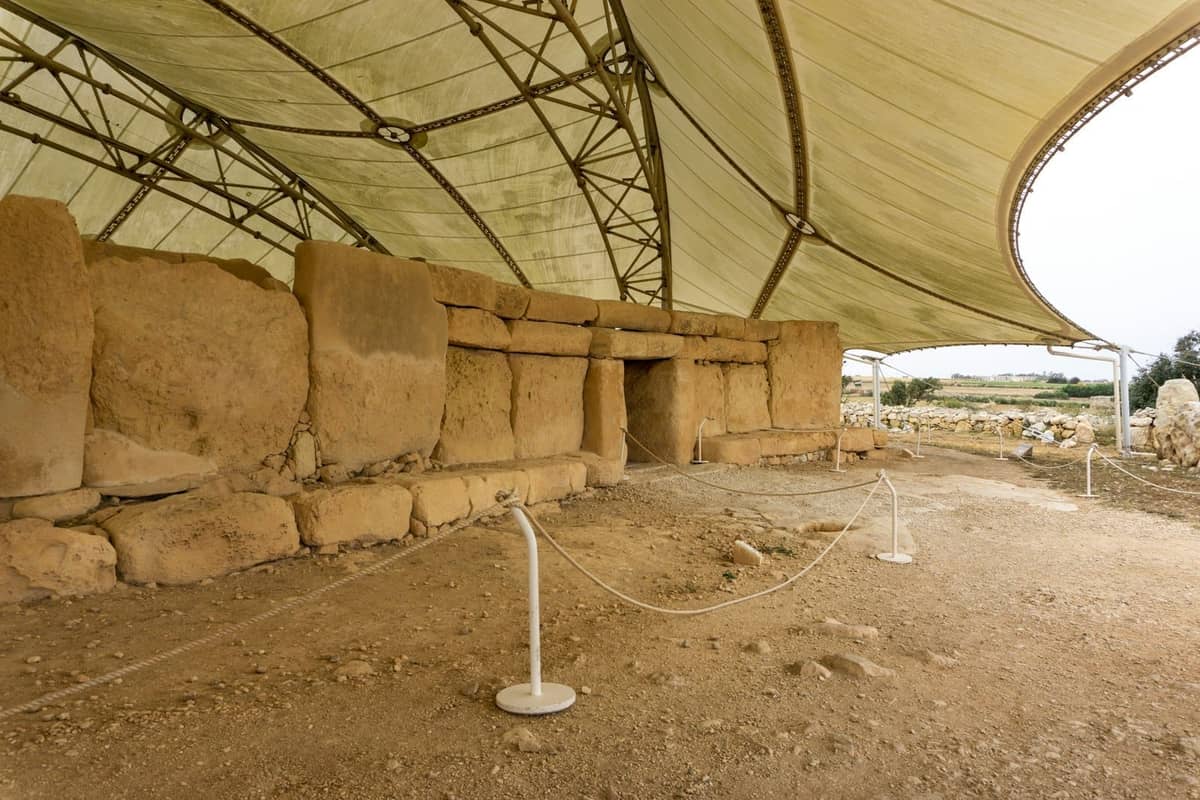
The two most accessible and best-presented sites are Ħaġar Qim and Mnajdra, located about 800 metres apart on Malta's southern coast near the village of Qrendi. Both are now covered by large tensile canopies installed to protect the soft globigerina limestone from further erosion. The canopies are practical but affect the atmosphere — you're not getting the dramatic open-sky experience many visitors expect. Ħaġar Qim is the larger of the two and contains several impressive megaliths, including one stone measuring over 5 metres wide. Mnajdra is more intact and arguably more atmospheric, with three conjoined temples oriented so that sunlight enters the main corridor precisely at the equinoxes and solstices.
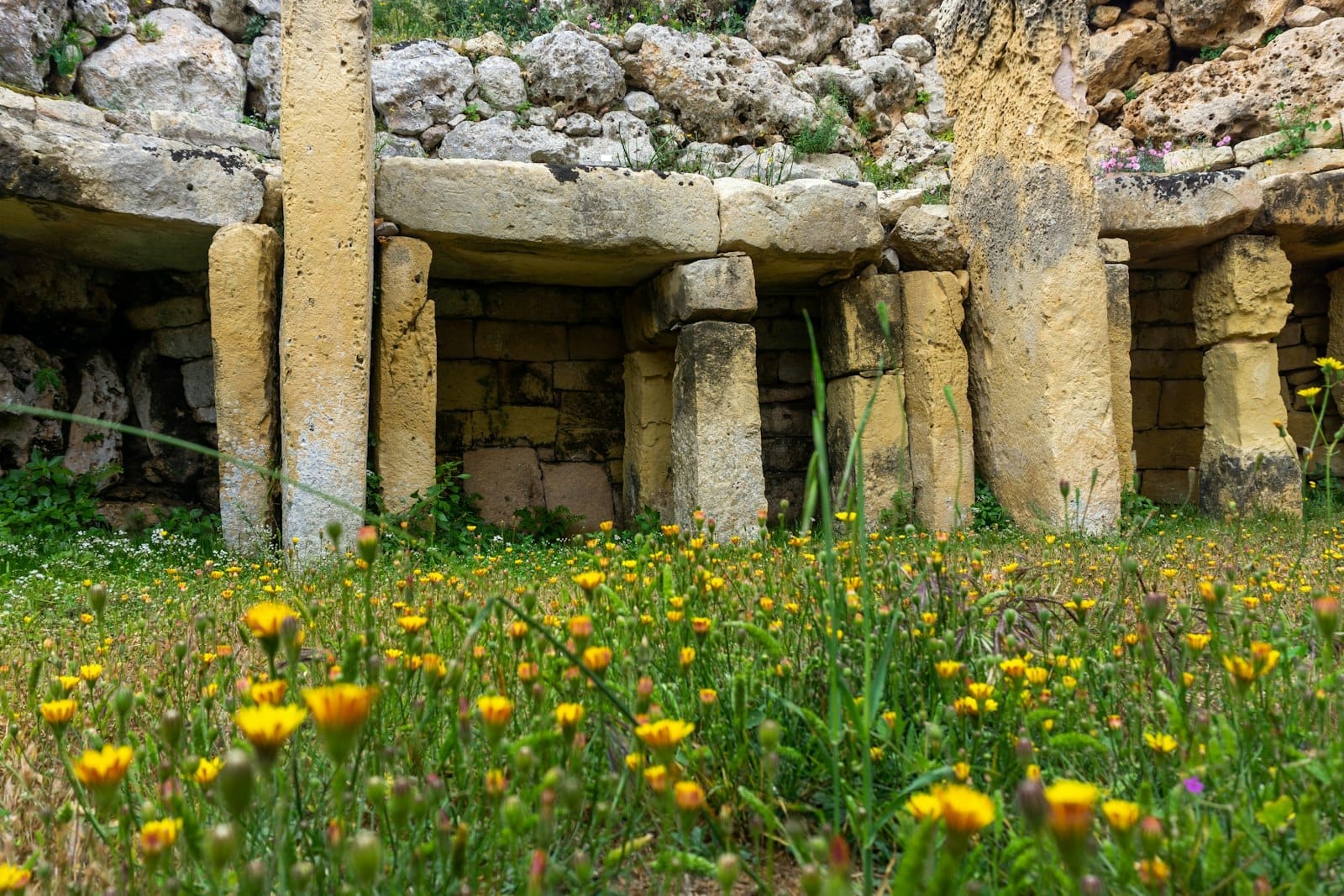
Ġgantija on Gozo is the oldest of the lot, dating to around 3600 BC. It sits on a hillside above the town of Xagħra and is remarkably well-preserved: the outer walls still stand to several metres in height. The site has better kerb appeal than the southern Malta temples — the scale of the megaliths is immediately apparent, and the lack of a full protective covering means you get a more direct sense of the stones. A modern interpretive centre beside the site provides useful context. If you're already planning a trip to Gozo, Ġgantija is worth making a dedicated stop.
- Ħaġar Qim & Mnajdra (South Malta, Qrendi) Best all-round combination for first-time visitors. Combined ticket available. Both sites within a 15-minute walk of each other. Visitor centre on site with replica artefacts. Open daily; check heritagemalta.mt for current hours.
- Ġgantija Temples (Gozo, Xagħra) Oldest temples at around 3600 BC. Impressive scale and relatively well-preserved outer walls. Modern interpretive museum alongside. Good option if you're doing a Gozo day trip.
- Tarxien Temples (Tarxien village, Malta) Less visited but archaeologically rich — this is where the famous 'Fat Lady' figurine fragments were discovered. Located in a residential neighbourhood, which surprises some visitors. Worth combining with a visit to the Ħal Saflieni Hypogeum, about 500 metres away.
- Skorba & Ta' Ħaġrat (Mġarr, Malta) More specialist interest. Less infrastructure, fewer interpretive materials on site. Ta' Ħaġrat is accessible without appointment; Kordin Temples require prior arrangement through Heritage Malta.
- Ħal Saflieni Hypogeum (Paola, Malta) Strictly underground, not a surface temple — but the same civilisation, same period, and a completely unique experience. A subterranean burial complex carved three storeys into the rock. Visitor numbers capped at around 80 per day. Book weeks or months in advance.
The Ħal Saflieni Hypogeum: Book Early or Miss It
The Ħal Saflieni Hypogeum in Paola deserves its own section because it operates completely differently from every other site. This is a subterranean complex cut into soft limestone, used as both a temple and a mass burial site — over 7,000 human remains were found here when it was excavated in the early 20th century. Visiting requires a guided tour in a small group, typically capped at around 10 people per slot to protect the delicate underground environment. Photography is not permitted inside.
The Hypogeum sells out consistently, particularly from April through October. Booking three to four weeks ahead is standard advice; during peak summer, six to eight weeks is safer. If the Heritage Malta website shows no availability, check back regularly as cancellations do open up. Admission is around €50 per adult (verify current pricing at heritagemalta.mt), significantly higher than other sites, and the experience justifies it. The acoustic properties of the underground chambers are extraordinary and unlike anything accessible at the surface temples.
⚠️ What to skip
The Ħal Saflieni Hypogeum cannot be visited spontaneously. There is no walk-up entry. If this is on your itinerary, book it first and plan everything else around your confirmed time slot. Children under 6 are not admitted.
Planning Your Visit: Tickets, Timing, and Logistics
All major Heritage Malta sites can be booked through heritagemalta.mt, and booking online is strongly recommended in high season. Admission fees are approximately €20 for adults at Ħaġar Qim and Mnajdra (combined ticket), and similar pricing at Ġgantija and Tarxien — but prices are reviewed periodically, so confirm current rates before travelling. Heritage Malta offers a multi-site pass that can provide savings if you plan to visit several sites in one trip.
Getting to the southern sites requires some planning. Ħaġar Qim and Mnajdra are about 12 km from Valletta and accessible by bus from Valletta, though services are infrequent. A rental car or taxi gives significantly more flexibility, particularly if you plan to combine temple visits with the nearby Blue Grotto. Ġgantija on Gozo requires taking the ferry from Cirkewwa (northern Malta) to Mġarr, then a short bus or taxi ride to Xagħra. The ferry crossing takes about 25 minutes and runs frequently throughout the day. The Tarxien Temples are accessible by bus from Valletta in around 20 minutes.
💡 Local tip
Arrive at Ħaġar Qim and Mnajdra when they open, especially in summer. By late morning in July or August, temperatures at these exposed cliff-top sites can exceed 35°C with no natural shade. Bring water regardless of season — the nearest facilities are only at the visitor centre.
- Book Ħal Saflieni Hypogeum first — it determines your overall itinerary
- Combine Ħaġar Qim and Mnajdra in one half-day trip; they are 800 metres apart
- Pair Tarxien Temples with the Hypogeum if you have a free afternoon in the south of Malta
- Ġgantija fits naturally into a full Gozo day trip; combine with Ramla Bay, the Citadella, and Dwejra
- The Malta Archaeological Museum in Valletta holds original artefacts removed from the temples — visit it before the sites for context
Best Time to Visit the Temples
Malta has a Mediterranean climate with hot, dry summers and mild, occasionally rainy winters. For temple visits specifically, the sweet spot is April to June or September to October, when temperatures hover between 18°C and 28°C. This aligns with the broader best time to visit Malta more generally. Crowds at the major sites are thinner in these shoulder months, and the light in spring and autumn is better for photographs.
July and August are the worst months for the exposed sites. Ħaġar Qim and Mnajdra sit on a limestone plateau above the sea with minimal vegetation. The protective canopies trap heat rather than provide relief. If summer is your only option, go early (sites typically open around 9:00) and plan to be finished before 11:00. The Hypogeum is temperature-controlled underground and is actually more comfortable in summer than any surface site.
Winter visits are underrated. December through February brings the off-season, when crowds are minimal and the landscape around the southern temples turns green after the autumn rains. The temperatures are mild (12–16°C), though wind can be significant on coastal sites. The solstice alignment at Mnajdra is a genuine spectacle: at the winter solstice, sunrise light enters the main doorway and illuminates the central corridor — Heritage Malta occasionally organises special access for this event, but places are limited and competitive.
What the Temples Tell Us (And What Remains Unknown)
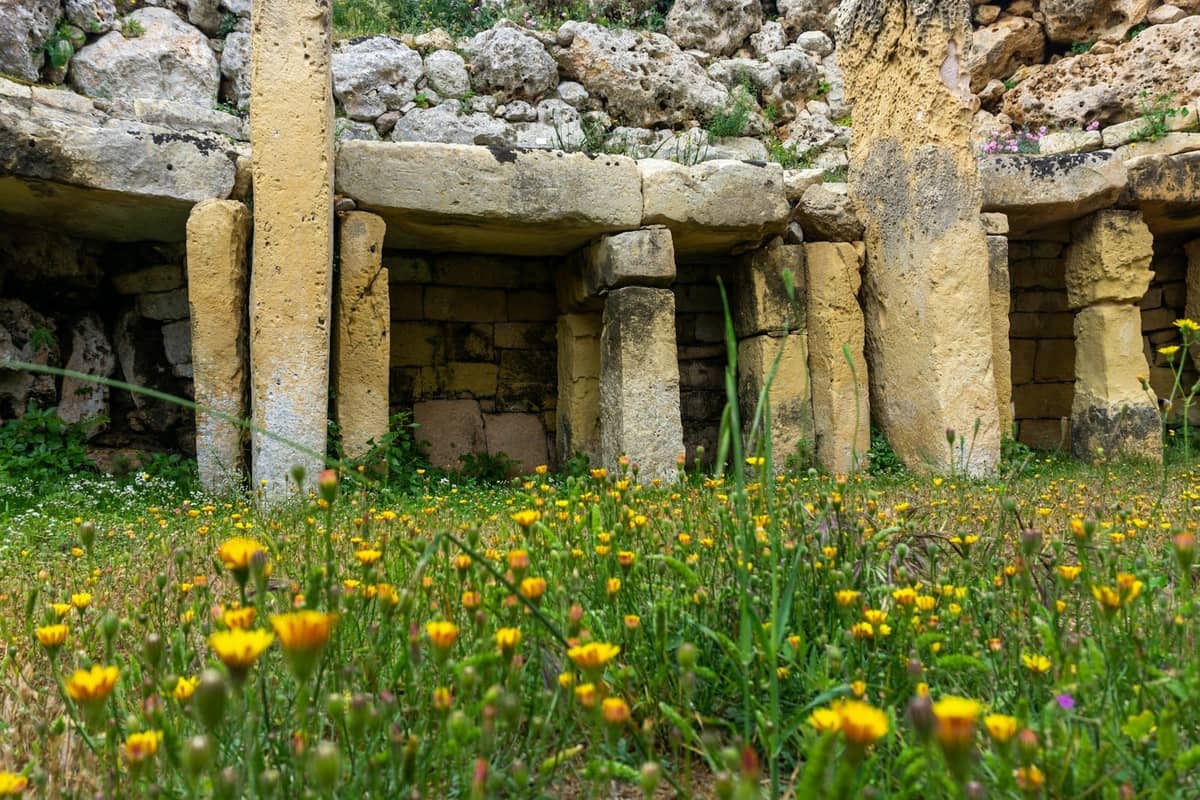
Archaeological evidence at the temples includes carved spirals, pitted decorations, animal bones consistent with ritual sacrifice, and fragments of large stone figures (the so-called 'Fat Lady' statuary found at Tarxien). The orientation of multiple temples toward solar events suggests sophisticated astronomical knowledge, though the exact nature of the rituals performed remains a matter of active academic debate.
The original artefacts — including the famous figurines and decorated altar stones — were removed long ago and are now held at the National Museum of Archaeology in Valletta's Republic Street. What visitors see at the temple sites are largely original megaliths in situ, with replica carvings where originals have been moved. For the full picture, combining a site visit with the Valletta museum is strongly recommended. The museum is centrally located and easy to reach if you're exploring things to do in Valletta.
One of the genuinely unresolved questions is why the temple-building civilisation disappeared so abruptly around 2500 BC. Theories include climate change, crop failure, disease, or social collapse, but no clear evidence definitively supports any single explanation. The island was subsequently repopulated by a Bronze Age culture with no apparent connection to the temple builders. This discontinuity makes Malta's prehistoric period distinctly different from most European archaeological narratives.
✨ Pro tip
The interpretive centres at Ħaġar Qim and Ġgantija show scale models and replica artefacts that help enormously before you walk the sites. Spend 15–20 minutes in the museum section first. Visitors who skip it often find the temples themselves harder to read without that context.
Combining Temple Visits With the Rest of Malta
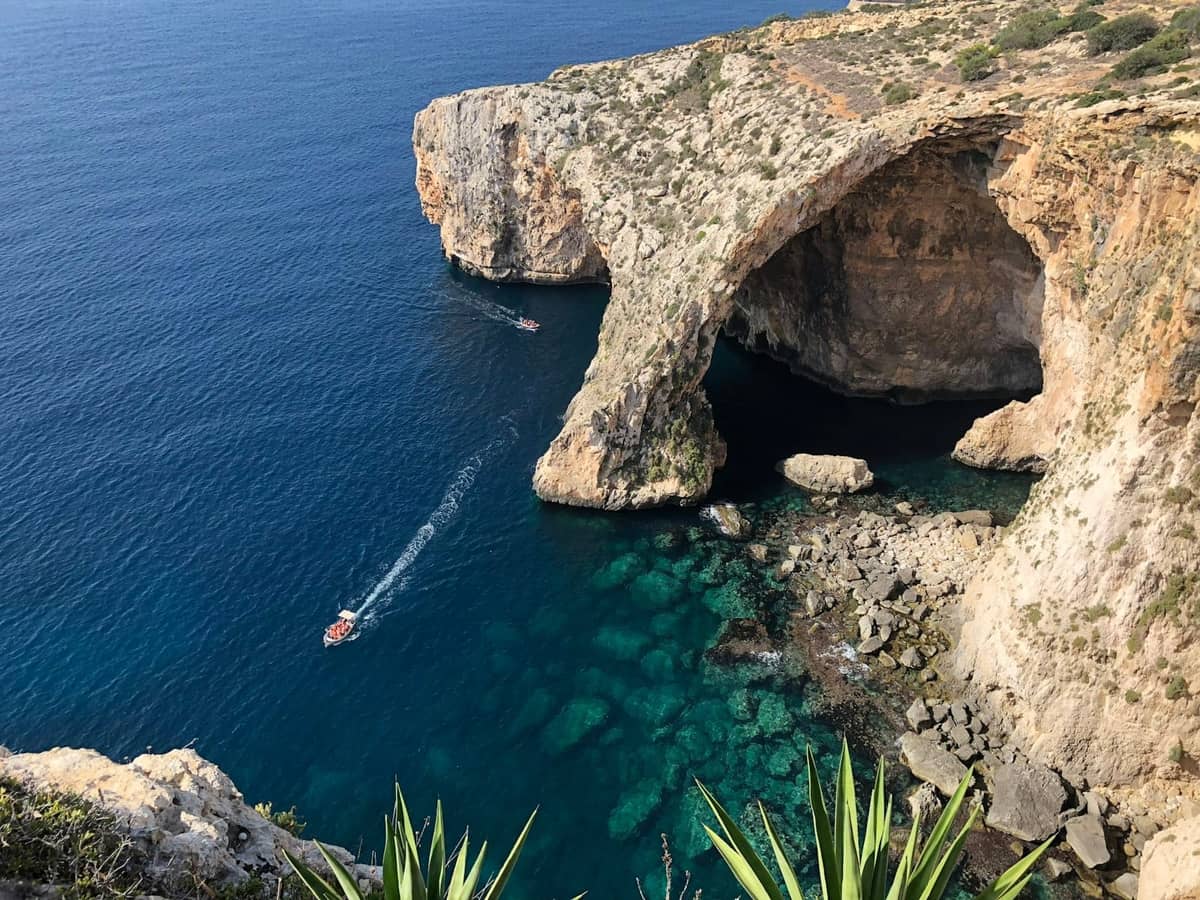
The ancient temples slot naturally into a broader Malta itinerary. If you're working from a 3-day Malta itinerary, dedicate one morning to Ħaġar Qim and Mnajdra, and spend the afternoon at the Blue Grotto or the nearby cliffs at Dingli Cliffs. The archaeological sites in the south of Malta pair well geographically since you're already away from the capital.
For Gozo, Ġgantija combines well with the island's other highlights on the same day: the Citadella in Victoria, the salt pans near Marsalforn, and the coastline around Dwejra. Gozo is compact enough to cover considerable ground in a day, though an overnight stay rewards the effort. See the full Gozo travel guide for a complete breakdown.
FAQ
Which Malta temple should I visit if I only have time for one?
Ħaġar Qim and Mnajdra together count as one half-day trip and offer the best combination of accessibility, presentation, and spectacle. If you're on Gozo, Ġgantija is the standout. The Ħal Saflieni Hypogeum is in a category of its own — if you've booked ahead, prioritise it above any surface temple.
How far in advance do I need to book the Ħal Saflieni Hypogeum?
Realistically, four to eight weeks in advance during April to October. In off-peak months (November to March), two to three weeks is usually sufficient, but earlier is always safer. Book through heritagemalta.mt.
Are the Malta temples suitable for children?
Most surface temples are suitable for children of all ages. The Ħal Saflieni Hypogeum has a minimum age of 6 and requires children to stay with the group on a guided tour — it involves narrow passages and low lighting. Ħaġar Qim and Ġgantija have flat, walkable paths that work well for families.
Is there shade at the temple sites?
Ħaġar Qim and Mnajdra are covered by large protective canopies, which provide partial shade, but the surrounding paths and the approach from the car park are fully exposed. Ġgantija has limited natural shade. Bring sun protection and water regardless of season, and be particularly cautious in July and August.
Can I visit multiple temple sites on the same day?
Yes, with planning. Ħaġar Qim and Mnajdra are easy to combine in a single morning. Tarxien and the Hypogeum (if booked) can fill an afternoon. Ġgantija requires a separate Gozo day trip. Skorba and Ta' Ħaġrat are in Mġarr in northern Malta and can be added if you're passing through, though they offer less interpretive infrastructure.
Tickets & tours
Live prices and dates from our booking partner. If you book, we may earn a commission at no extra cost to you.
Planning a trip? Discover personalized activities with the Nomado app.