Ħaġar Qim Temples: Malta's Ancient Wonder Above the Sea
Standing on a limestone ridge in southern Malta, Ħaġar Qim is a UNESCO-listed megalithic temple complex dating to around 3600–3200 BC, predating both Stonehenge and the Egyptian pyramids. The site sits just 500 metres from the Mnajdra temples and looks out over the Mediterranean toward the uninhabited islet of Filfla. This guide covers everything from the archaeology and architecture to transit, timing, and what most visitors miss.
Quick Facts
- Location
- Limestone ridge near Qrendi, southern Malta; approx. 2 km southwest of Qrendi village
- Getting There
- Bus from Valletta to Qrendi area; on-site parking available for drivers
- Time Needed
- 1.5–2.5 hours (include combined visit with Mnajdra, 500 m away)
- Cost
- Paid entry; combined ticket with Mnajdra Temples available at visitor centre
- Best for
- History enthusiasts, photographers, UNESCO site collectors, slow travellers
- Official website
- heritagemalta.org
What Ħaġar Qim Actually Is
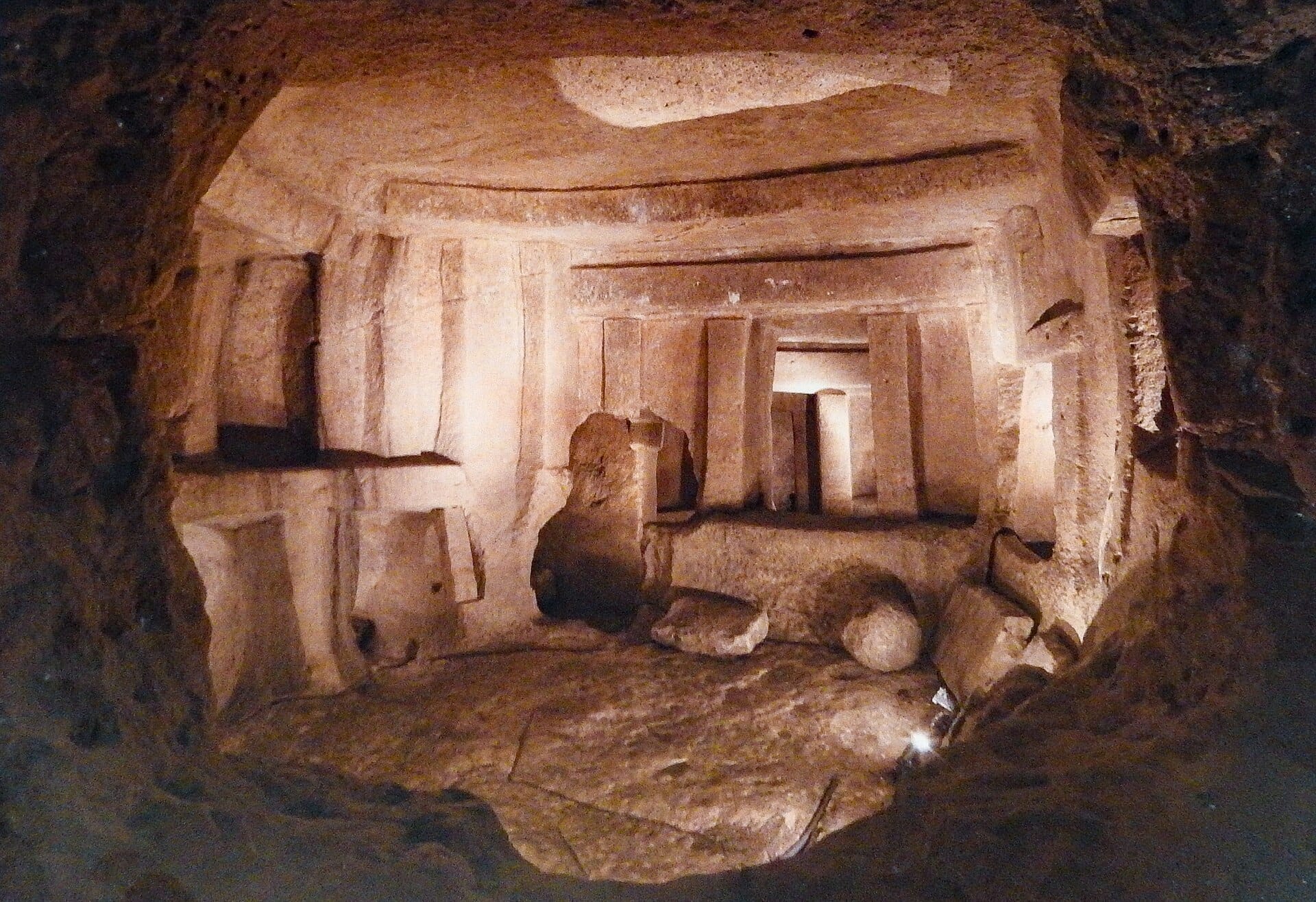
Ħaġar Qim (pronounced roughly 'hah-jar eem') translates from Maltese as 'Standing Stones' or 'Worshipping Stones', and both readings feel appropriate once you're standing inside the complex. Built during the Ġgantija phase between approximately 3600 and 3200 BC, these are among the oldest free-standing structures on the planet, predating Stonehenge by over a thousand years and the Great Pyramid of Giza by a millennium. That's not marketing hyperbole. It's a genuinely staggering timeline to absorb while standing in front of limestone megaliths that still hold their shape.
The temples are constructed primarily from globigerina limestone, a warm, honey-coloured stone that is softer and more workable than the coralline limestone used at other Maltese sites. This choice gave ancient builders more flexibility in shaping intricate curved walls and decorative elements, but it also made the structures more vulnerable to erosion. To address this, Heritage Malta installed large protective tent shelters over parts of the complex in 2008. These shelters are architecturally neutral but practically essential. Without them, the carvings and wall faces would continue deteriorating from wind, rain, and salt spray.
ℹ️ Good to know
Ħaġar Qim is a UNESCO World Heritage Site, inscribed in 1992 as part of the Megalithic Temples of Malta. The listing covers six temple sites across Malta and Gozo, making this site part of a broader ancient landscape worth understanding before you visit.
The Setting: Landscape as Context
The site sits on a low limestone ridge in the Qrendi area of southern Malta, with open Mediterranean views to the south and the flat agricultural interior of the island stretching behind you. On a clear day, Filfla, a small uninhabited islet about 2 kilometres offshore, is clearly visible. The ridge creates a sense of elevation and exposure that feels significant. Whether or not the ancient builders chose this position for ritual reasons related to sea sightlines, it creates a context very different from visiting a museum exhibit.
The surrounding landscape is largely scrubland and low fields, with the limestone bedrock breaking through in places. In spring (March to May), the area around the temples is covered in wildflowers, including poppies and sea squill, which add colour and soften the austerity of the stone. In July and August, the same land turns dry and pale gold. Both versions have visual appeal, but the spring version is easier to photograph and more comfortable to walk through.
Ħaġar Qim sits just 500 metres from the Mnajdra Temples, and the two sites are connected by a short coastal path. Most visitors combine them in a single visit using the joint ticket. Mnajdra is considered the better-preserved of the two and has a slightly different architectural character, so skipping one to save time is a genuine loss. Budget at least 45 minutes at each site.
Tickets & tours
Hand-picked options from our booking partner. Prices are indicative; availability and final rates are confirmed when you complete your booking.
Gozo full-fay tour including Ggantija Temples
From 80 €Instant confirmationFree cancellationCity Sightseeing hop-on hop-off bus tour of Gozo
From 20 €Instant confirmationFree cancellationThe Malta Experience Audio-Visual Show and La Sacra Infermeria Tour
From 20 €Instant confirmationFree cancellationLuggage Storage in Malta
From 6 €Instant confirmationFree cancellation
Inside the Temples: What You'll See
The Ħaġar Qim complex consists of one main temple and several additional structures, enclosed within a large outer wall made of massive limestone slabs. Some of the individual stones weigh several tonnes, and the largest single stone on the site measures roughly 5.2 metres high. The visual impression is less of a tidy ruin and more of a landscape of enormous tilted and upright stones, some still clearly forming walls and doorways, others collapsed into arrangements that take a moment to read.
Inside the main temple, the classic trefoil plan (a series of curved apses arranged around a central corridor) becomes legible once you're oriented. Altars, pitting holes, and niches are still visible in the stone. Researchers have identified specific astronomical alignments: at the summer solstice sunrise, light enters through one of the doorways and illuminates a specific point in the chamber. This kind of intentional solar alignment appears at multiple Maltese temples, suggesting sophisticated spatial planning by a culture we still understand only partially.
The visitor centre at the entrance houses replica artefacts (the originals are in the National Museum of Archaeology in Valletta) and explanatory panels that give historical context before you enter the site. Don't skip it. Fifteen minutes in the visitor centre transforms what might otherwise be a pleasant but puzzling walk among big stones into a structured experience with genuine depth.
💡 Local tip
The famous 'Fat Lady' figurines and other artefacts excavated at Ħaġar Qim are displayed at the National Museum of Archaeology in Valletta, not on-site. If the ancient Maltese culture interests you, plan that visit separately.
Best Time to Visit and How the Experience Changes
Opening hours follow a seasonal schedule. From April 1 to September 30, the site is open 9:00 AM to 6:00 PM, with last admission at 5:30 PM. From October 1 to March 31, hours are 9:00 AM to 5:00 PM, with last admission at 4:30 PM. Verify current hours with Heritage Malta before you go, as schedules can change.
Arriving within the first hour of opening gives you the best combination of light and quiet. The low morning sun hits the globigerina limestone at an angle that brings out the texture and colour in a way that flat midday light completely flattens. By 10:30 AM in summer, the site starts to fill with tour groups who arrive from Valletta and the resort areas. Midday in July or August is genuinely unpleasant: the ridge is fully exposed, there is almost no shade outside the protective shelters, and surface temperatures on the stone make the experience more endurance test than contemplation.
Late afternoon, around 4:00 PM, is the second-best window, particularly in spring or autumn. The tour buses have typically departed, the light is warm again, and the walk down to Mnajdra afterward feels comfortable rather than punishing. In winter, the site is quieter still, the air is clear, and the colours in the surrounding landscape are greener. Rain is possible between October and March, and the uneven terrain becomes slippery when wet.
For a broader picture of when to visit Malta to get the most from sites like this one, the best time to visit Malta guide breaks down the trade-offs across all seasons.
Getting There and Getting Around On-Site
The Ħaġar Qim and Mnajdra Archaeological Park is located near Qrendi in southern Malta. By car, it's roughly a 30-minute drive from Valletta, with a dedicated car park at the site. Public buses connect Valletta with Qrendi, though the timetable and route numbers are worth checking through Malta Public Transport before you travel, as rural routes can have limited frequency. Ride-hailing apps (Bolt and Uber both operate in Malta) are a practical alternative for those without a rental car, especially when combining the temples with other southern Malta stops like the Blue Grotto.
The Blue Grotto sea caves are roughly 2 kilometres from the temples and are commonly combined with a Ħaġar Qim visit on the same half-day. The two don't obviously go together thematically, but they share a geographic cluster in southern Malta that makes the pairing efficient.
On-site, the terrain is uneven limestone bedrock and compacted gravel paths. Closed-toe shoes with grip are strongly recommended. The protective shelters over parts of the temple provide some shade, but large sections of the exterior walk to Mnajdra are fully exposed. Bring water, sunscreen, and a hat if you're visiting between May and October. The site is not easily navigable in a wheelchair due to the natural ground surface, though the visitor centre is accessible. Contact Heritage Malta in advance if accessibility is a concern.
Photography and What the Camera Captures (and Misses)
The combination of warm limestone, sea backdrop, and ancient scale makes Ħaġar Qim genuinely photogenic. Early morning light from the east catches the face of the outer walls and creates strong shadow contrast in the textured stone. The Filfla islet visible on the southern horizon works well as a background element when shooting from the ridge above the entrance path.
The protective shelters do complicate interior photography. The white fabric roof creates a diffused light that's not ideal for showing stone detail, and the structural poles occasionally intrude into frame. Working with this rather than against it, some of the most interesting interior shots focus on the doorway alignments and use the shelter's shadow line to frame the composition.
What photographs tend not to capture: the scale of the largest stones relative to a human figure, the smell of dry Mediterranean scrubland and salt air that characterises the walk between the two temple sites, and the specific quality of silence the site holds on a quiet morning when the tour groups haven't yet arrived. Some of what makes Ħaġar Qim affecting is simply being there, which is not a reason to skip photography but is a reason not to experience the site entirely through a lens.
Honesty: Who This Suits and Who It Doesn't
If ancient history and archaeology genuinely interest you, Ħaġar Qim is one of the most significant sites in the Mediterranean and among the most important in the world. The same applies if you're working through Malta's full UNESCO story alongside sites like the Ġgantija Temples on Gozo or the Ħal Saflieni Hypogeum in Paola. The Hypogeum in particular represents the subterranean counterpart to the above-ground temple tradition and is genuinely unmissable for anyone serious about this period.
Visitors who find old stone without interpretation boards slow-going may struggle here. The site provides context through its visitor centre, but the temples themselves don't have in-situ labelling that hand-holds you through the space. Some people complete the walk in 25 minutes and leave underwhelmed. This usually reflects a mismatch in expectation rather than a failing of the site.
Young children can find the site engaging if framed correctly (these are older than the pyramids, and the builders had no metal tools), but there's nothing interactive on-site and the terrain is not stroller-friendly. Visitors with significant mobility limitations should be aware that the path between Ħaġar Qim and Mnajdra is a natural cliff-edge track, not a paved route.
⚠️ What to skip
Admission prices and opening hours are subject to change. Always confirm current fees and schedules directly with Heritage Malta (heritagemalta.org) before visiting, especially around public holidays.
Insider Tips
- Book a combined ticket with Mnajdra at the visitor centre entrance rather than buying separately. The walk between the two sites takes about 10–15 minutes along the coastal path and is one of the more scenic short walks in southern Malta.
- The summer solstice solar alignment at Ħaġar Qim is real and documented: if you visit in mid-June, the sunrise alignment through the main doorway is worth timing your arrival around.
- The visitor centre exhibition includes a 3D film about the temples and their history. It runs on a loop and takes roughly 20 minutes. Go before entering the site rather than after, as it provides the interpretive context that makes the stones readable.
- If you're driving, the car park fills quickly on weekend mornings from May through September. Arrive before 9:30 AM or after 2:00 PM to avoid the midday congestion when multiple tour coaches share the same small lot.
- The globigerina limestone used at Ħaġar Qim is noticeably warmer in colour than the grey coralline limestone used elsewhere. In late afternoon light, the outer walls turn almost orange, which is significantly more striking than the flat midday version most visitors see.
Who Is Ħaġar Qim Temples For?
- History and archaeology enthusiasts looking for genuine depth, not a curated theme-park version of the past
- Photographers drawn to ancient stone, sea landscapes, and warm Mediterranean light
- UNESCO site collectors working through Malta's full megalithic heritage trail
- Slow travellers who want a half-day that combines ruins, coastal scenery, and a nearby natural attraction like the Blue Grotto
- Couples or solo travellers who appreciate quiet and atmosphere over activity and entertainment
Nearby Attractions
Combine your visit with:
- Blue Grotto
The Blue Grotto is a cluster of sea caves cut into Malta's southern limestone cliffs, accessible only by small traditional boats. The vivid phosphorescent blues inside are striking in morning light, but the experience depends heavily on sea conditions and timing.
- Dingli Cliffs
Standing at 253 metres above the Mediterranean, Dingli Cliffs form the most dramatic natural viewpoint in Malta. The clifftop road offers sweeping open-sea panoramas, a centuries-old limestone chapel at the edge, and a sunset that turns the rock face deep amber. No admission, no crowds (if you time it right), and no guide required.
- Għajn Tuffieħa Bay
Għajn Tuffieħa Bay sits on Malta's northwest coast, separated from the road by more than 200 steep steps — a deliberate filter that keeps it quieter than most Maltese beaches. The reward is a wedge of reddish-orange sand framed by green clay cliffs, a 17th-century watchtower on the headland, and water that shifts from pale aquamarine to deep cobalt by midday.
- Għar Dalam
Għar Dalam is a 144-metre cave in Birżebbuġa that preserves the bones of dwarf elephants, hippos, and bears from Malta's prehistoric past. The attached museum adds scientific depth to the raw geology of the cave itself. It is a serious natural history site, not a polished tourist spectacle.