Għajn Tuffieħa Bay: Malta's Most Rewarding Beach Climb
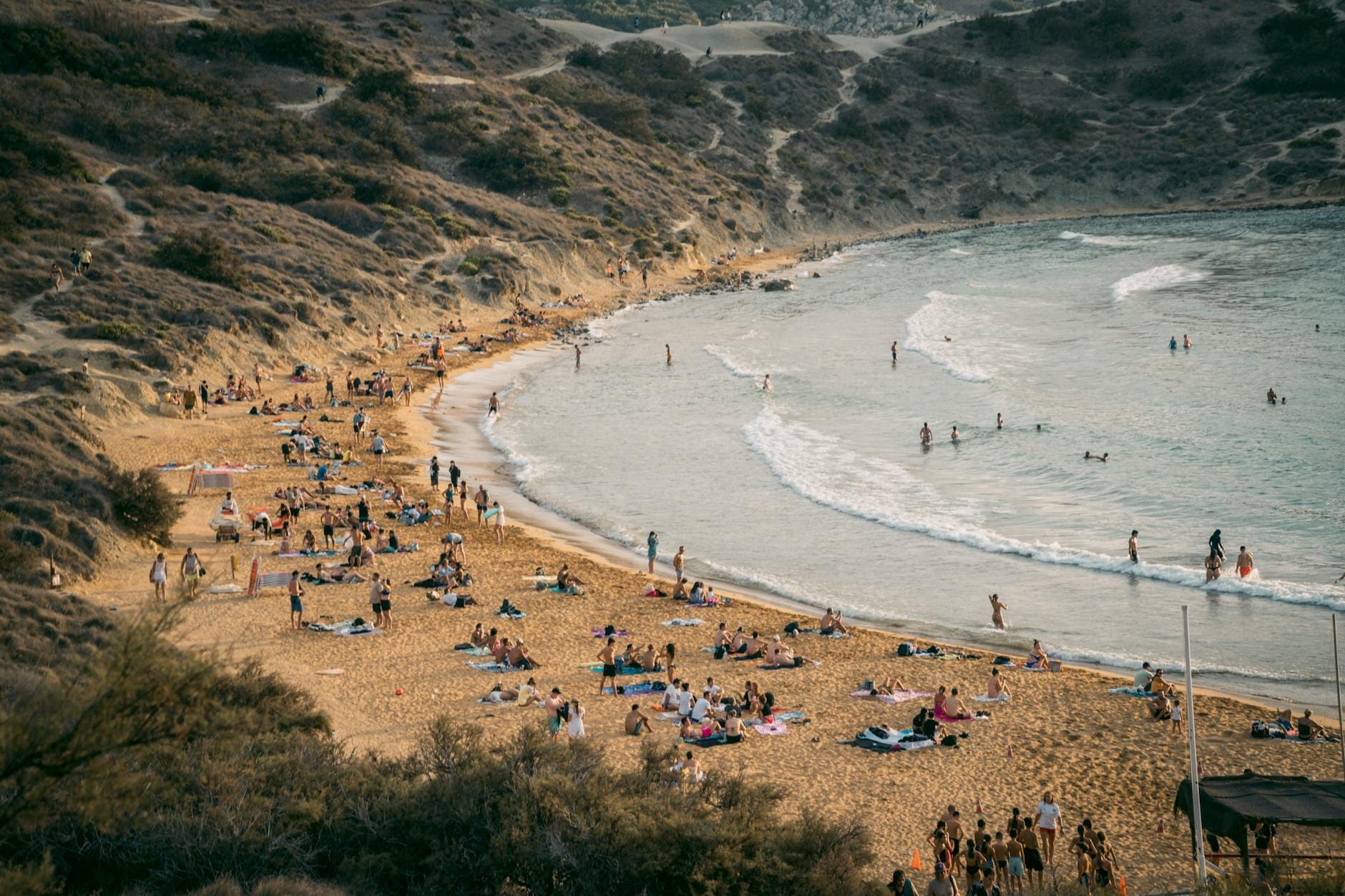
Għajn Tuffieħa Bay sits on Malta's northwest coast, separated from the road by more than 200 steep steps — a deliberate filter that keeps it quieter than most Maltese beaches. The reward is a wedge of reddish-orange sand framed by green clay cliffs, a 17th-century watchtower on the headland, and water that shifts from pale aquamarine to deep cobalt by midday.
Quick Facts
- Location
- Northwest Malta, near Mġarr and Manikata village
- Getting There
- Malta Public Transport buses serve the Għajn Tuffieħa area; short walk plus 200+ steps to beach
- Time Needed
- 2–4 hours for a beach visit; longer if hiking to the watchtower
- Cost
- Free entry; sunbed/umbrella hire available seasonally
- Best for
- Scenic beaches, swimming, coastal walks, photography
- Official website
- www.visitmalta.com/en/attraction/ghajn-tuffieha-bay
What Għajn Tuffieħa Bay Actually Is
Għajn Tuffieħa Bay — pronounced roughly 'Ayn Tuf-fee-ha' — translates from Maltese as 'Apple's Eye', a name that feels apt once you see the beach from above: a neat oval of reddish sand cupped between high clay bluffs, framed on one side by a centuries-old watchtower. The bay sits on Malta's northwest coast in the Mġarr district, tucked between the more commercial Golden Bay to the north and the much smaller Qarraba Bay to the south.
The beach itself measures roughly 150 metres long and 25 metres wide at its broadest, tapering into a narrower strip of sand and cobble at its southern end. What sets it apart from most Maltese beaches is the combination of that distinctive terracotta-coloured sand — the result of iron-rich clay eroding from the surrounding hills — and the steep descent required to reach it. There is no road to the beach. Every visitor takes the same 200-plus steps down from the clifftop parking area, which means crowds self-select. If you can't or won't make the climb, you won't be here.
💡 Local tip
The steps are uneven and can be slippery after rain. Wear closed shoes for the descent and carry any gear you need — sunbed hire is available seasonally at the bottom, but there's no kiosk for drinks or sunscreen.
The Experience: Morning vs. Afternoon
Arrive before 9am in summer and the bay belongs almost entirely to you. The light at this hour comes over the southern cliffs at a low angle, turning the sand a deep amber and throwing long shadows across the water. The sea is typically flat and glassy in the early morning, and you can hear it lapping against the rocks at the bay's edges rather than being swallowed by crowd noise.
By 11am in July and August, the beach fills noticeably, though it never quite reaches the shoulder-to-shoulder density of Golden Bay on a Saturday afternoon. The water is safest and clearest for swimming in the middle section of the bay, where the sandy bottom extends furthest before giving way to rock. The colour of the sea shifts dramatically through the day: pale green-blue in shallow morning light, a vivid cobalt by noon when the sun is overhead.
Late afternoon — after 4pm — brings a second wave of visitors escaping the peak heat, but it also brings some of the best light for photography. The western aspect of the bay means the cliffs catch the warm pre-sunset glow, and the watchtower silhouette above becomes particularly striking. If you time it right, the last hour before sunset is when this place is at its most photogenic.
⚠️ What to skip
Għajn Tuffieħa can get rough surf during autumn and winter when northwest swells push in. The beach is used by surfers and bodyboarders in these conditions, but swimming becomes hazardous. Check sea conditions before entering the water outside summer months.
Tickets & tours
Hand-picked options from our booking partner. Prices are indicative; availability and final rates are confirmed when you complete your booking.
City Sightseeing hop-on hop-off bus tour of Gozo
From 20 €Instant confirmationFree cancellationThe Malta Experience Audio-Visual Show and La Sacra Infermeria Tour
From 20 €Instant confirmationFree cancellationLuggage Storage in Malta
From 6 €Instant confirmationFree cancellation6-day heritage and attractions pass in Malta
From 80 €Instant confirmationFree cancellation
History and Architecture on the Headland
The most visible historical feature at Għajn Tuffieħa is the coastal watchtower that stands on the northern headland. Known as Għajn Tuffieħa Tower or, alternatively, Għajn Mixkuka Tower, it was built in the 17th century during the rule of the Knights of St. John, who constructed a network of such towers around Malta's coastline to provide early warning against Ottoman raids and corsair attacks. The tower is reachable on foot via a path from the top of the steps, and the walk up takes around 10 to 15 minutes.
The tower itself is squat and solid — a simple circular form designed for practicality rather than grandeur, typical of the coastal watchtower program that eventually included better-known structures like the Red Tower near Mellieħa. From the headland, you get a clear view down the full length of the beach and north along the rugged coastline toward Golden Bay. For a broader understanding of the Knights' military legacy across Malta, the Knights of Malta history guide provides useful context.
The bay is also sometimes listed under the name 'Riviera Bay', a label that stuck from the British colonial period when Maltese authorities and tourism promoters borrowed European resort terminology. This occasionally causes confusion when searching for the beach online or on older maps. The official name remains Għajn Tuffieħa Bay.
Wildlife and Natural Environment
The area around Għajn Tuffieħa is ecologically unusual by Maltese standards. The clay slopes above the bay support more vegetation than much of Malta's drier interior, and the surrounding fields and garigue scrubland are home to Mediterranean chameleons, one of Malta's most remarkable and least-expected residents. If you walk the path toward the watchtower or along the cliff edges, look carefully at low shrubs and rocky outcrops in the early morning or late afternoon when they're active. Spotting one requires patience and a slow pace.
The sea here is generally clean and the bay's relatively limited visitor numbers compared to busier beaches mean the water stays visibly clear through most of the season. Rocky outcrops at the northern and southern ends of the beach are worth exploring with a snorkel, where you'll find sea urchins, small fish, and occasional octopus tucked into crevices.
Getting There and Practical Logistics
Malta's public bus network connects to the Għajn Tuffieħa area from Valletta and other major points. From the bus stop, the clifftop car park and the top of the beach steps are a short walk. If you're driving, parking at the top is straightforward in off-peak months but can fill quickly on summer weekends. For broader guidance on getting around the island, the getting around Malta guide covers bus routes, taxis, and car hire options in useful detail.
The descent to the beach takes most people 5 to 10 minutes at a steady pace. Coming back up in full sun after a swim is more demanding — allow extra time and carry water. The steps are not wheelchair accessible, and the beach is not reachable with a stroller. This is worth knowing before making the journey with young children or anyone with mobility limitations.
If you're combining Għajn Tuffieħa with other northwest Malta highlights, Golden Bay is directly adjacent and has more facilities including a hotel, sunbed rental, and a café. The two beaches are connected by a clifftop path and make a natural pairing for a half-day on the coast.
ℹ️ Good to know
The beach has no freshwater showers or toilets at the bottom. Basic facilities are available at the clifftop level near the car park in summer. Plan accordingly before making the descent.
Photography: Where to Stand and When
The best overview of the bay comes from the clifftop before you descend. There's a natural viewpoint just past the top of the steps where the full arc of the beach is visible, with the watchtower in the upper left frame and the promontory curving into the sea on the right. This is the shot that most travel images of Għajn Tuffieħa use, and it works best in the two hours before sunset when the light is warm and directional.
For wider coastal context, the clifftop walk between Għajn Tuffieħa and Golden Bay offers views north and south along some of Malta's most photogenic shoreline. If you're specifically looking for the island's best vantage points, the best views in Malta guide covers the northwest coast alongside other scenic lookouts island-wide.
Who Should Skip This Beach
Travelers with mobility limitations, anyone travelling with a stroller, or those expecting beach club-style service will find Għajn Tuffieħa frustrating. The steps are the central fact of visiting this place. If they're a dealbreaker, Golden Bay next door offers similar water quality with flat, easy access and significantly more infrastructure. If you're looking for absolute seclusion, this beach is quieter than most Maltese options, but it's not isolated — on busy summer days, it still draws a crowd.
Insider Tips
- The clifftop path between Għajn Tuffieħa and Golden Bay takes about 20 minutes to walk and gives you access to both beaches plus open sea views. Most visitors don't bother with it — it's one of the more rewarding short coastal walks in northwest Malta.
- Mediterranean chameleons are genuinely present in the scrubland above the bay. Walk slowly and scan low shrubs between the car park and the watchtower path, particularly in cooler morning hours. They're slow-moving and well-camouflaged but not invisible once your eye adjusts.
- The southern end of the beach, where the sand narrows to a cobble strip, is almost always less crowded than the main stretch. The swimming is slightly less straightforward but still good, and you'll typically have more space.
- Autumn swells make the bay genuinely interesting for bodyboarding and wave-watching, even if swimming isn't safe. The beach takes on a completely different character in October and November, with dramatic northwest waves and almost no one else around.
- Bring more water than you think you need. The climb back up the steps in summer heat is significantly more effort than the descent, and there's no refreshment point at the beach itself.
Who Is Għajn Tuffieħa Bay For?
- Swimmers and snorkelers who want cleaner, less crowded water than Malta's busiest beaches
- Photographers targeting coastal landscapes, especially in late afternoon light
- History-minded visitors combining the beach with the 17th-century Knights' watchtower
- Wildlife watchers hoping to spot Mediterranean chameleons in the surrounding scrubland
- Couples and independent travellers happy to earn their beach with a proper clifftop descent
Nearby Attractions
Combine your visit with:
- Blue Grotto
The Blue Grotto is a cluster of sea caves cut into Malta's southern limestone cliffs, accessible only by small traditional boats. The vivid phosphorescent blues inside are striking in morning light, but the experience depends heavily on sea conditions and timing.
- Dingli Cliffs
Standing at 253 metres above the Mediterranean, Dingli Cliffs form the most dramatic natural viewpoint in Malta. The clifftop road offers sweeping open-sea panoramas, a centuries-old limestone chapel at the edge, and a sunset that turns the rock face deep amber. No admission, no crowds (if you time it right), and no guide required.
- Għar Dalam
Għar Dalam is a 144-metre cave in Birżebbuġa that preserves the bones of dwarf elephants, hippos, and bears from Malta's prehistoric past. The attached museum adds scientific depth to the raw geology of the cave itself. It is a serious natural history site, not a polished tourist spectacle.
- Għar Lapsi
Għar Lapsi is a raw, unspoiled cove on Malta's southern coast, where a natural sea cave opens directly into clear, shallow water. Free to access and easy to reach by car, it draws swimmers, snorkellers, and freedivers who want calm water and no crowds.