Blue Grotto, Malta: What the Boat Tour Is Actually Like
The Blue Grotto is a cluster of sea caves cut into Malta's southern limestone cliffs, accessible only by small traditional boats. The vivid phosphorescent blues inside are striking in morning light, but the experience depends heavily on sea conditions and timing.
Quick Facts
- Location
- Wied iż-Żurrieq, limits of Qrendi, southern Malta
- Getting There
- Drive or taxi to Wied iż-Żurrieq jetty; bus to Wied iż-Żurrieq (around 1 hour from Valletta)
- Time Needed
- 1.5 to 2.5 hours including wait time and the 20-25 min boat tour
- Cost
- Approximately €10 per adult for the boat tour; viewpoint access is free
- Best for
- Coastal scenery, photography, geology enthusiasts, and divers
What Is the Blue Grotto?
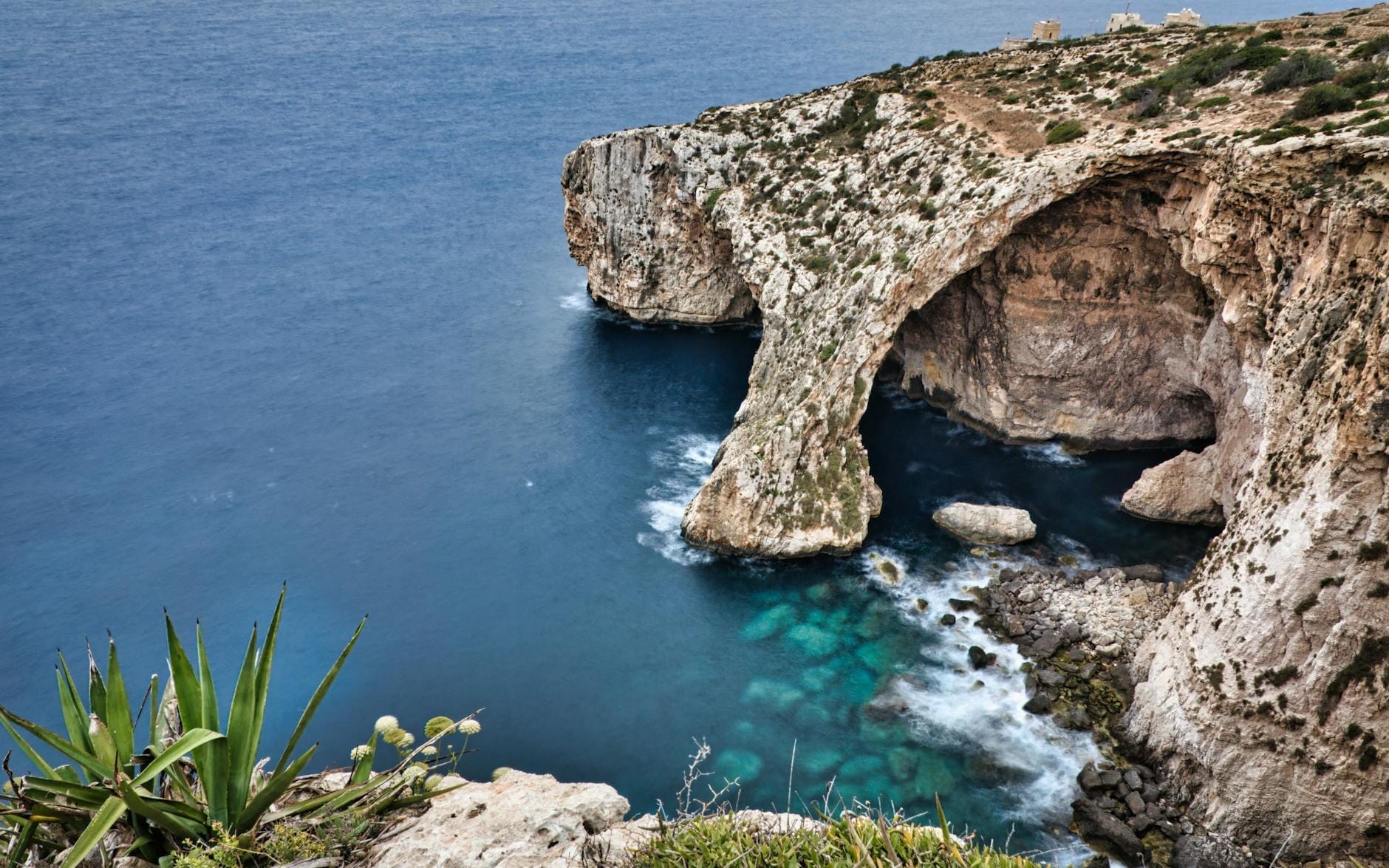
The Blue Grotto, known in Maltese as Il-Ħnejja (The Arch) or Taħt il-Ħnejja, is a series of sea caves cut into the sheer limestone cliffs of Malta's southern coastline near Wied iż-Żurrieq. The main arch rises over 30 metres above the waterline, and the principal cave descends roughly 50 metres into the rock face. What sets it apart from ordinary sea caves is the quality of reflected light: phosphorescent algae and the pale limestone floor beneath the water combine to produce an otherworldly blue-green glow that shifts with the angle of sunlight throughout the day.
The site sits directly opposite Filfla, a small uninhabited islet that served as a bombing target during British military exercises and is now a protected nature reserve. That combination of geology, light, and open southern sea gives the Blue Grotto a visual quality unlike anything else on the main island of Malta.
ℹ️ Good to know
The name 'Blue Grotto' was reportedly given by a British soldier who compared it to Capri's famous Grotta Azzurra. The Maltese name, Il-Ħnejja, simply refers to the large arch formation that defines the cave's entrance.
The Boat Tour: What to Expect
The only way to enter the caves is by boat. Traditional low-hulled luzzu vessels, operated by the Blue Grotto Boat Service (established 1968, when boat licenses were formally introduced), depart from the small jetty at the base of Wied iż-Żurrieq. Each tour takes approximately 20 to 25 minutes and passes through several cave openings along the cliff face. You sit low in the boat, close to the water, which means the scale of the arch and cave walls becomes more impressive the moment you're actually inside.
Boats operate daily from 09:00 to 16:30, weather permitting, year-round. In practice, the April to October window offers the most reliable conditions. During winter months and after storms, tours are frequently cancelled with no advance notice. If you arrive and the sea is slightly rough, operators make the call on-site. No online booking system currently exists: you pay at the ticket booth (approximately €10 per adult) and wait your turn.
The wait can run anywhere from a few minutes in the off-season to 40 minutes or more on busy summer mornings. The queue forms at the jetty, which has limited shade. Bring water. The descent from the car park area to the jetty involves a steep path and some uneven stone steps, which makes the site unsuitable for wheelchair users and challenging for anyone with significant mobility limitations.
⚠️ What to skip
Boat tours can be cancelled at short notice due to sea conditions, even on days that appear calm from above. Always check with the boat operators at the jetty before committing your day to the trip, especially in autumn and winter.
Tickets & tours
Hand-picked options from our booking partner. Prices are indicative; availability and final rates are confirmed when you complete your booking.
Roundtrip ferry to Comino Blue Lagoon with Gozo option from Marfa
From 15 €Instant confirmationFree cancellationJet ski safari tour in Northern Island with Blue Lagoon
From 200 €Instant confirmationFree cancellationMalta and Blue Lagoon catamaran day trip with buffet lunch and drinks
From 89 €Instant confirmationFull-day gulet cruise around Malta with Blue Lagoon and lunch
From 65 €Instant confirmationFree cancellation
Light, Timing, and Photography
The Blue Grotto's colour is not constant. It depends almost entirely on the angle and intensity of sunlight hitting the water inside the caves. Morning visits, ideally between 09:00 and 11:00, produce the most vivid electric-blue tones as sunlight enters the cave mouths at a low angle and bounces off the seafloor. By midday the light is more direct and vertical, washing out some of the refracted colour. Late afternoon can offer a warmer, more golden quality, but the blue effect is less intense.
For photography, the challenge is contrast: the cave interior is much darker than the sky outside, and smartphone cameras often struggle with the exposure difference. A camera with manual exposure control or RAW shooting gives better results. From the boat, the most dramatic shot is looking back toward the cave mouth as you exit, with the arch framing the open sea and Filfla in the distance.
The clifftop viewpoint above the jetty, accessible from the car park area, provides a broader perspective on the cave system and the surrounding coastline. This viewpoint is free, always accessible, and genuinely worth ten minutes of your time even if you choose not to take the boat.
Historical and Geological Context
The caves are carved into Lower Coralline Limestone, the hardest and oldest of Malta's primary rock types. Wave action over millennia has hollowed out a sequence of chambers and arches along this section of coast. The main cave stands 43 metres high at its peak, making it one of the largest sea cave formations in the Maltese archipelago. The phosphorescent algae that colonise the cave walls and seafloor are responsible for the greenish base colour; the vivid blue comes from sunlight refracting through shallow salt water over a pale limestone bed.
Beyond the cave itself, this stretch of southern Malta has a long maritime history. The Wied iż-Żurrieq inlet was used by fishermen for generations, and the valley (wied) leading down to it remains a quiet example of Malta's rural interior. The site attracted international attention when it appeared as a filming location in the 2004 epic film Troy, though the caves themselves were used more for their atmospheric quality than as a recognisable set piece.
Visitors interested in Malta's deeper geological and prehistoric history may find it worth pairing a Blue Grotto trip with a stop at the Ħaġar Qim Temples, which sit on the same southern ridge roughly 3 kilometres to the northwest. The temples offer a sharp contrast in texture and age: rough Globigerina limestone versus the sea-carved caves below.
Beyond the Boat: Diving and Snorkelling
The waters around the Blue Grotto are popular with scuba divers, and the surrounding area has several accessible entry points for snorkellers. The cave walls drop sharply below the waterline, and the light effects that draw photographers above the surface are even more striking when viewed from underwater. Visibility in this part of Malta's southern coast is typically excellent, often exceeding 20 metres on calm days.
Experienced divers often combine a Blue Grotto visit with a trip to the Um El Faroud wreck, a decommissioned Libyan tanker sunk deliberately in 1998 to create an artificial reef, located a short distance offshore. For a broader look at Malta's underwater world, the Malta diving guide covers the best sites island-wide.
Getting There and Practical Logistics
Wied iż-Żurrieq is in the far south of Malta, roughly a 30 to 40-minute drive from Valletta and 20 minutes from Marsaxlokk. There is a car park at the top of the valley, near the cluster of souvenir shops and restaurants. The road down to the jetty is not walkable for most visitors; you park above and descend on foot via the steep path.
Public bus connections are limited. Malta's bus network does not serve the jetty directly; the closest you can get by bus is Iż-Żurrieq village, from which the cave is a further 2 kilometres. A rental car, taxi, or organised tour is the most practical option. If you are getting around Malta without a car, organised day tours from Valletta and Sliema typically include the Blue Grotto alongside Ħaġar Qim and occasionally Marsaxlokk.
There are a handful of basic restaurants and cafes at the top of the valley, mostly serving Maltese staples and snacks. The food is functional rather than memorable, but useful if you are combining the Blue Grotto with a half-day in the area.
💡 Local tip
Arrive at the jetty by 09:15 to 09:30 if you want morning light and a short queue. The car park fills quickly on summer weekends after 10:00, and the wait for a boat can double in the space of an hour.
Honest Assessment: Is It Worth It?
The Blue Grotto is one of Malta's most photographed attractions, and the photographs do not deceive. On a clear morning with calm water, the colour inside the caves is genuinely remarkable. The 20-minute boat tour goes quickly and the boatmen are efficient, pointing out individual cave formations as you pass through.
That said, the experience has real limitations. The boat is small and low, which means you get no shelter from spray and no comfortable vantage for standing photography. The tour follows a fixed, brief route and does not stop inside the caves. On overcast days, the famous blue colour is largely absent: the cave interior looks grey-green and the effect that justifies the trip simply is not there. Anyone visiting on a cloudy afternoon should adjust expectations accordingly.
Travellers who are primarily seeking beaches may find that destinations like Golden Bay or Għajn Tuffieħa Bay offer more time-for-value, especially in summer. But if coastal geology, caves, or underwater light interests you at all, the Blue Grotto earns its reputation on the right day.
Insider Tips
- Visit on a weekday in May, June, or September for the best combination of reliable light, calm seas, and manageable queues. July and August bring the longest waits and the most unpredictable afternoon winds.
- The viewpoint from the car park area, looking down over the cave arch and out toward Filfla, is entirely free and worth 10 minutes regardless of whether you take the boat. In certain light conditions it produces better photographs than the boat tour itself.
- If the sea looks choppy from above, go to the jetty and ask the operators directly whether tours are running. The surface view can look rougher than conditions actually are, and operators sometimes run tours when casual observers assume they have stopped.
- Bring an extra layer in spring and autumn. The valley funnels sea wind directly onto the jetty and into the boats, and the temperature at water level is several degrees cooler than the car park above.
- The Um El Faroud dive site is accessible from this area and can be combined with a Blue Grotto visit by divers. Contact local dive operators in advance to arrange transport from the same inlet.
Who Is Blue Grotto For?
- Coastal geology and cave enthusiasts who want to understand Malta's limestone landscape at sea level
- Photographers with an interest in natural light effects, particularly those who can arrive early in the morning
- Scuba divers and snorkellers using the broader cove as a base for underwater exploration
- Visitors on a southern Malta day trip that already includes Ħaġar Qim or Marsaxlokk
- Travellers who want a short, contained outdoor experience that takes less than two hours from arrival to departure
Nearby Attractions
Combine your visit with:
- Dingli Cliffs
Standing at 253 metres above the Mediterranean, Dingli Cliffs form the most dramatic natural viewpoint in Malta. The clifftop road offers sweeping open-sea panoramas, a centuries-old limestone chapel at the edge, and a sunset that turns the rock face deep amber. No admission, no crowds (if you time it right), and no guide required.
- Għajn Tuffieħa Bay
Għajn Tuffieħa Bay sits on Malta's northwest coast, separated from the road by more than 200 steep steps — a deliberate filter that keeps it quieter than most Maltese beaches. The reward is a wedge of reddish-orange sand framed by green clay cliffs, a 17th-century watchtower on the headland, and water that shifts from pale aquamarine to deep cobalt by midday.
- Għar Dalam
Għar Dalam is a 144-metre cave in Birżebbuġa that preserves the bones of dwarf elephants, hippos, and bears from Malta's prehistoric past. The attached museum adds scientific depth to the raw geology of the cave itself. It is a serious natural history site, not a polished tourist spectacle.
- Għar Lapsi
Għar Lapsi is a raw, unspoiled cove on Malta's southern coast, where a natural sea cave opens directly into clear, shallow water. Free to access and easy to reach by car, it draws swimmers, snorkellers, and freedivers who want calm water and no crowds.