Dingli Cliffs: Malta's Highest Point and Its Best Sunset Views
Standing at 253 metres above the Mediterranean, Dingli Cliffs form the most dramatic natural viewpoint in Malta. The clifftop road offers sweeping open-sea panoramas, a centuries-old limestone chapel at the edge, and a sunset that turns the rock face deep amber. No admission, no crowds (if you time it right), and no guide required.
Quick Facts
- Location
- Western coast of Malta, near Dingli village, 13 km from Valletta
- Getting There
- Bus routes 201 and 202 from Valletta to Dingli village; clifftop road (Triq Panoramika) is a short walk from the village centre. By car or Bolt, approximately 20–25 minutes from Valletta.
- Time Needed
- 1–2 hours for a full clifftop walk and sunset watch
- Cost
- Free — no admission fee
- Best for
- Sunset photography, walkers, scenic drives, and anyone wanting open space away from tourist crowds
What Dingli Cliffs Actually Are
Dingli Cliffs (Maltese: Ħad-Dingli) mark the westernmost edge of the Maltese plateau, reaching 253 metres above sea level — the highest point on the Maltese islands. Unlike the structured heritage sites that dominate most Malta itineraries, this is unmediated landscape: a long limestone shelf that drops without ceremony into open water. There are no turnstiles, no ticket booths, and no audio guides. You park or step off the bus, walk to the edge, and feel the wind.
Triq Panoramika, the clifftop road that runs roughly 2 kilometres parallel to the drop, is the spine of the experience. Multiple pull-off points along its length allow visitors to stop, step out, and pick a vantage. The road is paved and easily navigated by car, but it also makes for a satisfying on-foot traverse if you want the full sweep rather than a single frame.
ℹ️ Good to know
The cliffs are accessible year-round during daylight hours at no cost. There are no fences along much of the edge — exercise genuine caution, especially with children or in strong wind.
The Experience at Different Times of Day
Morning visits are quieter and light. The east-facing aspect of the plateau catches early sun on the scrub, and the cliff face itself sits in partial shadow until mid-morning, which actually makes the texture of the rock more readable. At this hour the only sounds are wind and the occasional seabird. A handful of local joggers use the clifftop path, and the air carries the faint mineral scent of warm limestone after a cool night.
Midday in summer can be uncomfortably hot with almost no shade along the road. From June through August, the plateau bakes. Water, a hat, and sun cream are not optional. That said, the Mediterranean clarity at noon is outstanding — on a good day you can spot Filfla, the small uninhabited island sitting roughly 5 kilometres offshore, with unusual sharpness. Filfla is a designated nature reserve, inaccessible to the public, and its flat silhouette against the open sea gives the panorama a sense of scale that photos rarely capture.
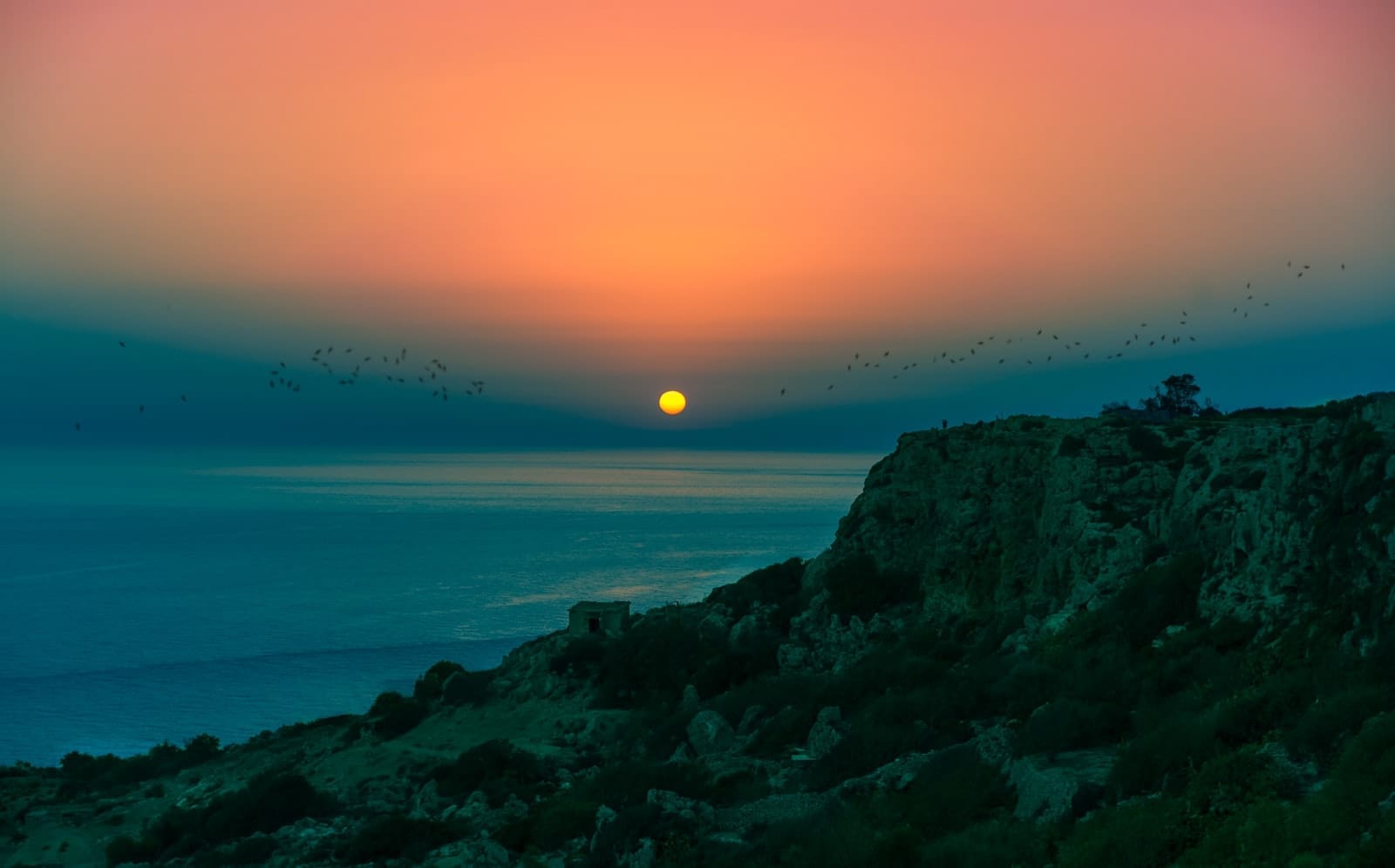
Sunset is when Dingli Cliffs perform at their highest. In the 45 minutes before the sun drops below the horizon, the limestone face transitions through amber, copper, and briefly a deep reddish-orange that makes the cliffs look almost lit from inside. This effect is most vivid from March through October when the sun sets over open water rather than at a sharp lateral angle. Arrive at least an hour before sunset to position yourself — and expect company. The sunset draw is well-known enough that the pull-offs fill on weekends, particularly in summer.
Tickets & tours
Hand-picked options from our booking partner. Prices are indicative; availability and final rates are confirmed when you complete your booking.
City Sightseeing hop-on hop-off bus tour of Gozo
From 20 €Instant confirmationFree cancellationThe Malta Experience Audio-Visual Show and La Sacra Infermeria Tour
From 20 €Instant confirmationFree cancellationLuggage Storage in Malta
From 6 €Instant confirmationFree cancellation6-day heritage and attractions pass in Malta
From 80 €Instant confirmationFree cancellation
St Mary Magdalene Chapel: The Building at the Edge
Perched directly at the cliff edge, the small limestone chapel of St Mary Magdalene is one of the more quietly striking buildings in Malta. Though substantially rebuilt in 1646, It has been struck by lightning multiple times throughout its history — a consequence, presumably, of standing as the highest isolated structure for miles in any direction. The exterior is worn and pale, with the kind of surface patina that comes from centuries of wind-driven salt spray.
The chapel is not a visitor attraction in any formal sense — there is no museum, no entry fee, and depending on timing it may simply be closed. Its value is contextual: the sight of this small, resolute building at the lip of a 253-metre drop, with open Mediterranean beyond, is one of the more memorable visual compositions on the island. It anchors the clifftop landscape and gives it a human dimension that the geology alone doesn't provide.
Walking the Clifftop: What the Route Delivers
The full length of Triq Panoramika takes around 30 to 40 minutes to walk at a comfortable pace, though most visitors do shorter stretches from a car pull-off. The surface underfoot is a mix of road, scrub-edged path, and bare rock — comfortable in sturdy footwear but uneven enough that sandals or dress shoes are a poor choice.
The vegetation along the plateau is characteristically Maltese: low, wind-sculpted, aromatic. Wild thyme, carob trees, and sparse grass cover the inland side of the path. In spring, particularly March through May, this scrub produces small wildflowers that add unexpected colour to what can otherwise read as a monochrome landscape. Autumn brings a similar brief softness before the summer-scorched ground recovers.
Walkers looking to extend the outing can head inland toward Buskett Gardens, approximately 45 minutes to an hour on foot. Buskett is Malta's only forested area and offers genuine shade, a striking contrast to the exposed clifftop. It fits naturally as a combined half-day with the cliffs, particularly for those visiting Ħaġar Qim Temples, which are also on the southwestern side of the island and make a logical third stop on the same route.
Getting There: Practical Logistics
By public bus, routes 201 and 202 from Valletta connect to Dingli village. The clifftop road is a short walk from the village centre. Bus fares on Malta's public transport network are around €2 per journey (subject to seasonal variation). Check current schedules and fares via Malta Public Transport before travelling.
By car or ride-hailing app (Bolt and Uber operate across Malta), the drive from Valletta takes around 20 to 25 minutes. Parking along Triq Panoramika is informal but generally straightforward except on busy weekend evenings in summer, when sunset-watchers can fill the obvious pull-offs. Arriving 90 minutes before sunset rather than 45 minutes gives you a better choice of position.
If you're building a broader day in the southwest, the cliffs combine well with Mnajdra Temples and the coast near Għar Lapsi. Both are within 20 minutes by car and represent very different Malta experiences — prehistoric ritual sites and a small natural swimming inlet, respectively.
💡 Local tip
The clifftop road offers almost no shade. In summer, visit in the morning or in the hour before sunset. Midday between June and September is best avoided unless you're well-prepared for direct sun and heat.
Photography Considerations
The standard shot at Dingli Cliffs is the cliff face at golden hour, ideally with the chapel silhouetted against a lit sky. This is achievable and genuinely worth the effort. For something less predictable, the Filfla view works well with a long lens, particularly in morning light when the sea surface is calmer and the island sits clearly defined on the horizon. The plateau vegetation in spring also photographs well up close — the contrast between flowering scrub and the sheer drop beyond it is underused.
Drone operators should be aware that Malta has airspace regulations requiring registration and in some areas explicit permission. The cliffs are not in a restricted zone by default, but regulations should be verified through Transport Malta before flying.
Who This Place Suits — and Who It Doesn't
Dingli Cliffs reward visitors who want open landscape rather than curated heritage. If your Malta trip is structured around sites like St John's Co-Cathedral or Hal Saflieni Hypogeum, the cliffs function as necessary breathing space — a place with no information panels, no audio commentary, and no right way to move through it.
Visitors expecting a fully developed attraction with cafes, visitor facilities, or formal walking infrastructure may be underwhelmed. There is a private establishment, The Cliffs (thecliffs.com.mt), near the viewpoint area, but the clifftop road itself is simply a road with views. The experience is elemental rather than constructed, and that is precisely its value for those who want it.
For families with young children, the lack of safety barriers along the cliff edge requires constant vigilance. The terrain is not technically difficult, but the proximity of the drop to informal walking paths means this is not a place to let small children run unsupervised. Wheelchair access along Triq Panoramika is limited by road condition and informal pull-off areas, though the road surface itself is paved.
⚠️ What to skip
Much of the cliff edge has no barrier. Wind gusts can be strong and unpredictable, particularly in winter and early spring. Stay well back from the edge, especially in wet or gusty conditions.
Insider Tips
- Come on a weekday rather than a Saturday evening if you want the cliff edge to yourself at sunset. Weekend evenings in summer draw significant local traffic to the pull-offs.
- The view north along the cliff face from near the chapel — rather than straight out to sea — gives a sense of the full scale of the geological formation that most visitors miss by only looking west.
- Spring (March to May) is the most visually interesting season on the plateau. The scrub vegetation produces low wildflowers and the air is clear without the summer haze that can soften the Filfla sightline.
- If you're driving, park at the far northern end of Triq Panoramika and walk south toward the chapel. This direction keeps the sunset in front of you for the full walk rather than at your back.
- Buskett Gardens, roughly an hour's walk inland, is a genuine contrast to the exposed clifftop — dense shade, birdsong, and the only woodland on the island. Combining the two in a half-day gives the landscape context it lacks in isolation.
Who Is Dingli Cliffs For?
- Sunset photographers looking for Malta's most dramatic natural light
- Walkers and hikers wanting a route with genuine elevation and open views
- Travellers who need a break from heritage sites and prefer unstructured outdoor time
- Anyone combining the southwest of Malta into a full-day loop with prehistoric temples and coastal swimming spots
- Visitors planning their trip around Malta's best seasonal conditions: spring wildflowers or autumn clarity
Nearby Attractions
Combine your visit with:
- Blue Grotto
The Blue Grotto is a cluster of sea caves cut into Malta's southern limestone cliffs, accessible only by small traditional boats. The vivid phosphorescent blues inside are striking in morning light, but the experience depends heavily on sea conditions and timing.
- Għajn Tuffieħa Bay
Għajn Tuffieħa Bay sits on Malta's northwest coast, separated from the road by more than 200 steep steps — a deliberate filter that keeps it quieter than most Maltese beaches. The reward is a wedge of reddish-orange sand framed by green clay cliffs, a 17th-century watchtower on the headland, and water that shifts from pale aquamarine to deep cobalt by midday.
- Għar Dalam
Għar Dalam is a 144-metre cave in Birżebbuġa that preserves the bones of dwarf elephants, hippos, and bears from Malta's prehistoric past. The attached museum adds scientific depth to the raw geology of the cave itself. It is a serious natural history site, not a polished tourist spectacle.
- Għar Lapsi
Għar Lapsi is a raw, unspoiled cove on Malta's southern coast, where a natural sea cave opens directly into clear, shallow water. Free to access and easy to reach by car, it draws swimmers, snorkellers, and freedivers who want calm water and no crowds.