Ħal Saflieni Hypogeum: Inside Malta's 5,000-Year-Old Underground World
The Ħal Saflieni Hypogeum is a three-level prehistoric burial complex carved entirely from rock, dating back to 4000 BC. One of the most extraordinary ancient sites on earth, it accepts fewer visitors per day than most museums see in an hour — making advance booking essential.
Quick Facts
- Location
- Triq iċ-Ċimiterju, Paola (Raħal Ġdid), Malta — near Grand Harbour
- Getting There
- Several Malta Public Transport bus routes serve Paola; nearest stop is approx. 2 minutes on foot
- Time Needed
- 1.5–2 hours including the guided audio tour
- Cost
- Adults (18+): €35 | Youths (12–17) & Seniors (60+): €20 | Last-minute tickets: €50
- Best for
- History enthusiasts, archaeology fans, travellers who want an experience unlike anything else in Europe
- Official website
- heritagemalta.mt/explore/hal-saflieni-hypogeum
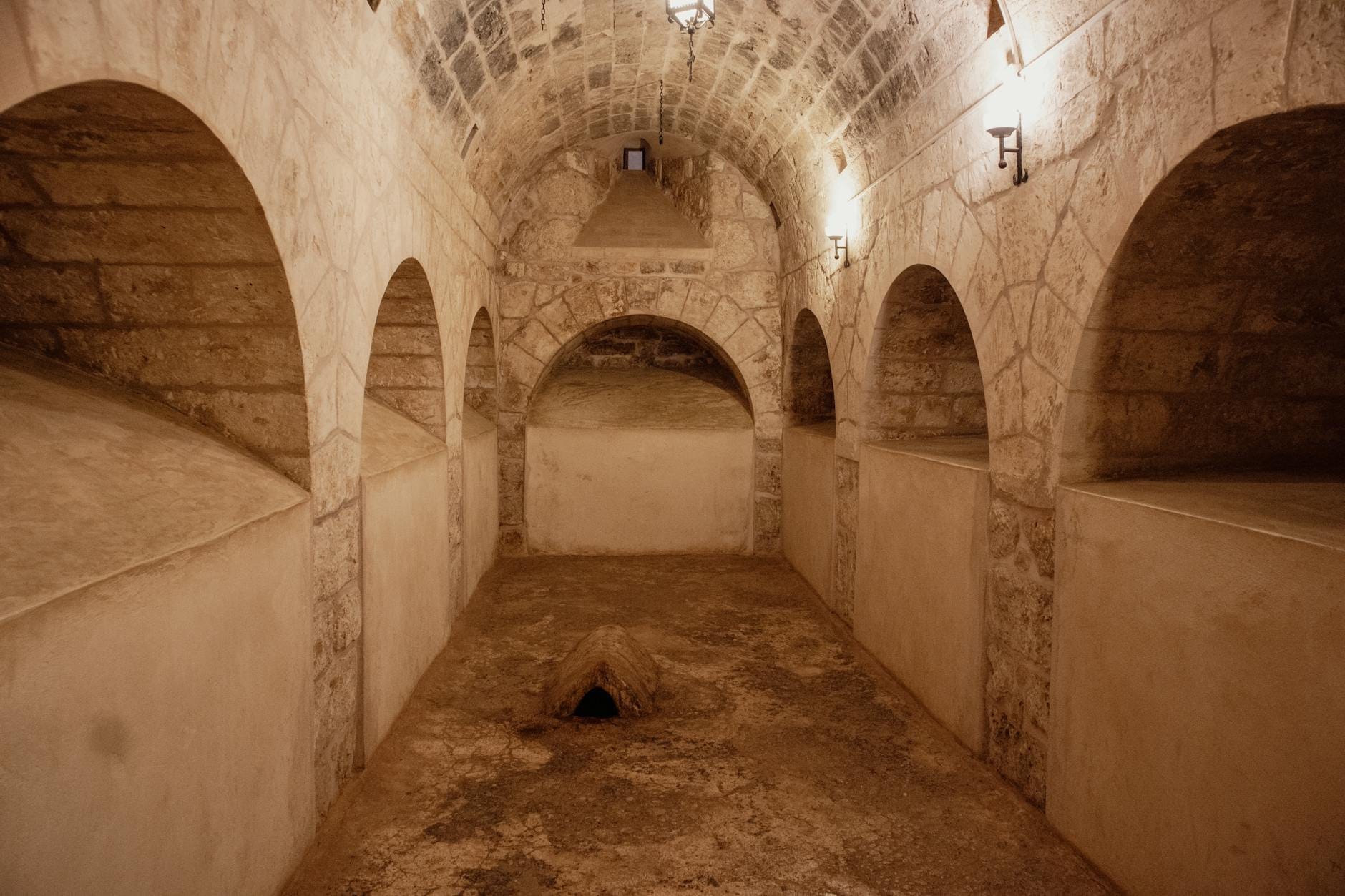
What Is the Ħal Saflieni Hypogeum?
The Ħal Saflieni Hypogeum is not a ruin or a monument you walk around. It is a complete underground world, hand-carved out of limestone over the course of roughly 1,500 years, beginning around 4000 BC. Three subterranean levels descend to a depth of 10.6 metres below the modern street above. At least 7,000 individuals were buried here across three distinct prehistoric phases: the Żebbuġ, Ġgantija, and Tarxien periods. It is, by most measures, one of the best-preserved prehistoric sites on the planet.
It was discovered in 1902, almost by accident, when workers laying foundations for new housing in Paola broke through the ceiling of the uppermost chamber. Father Emmanuel Magri led the first excavations from 1903, and Sir Themistocles Zammit continued the work through 1911. UNESCO inscribed the Hypogeum as a World Heritage Site in 1981 under criterion iii, recognising it as an exceptional testament to a now-vanished prehistoric culture. Heritage Malta manages the site today under strict conservation protocols.
⚠️ What to skip
Tickets sell out weeks, sometimes months, in advance. Only 80 visitors are admitted per day (10 per hour over an 8-hour window). Book directly via Heritage Malta's official website as early as possible. Last-minute tickets (€50 each) may be available from 1 day prior — but are not guaranteed.
The Experience: Descending Into the Rock
Entry begins in the modern visitor centre above ground, where you collect your audio guide — available in Maltese, English, German, Italian, Spanish, French, and Japanese. Groups of ten descend together, guided at a pace that allows careful observation. The transition from the surface world is immediate and physical: the temperature drops, the air becomes noticeably damp and cool, and the sound of the street disappears entirely.
The upper level is the oldest and, in structural terms, the most straightforward: a series of chambers that were originally cut as tombs and later expanded. By the middle level, the architecture becomes extraordinary. Trilithon doorways, corbelled ceilings, and a chamber known as the Holy of Holies — its facade a near-perfect imitation of the above-ground megalithic temple doorways found at sites like Ħaġar Qim and Mnajdra — demonstrate a level of technical skill that still commands serious archaeological attention.
The famous Oracle Chamber, a small alcove on the middle level, produces an acoustic effect that has fascinated researchers for decades: a deep male voice spoken into a specific niche creates a resonant, almost physical vibration that can be felt in the chest. Whether this was intentional ritual design or an incidental property of the geometry remains debated. For context on how Malta's prehistoric temple culture connects across the islands, the ancient temples of Malta guide provides useful background.
The lowest level, accessible via a narrow staircase, is the coldest and most restricted. Fewer visitors make it down here, and the chambers are smaller, the carvings less elaborate — but the sense of depth, both literal and historical, is at its strongest. Red ochre decorations survive on some walls, evidence of ceremony and intention that makes the space feel less like a tomb and more like a place that mattered deeply to the people who built it.
Tickets & tours
Hand-picked options from our booking partner. Prices are indicative; availability and final rates are confirmed when you complete your booking.
Valletta half-day guided tour with optional cathedral visit
From 39 €Instant confirmationFree cancellationHalf-day quad bike tour in Mellieha with pickup
From 85 €Instant confirmationFree cancellationCity Sightseeing hop-on hop-off bus tour of Gozo
From 20 €Instant confirmationFree cancellationThe Malta Experience Audio-Visual Show and La Sacra Infermeria Tour
From 20 €Instant confirmationFree cancellation
How the Site Feels at Different Hours
Unlike outdoor sites where morning light and evening atmosphere shift the experience, the Hypogeum has no windows and no natural light. What changes is your group. Morning slots tend to attract more organised tour groups who have planned months ahead. Mid-afternoon slots often include independent travellers. The atmosphere underground is largely the same regardless of when you visit — consistently cool at around 18–20°C year-round, quiet, and somewhat otherworldly.
What genuinely changes the experience is group composition. Ten people in a chamber designed for ritual use in 3000 BC feels intimate in a way that is hard to replicate. The guide moves through the audio narrative, but the silences between commentary are where the place reveals itself. Avoid rushing ahead of the group — the lighting is minimal by design, and the dimness is part of how the site communicates its age.
💡 Local tip
Wear a layer even in summer. The underground microclimate stays cool year-round. Sandals and flip-flops make the stairs awkward — closed shoes are a practical choice.
Architecture and Archaeological Significance
What makes the Hypogeum unusual even among prehistoric sites is that it is entirely subterranean and entirely carved, not built. The builders did not assemble stones — they removed rock, hollowing out chambers whose proportions mirror the above-ground temples that define Maltese prehistory. The recesses, niches, and corbelled roofs were cut using antler tools and obsidian blades, without metal implements of any kind.
The site covers approximately 500 square metres and contains multiple interconnected rooms on each of its three levels. The middle level is considered the ritual and administrative centre of the complex, containing not only the Oracle Chamber and the Holy of Holies but also a 'decorated chamber' whose ceiling bears geometric patterns painted in red ochre, now partially preserved behind glass. This painted ceiling is one of the rarest surviving examples of prehistoric mural art in the Mediterranean.
Among the artefacts recovered from the site, the most famous is the 'Sleeping Lady', a small terracotta figurine now housed at the National Museum of Archaeology in Valletta. Several other significant finds from the Hypogeum are displayed there, making a visit to the museum a logical companion to this site. If you are planning a wider itinerary across Malta's prehistoric landmarks, the Ħaġar Qim Temples and Mnajdra Temples share the same cultural horizon and are located together on the southern coast.
Practical Walkthrough: How Visits Actually Work
Access to the Hypogeum is timed and strictly managed. Each group of ten enters on the hour and follows a set route with an audio guide. You cannot linger indefinitely in any chamber — the flow of the group keeps things moving at a measured pace. Photography policies can change; check Heritage Malta's current guidelines before arrival, as flash photography has historically been restricted to protect pigments and microclimate conditions.
Last-minute tickets, when available from the day prior, can also be collected from the National Museum of Archaeology in Valletta or from the Domus Romana after noon. This provides a small safety valve for travellers who arrive in Malta without advance bookings, but supply is genuinely limited. The €50 last-minute price reflects both scarcity and the cost of conservation, not a premium tourist surcharge.
The site has lockers for bags, indoor seating in the visitor centre, and facilities for nappy changing. However, access to the lower level involves narrow stairs and low ceilings. Visitors with significant mobility impairments should contact Heritage Malta ahead of time to understand exactly which areas are accessible. The upper and middle levels are more navigable, but this is not a wheelchair-friendly site by its physical nature.
ℹ️ Good to know
Children under 6 years are not permitted entry, per Heritage Malta's preservation policy. This is non-negotiable and worth checking before planning a family visit with young children.
Who Should Skip This (And Who Absolutely Shouldn't)
If you have claustrophobia, the Hypogeum deserves honest consideration. The lower level in particular involves tight passages and low ceilings. The guided format means you move with a group through enclosed spaces for up to 90 minutes without the option to step outside. Most visitors find the atmosphere compelling rather than oppressive, but the physical reality of being underground in narrow carved chambers is not for everyone.
Travellers with young children under 12 cannot enter, full stop. Families looking for prehistoric culture accessible to all ages might consider the Ġgantija Temples on Gozo or the Tarxien Temples as alternatives — both are above ground, free of age restrictions, and genuinely impressive in their own right.
For travellers genuinely interested in prehistoric culture, archaeology, or the history of human burial practices, this is one of the most significant sites in Europe. The combination of its physical completeness, its age, and the intimacy of the guided experience makes it difficult to overstate how different this feels from a standard museum visit. It is worth the effort, the advance planning, and the relatively high ticket price.
Insider Tips
- Book directly on Heritage Malta's website the moment you confirm your travel dates. Popular time slots (late morning, early afternoon) disappear weeks out, especially from March through October.
- If you miss out on advance tickets, check the Heritage Malta website from midnight Malta time — last-minute availability for the following day is sometimes released then, before the noon pick-up window at the National Museum of Archaeology.
- The Oracle Chamber acoustic effect is only demonstrated to a limited degree during the tour. If you want to understand what the resonance actually feels like, position yourself near the back of your group when the guide activates it — the vibration is more perceptible when you are not immediately next to the source.
- Combine this visit with the National Museum of Archaeology in Valletta on the same day. The 'Sleeping Lady' figurine and other Hypogeum finds are displayed there, and seeing the artefacts after the chambers they came from deepens both experiences considerably.
- The site maintains a strict microclimate for conservation. Breathing and body heat from visitors genuinely affect conditions underground, which is precisely why visitor numbers are capped. Understanding this makes the restrictions feel less bureaucratic and more like a reasonable trade-off to keep the site intact for future generations.
Who Is Ħal Saflieni Hypogeum For?
- Archaeology and prehistory enthusiasts who want to understand Malta's ancient past at its most complete
- Serious travellers looking for a singular, difficult-to-replicate experience rather than standard sightseeing
- Adults and older teenagers (12+) who are comfortable in enclosed, dimly lit underground spaces
- Anyone following a broader itinerary through Malta's UNESCO and prehistoric sites
- Travellers who appreciate small-group, audio-guided formats that prioritise depth over throughput
Nearby Attractions
Other things to see while in Valletta:
- Basilica of Our Lady of Mount Carmel
The Basilica of Our Lady of Mount Carmel anchors Valletta's skyline with a 42-metre oval dome visible from across Marsamxett Harbour. Originally built in 1570 by the architect of Valletta himself, bombed flat in World War II, and rebuilt over two decades, this is a church with a remarkable story behind its serene facade.
- Casa Rocca Piccola
Casa Rocca Piccola is a 16th-century aristocratic palace on Valletta's Republic Street, home to the de Piro family for roughly 350 years and still occupied today. Guided tours take visitors through 50 furnished rooms stacked with Maltese silver, antique furniture, lace collections, and paintings, before descending into a genuine WWII air-raid shelter carved beneath the building.
- City Gate & Renzo Piano Parliament
The City Gate and Parliament House form Valletta's most architecturally charged entrance. Designed by Renzo Piano and completed between 2011 and 2015, this project replaced a clumsy 1960s gateway and derelict opera ruins with something genuinely bold. Entry to the public spaces is free and open around the clock.
- Fort St. Elmo & National War Museum
Standing at the tip of the Sciberras Peninsula, Fort St. Elmo has guarded Valletta's twin harbours for over five centuries. Inside, the National War Museum takes visitors from Bronze Age Malta through to the WWII siege that earned the island its George Cross, with artefacts that are genuinely difficult to find anywhere else in the Mediterranean.