Fort St. Elmo & the National War Museum: Valletta's Fortress at the Edge of History
Standing at the tip of the Sciberras Peninsula, Fort St. Elmo has guarded Valletta's twin harbours for over five centuries. Inside, the National War Museum takes visitors from Bronze Age Malta through to the WWII siege that earned the island its George Cross, with artefacts that are genuinely difficult to find anywhere else in the Mediterranean.
Quick Facts
- Location
- Mediterranean Street, Valletta, Malta
- Getting There
- 10-min walk from Valletta bus terminus; City Gate is the nearest major stop
- Time Needed
- 2 to 3 hours
- Cost
- Adults €10.00 · Seniors (60+) €7.50 · verify current rates at Heritage Malta
- Best for
- History enthusiasts, WWII buffs, architecture lovers, older children
- Official website
- heritagemalta.mt/explore/fort-st-elmo-national-war-museum
What Fort St. Elmo Actually Is
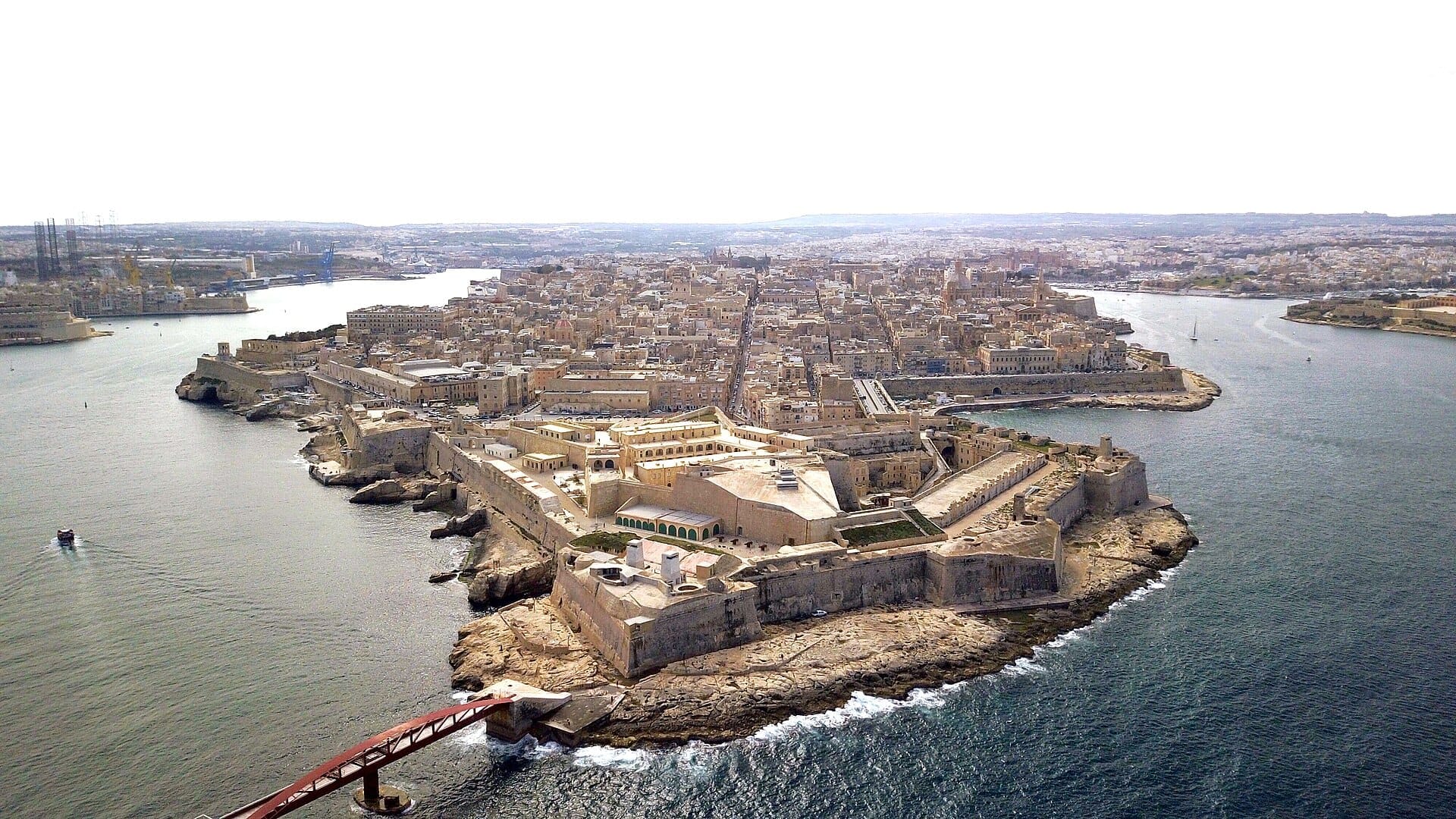
Fort Saint Elmo (Maltese: Forti Sant'Iermu) sits at the very tip of the Sciberras Peninsula, the narrow finger of land that divides Valletta's Grand Harbour from Marsamxett Harbour. It is a star-shaped artillery fortification built after an Ottoman raid in 1551, later absorbed into the fabric of Valletta when the Knights of St. John constructed the city from 1566 onward. The fort and the National War Museum it contains are managed by Heritage Malta, the government agency responsible for Malta's state museums.
The combination means you are visiting two things at once: the physical structure itself, which is as legible a piece of Renaissance military architecture as you will find anywhere in Europe, and a museum that tracks Maltese military history across 7,000 years in seven sequential sections. Neither half is a footnote to the other. Most visitors spend the bulk of their time in the museum galleries, but the fort's rooftop bastions and the views they offer over both harbours are worth factoring into your schedule.
💡 Local tip
Regular museum admission starts at 12:00pm. On Sundays, the In Guardia re-enactment runs from 11:00am to 12:00pm and is a separate event with its own ticketing. Check the Heritage Malta website before you go to confirm the current schedule and any closures.
A Brief History: Why This Fort Matters
The fort's defining moment came in 1565, during the Great Siege of Malta, when an Ottoman force estimated at 30,000 to 40,000 soldiers attempted to dislodge the Knights of St. John from the island. Fort St. Elmo, garrisoned by a few hundred knights and Maltese soldiers, held the attacking force for 31 days — far longer than Ottoman commanders had calculated. Every defender died when the fort finally fell on 23 June 1565. The delay proved decisive: it exhausted Ottoman resources and morale before they could consolidate control of Birgu and Senglea, the Knights' main strongholds across the water.
That story is inseparable from Valletta itself. The city was built after the siege as a direct response to it, and Fort St. Elmo was integrated into the new fortifications in 1689. For more on how the Knights shaped everything you see in Valletta today, the Knights of Malta history guide covers the broader arc well.
The fort's second major chapter came during the Second World War. On 11 June 1940, the day after Italy declared war on Britain and France, Fort St. Elmo became one of the first targets of Italian aerial bombardment — making it among the earliest sites in the British Empire to come under attack in that conflict. The siege of Malta that followed lasted two and a half years and is the backdrop for much of what the National War Museum displays.
Tickets & tours
Hand-picked options from our booking partner. Prices are indicative; availability and final rates are confirmed when you complete your booking.
City Sightseeing hop-on hop-off bus tour of Gozo
From 20 €Instant confirmationFree cancellationThe Malta Experience Audio-Visual Show and La Sacra Infermeria Tour
From 20 €Instant confirmationFree cancellationLuggage Storage in Malta
From 6 €Instant confirmationFree cancellation6-day heritage and attractions pass in Malta
From 80 €Instant confirmationFree cancellation
Inside the National War Museum: What to Expect Section by Section
The museum is laid out across seven sections, moving chronologically from prehistoric Malta through to the island's accession to the European Union. The first sections deal with Phoenician, Roman, and medieval-era military artefacts, including armour and weapons that most visitors move through at a moderate pace. These early galleries are genuinely informative but not where the museum earns its reputation.
The WWII material is the heart of the collection. Three artefacts demand particular attention. The first is the Gloster Sea Gladiator biplane 'Faith' — one of three biplanes (Faith, Hope, and Charity) that formed Malta's entire fighter defence in the opening weeks of the Italian bombing campaign in 1940. Faith is the only survivor of the three and is displayed in a condition that makes the odds Malta faced in those weeks feel very concrete. The second is the Willys MB Jeep 'Husky', presented to Malta by US President Franklin D. Roosevelt. The third is a replica of the George Cross, the British civilian gallantry award conferred collectively on the people of Malta by King George VI in April 1942, recognising the island's resistance under sustained aerial bombardment.
Section 6, which covers the later WWII period and post-war era, is where the elevator access point is located for visitors with mobility limitations. The Cavalier roof, the prison cells, and parts of the Abercrombie bastions are only accessible via stairs, so plan accordingly if this affects you.
ℹ️ Good to know
Photography is generally permitted in the museum galleries. Natural light varies considerably by section. A wide-angle lens or a phone with a good low-light mode will serve you better than flash for the aircraft and large artefacts.
The Fort Itself: Architecture and Views
Once you move from the museum galleries into the fort's physical structure, the scale of the construction becomes clearer. The star-shaped bastion plan, typical of 16th-century artillery fortifications across the Mediterranean, was designed to eliminate dead angles where attackers could approach without exposure to defensive fire. Standing on the Cavalier roof, you get a direct line of sight across the Grand Harbour to the Three Cities: Birgu, Senglea, and Cospicua. On a clear day, the view extends to the open sea.
The rooftop is best in the morning or mid-afternoon light. Late afternoon brings the sun directly from the west, which makes photography of the harbour difficult but the ambient warmth pleasant. If you are building an itinerary around Valletta's viewpoints, the Upper Barrakka Gardens and the Lower Barrakka Gardens offer complementary angles of the same harbour panorama.
The prison cells are a sobering addition to the visit. The fort served various functions over its history including as a prison, and the physical conditions in those cells communicate something that no display panel can fully replicate. They are accessible by stairs only.
Getting There and Practical Logistics
Fort St. Elmo is at the far eastern tip of Valletta, a 10-minute walk from the City Gate end of town along the spine of the peninsula. The route takes you past St. John's Co-Cathedral and the Grandmaster's Palace before the street opens onto the Mediterranean Street approach to the fort. There is no car access for visitors; Valletta is largely pedestrianised. Buses from across Malta terminate at the Valletta bus terminus just outside City Gate, with routes connecting to Sliema, St. Julian's, and most of the island.
If you are combining Fort St. Elmo with the rest of Valletta's major sites in a single day, the Valletta attractions guide includes a logical walking sequence that keeps backtracking to a minimum.
Wear comfortable shoes. The fort involves uneven stone surfaces, stairs without consistent handrails, and exposed rooftop areas that can be windy. In summer, the open areas of the fort offer little shade; bring water and sunscreen. In winter, the sea-facing position means wind chill is a factor even on mild days.
⚠️ What to skip
Ticket prices and opening hours are subject to change. The 12:00pm regular admission start time is confirmed at time of writing but Heritage Malta updates its schedule seasonally. Always verify at heritagemalta.mt before visiting, particularly if your plans depend on a specific time slot.
Who Will Get the Most From This Visit
Visitors with a prior interest in WWII history, the medieval Knights of St. John, or military architecture will leave Fort St. Elmo considerably more satisfied than those who arrive without context. The museum assumes a baseline familiarity with European and Mediterranean history. If you know roughly what the Great Siege of 1565 and the Siege of Malta in WWII were, the collection will fill in specific detail and surprise you. If neither name means anything to you, the first few sections may feel dense.
Older children, roughly 10 and above, tend to engage well with the WWII artefacts, particularly the biplane and the jeep. Younger children will find the visit long and the stair-heavy fort sections physically tiring without much reward for the effort. The fort is not the right choice for visitors with significant mobility limitations unless they are content to see the museum sections accessible by elevator and skip the Cavalier roof and prison cells.
Travellers focused primarily on beaches or outdoor activities may find the time investment difficult to justify against Malta's other options. But if you are spending more than two days in the country, Fort St. Elmo belongs in a full Malta itinerary.
Insider Tips
- Arrive close to the 12:00pm opening. The fort is quietest in the first hour, before cruise ship groups and organised tours arrive mid-afternoon.
- The In Guardia re-enactment on Sunday mornings is a full costumed military ceremony by the Knights of Malta re-enactment group. It runs 11:00am to 12:00pm with a separate ticket. It is theatrical but genuinely well-staged, and worth attending if your Sunday timing allows it.
- The Cavalier roof is the highest accessible point in the fort and gives you an unobstructed 360-degree view of both harbours. Most visitors who are short on time skip it because the museum takes longer than expected. Budget explicitly for 20 minutes on the roof.
- The George Cross on display is a replica. The original is held by the President of Malta. The distinction matters if you are planning to photograph it for any archival purpose.
- The walk from City Gate to the fort passes St. John's Co-Cathedral. If you have not already visited the cathedral, doing so on your way to the fort in the morning (it opens at 9:30am) and hitting Fort St. Elmo after 12:00pm makes for a highly efficient half-day in Valletta.
Who Is Fort St. Elmo & National War Museum For?
- WWII history enthusiasts wanting to see the Gloster Sea Gladiator 'Faith' and George Cross replica in context
- Architecture travellers interested in 16th-century star-fort design and Renaissance military engineering
- Visitors who want harbour panoramas from a vantage point with historical weight rather than just scenery
- Older children and teenagers with an interest in military history or engineering
- Anyone building a full-day Valletta itinerary who wants to anchor the eastern end of the peninsula
Nearby Attractions
Other things to see while in Valletta:
- Basilica of Our Lady of Mount Carmel
The Basilica of Our Lady of Mount Carmel anchors Valletta's skyline with a 42-metre oval dome visible from across Marsamxett Harbour. Originally built in 1570 by the architect of Valletta himself, bombed flat in World War II, and rebuilt over two decades, this is a church with a remarkable story behind its serene facade.
- Casa Rocca Piccola
Casa Rocca Piccola is a 16th-century aristocratic palace on Valletta's Republic Street, home to the de Piro family for roughly 350 years and still occupied today. Guided tours take visitors through 50 furnished rooms stacked with Maltese silver, antique furniture, lace collections, and paintings, before descending into a genuine WWII air-raid shelter carved beneath the building.
- City Gate & Renzo Piano Parliament
The City Gate and Parliament House form Valletta's most architecturally charged entrance. Designed by Renzo Piano and completed between 2011 and 2015, this project replaced a clumsy 1960s gateway and derelict opera ruins with something genuinely bold. Entry to the public spaces is free and open around the clock.
- Grandmaster's Palace & State Rooms
The Grandmaster's Palace in Valletta has served as a seat of power for the Knights Hospitaller, British governors, and Malta's parliament. Today, its restored State Rooms and legendary Armoury offer one of the most historically rich indoor experiences in the Mediterranean.