Citadella, Victoria: Gozo's Ancient Hilltop Fortress Explained
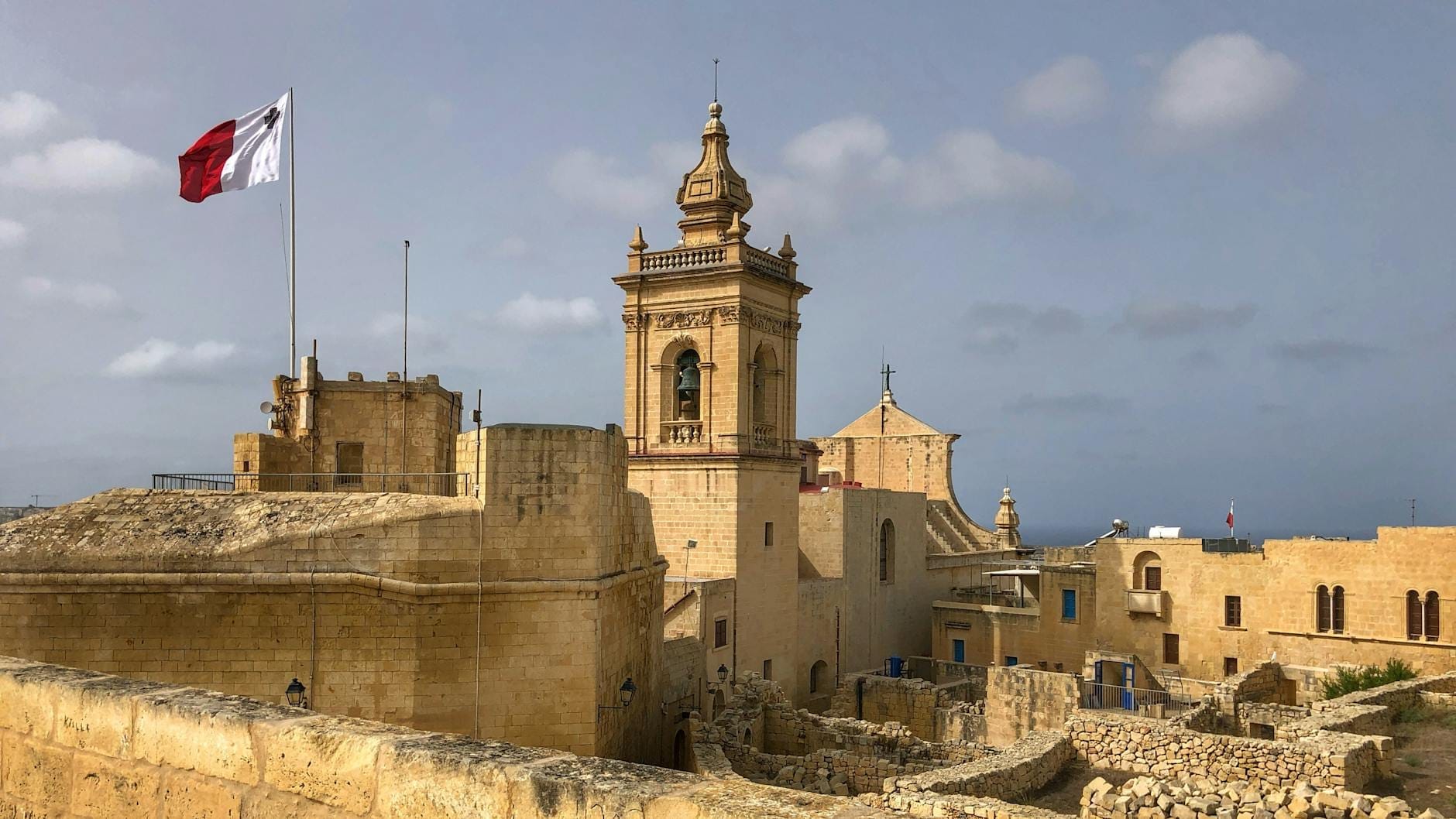
Rising from a rocky promontory above Victoria, the Citadella is Gozo's most significant historical site. Inside its 17th-century bastions you'll find a cathedral with a famous trompe-l'oeil ceiling, small but thoughtful museums, and panoramic views stretching across the entire island. It rewards a half-day of exploration.
Quick Facts
- Location
- Victoria (Rabat), Gozo, Malta
- Getting There
- Public buses serve Victoria from Mġarr ferry terminal; Citadella is walkable from the town center
- Time Needed
- 2–4 hours (walls and museums combined)
- Cost
- Free entry to grounds and walls; fees apply for Visitors' Centre and Heritage Malta museums
- Best for
- History lovers, photographers, architecture enthusiasts, families
- Official website
- heritagemalta.org
What the Citadella Actually Is
The Citadella, known in Maltese as Iċ-Ċittadella, is a walled fortified town sitting on a compact hilltop at the heart of Victoria, Gozo's capital. It is not simply a castle or a ruin. Inside the bastions you find a working cathedral, five small museums, medieval alleyways, houses carved directly into bedrock, and a circuit of walls that function as one of the best viewpoints in the entire Maltese archipelago.
The site has been continuously occupied since at least 1500 BC, passing through Neolithic, Phoenician, Roman, Arab, Norman, Aragonese, and Knights' periods before arriving at its current form. The major reconstruction that defines the walls you see today was carried out by the Knights of St. John between 1599 and 1603, a direct response to a catastrophic Ottoman raid in 1551 that enslaved the majority of Gozo's population. That historical wound shaped everything: the Citadella was designed to be a last refuge for the island's entire population in times of attack.
ℹ️ Good to know
Entry to the Citadella grounds and walls is free. The Visitors' Centre and Heritage Malta museums charge a fee; check heritagemalta.org for current combined ticket prices before you visit, as rates are updated periodically.
Arriving and First Impressions
From Victoria's main square, It-Tokk, the Citadella's honey-coloured limestone walls are visible above the rooftops to the north. The approach takes you up through narrow streets that grow progressively steeper, passing small cafes and souvenir stalls before the gate arch frames a sudden shift in atmosphere. The moment you step through, the noise of the town below drops significantly. The internal streets are narrow, mostly empty of cars, and paved with large irregular stone slabs worn smooth over centuries.
Morning light, particularly in spring and autumn, hits the cathedral facade at an angle that makes the stone glow a warm amber. By midday in summer, the same stone radiates heat noticeably. The smell inside the walls is a mix of old limestone, occasional incense from the cathedral, and, near the museum buildings, the faint mustiness of preservation. It is distinctly old, in the way that places with genuinely layered history tend to be.
Visitors arriving by ferry from Malta will reach Victoria in roughly 20 minutes by public bus from Mġarr. For more context on navigating Gozo once you arrive, see the Gozo travel guide, which covers transport, accommodation, and day planning across the island.
Tickets & tours
Hand-picked options from our booking partner. Prices are indicative; availability and final rates are confirmed when you complete your booking.
City Sightseeing hop-on hop-off bus tour of Gozo
From 20 €Instant confirmationFree cancellationThe Malta Experience Audio-Visual Show and La Sacra Infermeria Tour
From 20 €Instant confirmationFree cancellationLuggage Storage in Malta
From 6 €Instant confirmationFree cancellation6-day heritage and attractions pass in Malta
From 80 €Instant confirmationFree cancellation
The Cathedral of the Assumption
The Cathedral of the Assumption dominates the interior of the Citadella both physically and historically. Construction ran from 1697 to 1711, and the building sits on the foundations of a Roman temple, which itself stood on the site of earlier Punic structures. The cathedral is relatively modest in scale compared to the great churches of Malta's main island, but it contains one of the most talked-about interiors in the archipelago.
The ceiling is the reason most visitors pause at the entrance. It appears to rise into a fully realised dome with coffered detail and painted figures, but the dome does not physically exist. It is an entirely flat ceiling painted in trompe-l'oeil perspective by Antonio Manuele da Messina in 1739. The effect is convincing enough that first-time visitors often crane their necks looking for the edge where the illusion breaks, and it takes a moment to reconcile what the eye reports with what the architecture actually is. The story goes that funds ran short before a real dome could be built, and the painted version was the pragmatic solution.
Photography inside is permitted, but the ceiling is difficult to capture well without a wide-angle lens. The floor contains memorial slabs in marble, and the side chapels hold silverwork and carved altarpieces worth examining closely. Dress modestly for entry: shoulders and knees should be covered, as is standard across Maltese religious sites.
The Walls and Viewpoints
The bastions of the Citadella form a continuous walkable circuit at roof level, and this walk is arguably the most rewarding element of the whole site. The path is mostly narrow and uneven, with low or absent guardrails in some sections, but the views are comprehensive in every direction. On a clear day you can see across Gozo's patchwork of fields and villages, the channel separating Gozo from Malta, and the flat silhouette of the main island beyond.
The western bastions give the most dramatic view: the land drops sharply below the walls into terraced farmland, and in the distance the terrain flattens toward the coast. Late afternoon is the best time to walk this section, when the sun moves west and the light warms the stone. The eastern side faces Victoria's rooftops and the interior of the island, which is quieter but still worth the walk for the different perspective.
💡 Local tip
Arrive before 9:00 AM or after 4:00 PM to walk the walls with far fewer other visitors. Midmorning, particularly on days when cruise excursions visit from Malta, can feel crowded on the narrow rampart paths.
The Citadella's views are among the best elevated vantage points on Gozo. If you are compiling a list of the island's most rewarding panoramas, cross-reference with our best views in Malta guide for comparison across the archipelago.
Museums Inside the Walls
The Citadella contains five museums managed by Heritage Malta and Cultural Heritage Gozo. These are not large institutions, but they are specific and informative in ways that generalist museums rarely are.
- The Cathedral Museum: houses ecclesiastical silver, vestments, and prints, including a fine collection of Dürer woodcuts donated centuries ago.
- The Folklore Museum: occupies a medieval building and covers traditional Gozitan crafts, farming tools, fishing equipment, and domestic life.
- The Natural Science Museum: focuses on the geology, flora, and fauna of Gozo and the wider Maltese archipelago.
- The Old Prison: a particularly memorable space — the cells contain graffiti carved by prisoners dating back to the 16th century, including names, dates, ships, and religious symbols. This is one of the more intimate historical records anywhere in Malta.
- The Archaeology Museum: covers finds from the Neolithic through to the Arab period, with exhibits relevant to the site's deep occupation history.
The Old Prison is frequently cited by visitors as the most affecting of the five. The carved graffiti is not displayed behind glass but is on the actual walls of the actual cells. It is the kind of unmediated connection to the past that larger heritage sites rarely offer.
The Visitors' Centre and the museums are open Tuesday, Thursday, Friday, Saturday, and Sunday, 9:00 AM to 5:00 PM. They are closed on Monday, Wednesday, and public holidays including 1 January, Good Friday, and the period around Christmas (24, 25, and 31 December). Verify hours at culturalheritagegozo.gov.mt before visiting, as schedules have changed in recent years.
Historical Depth: Why This Place Matters
The Citadella sits on one of the longest continuously occupied sites in the central Mediterranean. Neolithic and Bronze Age communities used this promontory around 1500 BC. Phoenicians fortified it. Romans established an acropolis here for the ancient city of Gaulos. After Arab rule and the Norman reconquest, the site passed to Aragonese control and then to the Knights of St. John, each layer leaving physical traces that archaeologists have been working to document for decades.
The 1551 Ottoman raid is the event that most sharply defines the Citadella's current form. An Ottoman fleet under Dragut sacked Gozo and carried off somewhere between 5,000 and 6,000 people into slavery — effectively emptying the island. The traumatic memory of that event drove the Knights to rebuild the fortifications between 1599 and 1603 on a larger and more defensible plan. The bastions were designed with a specific capacity calculation: the entire Gozitan population could shelter within the walls. That logic is visible in the internal layout, where small dwellings are packed tightly against the walls in a way that prioritises density over comfort.
The Citadella has been on Malta's UNESCO World Heritage Tentative List since 1998. Understanding the broader Knights of St. John context adds considerably to a visit here; the Knights of Malta history guide covers the Order's strategic and architectural legacy across both islands.
Practical Information for Your Visit
The Citadella is located in Victoria, Gozo's main town, at coordinates 36°02′37″N 14°14′35″E. To reach Gozo from Malta, take the ferry from Ċirkewwa in the north of Malta to Mġarr on Gozo, a crossing that takes approximately 25 minutes. From Mġarr, regular public buses serve Victoria. The town center is then a short, flat walk, and the Citadella gate is another few minutes uphill from It-Tokk square.
The exterior walls and grounds are accessible around the clock at no charge. Museums operate Tuesday, Thursday, Friday, Saturday, and Sunday, 9:00 AM to 5:00 PM. The grounds are significantly more pleasant outside peak hours, particularly on summer mornings before 9:30 AM and late afternoons after 4:00 PM.
The terrain inside is steep and almost entirely cobblestone or stone flags. The rampart walk involves narrow paths, low walls, and uneven surfaces. Comfortable shoes with grip are strongly advisable. Wheelchair access is severely limited by the historic street layout and stairways; visitors with mobility difficulties can access parts of the interior square but will find much of the site inaccessible.
⚠️ What to skip
In July and August, the midday heat inside the Citadella's stone walls is intense. Bring water and sun protection. There is minimal shade on the ramparts, and the temperature reflected off the limestone can be considerably higher than the ambient air temperature.
If you are planning a full day in Victoria and Gozo, the Citadella pairs naturally with the island's other historic and natural sites. See the things to do in Malta guide for broader itinerary ideas, or check specific Gozo highlights like the Ggantija Temples, which date to around 3600 BC and are among the oldest free-standing structures on Earth.
Who Will Enjoy This and Who Might Not
The Citadella rewards visitors who are willing to slow down and look closely. The individual exhibits are modest in size, and the streets inside the walls take perhaps 20 minutes to cover if you walk briskly. The value comes from combining the museums, the cathedral, the walls, and the views into a coherent half-day, rather than passing through quickly.
Visitors primarily interested in swimming, nightlife, or contemporary food scenes will find little here to hold their attention for long. Young children may enjoy the scale of the walls and the views, but the museum content skews toward adult historical interest. Those with limited mobility should assess carefully before visiting, as the uneven terrain is genuinely challenging.
Insider Tips
- The Old Prison's carved graffiti is the single most underrated element of the entire site. Budget 20 minutes for it specifically rather than rushing through as part of the museum circuit.
- The western bastion at sunset, looking toward the coastline and the distant outline of Malta, is one of Gozo's finest views and costs nothing. You do not need to visit the museums to access the walls.
- On days when cruise ship excursions are scheduled from Malta, Victoria receives an influx of visitors between roughly 10:00 AM and 2:00 PM. Arriving before 9:30 AM or after 3:30 PM gives you a qualitatively different experience.
- The trompe-l'oeil cathedral ceiling photographs best from just inside the entrance door, using a wide-angle lens or the widest setting on a phone camera. Move too far down the nave and the perspective flattens.
- If you plan to visit multiple Heritage Malta sites on Gozo, ask about combination tickets at the Visitors' Centre, as the pricing structure can make the bundle more economical than buying individual admissions.
Who Is Citadella (Victoria) For?
- History and archaeology enthusiasts who want more than surface-level sightseeing
- Photographers looking for elevated panoramic views across Gozo and toward Malta
- Architecture lovers interested in Baroque churches and military fortification design
- Travellers combining Gozo's cultural and natural highlights in a single day trip
- Anyone wanting to understand the deep history of the Maltese islands beyond Valletta
Nearby Attractions
Other things to see while in Gozo:
- Dwejra & Blue Hole
Dwejra on Gozo's west coast is the site of the Blue Hole, a natural limestone sinkhole that funnels divers into one of the Mediterranean's most celebrated underwater landscapes. Above water, the Inland Sea, surrounding cliffs, and the rubble of the lost Azure Window make this one of the most geologically dramatic corners of Malta.
- Ġgantija Temples
Standing on the Xagħra plateau in Gozo, the Ġgantija Temples are among the oldest freestanding structures on Earth, predating both Stonehenge and the Egyptian pyramids. This UNESCO World Heritage Site offers a rare encounter with Neolithic craftsmanship on a scale that continues to baffle archaeologists and awe visitors.
- Ramla Bay
Ramla Bay (Ir-Ramla l-Ħamra, meaning 'the red sands') is Gozo's largest and most distinctive beach, stretching 360 metres across the island's north-east coast. Its warm-toned sand, clear Blue Flag water, and surrounding dunes of endemic flora make it unlike anything on the main Malta island.
- Xwejni Salt Pans
Carved into the rocky northern coast of Gozo near Marsalforn, the Xwejni Salt Pans are one of the Mediterranean's last working traditional salt harvests. Free to visit year-round, the roughly 300 hand-cut limestone pans have been producing sea salt for centuries, and one family has tended them for over five generations.