Domus Romana: Malta's Best-Preserved Roman Townhouse
Hidden in plain sight on the edge of Rabat and Mdina, the Domus Romana is one of Malta's most rewarding museum experiences. A 1st-century BC aristocratic townhouse preserves some of the finest Roman mosaics in the Mediterranean, housed in a purpose-built museum that has stood since 1882. Small in footprint, but dense with history.
Quick Facts
- Location
- Wesgħet il-Mużew, Rabat RBT 1202, Malta (on the Mdina-Rabat boundary)
- Getting There
- 2-minute walk from the nearest bus stop; a few minutes on foot from Mdina Main Gate
- Time Needed
- 45 minutes to 1.5 hours
- Cost
- Adults €6.00 | Seniors/Youths (60+ or 12-17) €4.50 | Heritage Malta Pass accepted
- Best for
- Roman history, mosaic art, archaeology, quiet museum visits
- Official website
- heritagemalta.mt/explore/domvs-romana
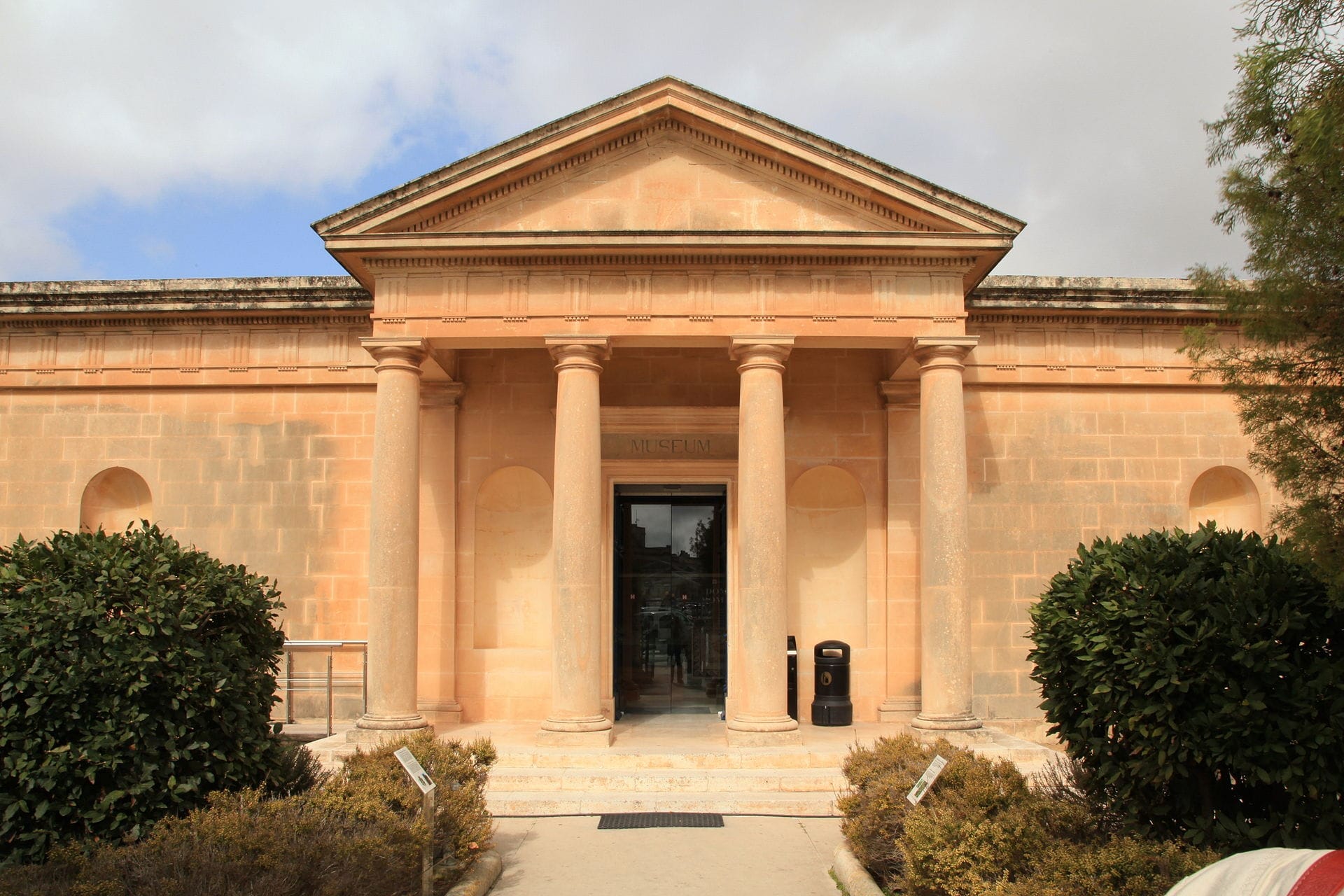
What the Domus Romana Actually Is
The Domus Romana is not a villa. That distinction matters. A villa was a rural estate; a domus was an urban townhouse, the type of home that a wealthy Roman merchant or civic official would have occupied inside a city. This particular domus sat in the heart of Melite, the Roman settlement that preceded both Mdina and Rabat. What you are visiting is the preserved remains of a first-class private residence from approximately the 1st century BC, complete with a peristyle courtyard, decorative floor mosaics, and statuary that suggests the owner had genuine means.
The site was discovered by accident in 1881 during garden work, and the find was significant enough that Malta rapidly constructed a purpose-built museum structure over the remains to protect them. When it opened in 1882, it became the first building in Malta specifically designed to shelter an archaeological site. Heritage Malta now manages it as part of a broader network of national heritage properties.
You can combine the Domus Romana with nearby attractions on a single afternoon. It sits minutes from Mdina's walled city and the ancient underground catacombs of St. Paul's Catacombs. The Rabat area rewards visitors who take time to explore slowly.
The Mosaics: What You'll Actually See
The mosaics are the reason to come. Several polychrome floor panels survive in remarkably good condition, depicting mythological scenes, birds, fish, and geometric patterns. The craftsmanship is not provincial work. These are the kind of detailed tesserae compositions you would find in wealthy homes from Pompeii or Carthage, which is a telling statement about Roman Melite's status as a prosperous, connected city in the Mediterranean trading network.
The most celebrated piece is the panel depicting Alkibiades, the famous Athenian general, rendered in fine mosaic tile. The detail in the face and the border patterns around it give a clear sense of what skilled Roman craftsmen could produce for patrons with money to spend. Look closely at the tesserae size: smaller tiles indicate higher quality work, and the figurative sections here use very small cuts.
💡 Local tip
Bring reading glasses or a small magnifying glass if you have one. The mosaic details reward close inspection, and the lighting conditions at floor level are uneven. Getting low to observe the tesserae at an angle often reveals texture and depth that upright viewing misses.
Beyond the mosaics, the museum displays a collection of Roman statuary, marble fragments, oil lamps, pottery, and household objects recovered from the site and surrounding area. A marble head of the goddess Juno and several other sculptural fragments sit in the display cases, grounding the domestic setting in the wider religious and cultural world of Roman Malta.
Tickets & tours
Hand-picked options from our booking partner. Prices are indicative; availability and final rates are confirmed when you complete your booking.
City Sightseeing hop-on hop-off bus tour of Gozo
From 20 €Instant confirmationFree cancellationThe Malta Experience Audio-Visual Show and La Sacra Infermeria Tour
From 20 €Instant confirmationFree cancellationLuggage Storage in Malta
From 6 €Instant confirmationFree cancellation6-day heritage and attractions pass in Malta
From 80 €Instant confirmationFree cancellation
Layers of History: From Roman Melite to a Medieval Cemetery
What gives the Domus Romana unusual depth is that it contains evidence of multiple civilizations. During excavations, archaeologists uncovered the remains of an 11th-century Muslim cemetery overlaying parts of the Roman structure. This is not incidental. Malta was under Arab rule from 870 to 1091 AD, and the Arab cultural imprint on Malta, including contributions to the Maltese language itself, is substantial. Finding a Muslim burial site layered over a Roman aristocratic house is a physical record of that shift in civilization.
The Roman city of Melite was a significant urban center, and its relationship to what became Mdina and Rabat is direct. The Arab rulers constructed the fortified medina (walled city) from the earlier Roman settlement, eventually producing the Mdina we see today. Rabat developed as the suburb outside those walls. The Domus Romana sits at that seam, on land that has been continuously significant for over two thousand years.
For travelers wanting to understand Malta's full historical arc from prehistoric temples to medieval knights, the Domus Romana fills a crucial gap. Pair it with a visit to the Hagar Qim temples to see how radically different civilizations have left their mark on this small island, and read the Knights of Malta history guide for wider context on the centuries that followed the Roman period.
The Experience: What a Visit Feels Like
The Domus Romana is a quiet museum. Not hushed-cathedral quiet, but genuinely low-traffic. On most mornings, especially outside July and August, you may find yourself nearly alone in the main mosaic hall. That solitude is part of the value. Without crowds pressing around you, you can spend five full minutes studying a single mosaic panel without anyone nudging you forward.
The museum building itself preserves the peristyle structure, the colonnaded courtyard garden layout typical of Roman townhouses. Walking through it creates a faint spatial sense of what the original home felt like, even though the roof and upper structures are long gone. The stone underfoot, the play of natural light through the modern glazing above the courtyard, the way sound moves through the space: these details make it feel less like a sterile display case and more like a ruin you are being allowed to walk through.
Morning visits are preferable. Between 9am and 11am the light falls across the mosaic floors at a lower angle, which brings out the colour gradients in the tesserae better than the flat midday light does. By early afternoon, groups from nearby Mdina sometimes walk over, and the main mosaic room can feel noticeably smaller. Afternoon visits are not bad; they are simply busier and warmer in summer.
ℹ️ Good to know
The museum is small. The core experience covers perhaps 600 to 800 square metres of display space. Budget 45 minutes for a focused visit or up to 90 minutes if you read all the interpretive panels and spend real time with the artefacts.
Practical Information for Your Visit
The Domus Romana is operated by Heritage Malta and is located at Wesgħet il-Mużew, Rabat RBT 1202. Admission is €6.00 for adults (18 and over), and €4.50 for seniors aged 60 and above and for youths between 12 and 17. A Heritage Malta Pass or a Rabat Combo Ticket may be more economical if you are visiting multiple Heritage Malta sites in the region. Check the Heritage Malta website or call +356 21454125 for current seasonal opening hours before visiting, as they do adjust.
Getting there is straightforward. The museum is a short walk from the Mdina Main Gate and a two-minute walk from the nearest Malta Public Transport bus stop. If you are coming from Valletta, buses run regularly to Rabat. Bolt and Uber operate on Malta and provide a convenient alternative if you prefer door-to-door transport. There is no parking charge specific to the museum, and the surrounding streets of Rabat have accessible parking in most conditions.
The interior is not large, but the flooring and layout present some uneven surfaces due to the nature of the preserved archaeological layers. Visitors with significant mobility limitations should contact Heritage Malta in advance to confirm current access arrangements. Photography is generally permitted without flash, but confirm with staff at entry.
⚠️ What to skip
Do not assume opening hours from third-party websites. Heritage Malta adjusts hours seasonally and for public holidays. Verify directly at heritagemalta.mt or by phone before making it a centrepiece of your day.
Who Will Love This and Who Might Not
The Domus Romana delivers most for travelers with genuine interest in Roman history, classical archaeology, or mosaic art. It is not a spectacle in the way that a clifftop panorama or a cathedral interior is a spectacle. The rewards are intellectual and visual rather than emotional or scenic. If you are the type of visitor who reads museum panels thoroughly, who can spend twenty minutes in front of a single ancient object, this place will stay with you.
Families with young children can make it work. The mosaics are visually engaging, and the concept of a house that is 2,000 years old tends to land well with curious kids. But the museum does not have dedicated children's programming or interactive displays, so restless visitors under ten may find it short on stimulation.
Visitors primarily interested in beaches, nightlife, or scenic landscapes are better served elsewhere. Check the full Malta attractions guide to build an itinerary that matches your interests. If history is your focus, consider spending a full day in the Rabat-Mdina area: the Domus Romana in the morning, St. Paul's Catacombs at midday, and Mdina's streets in the late afternoon when day-trippers have largely departed.
Insider Tips
- Visit on a weekday morning to have the mosaic hall almost entirely to yourself. Weekend afternoons draw the biggest crowds, particularly when tour groups move over from Mdina.
- The Rabat Combo Ticket bundles the Domus Romana with St. Paul's Catacombs and St. Agatha's Catacombs. If you plan to see all three, it saves money and makes for a coherent half-day archaeological circuit.
- The museum shop stocks a small but well-curated selection of books on Roman Malta and Maltese archaeology. If you want to go deeper into what you've seen, this is a better reference point than general Malta guidebooks.
- The peristyle courtyard receives the best natural light between 9am and 11am. Arriving at opening time is worth the effort for anyone interested in photography or simply experiencing the space at its most atmospheric.
- Do not miss the marble sculptural fragments in the side cases. Most visitors focus on the floor mosaics, but the fragments of statuary, including the Juno head, are equally significant and tend to get overlooked.
Who Is Domus Romana For?
- Classical history and Roman archaeology enthusiasts
- Mosaic art and decorative arts travelers
- Travelers on a focused Rabat-Mdina half-day circuit
- Visitors seeking a quiet, uncrowded museum experience
- History-focused families with older children or teenagers
Nearby Attractions
Other things to see while in Rabat:
- St. Paul's Catacombs
St. Paul's Catacombs in Rabat is Malta's largest underground burial complex, covering more than 2,000 square metres of hand-cut limestone tunnels used from the Punic period through the Byzantine era. It is one of the most significant archaeological sites in the Mediterranean, and far more atmospheric than most visitors expect.