Overpoortstraat & Student Quarter
Overpoortstraat is Ghent's student nightlife spine, running from Sint-Pietersplein south to the Heuvelpoort ring road. Lined with cheap bars, student restaurants, and takeaway counters, it comes alive after dark and sleeps late into the morning. It's raw, affordable, and entirely local in character.
Located in Ghent
Overview
Overpoortstraat is the beating heart of Ghent's student nightlife, a long strip of bars and cheap food running south from Sint-Pietersplein toward the R40 ring road. With over 50,000 students enrolled at Ghent University and its associated institutions, this street is less a tourist attraction and more a daily reality: rowdy on Thursday nights, quiet on Sunday mornings, and always honest about what it is.
Orientation
Overpoortstraat runs in a roughly north-south direction, beginning at Sint-Pietersplein in the north and ending at the Heuvelpoort intersection with the R40 ring road in the south. The ring road marks a clear urban boundary: south of Heuvelpoort is the quieter residential city beyond the student zone; north of it, the density of bars and student housing increases sharply as you approach Sint-Pietersplein.
The neighborhood sits in the southern half of Ghent, immediately east of Gent-Sint-Pieters railway station. That proximity is significant: arriving students from Brussels or Bruges step off the train and are within a 10-minute walk of the entire strip. The wider student quarter radiates outward from Overpoortstraat to include the Ledeganck campus of Ghent University, several large student residences, and Sint-Pietersplein itself, a broad square that functions as the social forecourt to the whole area. For context on Ghent's wider layout, the historic city centre is roughly 20 minutes on foot heading north, past the station and along the tram corridor.
Normaalschoolstraat runs parallel to Overpoortstraat and is worth knowing as a quieter residential counterpart, lined with student housing rather than bars. The streets connecting these two axes give the neighborhood its grid-like texture: dense, walkable, and easy to navigate once you understand that Overpoortstraat itself is the commercial and social spine, while the surrounding blocks are where people actually live.
Character & Atmosphere
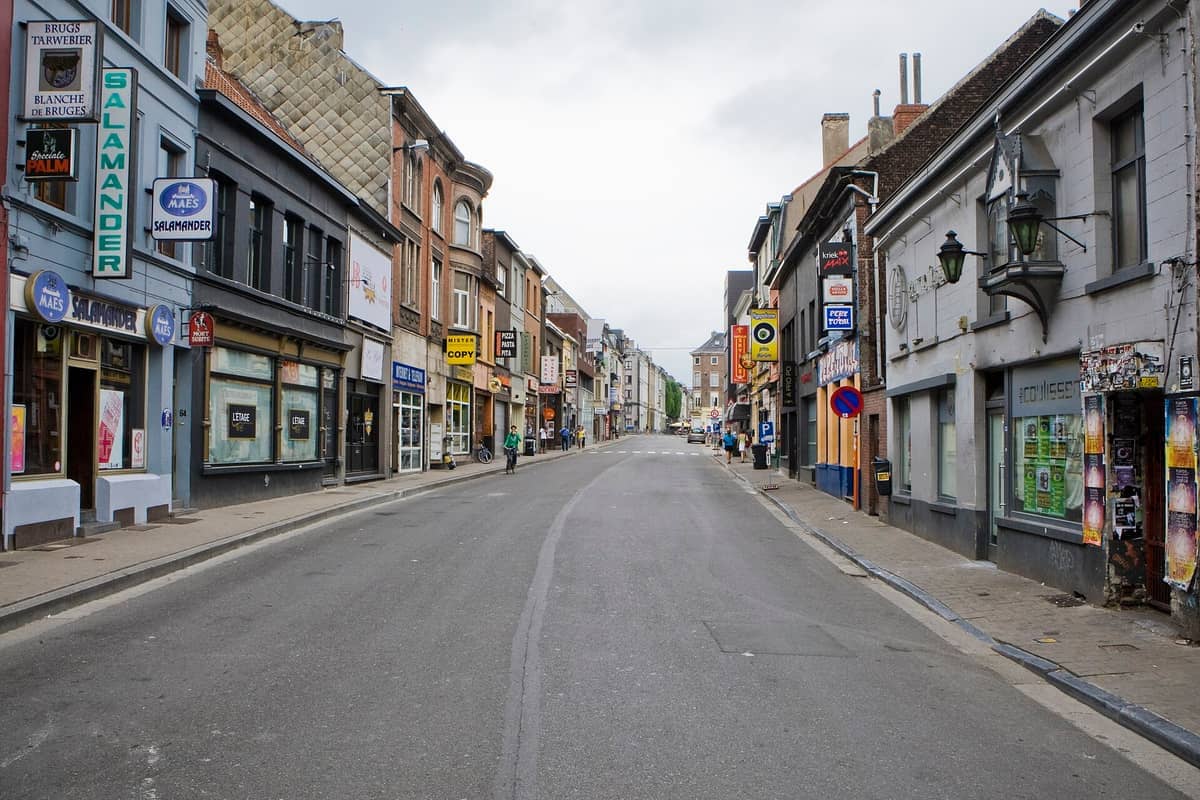
Come here on a weekday morning and the street is almost silent. Shutters are down on most bars, delivery scooters weave between recycling bins, and the occasional student in a hoodie moves quickly toward campus. The light is flat and northern in the way only Belgian autumn mornings can be, and the pavement still carries the evidence of the night before: a plastic cup here, a forgotten kebab wrapper there. It's not glamorous. It's not trying to be.
By late afternoon, the energy shifts. Students finishing afternoon lectures drift back through Sint-Pietersplein and into the strip. Sandwich shops and cheap lunch counters pull in their last trade. A few bars prop open their doors. The smell of frites from the frituur on the corner starts to carry down the street. By early evening, the bars are filling up, the music has started, and Overpoortstraat is doing what it does every week of the academic year: feeding and entertaining a few thousand young people at prices that make it possible to go out three nights in a row.
Thursday nights are traditionally the main student going-out night in Ghent, a Belgian university tradition tied to the fact that many students head home to their families on Friday. On Thursdays, Overpoortstraat is extremely loud and extremely full from around 9 pm until the early hours. Weekends bring a different crowd, with more out-of-town visitors and slightly older regulars. During the summer university break, the street goes quiet in a way that feels almost eerie after the academic-year intensity.
⚠️ What to skip
The city of Ghent has run repeated safety initiatives on Overpoortstraat targeting glass bottles on the street, public urination, and petty theft. Keep an eye on your belongings on busy nights and stick to well-lit parts of the strip. It is safe by the standards of any student nightlife area, but it is not without incident.
What to See & Do
Let's be direct: this is not a sightseeing neighborhood. There are no major historic monuments on Overpoortstraat itself. What the area offers is a window into everyday Ghent student culture, which is genuinely interesting if you're curious about the city beyond its medieval waterfront. Watching several thousand students organise their social lives around a single street is, in its own way, a kind of living urban spectacle.
Sint-Pietersplein, at the northern end of the axis, is worth pausing at. The square is anchored by the Sint-Pietersabdij, a Baroque abbey complex that houses a museum and exhibition space, and it gives the student quarter an unexpectedly grand architectural frame. From Sint-Pietersplein, you can walk north into the Citadelpark and Museum Quarter in around 10 minutes, which is where Ghent's serious museum infrastructure is concentrated.
The nearby Citadelpark itself is a broad public green space that students use for everything from frisbee to impromptu picnics during exam season. It's also home to S.M.A.K., Ghent's contemporary art museum, and the MSK Gent, the fine arts museum. Neither is technically within the student quarter, but both are within easy walking distance and make for a good cultural counterpoint to an evening on Overpoortstraat.
- Sint-Pietersplein: the social square at the northern edge of the student axis, worth a look for the abbey architecture
- Sint-Pietersabdij: Baroque abbey complex adjacent to the square, with rotating exhibitions
- Citadelpark: green space for daytime downtime, about 10 minutes' walk from the strip
- Campus Ledeganck: one of the main Ghent University faculties, anchoring the academic character of the area
- Street art and postering: the walls around Overpoortstraat carry a constantly rotating layer of gig posters, political stickers, and occasional murals
If street art is your focus, this area has a rougher, more spontaneous energy than the curated murals elsewhere in the city. You can find more on that in the Ghent street art guide.
Eating & Drinking
The food offer on Overpoortstraat is calibrated almost entirely to student budgets, which means it's cheap, fast, and open late. Frituren (Belgian chip shops) are the backbone: frites with stoofvlees sauce or andalouse are a staple at any time of the evening, and the better frituren on the strip maintain surprisingly high quality despite the volume they turn over. Döner and shawarma shops, pizza counters, and sandwich bars fill in the gaps.
The Ghent University student restaurant system operates in and around the area, providing subsidised hot meals for enrolled students. Non-students can typically eat there too, though at a slightly higher price point, and the quality is significantly better than the name suggests: Ghent's student restaurants have a reputation for decent Flemish cooking at very low prices. Vegetarian options are standard, which reflects Ghent's broader reputation as one of Belgium's most plant-friendly food cities.
The bar culture here is specific to the student world. Most places are large, informal, and designed for volume rather than atmosphere. Beer is cheap by Belgian standards, and the house pours are usually local Flemish lagers or basic Belgian abbey ales. If you want Ghent's more serious craft beer scene, you'll find it in the historic centre or around the Vrijdagmarkt area. What Overpoortstraat does offer is a kind of unpretentious drinking culture that most tourist-facing bars in Ghent have long since traded away.
💡 Local tip
Thursday night is the main going-out night for Ghent students. If you want to experience Overpoortstraat at its most intense, Thursday from 9 pm onward is when it peaks. If you're looking for a quieter visit, Wednesday afternoons and Saturday mornings are when the neighbourhood feels most like its daytime self.
Coffee shops and casual cafés are concentrated toward Sint-Pietersplein rather than along the strip itself. The square and its immediate surroundings have a slightly more relaxed, daytime-friendly café culture, with places that work well for a slow breakfast or a working afternoon. These cater to the student population during the day and transform into pre-drinking venues by early evening.
Getting There & Around
The most convenient public transport connection is from Gent-Sint-Pieters, the city's main railway station, which sits just west of the student quarter. Tram lines operated by De Lijn connect Sint-Pieters to the city centre in around 5 to 10 minutes: trams stop at Korenmarkt, putting you in the heart of the historic centre. From the station, Overpoortstraat is a 10-minute walk heading east and then south, or you can take a bus along the corridor.
Bus lines serving the immediate area include routes 34, 55, 5A, 70, 76, 77, and 78, with stops at Gent Heuvelpoort, Gent Sint-Pietersplein, Gent Sint-Amandstraat, and Gent Terplatenbrug. The Heuvelpoort stop is at the southern end of Overpoortstraat near the R40 ring road, while Sint-Pietersplein covers the northern end. De Lijn tickets cost €3 for a single ride with one hour of travel included; contactless bank card payment is accepted on all trams and buses, which is the simplest option for visitors.
ℹ️ Good to know
De Lijn ticket prices and tram line numbers are subject to change. Verify current fares and routes on the De Lijn website or app before travelling, particularly if you're planning to use a day pass or multi-ride card.
Walking is the most practical way to explore the strip itself, as Overpoortstraat is compact enough to cover end to end in under 15 minutes. Getting from the student quarter to Ghent's main tourist sights on foot takes 20 to 25 minutes heading north through the station area and into the centre. The full getting around Ghent guide covers tram routes and cycling options in more detail.
Cycling is extremely common in this part of Ghent, as it is across the whole city. Student quarter streets are well served by cycle infrastructure, and the flat terrain makes the journey to the historic centre or the Citadelpark straightforward on a borrowed or rented bike. Bike-sharing is available at multiple points near the station and along the Sint-Pietersplein corridor.
Where to Stay
The student quarter is not a conventional hotel district. Accommodation here tends toward budget hostels, student short-stay apartments, and Airbnb-style rentals, many of them targeting visiting academics or students on exchange programmes. Travellers looking for hotels with services, a central location, and proximity to Ghent's main sights will find better options in or around the historic centre. For a full overview of where to base yourself in the city, the where to stay in Ghent guide breaks down all the main areas.
That said, staying near Sint-Pietersplein or Gent-Sint-Pieters station puts you within walking distance of both the student nightlife and the historic centre, and is a reasonable compromise for travellers who want to minimise tram use. The station area has a small cluster of mid-range hotels that serve as practical bases without being embedded in the noise of Overpoortstraat itself.
If you're specifically coming to Ghent for the Gentse Feesten, Ghent's massive summer music and street festival, be aware that accommodation across the whole city fills up fast. The student quarter can be a fallback option during the festival period, but it tends to be loud at the best of times, and during Feesten the noise level across the city escalates considerably.
Read more about timing your visit in the Gentse Feesten guide and the best time to visit Ghent overview.
Is Overpoortstraat Worth Your Time?
For most leisure visitors to Ghent, Overpoortstraat is not a destination in itself. The historic centre, with its medieval waterfront, world-class altarpiece, and centuries-old architecture, is where you go first. But if you're spending more than two days in the city, or if you want to see what Ghent looks like when it isn't performing for tourists, the student quarter offers something real: a neighbourhood built entirely around the needs of 50,000 young people, operating at full volume during the academic year.
It also sits close enough to the Citadelpark museum cluster to make a logical combined visit: a morning at S.M.A.K. or the MSK Gent followed by a cheap lunch near the student quarter is a perfectly sensible way to spend a half day. For budget travellers, the low price point of food and drink on the strip can make it a useful anchor for an evening even if you're based elsewhere in the city.
TL;DR
- Overpoortstraat is Ghent's main student nightlife corridor, running from Sint-Pietersplein south to the Heuvelpoort ring road, with a dense concentration of bars, cheap food, and student energy.
- Best experienced on a Thursday night during the academic year, when the street is at full capacity; largely quiet in summer months when students leave the city.
- Not a sightseeing area, but useful for budget travellers and anyone curious about the city's everyday student culture beyond the tourist waterfront.
- Safety is generally fine by student nightlife standards, but petty theft and rowdy crowds are recurring issues on busy nights; take standard precautions.
- Ideally combined with a visit to the nearby Citadelpark museum cluster (S.M.A.K. and MSK Gent) for a half-day that balances culture with cheap food and drinks.
Related Travel Guides
- 2 Days in Ghent: The Perfect Weekend Itinerary
Ghent rewards visitors who stay longer than a day trip. This two-day itinerary covers the medieval core, the best museums, canal-side eating, and the practical logistics to make every hour count — with clear notes on what's worth your time and what isn't.
- Ghent's Best Churches & Religious Architecture: A Complete Guide
Ghent's medieval skyline is defined by its three great towers, two of which belong to churches that rank among the finest in Northern Europe. This guide covers every major church and religious building worth seeking out, from the cathedral housing Jan van Eyck's masterpiece to a quiet beguinage that has barely changed in centuries.
- Best Museums in Ghent: Art, History & Design Worth Seeing
Ghent stands out for museum-going. This guide covers the city's finest collections, from medieval altarpieces and Flemish old masters to contemporary art and decorative design, with practical advice on what to prioritise and when to visit.
- Best Time to Visit Ghent: A Month-by-Month Guide
Ghent rewards visitors in every season, but the best time to visit Ghent depends on your priorities. This guide breaks down weather patterns, major events, crowd peaks, and price fluctuations so you can choose the right window for your trip.
- Brussels to Ghent: The Definitive Day Trip Guide
Ghent is one of Belgium's most rewarding cities and sits just 35 minutes from Brussels by train. This guide covers every transport option, the smartest itinerary for a single day, what to skip, and what not to miss — including the city's medieval waterfront, world-famous altarpiece, and canal boat tours.
- Best Day Trips from Ghent: Bruges, Brussels, Antwerp & Beyond
Ghent sits at the centre of one of Europe's most connected rail networks, putting Bruges, Brussels, Antwerp, and the WWI battlefields of Flanders Fields within easy reach. This guide covers journey times, fares, what to do once you arrive, and how to avoid the most common planning mistakes.
- Following the Flemish Masters in Ghent: The Complete Route Guide
Ghent holds one of Europe's greatest concentrations of Flemish master art, anchored by Jan van Eyck's Ghent Altarpiece and a self-guided cycle route connecting cathedral treasures, medieval streetscapes, and riverside nature reserves. This guide covers every key stop, practical logistics, and what to skip.
- Free Things to Do in Ghent: 20 Attractions That Won't Cost You a Thing
Ghent stands out for free attractions. From sweeping canal views and medieval architecture to botanical gardens and contemporary street art, this guide covers the best no-cost experiences the city has to offer.
- Gentse Feesten: The Complete Guide to Ghent's July Festival
The Gentse Feesten is one of Europe's largest free city festivals, transforming Ghent's medieval centre into 10 days of concerts, street theatre, and late-night revelry every July. This guide covers everything from how to navigate the festival's spread-out layout to booking accommodation before it sells out.
- Getting Around Ghent: The Complete Transport Guide
Ghent is one of Belgium's most walkable historic cities, but knowing how its tram network, train connections, and visitor passes work saves real time and money. This guide covers every transport option in detail, from Brussels Airport transfers to De Lijn ticketing, cycling routes, and the CityCard Gent.
- Ghent Christmas Market: The Complete Guide to Gentse Winterfeesten
The Ghent Christmas Market, officially known as Gentse Winterfeesten, transforms the city's medieval squares into one of Belgium's most atmospheric winter events each December. This guide covers exact dates, opening hours, what to expect at each location, practical transport tips, and practical advice on making the most of your visit.
- What to Eat in Ghent: Flemish Food & Local Specialties
Ghent takes its food seriously. This guide covers every dish worth ordering in the city, from the iconic creamy waterzooi stew to cone-shaped cuberdon candies, with clear context on prices, seasonality, and where locals actually eat.
- Ghent Nightlife: Best Bars, Clubs & After-Dark Experiences
Ghent stands out after dark. With a student population of tens of thousands, a dense historic centre, and multiple distinct nightlife zones, the city offers everything from cheap weeknight pints on Overpoortstraat to late-night jazz and craft beer in medieval surroundings. This guide covers every major area, what to expect on different nights of the week, and how to avoid the rookie mistakes.
- Ghent on a Budget: How to Visit for Less
Ghent is one of Belgium's most impressive medieval cities, and it doesn't have to be expensive. From free canal walks and no-cost museum entry for under-18s to the CityCard Gent pass and multi-trip tram tickets, this guide covers every angle of visiting Ghent without breaking the bank.
- Best Photo Spots in Ghent: 20 Locations Every Photographer Should Know
Ghent is one of Belgium's most photogenic cities, with medieval towers, guild-lined canals, and hidden courtyards at every turn. This guide covers the 20 best photo spots in Ghent, from classic panoramas to atmospheric backstreets, with practical advice on when to go and what to expect.
- Ghent Street Art: The Complete Guide to the City's Urban Art Scene
Ghent has one of Belgium's most seriously developed street art scenes, backed by city policy, a free downloadable map, and over 330 catalogued works. This guide covers every self-guided route, the best guided tours, the legendary Werregarenstraatje, and how to explore beyond the tourist center.
- Ghent vs Bruges: Which Belgian City Should You Visit?
Both cities are medieval, canal-laced, and packed with Flemish history — but they feel completely different on the ground. This guide breaks down the real differences between Ghent and Bruges so you can choose wisely, or plan both.
- Self-Guided Walking Tour of Ghent: The Complete Expert Guide
Ghent rewards walkers more than almost any city in Belgium. This guide covers the best self-guided walking routes through the historic centre, practical logistics, CityCard value, seasonal tips, and the landmarks you genuinely should not skip.
- Ghent's Waterways: The Complete Guide to Canal Boat Trips and the City's Canals
Ghent's medieval canals are among the most atmospheric in Belgium, threading past Gothic towers, guild houses, and centuries-old quaysides. This guide covers every boat trip option, the best spots to explore on foot, what things cost, and the practical details that make the difference between a great experience and a wasted afternoon.
- Ghent with Kids: The Best Family Activities in Ghent
Ghent stands out as a family destination. This guide covers the best activities for kids in Ghent, from castle adventures and canal tours to parks, pools, and seasonal events, with practical advice on what to skip and how to save money with the CityCard.
- One Day in Ghent: The Perfect 24-Hour Itinerary
Ghent packs medieval architecture, world-class art, and one of Belgium's best food scenes into a compact, walkable historic centre. This 24-hour itinerary tells you exactly where to go, what to skip, and how to move between it all without wasting a minute.
- Romantic Ghent: The Complete Couples' City Break Guide
Ghent stands out as a romantic destination. This guide covers the best experiences for couples, from evening walks along illuminated waterways to medieval castles, Flemish food, and the quieter corners that most visitors miss. Practical and seasonal.
- Best Things to Do in Ghent: The Definitive Guide
Ghent is Belgium's most underestimated city. With a medieval core, world-class museums, a thriving food scene, and fewer tourist crowds than Bruges, it rewards visitors who take their time. This guide covers the best things to do in Ghent — from the unmissable to the genuinely off the beaten track — with real prices, practical logistics, and practical advice.
- Where to Stay in Ghent: Best Areas & Hotels (2026 Guide)
Choosing where to stay in Ghent shapes your entire trip. This guide breaks down every key neighbourhood by atmosphere, price, and convenience, then matches each to the right type of traveller, from first-timers to budget backpackers to couples after a romantic canal-view room.