Montjuïc is the great hill that anchors Barcelona's southwestern edge, rising 184.8 metres above the port and offering a completely different experience from the city's flat, street-level neighborhoods. It is home to world-class museums, sprawling gardens, a hilltop fortress, and the 1992 Olympic facilities — all connected by cable car, funicular, and a network of walking paths.
Montjuïc is not a neighborhood in the conventional sense: it is a hill, a park, and a cultural district rolled into one. Rising sharply from the port and Poble Sec, it holds more museums per square kilometre than almost anywhere else in Barcelona, yet large stretches remain quiet enough that you can hear the wind through the pine trees. Come here for art, for views, and for a pace the old town simply cannot offer.
Orientation: Where Montjuïc Sits in Barcelona
Montjuïc is the limestone hill that forms Barcelona's natural southern boundary, sitting between the port and the Llobregat delta. At 184.8 metres, it is one of the most prominent elevated viewpoints along the port, and from its upper terraces you can see the entire metropolitan basin, from the Collserola ridge to the north down to the open Mediterranean. Administratively it belongs to the Sants-Montjuïc district, the largest in Barcelona at 21.35 square kilometres, though the hill itself is primarily a park and institutional zone rather than a residential one.
The neighbourhood of Poble Sec sits at the foot of the northern slope, serving as the residential gateway to the hill. Its boundary runs roughly along Avinguda del Paral·lel to the north and Carrer de Lleida to the east. To the south, the hill drops sharply toward the port and the container terminal. The 1992 Olympic Ring occupies the upper plateau, while the hill's western flank descends through gardens and cemeteries toward the Zona Franca industrial area. For visitors, the relevant zone is the northern and upper sections of the hill, which are well connected and well maintained.
Montjuïc neighbours some of Barcelona's most-visited areas without actually being overrun itself. The Barceloneta waterfront is visible to the east from the castle walls. The Gothic Quarter is roughly 20 minutes on foot from the hill's base, and the broad avenue of La Rambla runs directly from Plaça de Catalunya down to the port, finishing just a few hundred metres from the Montjuïc funicular station.
Character & Atmosphere
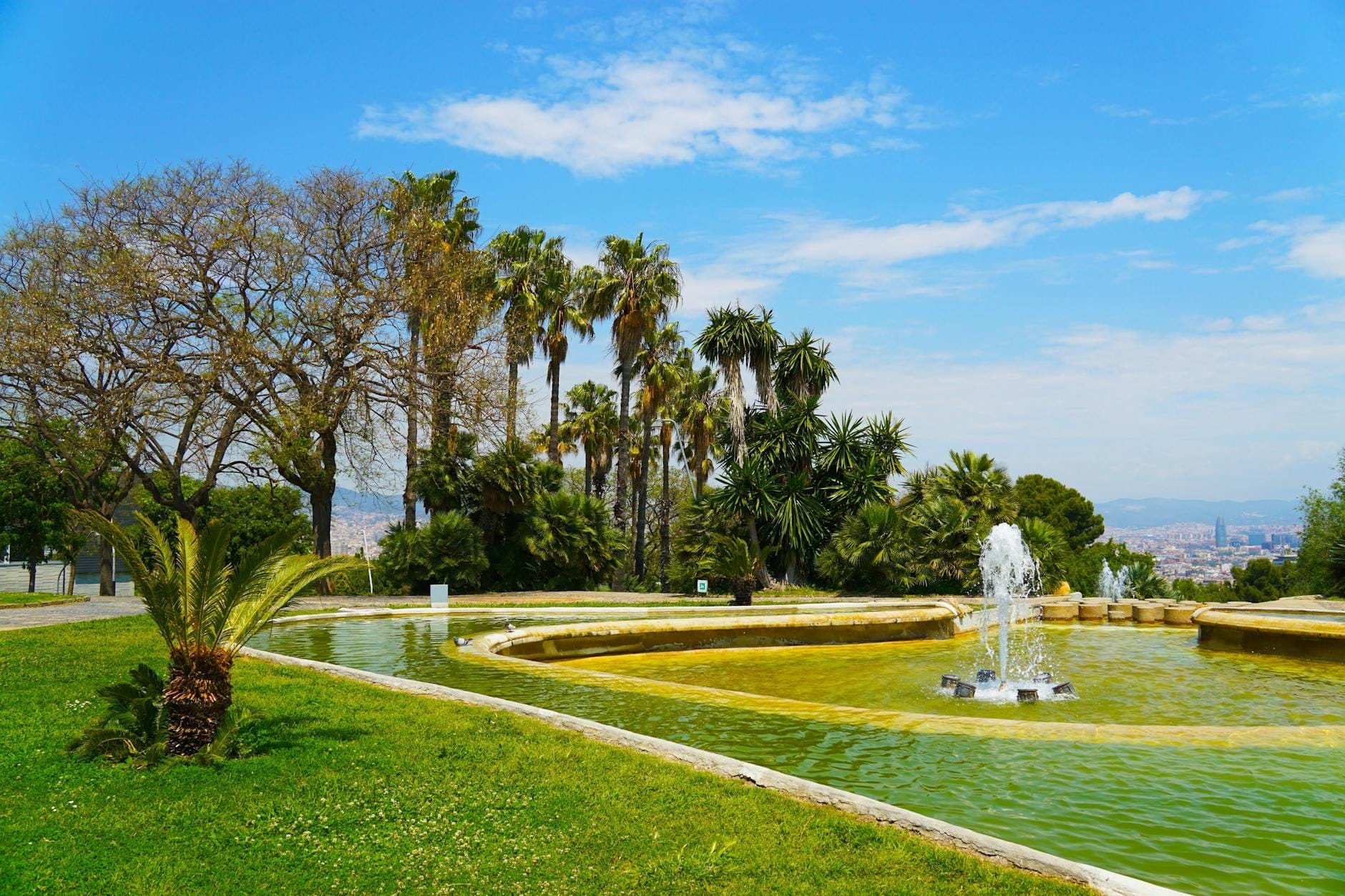
The character of Montjuïc shifts dramatically depending on where you are on the hill and what time of day you arrive. Early in the morning, the paths through the Jardins de Laribal and the Jardí Botànic are almost entirely empty. The light comes in low from the east, catching the stone terraces and the surface of the ornamental pools, and the only sounds are birdsong and the distant hum of the city below. This is when the hill rewards those willing to climb: the sense of being above a city of 1.6 million people, surrounded by gardens, is quietly extraordinary.
By mid-morning, the museums open and the tourist coaches begin to arrive, particularly at the Museu Nacional d'Art de Catalunya (MNAC) and the Fundació Joan Miró. The main avenues, especially Avinguda de l'Estadi and the area around Plaça d'Espanya at the hill's foot, fill with visitors working their way up through the terraced fountains. Weekends bring local families with children to the gardens and the cable car station, a different crowd from the day-trippers heading purely for the big institutions.
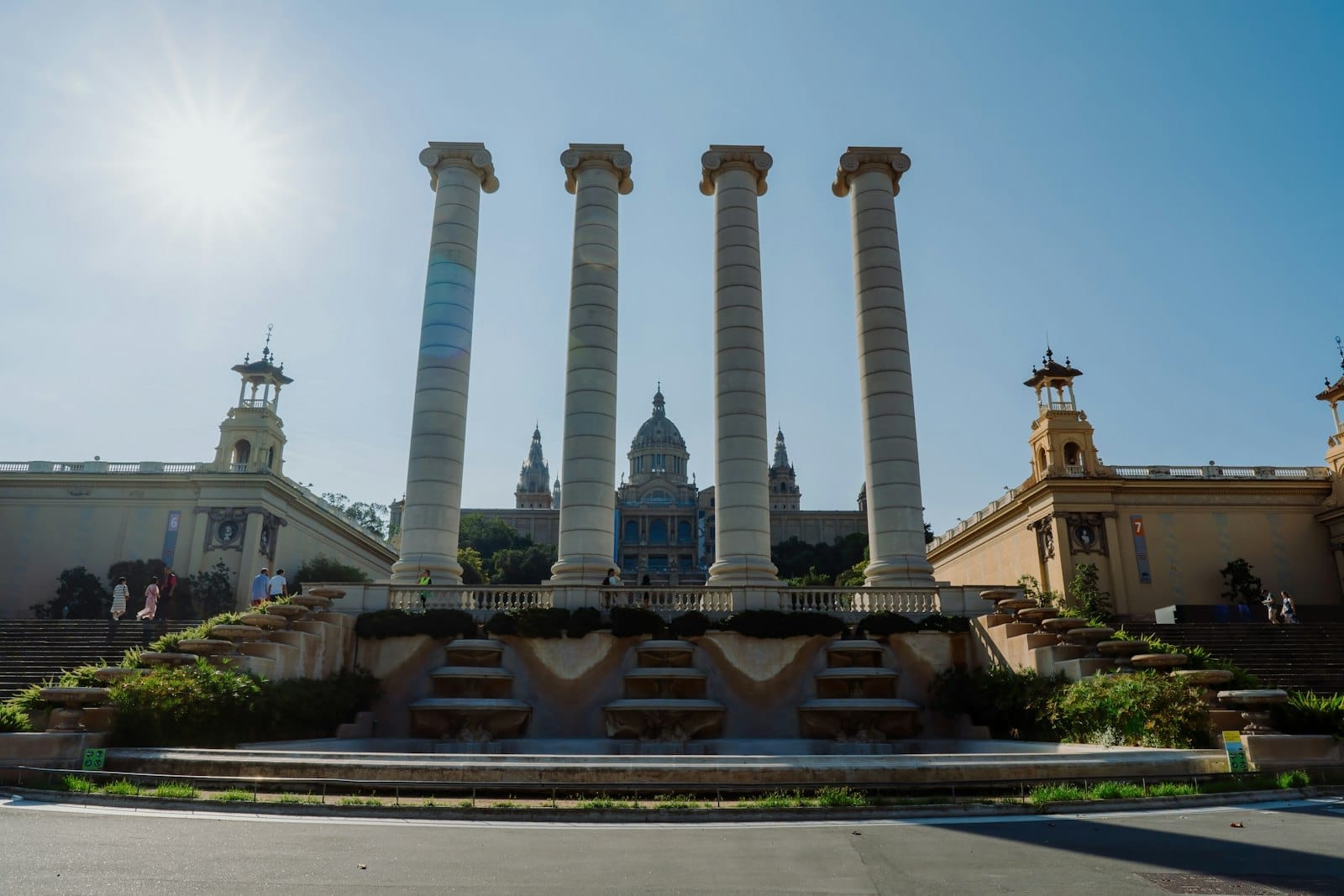
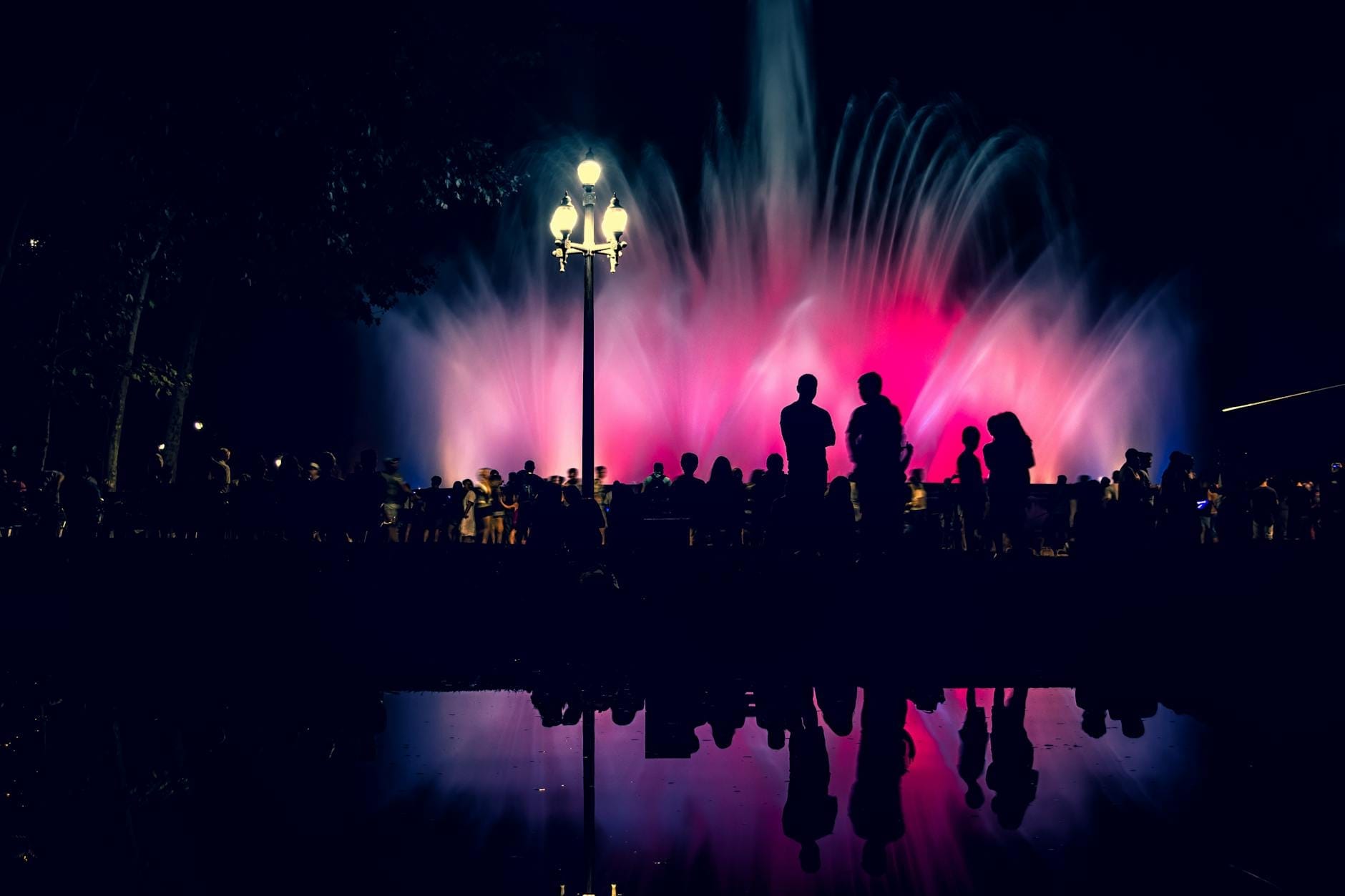
After dark, Montjuïc has a split personality. The Magic Fountain show draws large crowds to the base of the hill on Thursday through Sunday evenings, turning the broad staircase below MNAC into a public spectacle of light and water. Higher up, the castle area is quiet after closing time, and the roads through the park see almost no foot traffic. Poble Sec, down the hill, is where the evening energy actually lives: the strip along Carrer de Blai is one of Barcelona's best pintxos streets, and the bars along Avinguda del Paral·lel run late.
💡 Local tip
Visit the MNAC or Fundació Joan Miró on a Tuesday or Wednesday morning to avoid weekend queues. The gardens are free to enter and rarely crowded at any time — the Jardins de Laribal in particular are often overlooked even in peak season.
What to See & Do
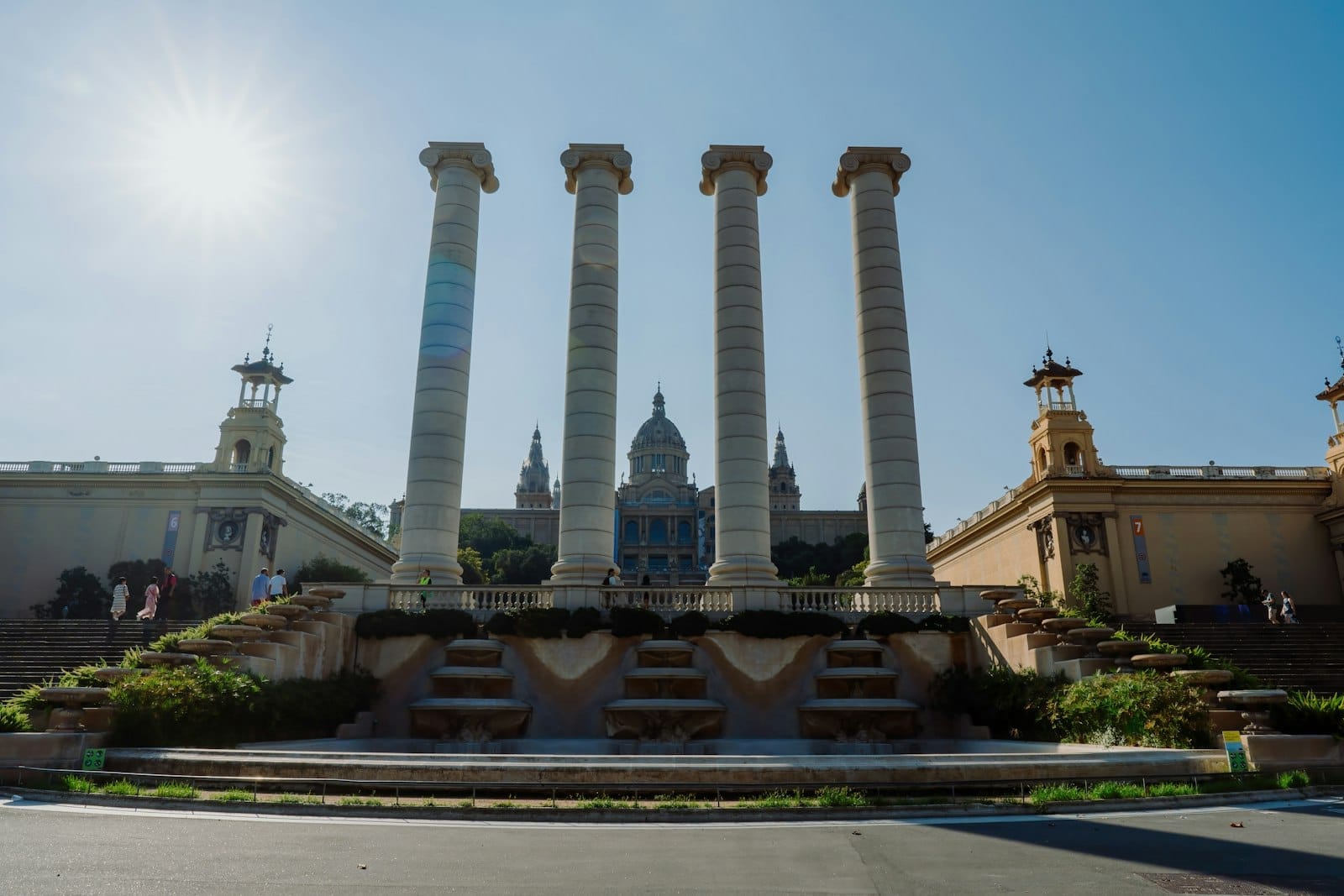
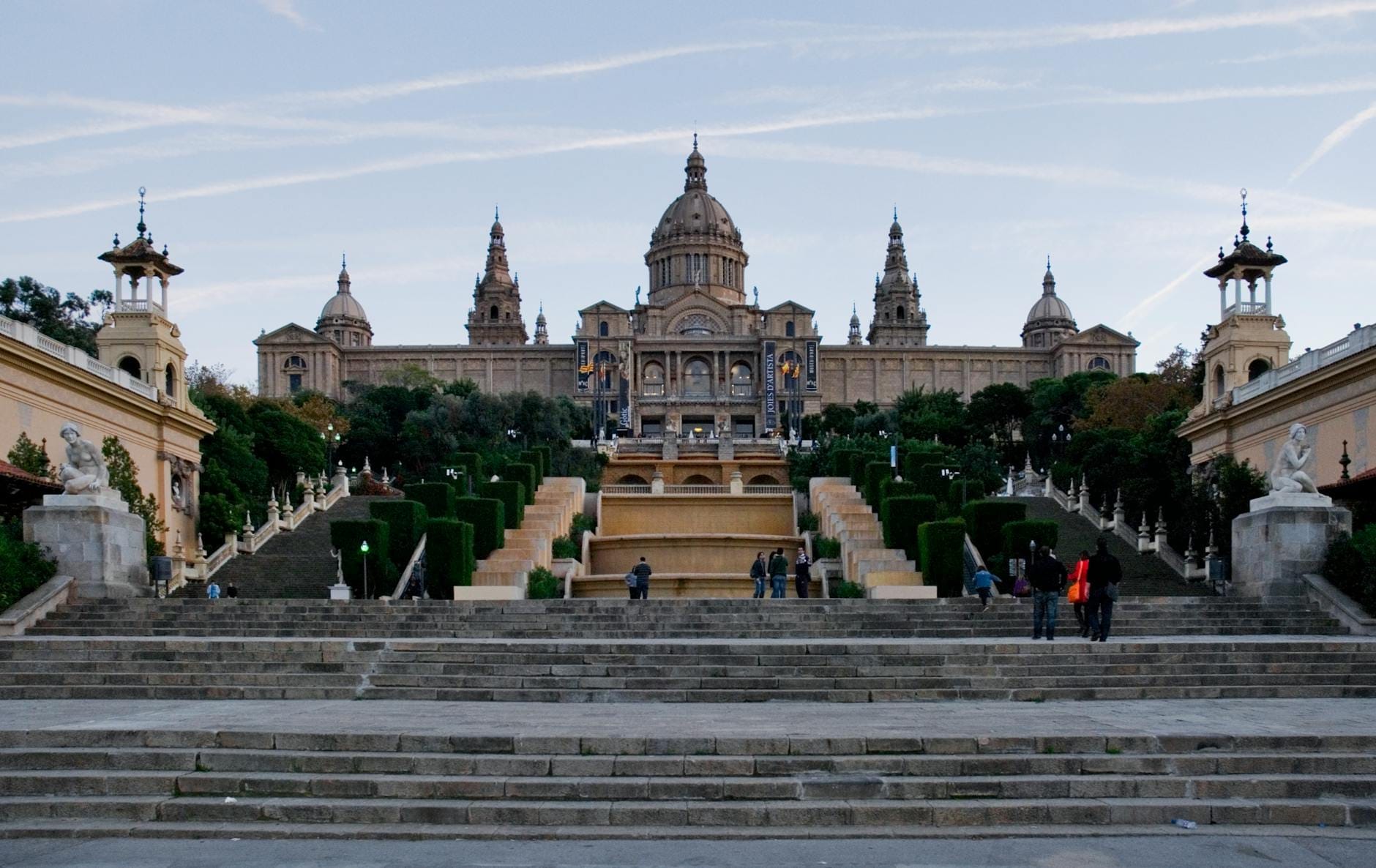
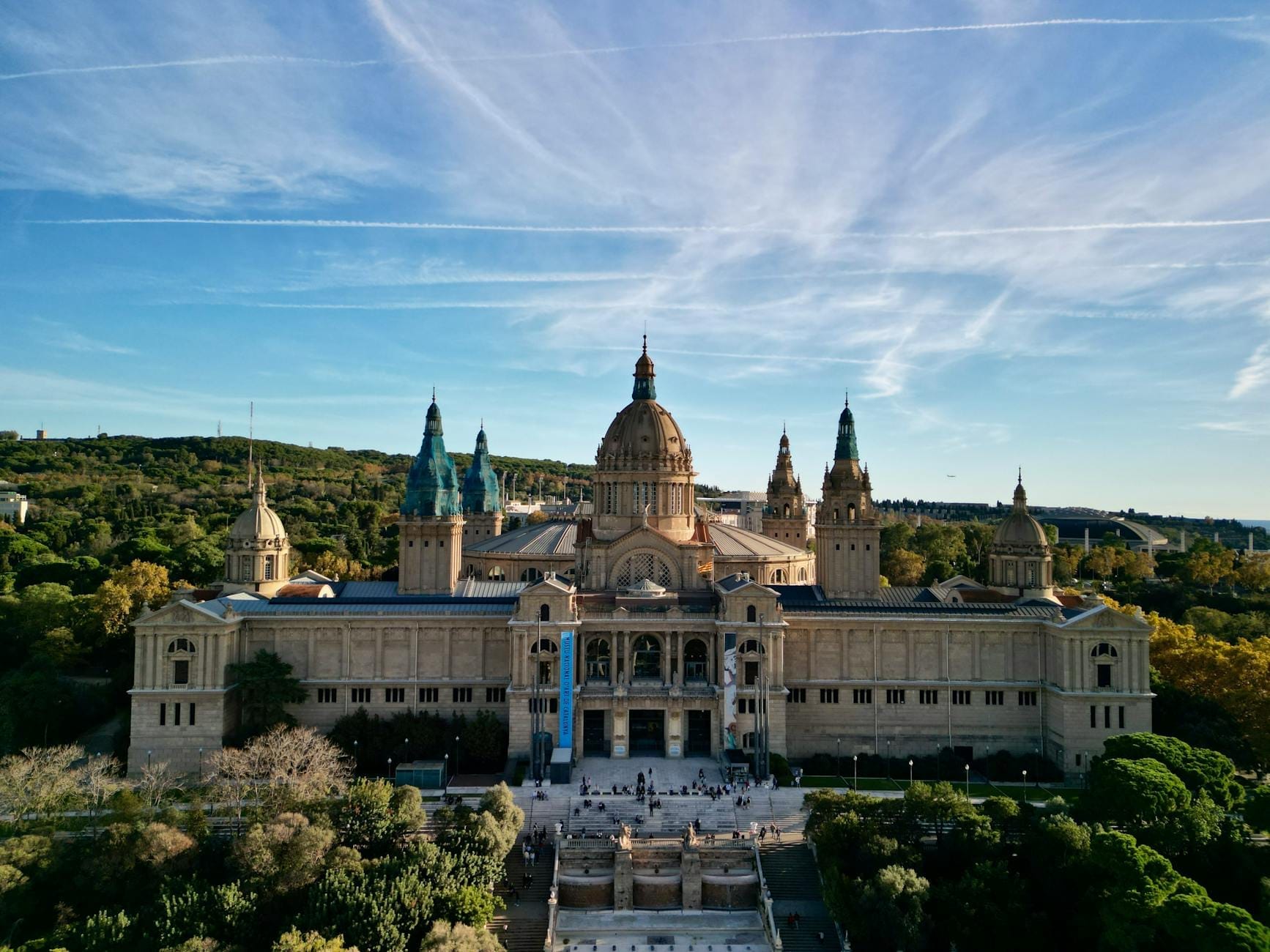
Montjuïc holds a concentration of cultural institutions that would take several days to visit properly. The anchor is the Museu Nacional d'Art de Catalunya, housed in the Palau Nacional that dominates the upper plateau. Its Romanesque art collection is one of the finest in the world, salvaged from rural Pyrenean churches in the early 20th century, and the building's oval dome and sweeping terraces are destinations in their own right.
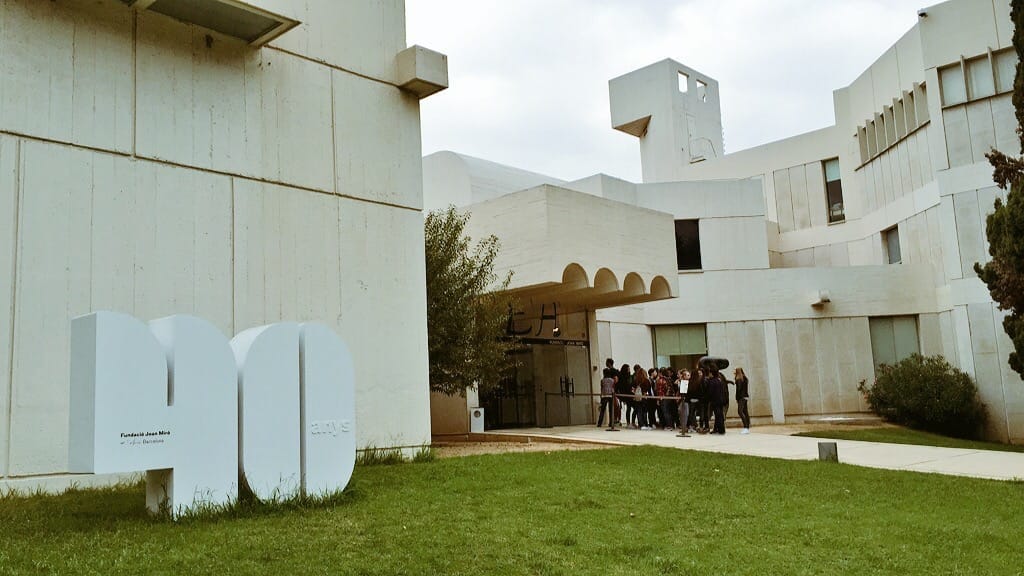
Below and to the west, the Fundació Joan Miró is a purpose-built modernist building by Josep Lluís Sert, filled with natural light and housing the most comprehensive collection of Miró's work anywhere. The permanent collection is strong, but the temporary exhibitions are consistently ambitious. Nearby, CaixaForum Barcelona sits at the base of the hill in a converted Modernista factory and runs a year-round programme of international art and science exhibitions — often the most adventurous contemporary programme in the city.
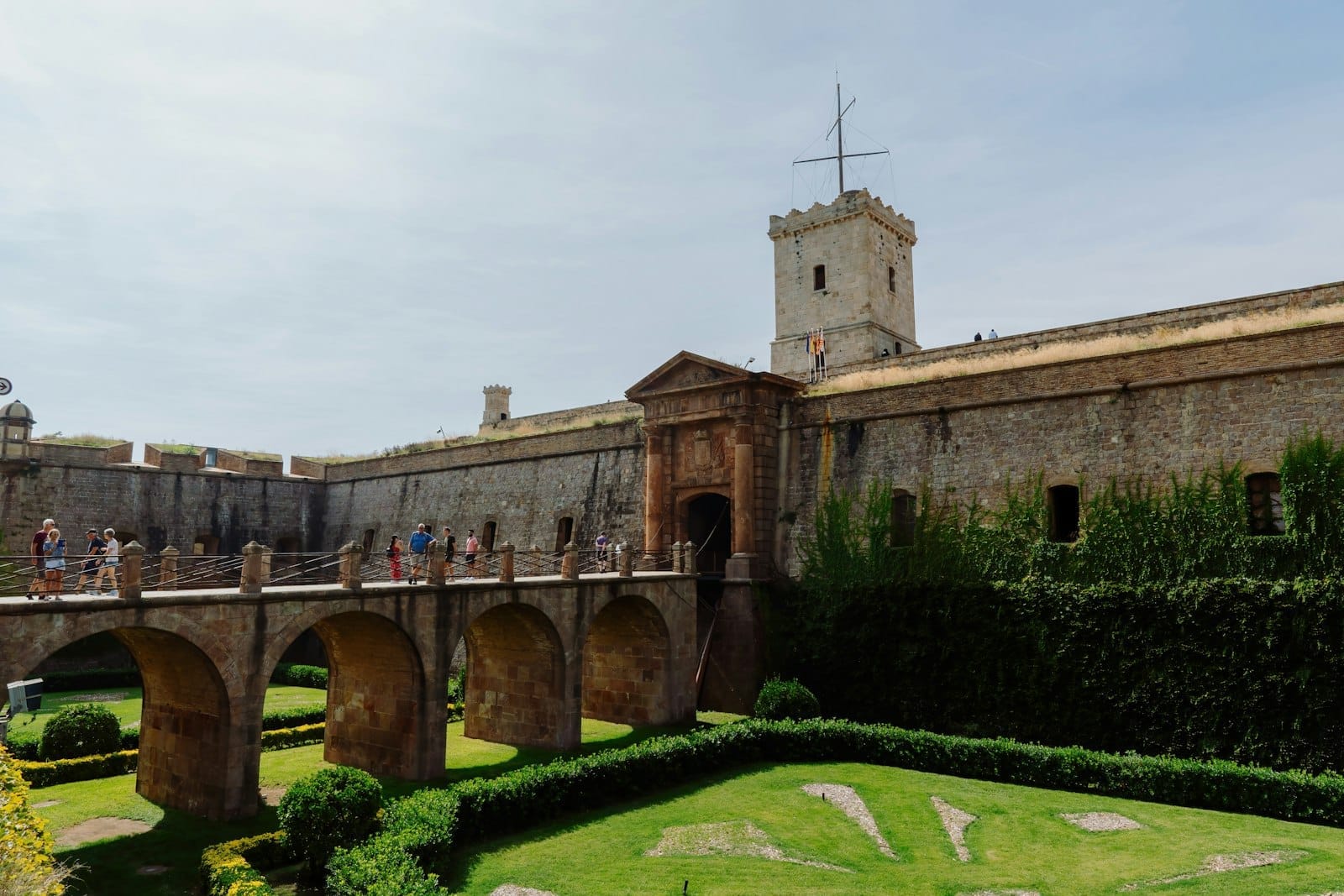
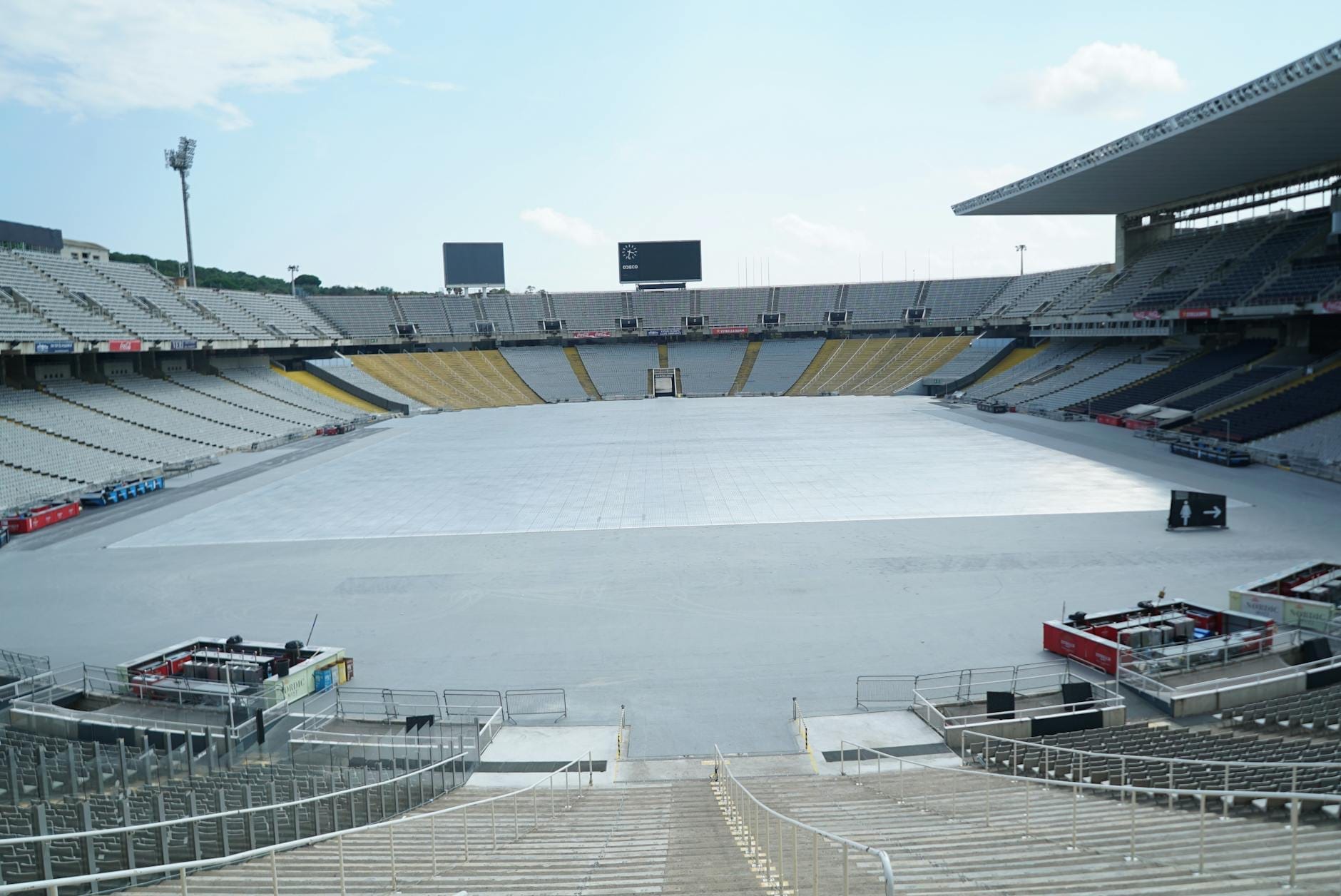
The Olympic legacy is still very much present on the upper plateau. The Olympic Stadium (Estadi Olímpic Lluís Companys) dates originally from 1929 and was rebuilt for the 1992 Games; you can walk in freely when events are not scheduled. The Torre Calatrava communications tower (136 metres tall) remains one of the most striking pieces of 1990s architecture in the city. Higher still, the Montjuïc Castle crowns the summit, a military fortress with a dark history as a political prison that the city has gradually repurposed as a public space and museum. The views from the castle walls over the port and the open sea are the best in Barcelona.
Museu Nacional d'Art de Catalunya (MNAC): world-class Romanesque and Gothic collections
Fundació Joan Miró: light-filled modernist building with major permanent collection
Montjuïc Castle: hilltop fortress with panoramic port views and historical exhibitions
Olympic Stadium (Estadi Olímpic Lluís Companys): freely accessible on non-event days
Jardí Botànic de Barcelona: hillside botanical garden with Mediterranean species
Jardins de Laribal: terraced water gardens, quiet and well-maintained
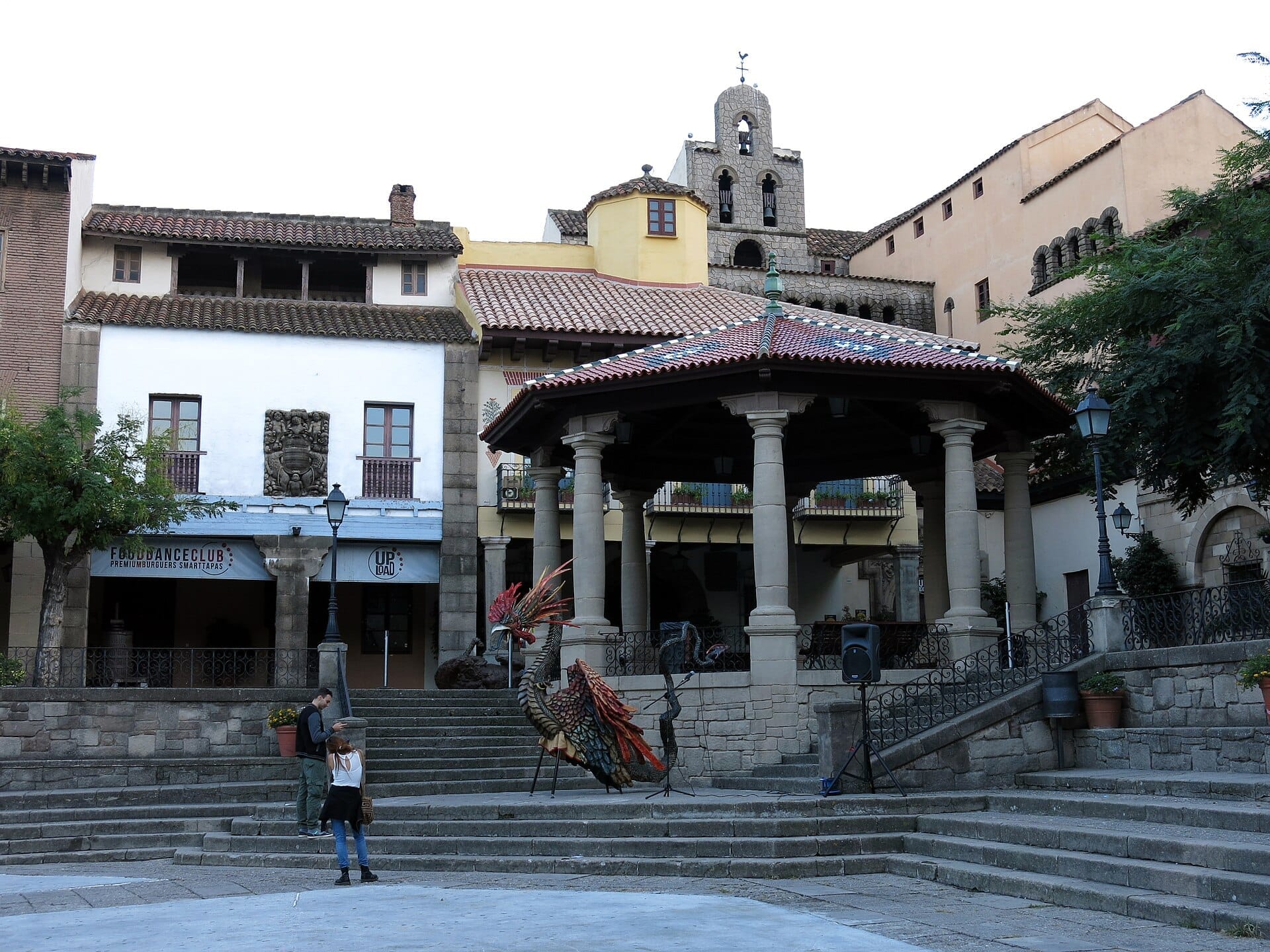
Poble Espanyol: open-air architectural museum recreating Spanish building styles from across the country
Magic Fountain of Montjuïc: evening light-and-water shows at the base of the hill
The Poble Espanyol is worth an honest mention: it is a 1929 World's Fair creation, an artificial 'village' built from reproductions of regional Spanish architecture. It sounds kitsch, and parts of it are, but it also contains serious craft workshops, a handful of decent restaurants, and after dark it becomes one of the city's more reliably interesting nightlife venues. It is not trying to be authentic; it is a constructed experience, and approaching it that way makes it considerably more enjoyable.
ℹ️ Good to know
The Magic Fountain show (Font Màgica de Montjuïc) runs Thursday to Sunday evenings, typically from around 21:30 in summer and 19:00 in winter, though hours change seasonally. Entry is free. The area around Plaça d'Espanya gets crowded quickly on show nights — arrive 20 minutes early for a decent position.
Eating & Drinking
Eating on the hill itself is convenient rather than exceptional. The museum cafés and restaurant at MNAC are solid options for lunch, with the terrace offering views over the city that compensate for menu prices that are slightly above average. The Fundació Joan Miró has a café-restaurant that is well designed and pleasant. Poble Espanyol contains several restaurants of varying quality, and at least one or two are genuinely worth visiting for lunch if you are already there.
The real eating and drinking scene is in Poble Sec, a five-minute walk downhill from the main Montjuïc attractions. Carrer de Blai is the street to know: a narrow pedestrian lane lined almost entirely with pintxos bars, where small plates of bread topped with everything from Iberian ham to smoked anchovies go for around one to two euros each. It is affordable, informal, and genuinely local. The street fills up from around 19:00 onward, with both residents and visitors working their way from bar to bar.
Poble Sec also has a strong restaurant scene beyond the pintxos strip, with a mix of Catalan, Mediterranean, and international options at reasonable prices, considerably better value than the Gothic Quarter or El Born. For a broader picture of where to eat well across the city, the where to eat in Barcelona guide covers the full range of neighbourhoods and price points.
Getting There & Around
Montjuïc is served by several overlapping transport options, which is fortunate because the hill is steep enough that walking the full ascent in summer heat is not a casual undertaking. The most useful entry point for most visitors is Plaça d'Espanya, which is served by Metro Lines 1 and 3 (the red and yellow/green lines). From there, the escalator-linked terraces lead up toward MNAC, Poble Espanyol, and CaixaForum without requiring you to climb any steps.
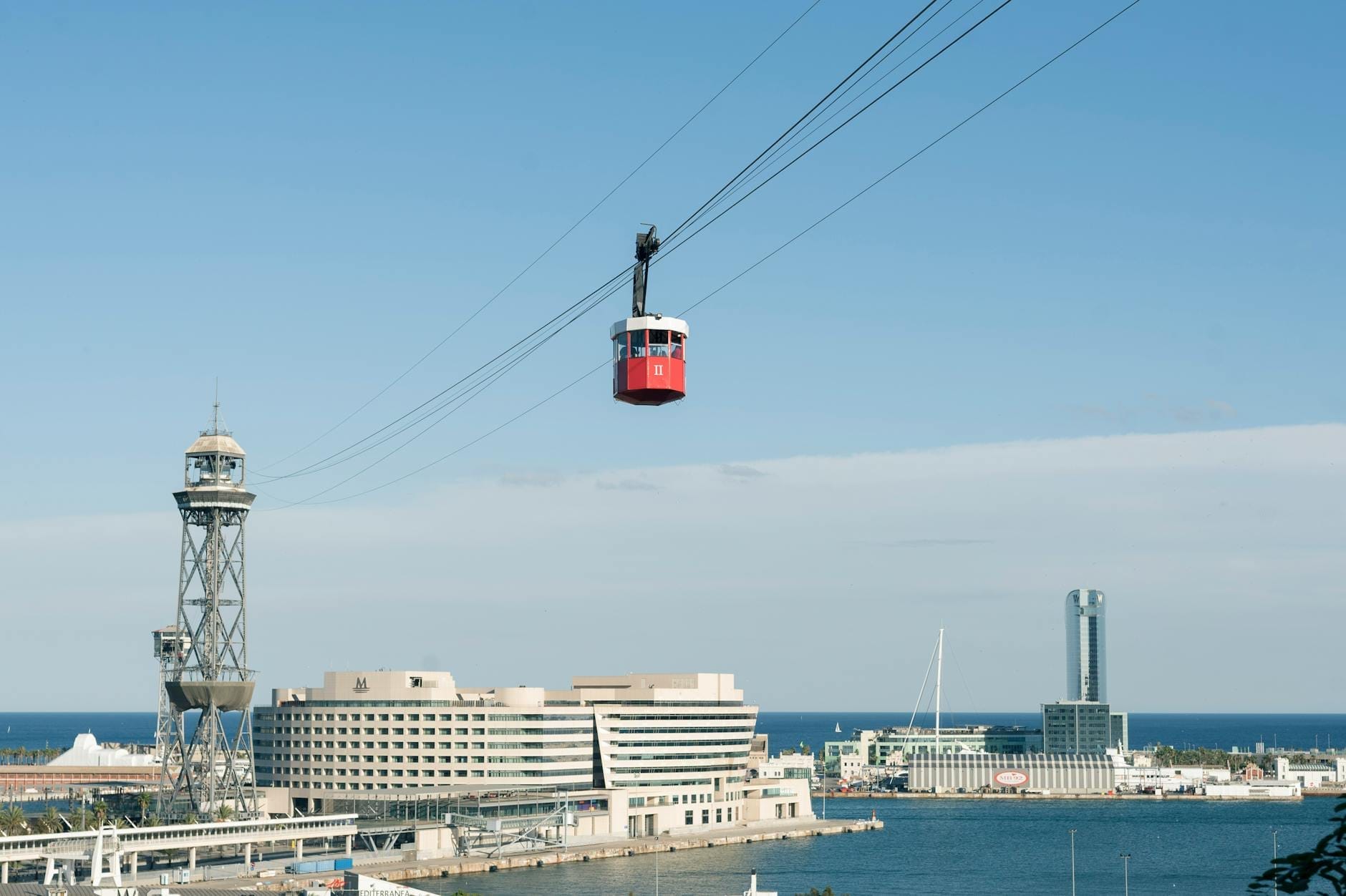
The Montjuïc Funicular runs from Paral·lel Metro station (Lines 2 and 3) to the middle section of the hill, near the Fundació Joan Miró and the cable car station. It is included in the standard TMB transit fare, meaning a T-Casual card (the 10-trip card) covers it. From the funicular's upper station, the Montjuïc Cable Car continues to the castle at the summit — this is a separate ticket and runs on a gondola system with excellent views over the port. Note that the cable car is subject to wind closures; check before making it your primary plan.
Bus 150 covers the main road circuit of the hill, stopping at all major attractions including the castle. It runs from Plaça d'Espanya and is the most flexible option if you want to move between multiple sites without backtracking on foot. The Bus Turístic also stops at Plaça d'Espanya and Montjuïc as part of its southern circuit, useful if you are already using that pass.
On foot, the hill is very walkable if you pace yourself. The path from Poble Sec up through the Jardins de Laribal to the MNAC takes roughly 25 to 30 minutes at a moderate pace and passes through pleasant gardens. Descending is significantly easier and makes for a rewarding end to a day on the hill, walking down through the terraces to Avinguda del Paral·lel and then into Poble Sec for dinner.
⚠️ What to skip
The cable car from Barceloneta (Port Vell) to Montjuïc is a popular option shown in many travel guides, but it runs limited hours and is subject to technical closures. Do not rely on it as your primary route up the hill. The funicular from Paral·lel is far more reliable.
Where to Stay
There are no hotels on Montjuïc hill itself. The closest accommodation options are in Poble Sec, at the hill's northern foot, and around Plaça d'Espanya. Poble Sec is a genuine residential neighbourhood with good transport links, quieter than the Gothic Quarter or Eixample, and significantly cheaper. It suits travellers who want to be within walking distance of Montjuïc's attractions without paying central Barcelona prices.
The Plaça d'Espanya area has a cluster of large hotels including several international chains, convenient for direct Metro access and the trade fair venues at Fira de Barcelona. It is functional but not atmospheric. For travellers weighing up where to base themselves across the city, the where to stay in Barcelona guide compares all the main areas with honest assessments of each. Montjuïc and Poble Sec work best for travellers specifically interested in the hill's cultural offerings and who value quiet evenings over proximity to the old town's nightlife.
Practical Tips & Honest Drawbacks
Montjuïc requires planning in a way that most Barcelona neighbourhoods do not. The distances between attractions on the hill are larger than they appear on a map, and the gradient means that misjudging the walk between the castle and the MNAC in the midday heat of July is a genuinely unpleasant experience. Carry water, wear comfortable shoes, and plan your route before you set off.
The Zona Franca industrial area on the hill's southern and western flanks is not a visitor destination and is worth knowing about mainly so you do not accidentally map-route through it. It is safe but featureless and far from any transit. Stick to the northern and upper sections of the hill and you will have no issues.
Montjuïc rewards visitors who commit a full day to it. Trying to combine the hill with the Sagrada Família or Park Güell in the same day is theoretically possible but leaves you rushing everything. The MNAC alone is a two-hour minimum. If you want the best views and a manageable itinerary, consider the best viewpoints in Barcelona guide, which puts the castle terrace in context alongside the city's other high points.
TL;DR
Montjuïc is Barcelona's cultural hill: the MNAC, Fundació Joan Miró, Poble Espanyol, Olympic Stadium, and a hilltop castle all sit within walking distance of each other — plan a full day rather than a half-day.
The Magic Fountain show at the base of the hill is free, runs Thursday to Sunday evenings, and draws large crowds: arrive early or watch from a side angle.
Getting up the hill is easiest via the funicular from Paral·lel Metro station (included in standard TMB fares); Bus 150 connects all the main sites once you are on the hill.
Eating on the hill is functional; Poble Sec's Carrer de Blai pintxos bars are the far better option for dinner after a day exploring.
Best for: travellers interested in art and architecture, those who want panoramic city views, families with children (gardens, cable car, fountain shows). Less suited to visitors focused purely on old-town street life and nightlife.
Barcelona transforms after sunset. Locals dine at 10 PM, the Magic Fountain draws crowds until midnight, and Gaudí's buildings glow in a way daylight simply cannot match. This guide covers the best ways to spend your evenings, from free spectacles to world-class performances.
Barcelona has nearly 5.5 kilometres of urban beaches stretching along the Mediterranean coast, all reachable by metro, bus, or bike. This guide covers every beach, what to do nearby, and how to make the most of the waterfront from the old port to the modern Diagonal Mar district.
Barcelona is an exceptional base for exploring Catalonia and beyond. These are the best day trips you can make from the city, from mountain monasteries and Roman ruins to Costa Brava beaches and Dalí's surrealist universe, most reachable by affordable public train.
Three days in Barcelona is enough to cover the city's greatest landmarks without rushing, if you plan smartly. This itinerary balances iconic Gaudí architecture, medieval streets, seafront walks, and local markets, with honest advice on what to skip, what to book ahead, and how to move between neighborhoods efficiently.
Barcelona is Spain's most expensive city, but it rewards smart travelers with free museums, cheap tapas, and world-class architecture you can admire for nothing. This guide breaks down exactly how to stretch your euros further without missing anything essential.
Barcelona rewards families with an extraordinary range of experiences: world-class science museums, a historic hilltop amusement park, beaches, Gaudí's fantastical architecture, and free fountain shows. This guide cuts through the noise to focus on what genuinely works with children in tow.
Choosing the best time to visit Barcelona depends on more than just sunshine. This guide breaks down every season by temperature, crowd levels, events, and value, so you can match your trip to your priorities rather than defaulting to peak summer.
Barcelona rewards those who look up and out. From hilltop ruins to Modernista rooftops, these are the city's best vantage points, ranked and described with practical detail so you can plan the perfect panorama.
Antoni Gaudí left seven UNESCO World Heritage Sites across Barcelona, each one a window into his obsessive genius. This guide covers every major work, from the soaring Sagrada Família to his earliest commission in Gràcia, with tips on booking, routing, and what to see inside each building.
Barcelona has one of Europe's most comprehensive urban transport networks, but knowing which option to use when can save hours and euros. This guide covers every mode of transport in the city, from the TMB metro and night buses to ride-hailing apps, cycling, and how to reach the airport.
Barcelona rewards those who look beyond the obvious. These 18 attractions reveal the city that locals actually love: Civil War ruins with unbeatable views, Gaudí buildings the tour buses miss, neighbourhood promenades, and market halls that outshine the famous ones.
Barcelona packs extraordinary architecture, world-class food markets, sun-soaked beaches, and centuries of history into 101 square kilometres. This guide cuts through the hype to tell you what's genuinely worth your time, what to skip, and how to do it all without wasting a day.
Barcelona's food scene runs far deeper than paella and tapas. This guide covers essential Catalan dishes, the best markets, standout restaurants by neighborhood, and the seasonal specialties most visitors miss entirely.
Choosing where to stay in Barcelona shapes your entire trip. This guide breaks down every major neighborhood by location, atmosphere, price range, and who it actually suits, so you can book with confidence.