Where to Stay in Barcelona: Best Areas & Hotels for Every Traveler
Choosing where to stay in Barcelona shapes your entire trip. This guide breaks down every major neighborhood by location, atmosphere, price range, and who it actually suits, so you can book with confidence.
Tickets & tours
Live prices and dates from our booking partner. If you book, we may earn a commission at no extra cost to you.
TL;DR
- El Born is the smartest base for most visitors: central, walkable, atmospheric, and better value than the Gothic Quarter.
- Eixample suits those prioritizing Gaudí sights and upscale restaurants, with excellent metro connections across the city.
- The Gothic Quarter is not a trap, but it is loud and overpriced compared to neighboring areas — first-timers should set expectations accordingly.
- Barceloneta is ideal for a beach-focused summer trip, but overpriced for anyone who wants to explore the wider city.
- Book at least 6-8 weeks in advance for peak season (June-September). Spring and early autumn offer the best value and weather.
How to Choose the Right Neighborhood
Barcelona is a compact city of around 101 km², and its metro system is reliable enough that location is rarely a dealbreaker. That said, your neighborhood still determines what's outside your door each morning, how much noise you sleep through, and how much you'll pay per night. The difference between staying in the Gothic Quarter and staying in Eixample is not just a question of geography — it's a different experience of the city.
The city divides neatly into the old town (Barri Gòtic, El Born, El Raval), the planned 19th-century grid of Eixample, the coastal strip around Barceloneta, and the more residential neighborhoods like Gràcia further north. Each has a distinct character, a different price floor, and a different set of tradeoffs.
💡 Local tip
Barcelona's metro runs until midnight on weekdays and Sundays, extends to 2am on Fridays, and operates 24 hours on Saturdays. Unless you're staying in a remote suburb, you're rarely more than 20 minutes from anywhere by public transport. Don't let mild distance from the centre push you toward overpriced central hotels.
El Born: The Best All-Round Base
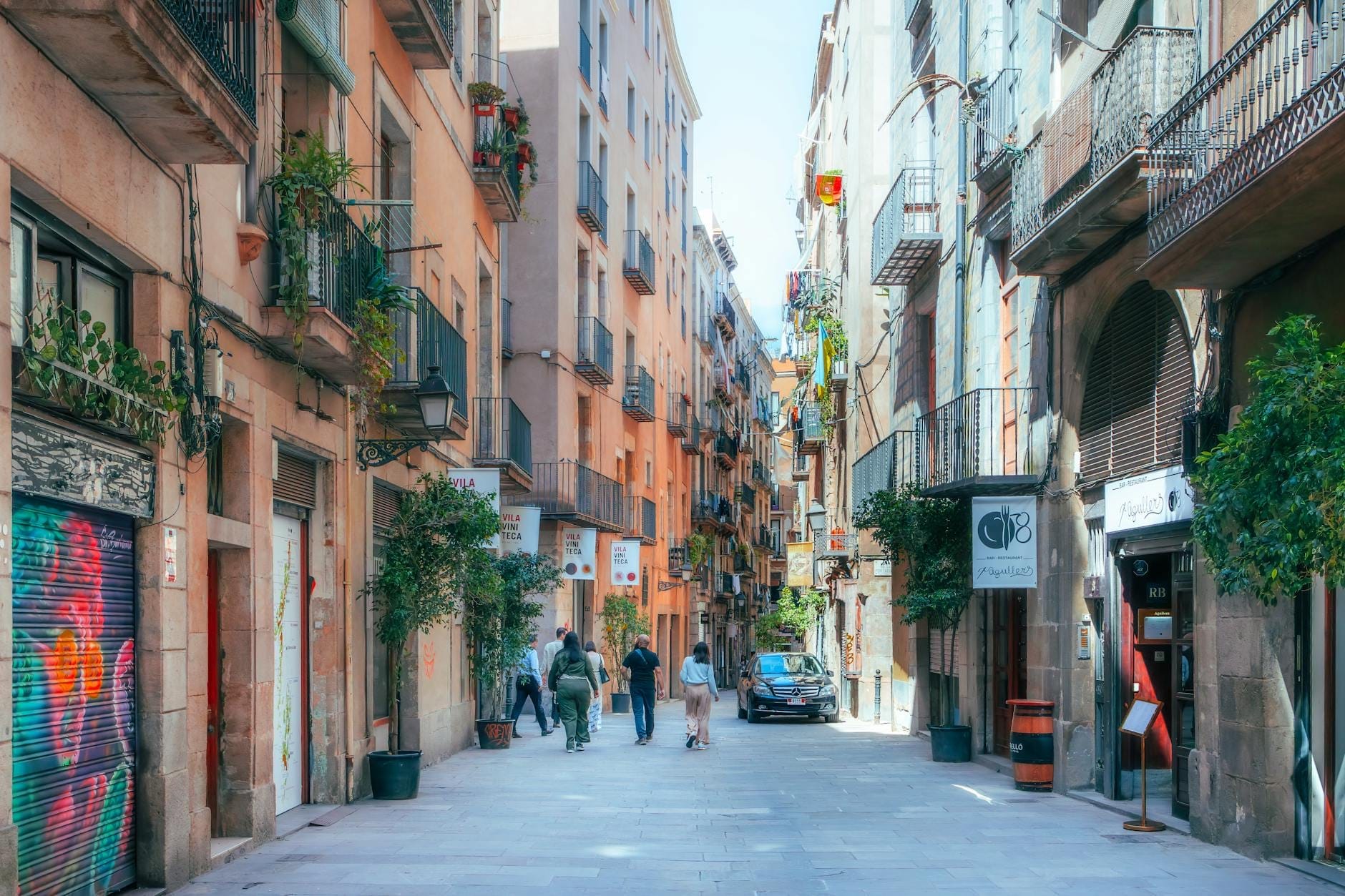
El Born (officially part of Sant Pere, Santa Caterina i la Ribera) sits between the Gothic Quarter and Parc de la Ciutadella and consistently delivers more value per euro than almost any other central area. The streets are medieval but the neighborhood feels genuinely lived-in, with Catalan bakeries, independent wine bars, and boutique shops alongside the tourist flow.
The main draws are walkable from here: the Museu Picasso Barcelona, the stunning Basílica de Santa Maria del Mar, and the Mercat de Santa Caterina (a better alternative to La Boqueria). The beach at Barceloneta is around 15 minutes on foot. Eixample is a short walk north, and Sagrada Família is a quick metro ride away.
Hotel prices in El Born tend to run 10-25% lower than equivalent-quality options in the Gothic Quarter, and you get quieter streets at night. The main downside: accommodation options are mostly boutique and smaller properties. If you need a large chain hotel with a pool, you'll likely be looking elsewhere.
Gothic Quarter: Central But Overrated for Sleeping
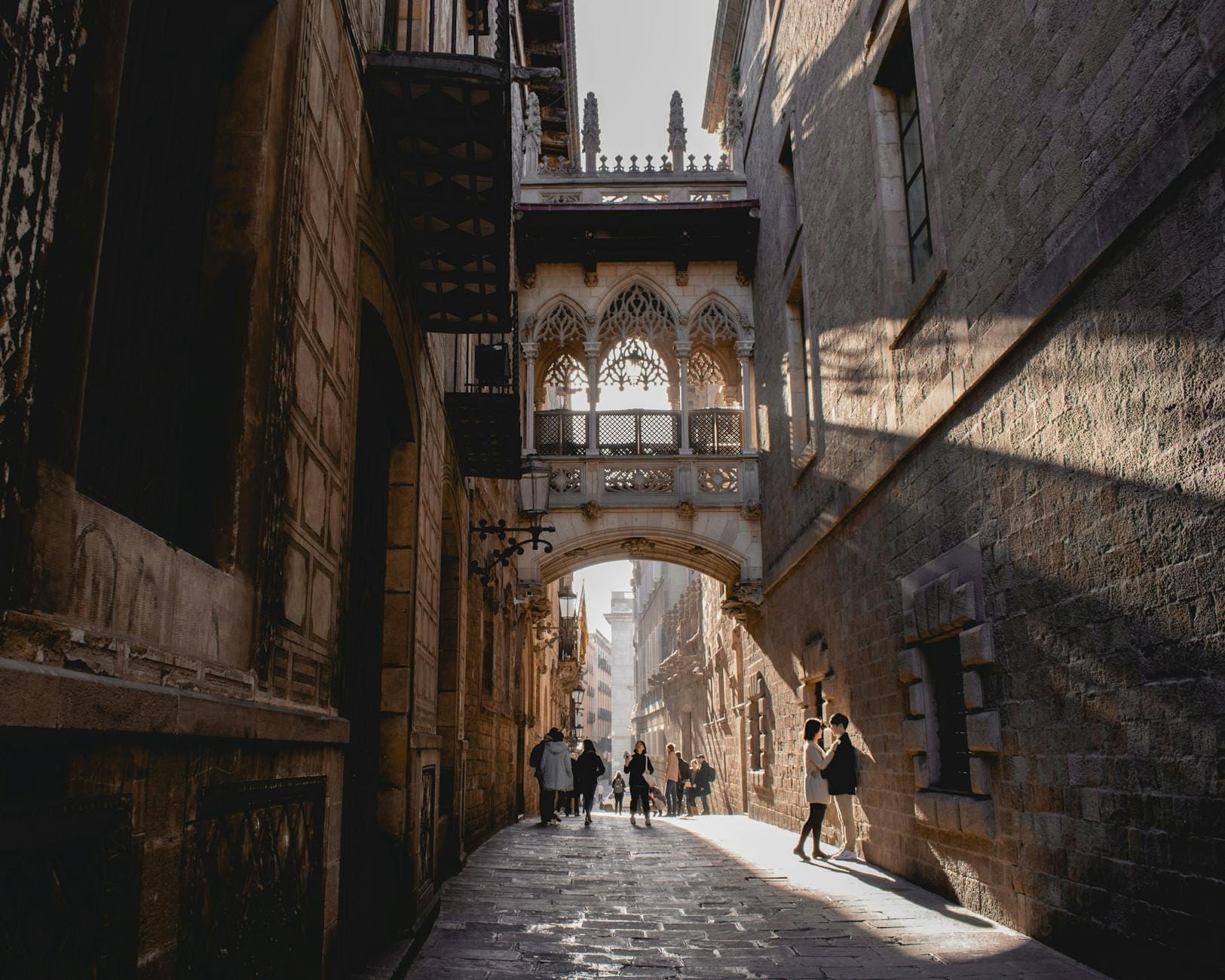
The Gothic Quarter is where most first-time visitors assume they should stay, and the logic isn't wrong: you're a few minutes from Las Ramblas, the Barcelona Cathedral, and Plaça Reial. You'll spend less time on transport and more time walking ancient streets.
The honest drawback: noise. The narrow lanes amplify sound dramatically, and the Gothic Quarter is one of the most trafficked tourist areas in Europe. Bars near Plaça Reial run until 3am on weekends. Hotels compensate with double-glazed windows, but light sleepers should be cautious. You're also paying a location premium of 20-40% over comparable rooms in El Born or Eixample.
⚠️ What to skip
Las Ramblas and the surrounding Gothic Quarter streets are the primary pickpocketing zones in Barcelona. Keep bags zipped and close to your body, and be particularly alert at street performers and crowded café terraces. This applies to all times of day, not just at night.
Who it suits: travelers on a short trip (2-3 days) who want maximum sightseeing density and don't mind paying for it. First-timers who want to feel immersed in the historic core will find it delivers, especially for the first evening walk. For stays of four nights or more, El Born or Eixample give more value without sacrificing much on location.
Eixample: Best for Architecture, Dining, and Metro Access
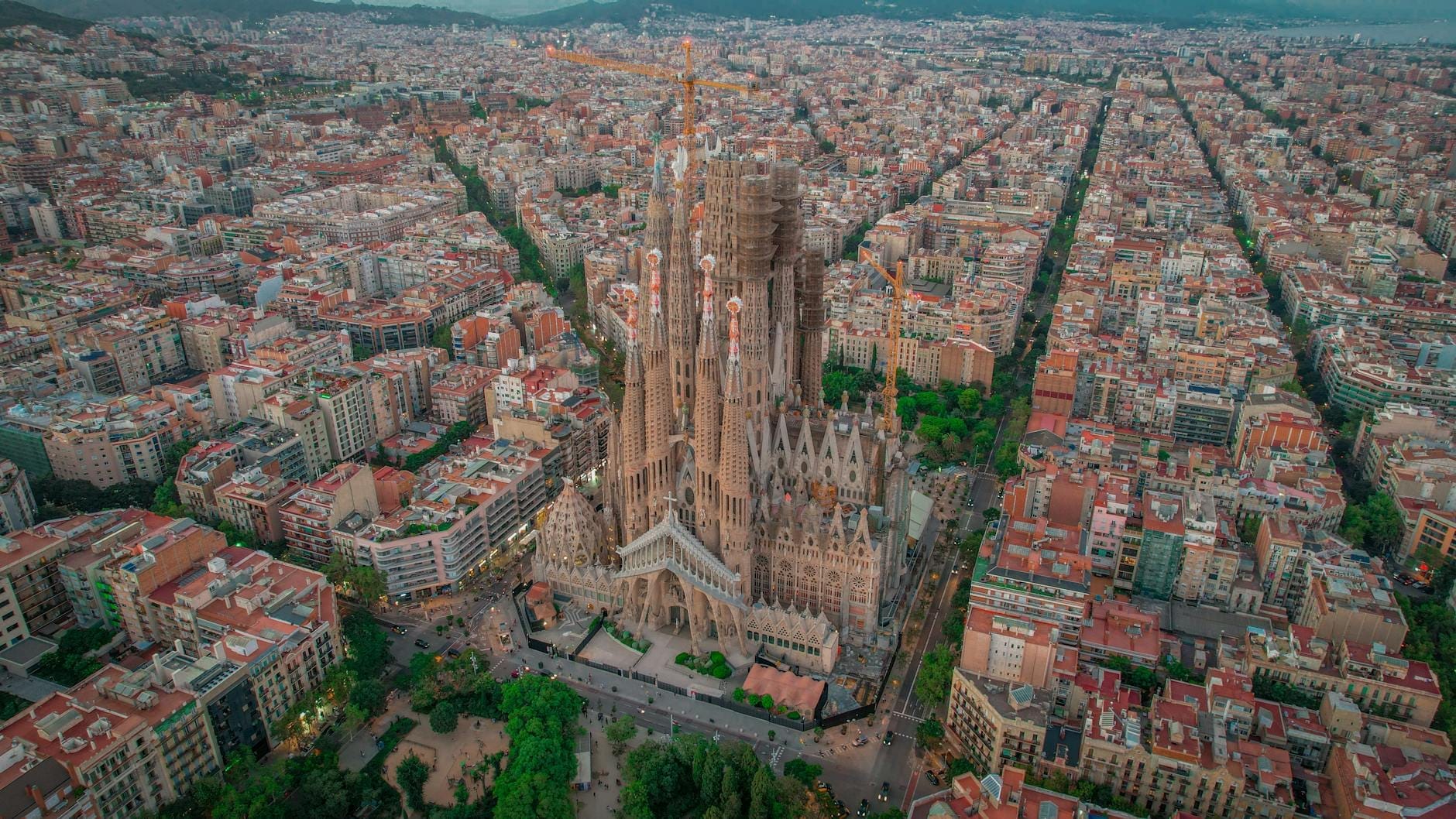
Eixample (pronounced 'ey-SHAM-pluh') is the 19th-century grid district designed by Ildefons Cerdà and it functions as Barcelona's upscale spine. Wide avenues, octagonal city blocks, and the highest concentration of Modernista architecture in the world make this area genuinely distinctive to walk through. The main hotel strip along Passeig de Gràcia puts you within walking distance of Casa Batlló and La Pedrera, with Sagrada Família a short metro ride away.
Eixample splits informally into La Dreta (right side, more touristy) and Esquerra (left side, quieter and more residential). For most visitors, staying in La Dreta puts you closest to Sagrada Família, Casa Batlló, and Casa Milà (La Pedrera). Esquerra is worth considering if you want local cafés, lower prices, and a quieter street experience.
- Best for: Architecture enthusiasts Gaudí's major works are all within walking distance. You can visit Casa Batlló and La Pedrera without needing any transport.
- Best for: Foodies Eixample contains the highest concentration of Michelin-starred and critically acclaimed restaurants in the city.
- Best for: Longer stays With four or more metro lines converging here, reaching the beach, Gothic Quarter, or Montjuïc takes under 20 minutes.
- Best for: Business travelers Large international hotel chains with conference facilities are primarily based in Eixample and nearby Gràcia.
Barceloneta and the Waterfront: Best for Summer Beach Trips
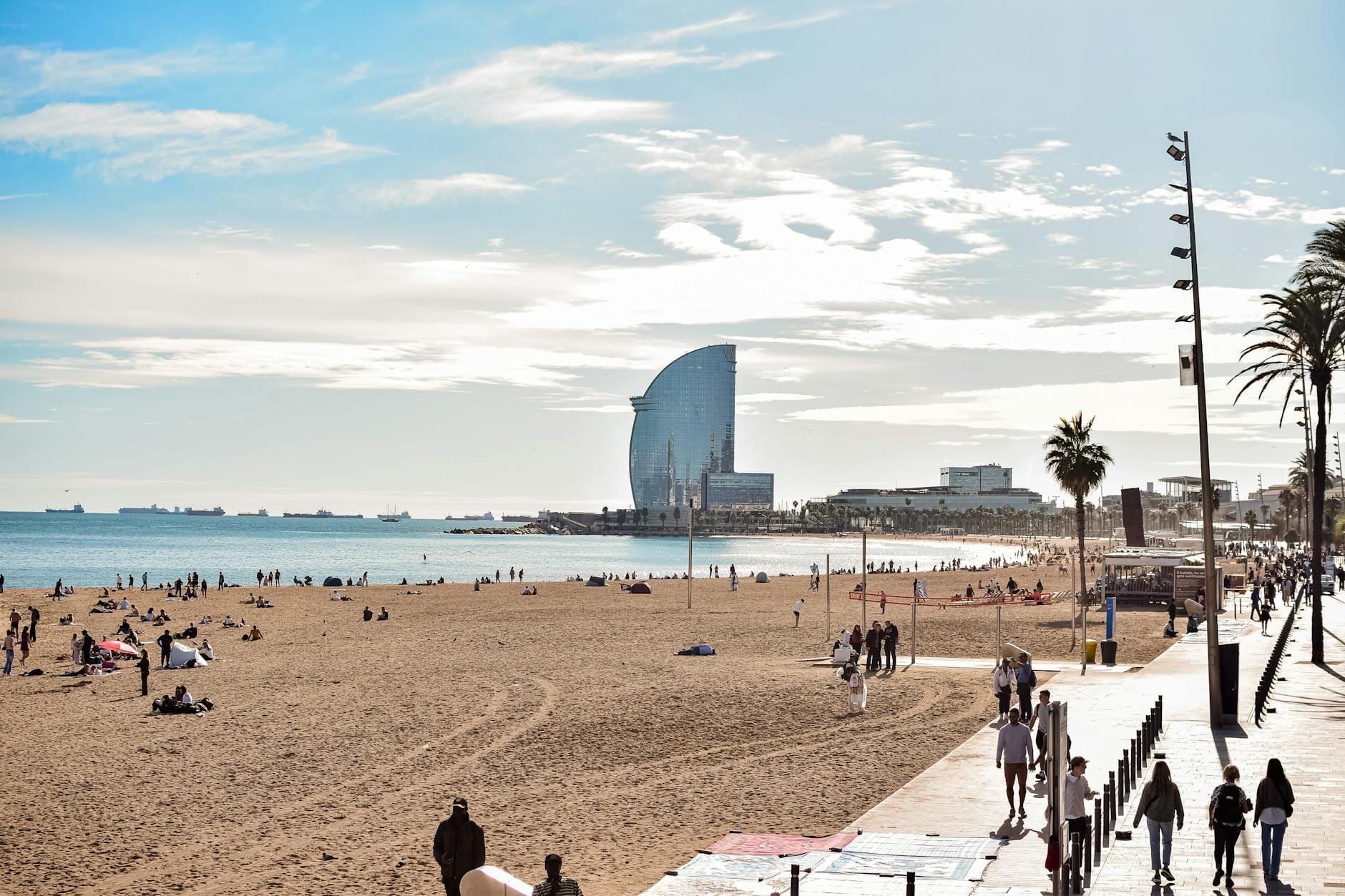
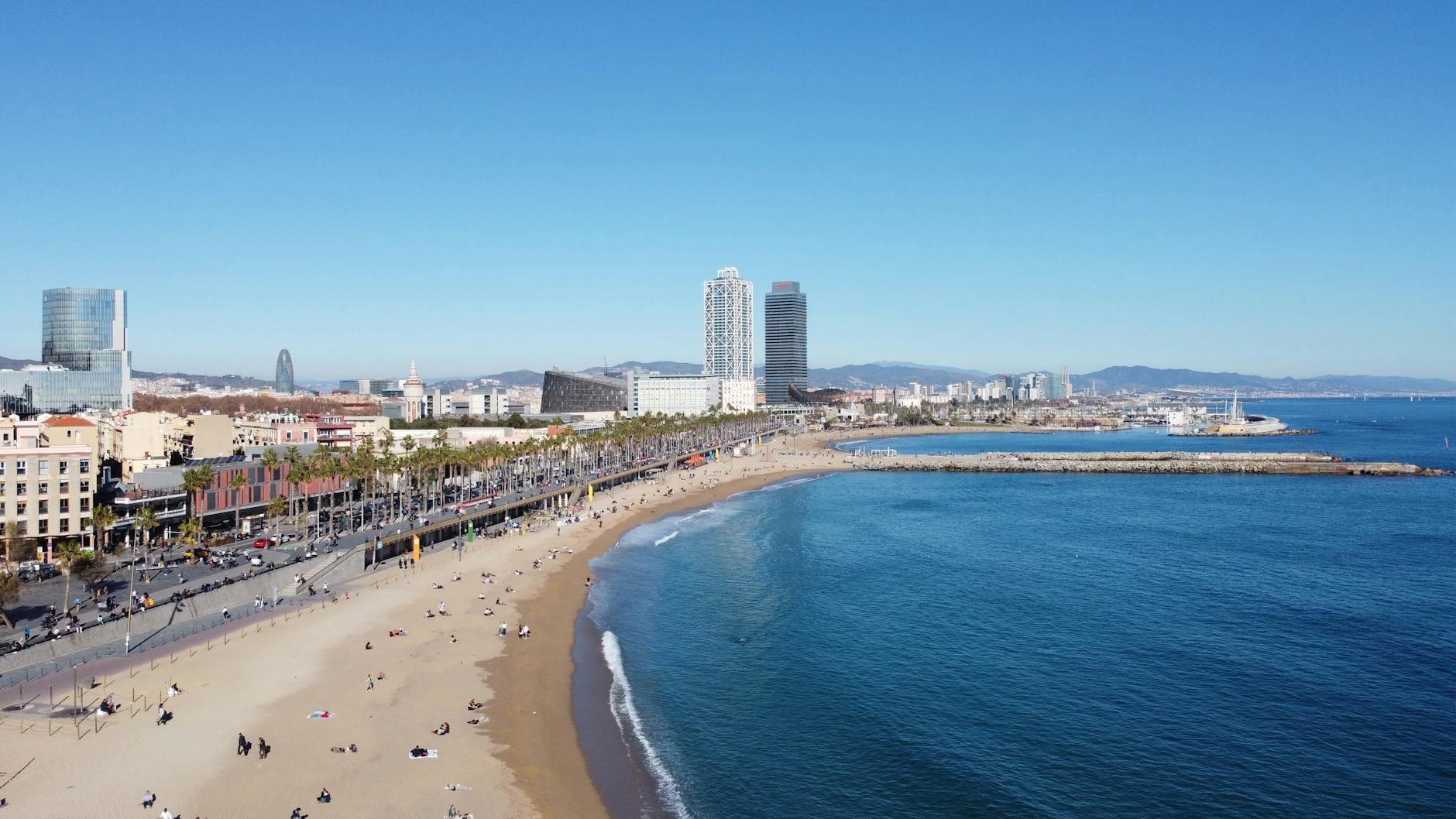
Barceloneta is where you stay if beach access is your top priority. The neighborhood sits on a narrow peninsula between the port and the sea, and in summer it delivers exactly what it promises: sand, seafood restaurants, and a constant warm-weather energy. Hotels with sea-facing rooms command a significant premium, often 40-60% more than an equivalent room one street back.
Outside of June through August, Barceloneta quiets considerably. The beach is still pleasant in May and September, but the dense party atmosphere thins out. For winter visits, staying here makes little sense: you're positioned far from most cultural sights, and the neighborhood feels genuinely deflated. The journey to Eixample or Gothic Quarter requires either a 30-minute walk or a metro connection with a change.
✨ Pro tip
If you want beach proximity without Barceloneta prices, look at hotels in El Born or the southern end of the Gothic Quarter. Barceloneta beach is 15-20 minutes on foot from both, and you'll be significantly better positioned for the rest of the city.
Gràcia: Local Atmosphere, Longer Commute
Gràcia is a former independent village absorbed into Barcelona in 1897, and it still feels distinct from the rest of the city. The streets are narrower, the plazas are lively without being tourist-saturated, and the café culture is genuinely local. It sits immediately north of Eixample and just below Park Güell, making it a natural base for anyone spending significant time in that area.
The tradeoff is distance. Gràcia is not far from the center in absolute terms, but it adds 15-25 minutes to reaching Las Ramblas or the Gothic Quarter compared to staying in El Born. Metro Line 3 connects it to the center efficiently, but that extra commute adds up on a short trip. For a longer stay of five nights or more, the local atmosphere and lower prices (typically 15-30% below central zones) make it a strong option.
- Gothic Quarter: Best for first-timers wanting maximum sightseeing density, willing to pay a premium for central location.
- El Born: Best overall for most visitors — central, atmospheric, good value, walkable to beaches and key sights.
- Eixample: Best for architecture lovers, restaurant-focused travelers, and those on longer stays needing metro flexibility.
- Barceloneta: Best for summer beach trips, but overpriced and poorly positioned for cultural itineraries.
- Gràcia: Best for repeat visitors or longer stays who want local neighborhood life over sightseeing convenience.
Practical Booking Advice: Timing, Prices, and What to Avoid
Barcelona hotel prices follow predictable seasonal curves. Peak season runs June through September, with August being the most expensive month overall despite the heat and crowds. Shoulder season (April-May and October-November) offers the best combination of price, weather, and manageable tourist density. January and February are the cheapest months, though some beachside properties reduce services or close partially.
Book at least 6-8 weeks in advance for summer travel, and 4-6 weeks ahead for shoulder season. For major events like Mobile World Congress (late February) or Primavera Sound (late May/early June), prices spike across all neighborhoods and rooms in central areas sell out weeks in advance. Check the best time to visit Barcelona before locking in your dates.
Getting to your hotel from the airport is straightforward. The Aerobus runs directly from Josep Tarradellas Barcelona-El Prat Airport (BCN) to Plaça de Catalunya in 35 minutes for €7.45 one-way or €12.85 return. Metro Line 9 Sud connects to the city for around €5.50 (airport supplement) but requires a transfer. Taxis cost roughly €25-35 depending on traffic and time of day. For a full breakdown, see the guide to getting around Barcelona.
ℹ️ Good to know
Barcelona requires a tourist tax (taxa turística) on top of your accommodation rate. Under current regulations, this ranges from €3.50 to €12 per person per night depending on accommodation type and category. It's not always included in advertised prices, so factor it into your budget when comparing options.
If you're traveling with children, El Born and southern Eixample offer the best combination of safety, walkability, and proximity to family-friendly sights like Parc de la Ciutadella. For more tailored advice, the Barcelona with kids guide covers sights and neighborhoods in detail.
FAQ
What is the best area to stay in Barcelona for first-time visitors?
El Born is the top recommendation for most first-timers. It's centrally located between the Gothic Quarter and the sea, has a strong restaurant and bar scene, is walkable to the major sights, and offers better value than the Gothic Quarter itself. The Gothic Quarter works well too but expect more noise and higher prices.
Is it worth staying in the Gothic Quarter or is it overrated?
It depends on your trip length and tolerance for noise. For a 2-3 night trip focused on central sightseeing, the Gothic Quarter delivers on convenience. For longer stays, the premium price and street noise make El Born or Eixample more sensible choices. The Gothic Quarter is not a bad area — it just tends to be overpriced relative to its actual advantages.
How far in advance should I book a hotel in Barcelona?
For June through August, book 6-8 weeks ahead minimum, and earlier for popular boutique properties. Shoulder season (April-May, September-October) warrants 4-6 weeks advance booking. During major events like Mobile World Congress or Primavera Sound, book 2-3 months ahead or you'll face very limited options at inflated rates.
Is Barcelona's public transport good enough that neighborhood location doesn't matter much?
For most purposes, yes. The TMB metro runs 12 lines with frequent service and covers all major neighborhoods. Even Gràcia, often flagged as 'far from the center,' is 10-15 minutes from Las Ramblas by metro. Location matters most if you're doing a very short trip (1-2 nights) where every extra 20 minutes of commuting cuts into limited time.
Are there hidden costs to watch for when booking Barcelona accommodation?
Yes. Barcelona's tourist tax is charged on top of all accommodation rates and is not always included in online booking totals — check the price breakdown before confirming. Some central hotels also charge for Wi-Fi or parking, which can add up. For beach-area accommodation, confirm whether the quoted rate includes the balcony or sea view, as some properties have significant variation between room types.
Tickets & tours
Live prices and dates from our booking partner. If you book, we may earn a commission at no extra cost to you.
Planning a trip? Discover personalized activities with the Nomado app.