Eixample is Barcelona's grand 19th-century expansion district, defined by its geometric grid, chamfered block corners, and extraordinary concentration of modernista architecture. Home to Gaudí's greatest works and the city's most elegant shopping avenue, it sits between the old city and the hills, and functions as Barcelona's beating urban core.
Eixample is the Barcelona most people picture when they close their eyes: wide, tree-lined avenues, ornate stone facades, and a skyline punctuated by the towers of the Sagrada Família. Designed in 1860 by urban planner Ildefons Cerdà as a rational, egalitarian expansion of a city bursting at its medieval seams, the district is now home to some of the most photographed architecture in Europe, a serious restaurant scene, and a daily rhythm that swings between business-district efficiency and long, languorous evenings on café terraces.
Orientation
Eixample occupies the broad flatland between Barcelona's old medieval core and the former independent municipalities that now make up the upper city. Its boundaries run roughly from Plaça de Catalunya and the Ronda de Sant Pere to the south, up to Avinguda Diagonal in the north, with Paral·lel and the Ronda de Sant Antoni marking the western edge and the neighbourhood of Poblenou's border defining the east. In practical terms, it is a very large district: crossing it on foot from south to north takes a good 25 minutes.
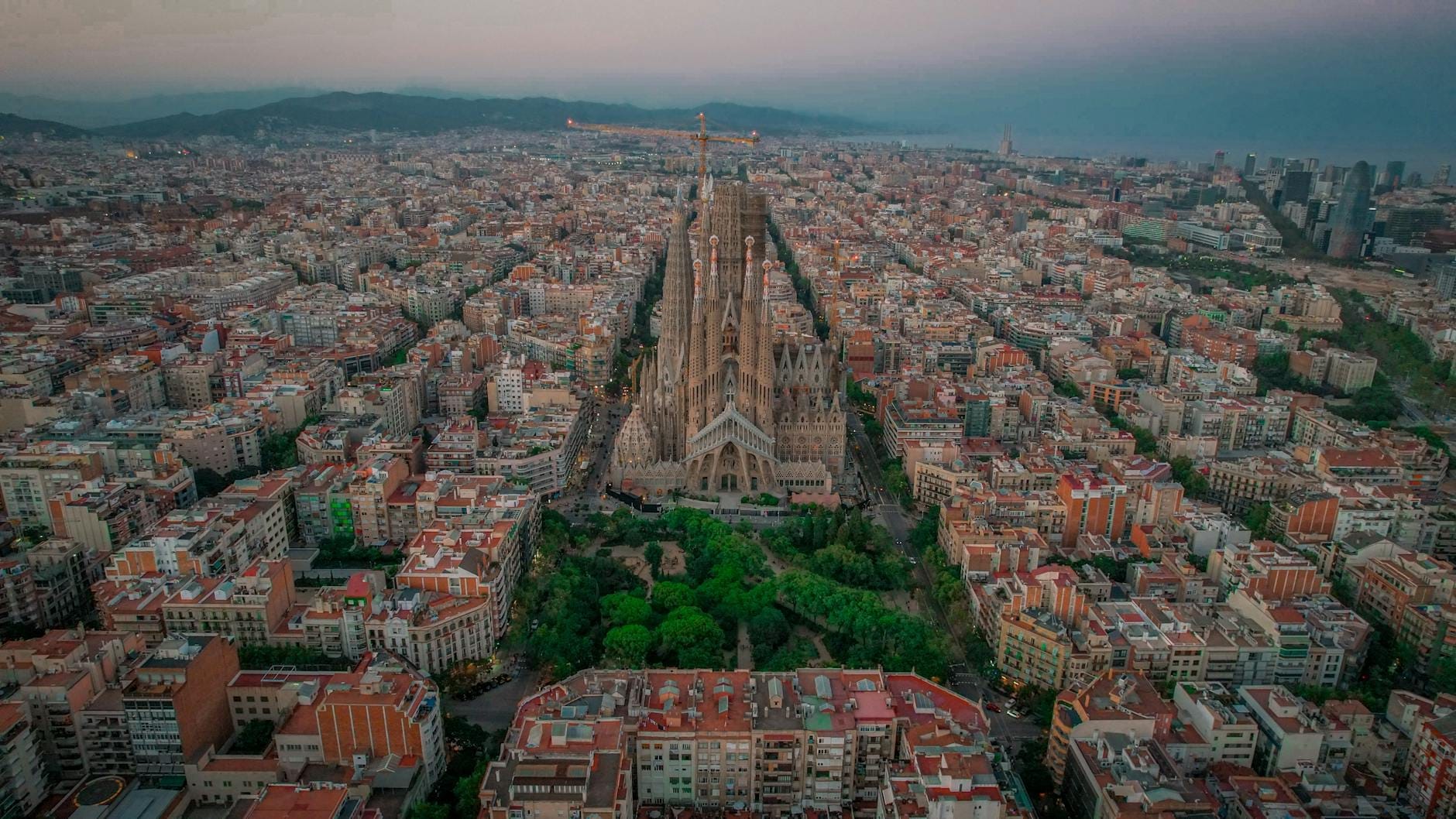
The defining feature is Cerdà's grid. Hundreds of city blocks, each with its corners cut at 45 degrees, create octagonal intersections that give the neighbourhood its instantly recognisable aerial silhouette. Streets run on a consistent northeast-southwest axis, which means that afternoons bathe one side of every street in warm Catalan light while the other sits in shade. The two main axes are Passeig de Gràcia, the wide ceremonial boulevard running north from Plaça de Catalunya, and Gran Via de les Corts Catalanes, the long east-west corridor that bisects the district.
For practical navigation, most visitors divide Eixample into two halves. Dreta de l'Eixample (the right side, when facing north) runs from Passeig de Gràcia eastward toward the Sagrada Família neighbourhood. This is where you find the densest concentration of modernista landmarks and the most tourist traffic. Esquerra de l'Eixample (the left side) runs west toward Sant Antoni and Urgell, and has a noticeably more local, lived-in feel. The Esquerra is also known informally as the Gayxample, the centre of Barcelona's LGBTQ+ community. To the north, the grid transitions seamlessly into Gràcia, and many visitors cross that invisible boundary without noticing.
If you are planning your wider Barcelona itinerary, it helps to know that Eixample sits almost exactly between the Gothic Quarter to the south and Gràcia to the north, making it an efficient base for reaching both the old city and the hills.
Character & Atmosphere
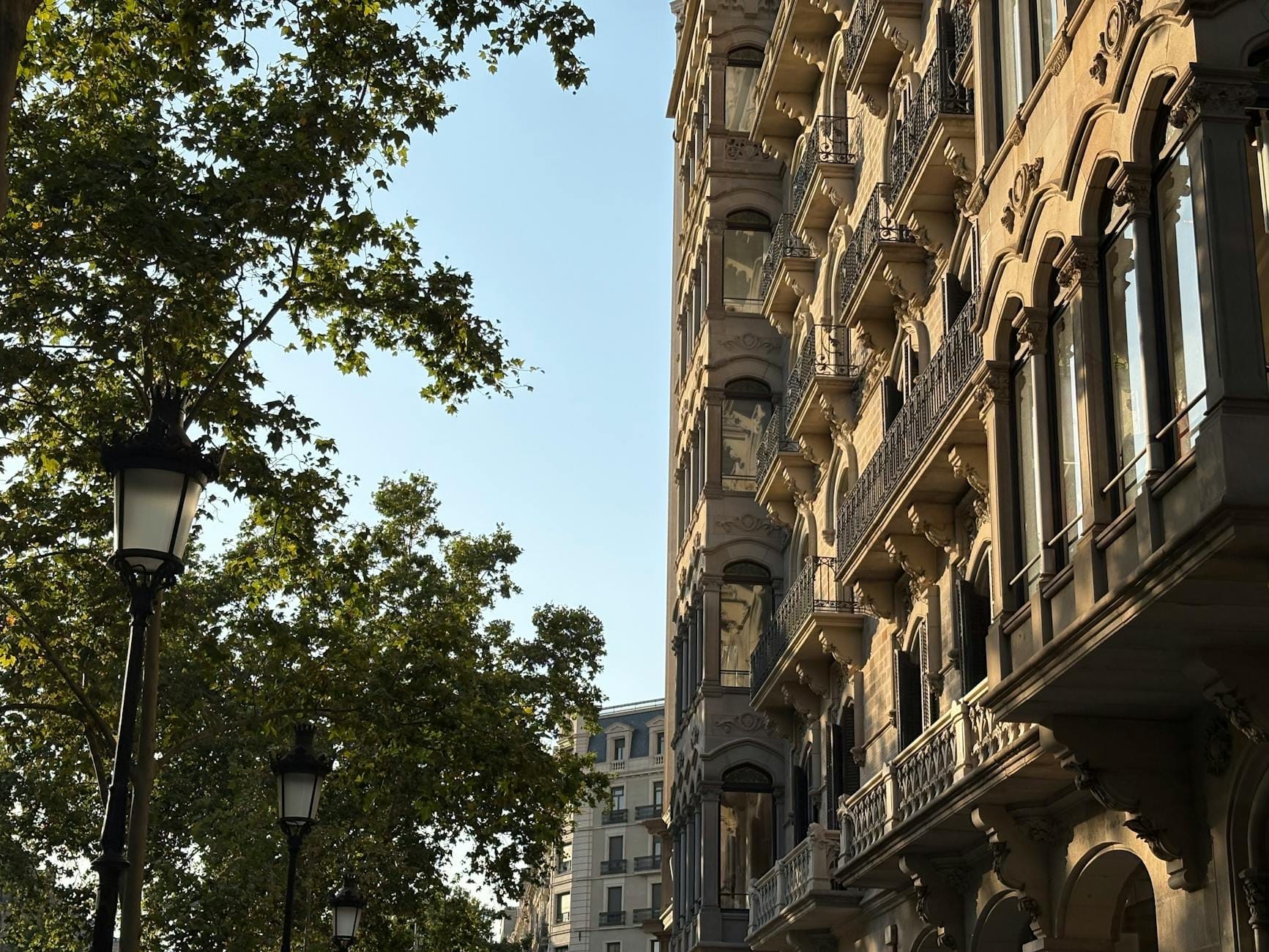
Walking into Eixample from Plaça de Catalunya early on a weekday morning, the first thing you notice is scale. The streets are 20 metres wide, with 5-metre pavements on each side, and the buildings rise to six or seven floors in uniform rows of pale stone. There is a sense of order here that the old city completely lacks. At 8am, the terraces of the corner cafés are filling with people reading newspapers and drinking café amb llet. The newspaper kiosks are open. The light, coming in low from the east, catches the carved stone balconies and the iron railings in a way that makes even ordinary blocks look architecturally considered.
By midday, Passeig de Gràcia has the energy of a high-end commercial street crossed with an outdoor architecture museum. Tourists stop in the middle of the pavement to photograph Casa Batlló's dragon-scale roof. Office workers from the law firms and banks in the surrounding blocks eat sandwiches on benches between the tall linden trees. The pavements on Passeig de Gràcia are famously wide and paved with hexagonal tiles designed by Gaudí himself, with a repeating pattern of sea creatures. If you look down, you are walking on a piece of the city's design history.
The late afternoon is when Eixample's residential character reasserts itself. The Esquerra streets around Carrer del Consell de Cent and Carrer de Muntaner fill with people coming home from work, ducking into small grocery shops and picking up children from schools. The terraces of the Esquerra's bars begin to fill around 7pm, and the sound is more Catalan, more neighbourhood, less tourist. After dark, the Dreta's restaurant strip along Carrer d'Enric Granados, a car-free rambla with trees and café tables running between Universitat and Diagonal, is one of the city's most pleasant places to eat outdoors.
ℹ️ Good to know
Cerdà's original 1859 plan included height caps of 16 metres and communal gardens inside every block. Developers ignored both constraints almost immediately. A handful of the original interior courtyards, called illes interiors, have been recovered as public green spaces and are worth seeking out if you want to see what Cerdà envisioned.
What to See & Do
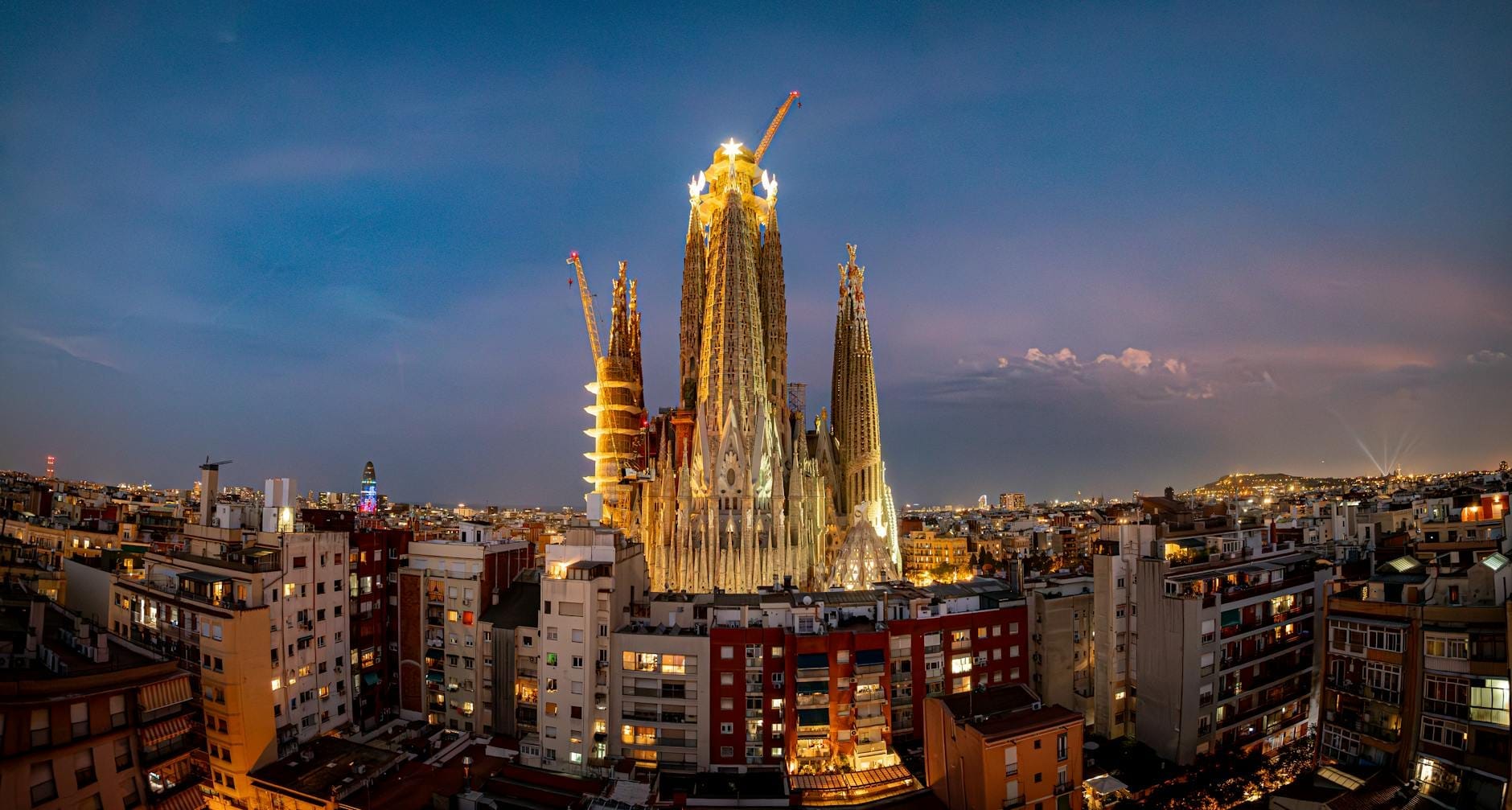
The single most important thing in Eixample, and arguably in all of Barcelona, is the Sagrada Família. Antoni Gaudí's basilica has been under construction since 1882 and remains incomplete, though the nave and much of the interior were consecrated in 2010. The project remains under construction with no confirmed completion date. Nothing quite prepares you for the scale of it in person: the towers rising above the surrounding blocks, the organic stone facades that look more grown than carved. Book tickets in advance without exception. Same-day tickets are rarely available, and the queues without a reservation can cost you hours.
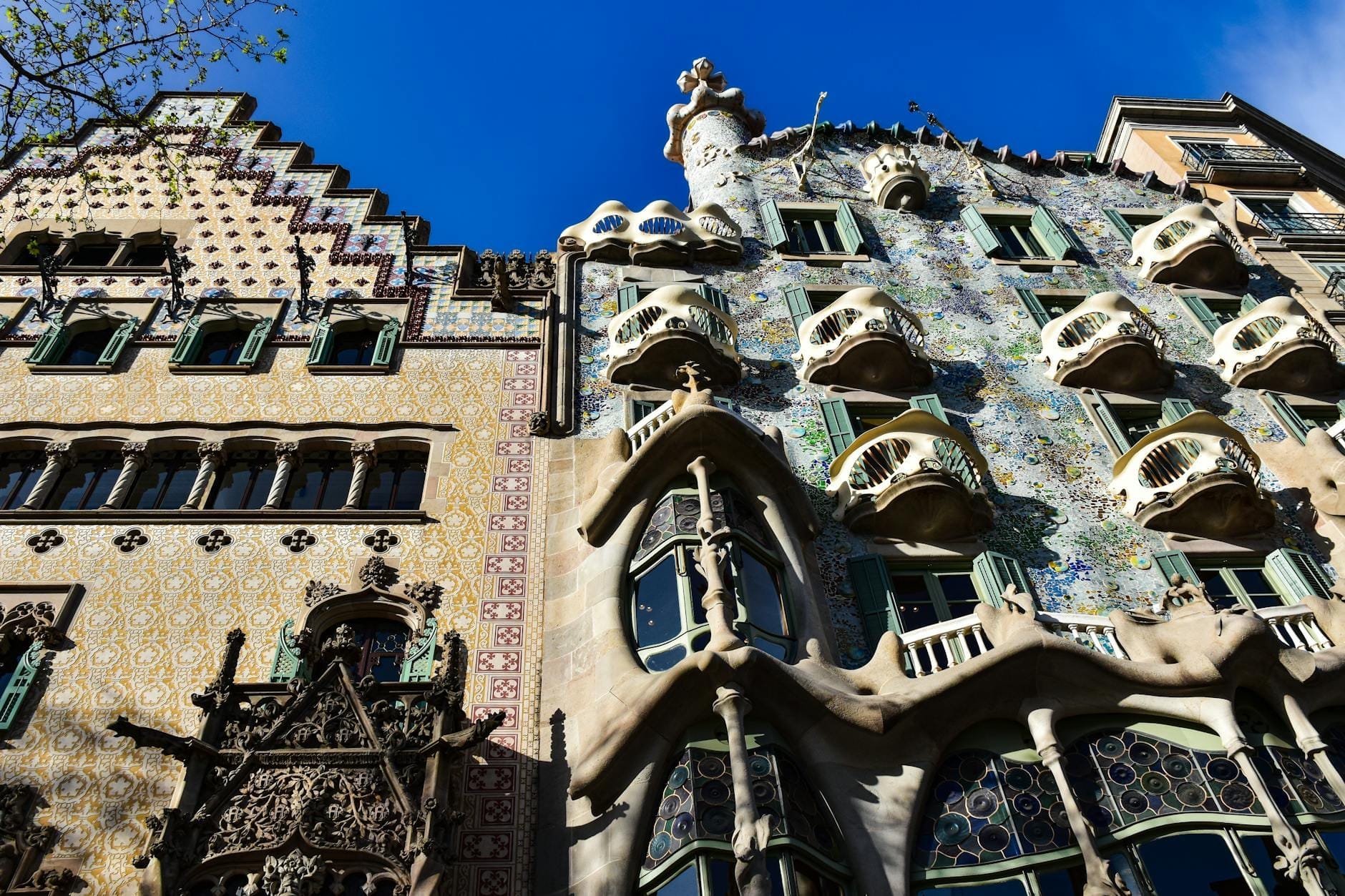
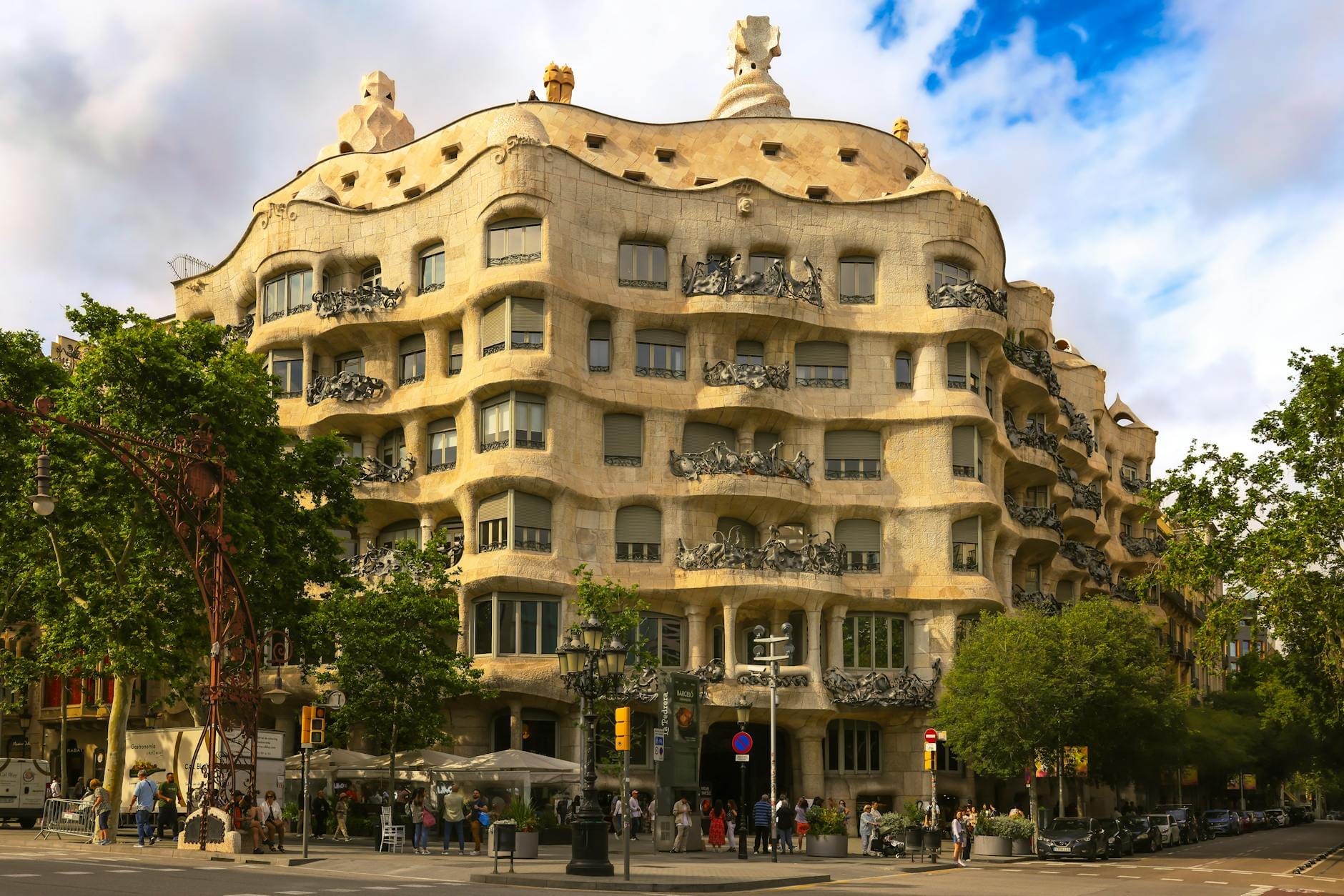
On Passeig de Gràcia, the so-called Manzana de la Discordia (Block of Discord) presents three major modernista buildings within a single block: Casa Batlló by Gaudí, Casa Amatller by Puig i Cadafalch, and Casa Lleó Morera by Domènech i Montaner. The contrast between three architects, all working at the peak of Catalan modernisme in the same short street, is the best possible introduction to the movement. A few blocks north, Casa Milà (La Pedrera) is Gaudí's most complete building in the Eixample, with a rooftop of warrior-like chimneys and a spectacular interior attic exhibition.
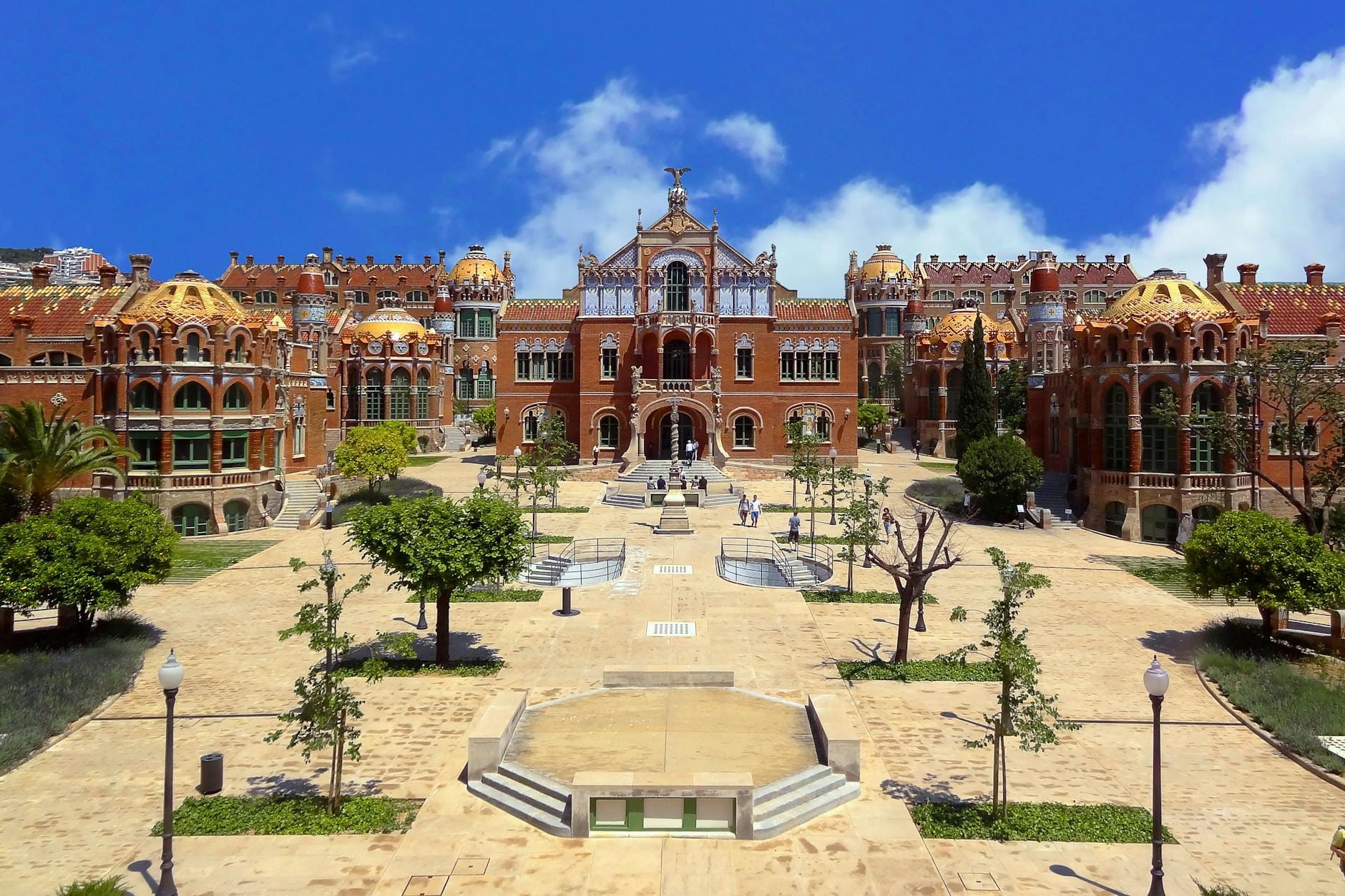
Beyond Gaudí, the Eixample rewards slow walking. The Hospital de Sant Pau on Carrer de Sant Antoni Maria Claret, designed by Domènech i Montaner and a UNESCO World Heritage Site, is one of the most beautiful and least crowded of Barcelona's major monuments. The complex, set in gardens and built in a Moorish-influenced modernista style, operated as a hospital until 2009 and is now a cultural centre. Most visitors to Eixample never make it here, which makes it all the more worthwhile.
Passeig de Gràcia: Walk the full length from Plaça de Catalunya to Diagonal for the best concentration of modernista architecture
Carrer d'Enric Granados: The pedestrianised rambla between Universitat and Diagonal, good for café stops and browsing independent shops
Mercat de l'Abaceria (Gràcia border): A covered market at the top of Gràcia, accessible on foot from northern Eixample
Sant Antoni Market (Mercat de Sant Antoni): A restored 19th-century iron market on the Esquerra, one of the city's best for fresh produce and the weekly Sunday book market
Fundació Antoni Tàpies: A converted modernista publishing house on Carrer d'Aragó housing the work of Barcelona's most important 20th-century artist
Eating & Drinking
Eixample has one of the highest restaurant densities in Barcelona, and the quality range is extreme. At the top end, Passeig de Gràcia and the surrounding blocks have some of the city's most expensive and celebrated restaurants. For a more grounded overview of where and how to eat across the city, the Barcelona eating guide covers the key neighbourhoods and cuisines in detail.
The Dreta's restaurant scene around Carrer de Pau Claris and Carrer d'Enric Granados skews toward modern Catalan and Mediterranean cooking: dishes built around seasonal vegetables, grilled fish, and cured meats, served in dining rooms with exposed brick and low lighting. This is where Barcelona's professional classes go for business lunches and date nights. The quality is generally high and the prices reflect it: a three-course dinner with wine here can easily reach 50-70 euros per person.
The Esquerra offers better value for everyday eating. The streets around Carrer del Consell de Cent and the Sant Antoni market are packed with small Catalan restaurants, Vietnamese spots, and the kind of neighbourhood tapas bars where you can eat a proper lunch for 12-15 euros with wine included. The area around Mercat de Sant Antoni has been significantly gentrified over the past decade and now has a cluster of good natural wine bars, brunch cafés, and craft beer spots along Carrer del Parlament and Carrer de la Tamarit.
💡 Local tip
The menú del día (fixed lunch menu) is the most economical way to eat well in Eixample. Most restaurants offer a two or three-course menu with bread and a drink for 12-16 euros at lunchtime, even in areas that would charge double at dinner. Look for handwritten chalkboards outside rather than printed laminate menus, which often signal tourist-oriented pricing.
For coffee, Eixample has a strong independent café scene that coexists with the large chains on Passeig de Gràcia. The side streets off Gran Via and around Universitat have third-wave coffee shops that take their sourcing seriously. For a drink before dinner, the terraces on Rambla de Catalunya, the more residential parallel boulevard one block west of Passeig de Gràcia, are quieter than the main avenue and better for an unhurried vermouth or Estrella Damm.
Getting There & Around
Eixample is the best-connected neighbourhood in Barcelona for public transport. The metro network runs through it densely, with Line 2 (purple), Line 3 (green), Line 4 (yellow), and Line 5 (blue) all having multiple stops within the district. The main interchange is Passeig de Gràcia station, where Lines 2, 3, and 4 intersect (Line 4 is the yellow line), making it Barcelona's central hub for cross-city journeys. For a full breakdown of how to navigate Barcelona's metro and bus network, the getting around Barcelona guide explains all the options including the T-Casual card and tourist travel passes.
For the Sagrada Família specifically, Line 2 (purple) stops directly at the Sagrada Família station, one block from the basilica. Line 5 (blue) also stops at the same station. From Plaça de Catalunya, the journey is around 10 minutes by metro. Coming from the airport on the Aerobus, the bus terminates at Plaça de Catalunya, putting you at the southern edge of Eixample and within walking distance of Passeig de Gràcia's major landmarks.
Within Eixample, the grid makes walking straightforward once you understand the axis. Blocks are consistent in size, and the street signs are clear. Bicing, the city's municipal bike-share system, has docking stations throughout the district, and the flat terrain makes cycling practical. The Carrer de Londres and Carrer d'Enric Granados both have protected bike lanes. Avoid driving if you can: parking is expensive, and the Superilles traffic-calming restrictions mean some blocks are now closed to through traffic.
⚠️ What to skip
Passeig de Gràcia and the areas immediately around the Sagrada Família attract high volumes of pickpockets, particularly around the ticket queues and on the metro platforms at Passeig de Gràcia station. Use a front-facing bag and keep valuables in inner pockets, especially during the peak summer months.
Where to Stay
Eixample is one of the best bases in Barcelona for most travellers, particularly those who want to be central without being in the thick of the old city's nightly noise. For a detailed comparison of all the city's accommodation options by neighbourhood, the where to stay in Barcelona guide covers price ranges, trade-offs, and what each area feels like at night.
The Dreta, particularly the blocks around Passeig de Gràcia and Diagonal, has the highest concentration of four and five-star hotels, many of them in converted modernista buildings or purpose-built luxury towers. These come at significant cost: rates in high season routinely exceed 250 euros per night. The advantage is immediate proximity to the major landmarks and very good metro access.
The Esquerra offers better value. Boutique hotels and mid-range options along Carrer d'Urgell, Carrer de Muntaner, and around the Sant Antoni market area sit in quieter streets with a more residential atmosphere. You are still only two or three metro stops from the major attractions, and you get a more accurate picture of how Barcelona residents actually live. This area suits travellers who prioritise neighbourhood feel over postcard-perfect location.
One thing to check before booking: Eixample's grid means that rooms on lower floors of buildings facing wide avenues like Gran Via or Passeig de Gràcia can be significantly louder than you expect, even late into the night. Ask for rooms above the third floor or facing the interior courtyard if noise is a concern.
Honest Assessment: Who Eixample Is For
Eixample is not Barcelona at its most atmospheric or surprising. The old city's narrow lanes and the vertical drama of Montjuïc are not here. What Eixample offers instead is legibility, scale, and quality: a neighbourhood designed with serious civic ambition that still functions more or less as its designer intended, 166 years later. The architecture is world-class and approachable. The food scene is excellent. The public transport is unbeatable.
It is not, however, particularly cheap, and in summer the Dreta's tourist routes can feel relentlessly crowded. If you are visiting Barcelona on a tight budget, the accommodation costs in the better parts of Eixample will push you toward less central neighbourhoods. And if you are hoping for a sense of discovery around every corner, the grid's mathematical regularity can feel repetitive after a few days.
For most first-time visitors to Barcelona, Eixample is the right base. For those returning, or those with a specific interest in the waterfront and beach life, basing yourself in Barceloneta or El Born and treating Eixample as a day-trip zone may make more sense. Either way, you will spend time here. It is the centre of the city in every meaningful sense.
TL;DR
Eixample is Barcelona's grand modernista grid district, home to the Sagrada Família, Casa Batlló, Casa Milà, and the Passeig de Gràcia boulevard, making it the most architecturally significant neighbourhood in the city.
The district divides into the Dreta (right, more touristy and expensive) and the Esquerra (left, more residential and affordable), with different characters worth understanding before you book accommodation.
Public transport connectivity is unmatched: three metro lines (L2, L3, L4) intersect at Passeig de Gràcia station, and the flat grid makes cycling and walking straightforward.
Best suited to first-time visitors to Barcelona, architecture enthusiasts, and travellers who want a central base with excellent restaurants and easy access to the whole city.
Main drawbacks: high accommodation costs in prime areas, significant tourist crowds on the main routes in summer, and street noise on lower floors of buildings facing major avenues.
Barcelona transforms after sunset. Locals dine at 10 PM, the Magic Fountain draws crowds until midnight, and Gaudí's buildings glow in a way daylight simply cannot match. This guide covers the best ways to spend your evenings, from free spectacles to world-class performances.
Barcelona has nearly 5.5 kilometres of urban beaches stretching along the Mediterranean coast, all reachable by metro, bus, or bike. This guide covers every beach, what to do nearby, and how to make the most of the waterfront from the old port to the modern Diagonal Mar district.
Barcelona is an exceptional base for exploring Catalonia and beyond. These are the best day trips you can make from the city, from mountain monasteries and Roman ruins to Costa Brava beaches and Dalí's surrealist universe, most reachable by affordable public train.
Three days in Barcelona is enough to cover the city's greatest landmarks without rushing, if you plan smartly. This itinerary balances iconic Gaudí architecture, medieval streets, seafront walks, and local markets, with honest advice on what to skip, what to book ahead, and how to move between neighborhoods efficiently.
Barcelona is Spain's most expensive city, but it rewards smart travelers with free museums, cheap tapas, and world-class architecture you can admire for nothing. This guide breaks down exactly how to stretch your euros further without missing anything essential.
Barcelona rewards families with an extraordinary range of experiences: world-class science museums, a historic hilltop amusement park, beaches, Gaudí's fantastical architecture, and free fountain shows. This guide cuts through the noise to focus on what genuinely works with children in tow.
Choosing the best time to visit Barcelona depends on more than just sunshine. This guide breaks down every season by temperature, crowd levels, events, and value, so you can match your trip to your priorities rather than defaulting to peak summer.
Barcelona rewards those who look up and out. From hilltop ruins to Modernista rooftops, these are the city's best vantage points, ranked and described with practical detail so you can plan the perfect panorama.
Antoni Gaudí left seven UNESCO World Heritage Sites across Barcelona, each one a window into his obsessive genius. This guide covers every major work, from the soaring Sagrada Família to his earliest commission in Gràcia, with tips on booking, routing, and what to see inside each building.
Barcelona has one of Europe's most comprehensive urban transport networks, but knowing which option to use when can save hours and euros. This guide covers every mode of transport in the city, from the TMB metro and night buses to ride-hailing apps, cycling, and how to reach the airport.
Barcelona rewards those who look beyond the obvious. These 18 attractions reveal the city that locals actually love: Civil War ruins with unbeatable views, Gaudí buildings the tour buses miss, neighbourhood promenades, and market halls that outshine the famous ones.
Barcelona packs extraordinary architecture, world-class food markets, sun-soaked beaches, and centuries of history into 101 square kilometres. This guide cuts through the hype to tell you what's genuinely worth your time, what to skip, and how to do it all without wasting a day.
Barcelona's food scene runs far deeper than paella and tapas. This guide covers essential Catalan dishes, the best markets, standout restaurants by neighborhood, and the seasonal specialties most visitors miss entirely.
Choosing where to stay in Barcelona shapes your entire trip. This guide breaks down every major neighborhood by location, atmosphere, price range, and who it actually suits, so you can book with confidence.