Camp Nou & FC Barcelona Museum: What to Expect Before You Go
Home to Europe's largest football stadium and one of Catalonia's most visited museums, the Camp Nou complex is a pilgrimage site for football fans worldwide. With the stadium under renovation until 2027, the Barça Immersive Experience now hosts the collection in a purpose-built 2,400 m² facility nearby.
Quick Facts
- Location
- C. d'Arístides Maillol, 12, Les Corts, Barcelona
- Getting There
- Metro L3 / L5 – Palau Reial station (10-min walk)
- Time Needed
- 2 to 3 hours
- Cost
- From €49 (Total Xperience); from €69 (Camp Nou Experience, including stadium access)
- Best for
- Football fans, families, sports history enthusiasts
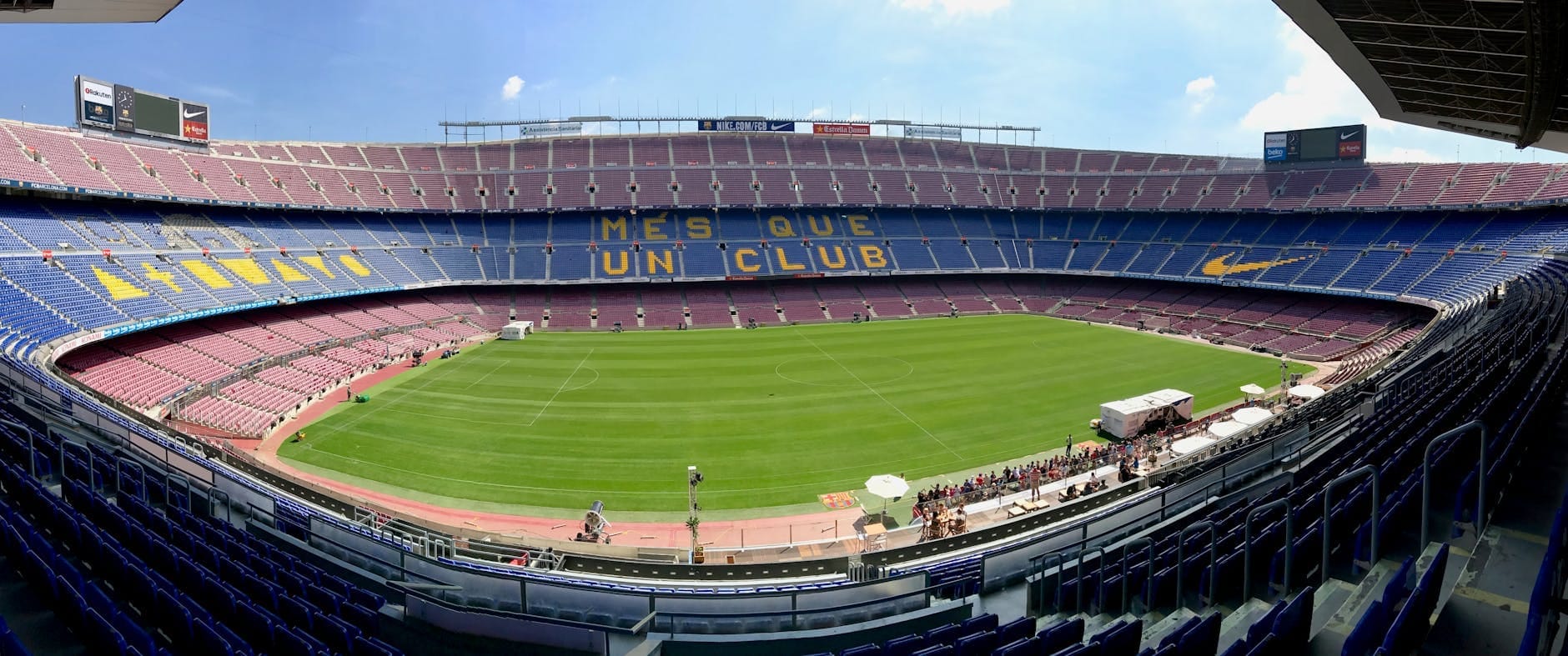
What Is the Camp Nou Experience Right Now?
Camp Nou, officially known as Spotify Camp Nou, is the home stadium of FC Barcelona and the largest football stadium in Europe, with a capacity of 99,354 spectators. Built between 1954 and 1957, the concrete bowl in the Les Corts district has been the backdrop for Champions League finals, historic league titles, and some of the most iconic moments in football history.
Since 2023, the stadium itself has been closed to the public while a major renovation project reshapes its infrastructure. FC Barcelona responded by opening the Barça Immersive Experience, a dedicated 2,400 m² attraction near the stadium grounds. This is where the museum collection now lives, and where all ticketed visits currently take place. If you are expecting to walk through the original stadium tunnels in their historic state, temper that expectation: the experience has shifted, though the collection itself remains substantial.
ℹ️ Good to know
The Camp Nou stadium renovation is scheduled for completion in 2027. With partial access now available, the Barça Immersive Experience is the primary visitor attraction. Check the official website before booking, as hours and tour formats are subject to change during active construction.
The Museum Collection: 125 Years of Club History
FC Barcelona was founded in 1899 by a Swiss businessman, Joan Gamper, and the museum traces every decade of that history across 10 exhibition rooms. The core of the collection is what you would expect: major trophies including Champions League cups, La Liga titles, and Copa del Rey silverware displayed in well-lit cabinets. Historic jerseys from players like Johan Cruyff, Ronaldinho, and Lionel Messi anchor the memorabilia sections, and interactive digital displays let younger visitors engage with statistics and match footage.
What surprises most visitors is the art. The museum holds works by Spanish artists including Salvador Dalí and Joan Miró, both of whom had connections to the club. These are not decorative additions; they are genuine cultural artifacts that reflect the role FC Barcelona played in Catalan cultural identity during the Franco era, when the club became one of the few tolerated expressions of regional pride. The phrase 'Més que un club' (More than a club) is not marketing copy; it has a specific political history that the exhibition does cover, though with varying depth depending on the current display format.
For broader context on Barcelona's cultural institutions, the Barcelona attractions guide covers how this museum fits alongside the city's other major draws.
Tickets & tours
Live prices and dates from our booking partner. If you book, we may earn a commission at no extra cost to you.
Visiting Hours, Tickets, and Getting There
The Barça Immersive Experience operates on a seasonal schedule. From April 1 to October 15, it is open daily from 9:30 AM to 7:00 PM. During the rest of the year (October 16 through March 31), hours shift to Monday through Saturday, 10:00 AM to 6:00 PM, and Sundays, 10:00 AM to 3:00 PM. These hours can change on match days and public holidays, so checking the official site before your visit is worth the two minutes it takes.
Tickets come in two main tiers. The Total Xperience, from €49, covers the museum and a digital audio guide with additional interactive features. The Spotify Camp Nou Experience, from €69, adds the stadium tour component. Given that the stadium is under active renovation, the tour format has changed considerably from what older reviews describe. Read the current ticket description carefully so you know exactly what access is included on the date of your visit.
Getting there by metro is the most straightforward option. Take Line 3 (green) or Line 5 (blue) to Palau Reial station. From the exit on Avinguda Diagonal, walk approximately 10 minutes southwest down Carrer de Martí i Franquès. The route is flat and clearly signed. From Plaça de Catalunya, the full journey including the walk takes around 25 minutes.
💡 Local tip
Book tickets online in advance, especially during summer and around match weekends. Walk-up queues can be long, and some time slots sell out. The official FC Barcelona website is the safest place to purchase; third-party resellers often charge significantly higher prices.
What the Visit Actually Feels Like
Mornings on weekdays are the quietest window. The 9:30 AM opening slot in summer draws a manageable crowd, mostly families and organized groups. By 11:00 AM on weekends, school groups and tour buses fill the entrance area, and the noise level inside rises accordingly. If you are visiting with children who are genuine football fans, this energy is actually part of the experience. If you want to read displays carefully and take photos without people in frame, arrive at opening time or within the last 90 minutes before closing.
The immersive format uses projection rooms, touchscreens, and audio narration to create something more engaging than a standard trophy-and-jersey display. The trophy room still lands with real weight: the sheer scale of the silverware, particularly the Champions League trophies, is striking in person. Audio guides are available in multiple languages and add useful context that the physical labels alone do not always provide.
Wear comfortable shoes. Although the space is indoors, the full visit involves considerable walking and some standing in projection areas. There is no requirement to dress up, and there is nothing about the physical environment that demands special preparation beyond arriving with a charged phone if you plan to use the digital guide app.
Families planning a full day in this part of the city might consider combining this visit with nearby attractions. The Eixample district has excellent lunch options within walking distance, and the area connects easily to the broader city grid.
Photography and Accessibility
Personal photography is permitted throughout the museum. The trophy rooms and the projection spaces are the most photogenic areas. Wide-angle lenses or a smartphone with a good wide mode work best in the trophy cabinets, which are lit dramatically but not always from ideal angles. Flash photography is restricted in some sections to protect the art and older materials.
The Barça Immersive Experience is fully accessible by wheelchair and stroller. The facility was designed with step-free access throughout, and the temporary format actually offers better accessibility than the original stadium tour, which required navigating steep stadium seating rows and ramps. Restrooms are available on-site and are appropriately signed.
Honest Assessment: Is It Worth Your Time?
For football fans, this is not a question: the Barça Museum is one of the best sports museums in Europe, and the collection deserves several hours. The art, the political history, and the scale of the trophy display set it apart from club shops dressed up as museums.
For travelers without a strong interest in football, the case is weaker. The ticket price is high relative to other Barcelona cultural institutions, and the experience is built around a sport-specific narrative. If you are choosing between this and the Fundació Joan Miró or the Museu Picasso on a tight schedule, the general cultural weight sits with those alternatives.
Travelers working with limited time should consult a well-planned Barcelona itinerary to see how this attraction fits realistically into a multi-day trip alongside the city's other major sites.
One group that should manage expectations: visitors who came specifically to stand on the pitch or walk the original 1957 stadium concourse in its unmodified state. The renovation has changed what is accessible, and until 2027, the classic stadium tour experience is not what it once was. That said, the museum content itself has not been diminished by the move to the immersive format.
If your interest is Gaudí and Barcelona's architectural heritage more broadly, the Gaudí Barcelona guide covers the buildings that defined the city's visual identity, several of which sit within the same Eixample neighborhood as the Camp Nou complex.
Insider Tips
- The 9:30 AM weekday slot in summer is consistently the least crowded entry window. Arriving at opening on a Tuesday or Wednesday gives you the trophy room almost to yourself for the first 20 minutes.
- The digital audio guide included in the Total Xperience ticket has significantly more content than the physical wall labels. Download the app before you arrive rather than spending time on the Wi-Fi inside.
- The Camp Nou shop near the entrance sells official merchandise at the same prices as the online store. If you are buying jerseys or scarves as gifts, there is no premium for buying on-site, unlike many stadium stores.
- Admission prices can differ between the official FC Barcelona website and third-party booking platforms. The official site is consistently cheaper and provides direct cancellation flexibility if plans change.
- On match days, the surrounding streets fill with vendors, fans, and increased foot traffic for hours before kickoff. If your visit coincides with a home match, arrive early in the morning and leave before afternoon, or plan to embrace the crowd and extend your visit.
Who Is Camp Nou & FC Barcelona Museum For?
- Football fans of any age who want to engage with club history at depth
- Families with children aged 7 and up, particularly those with a connection to the sport
- Travelers interested in the intersection of sport and Catalan political identity
- Groups that want a structured, indoor half-day activity suitable for variable weather
- Photography enthusiasts interested in sports architecture and dramatic trophy displays
Nearby Attractions
Other things to see while in Eixample:
- Casa Batlló
Casa Batlló is Antoni Gaudí's reimagining of an ordinary Eixample townhouse into something closer to a living organism. Covered in iridescent ceramic scales, crowned by a dragon-spine roof, and filled with rooms that ripple like underwater caves, it is one of Barcelona's most visually overwhelming interiors. This guide covers what to expect, when to go, and how to make the most of your visit.
- Casa Milà (La Pedrera)
Casa Milà, universally known as La Pedrera, is Antoni Gaudí's most architecturally daring residential building, completed in 1912 and declared a UNESCO World Heritage Site. From its wave-like stone façade to the otherworldly rooftop of chimney warriors, it remains one of Barcelona's most rewarding cultural experiences.
- Hospital de Sant Pau
The Recinte Modernista de Sant Pau is one of Barcelona's most architecturally significant sites and yet consistently overshadowed by its famous neighbor down the road. Designed by Lluís Domènech i Montaner and declared a UNESCO World Heritage Site in 1997, this former hospital complex is a riot of color, craft, and ambition spread across 14.5 hectares of the Eixample grid.
- Passeig de Gràcia
Passeig de Gràcia is Barcelona's most architecturally significant avenue, stretching 1.5 kilometres through the Eixample district past landmark Modernista buildings including Casa Batlló and Casa Milà. The boulevard itself is free to walk at any hour, offering one of the city's great urban experiences whether you visit at dawn or after dark.
Planning a trip? Discover personalized activities with the Nomado app.