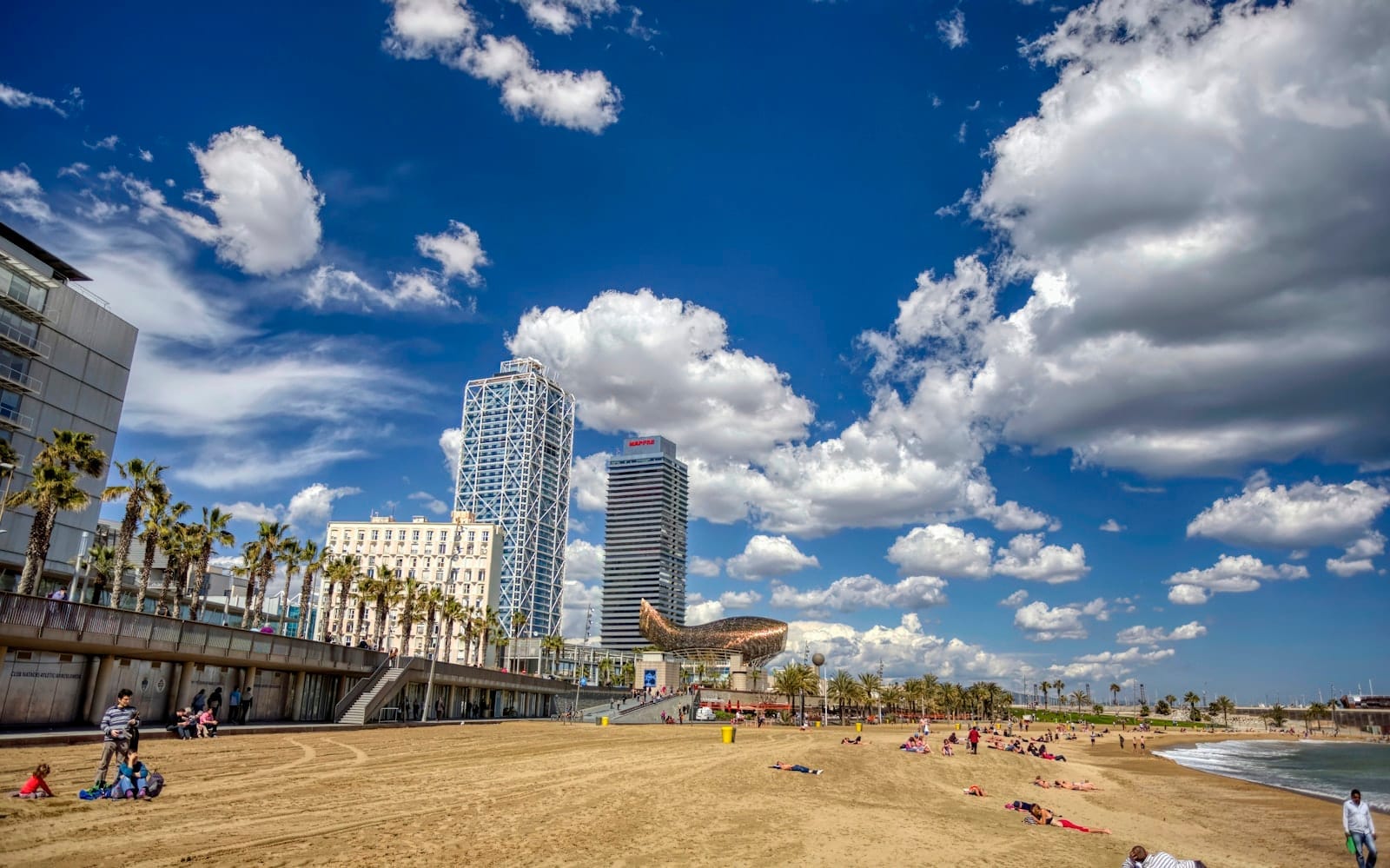
Barceloneta is Barcelona's coastal neighborhood, a narrow triangle of land wedged between the Mediterranean and the old city. Built in the 18th century to rehouse residents displaced by the construction of the Ciutadella fortress, it retains a distinctive grid of narrow streets, low-rise apartment blocks, and a seafront culture that sets it apart from every other part of the city.
Barceloneta is the city's original beach neighborhood: a compact grid of tight streets packed between the old town and the Mediterranean, where the smell of salt air and grilled seafood has defined daily life for centuries. It runs directly into one of Europe's most famous urban beaches, draws everyone from local families to summer crowds, and sits close enough to the Gothic Quarter to explore both in a single day.
Orientation
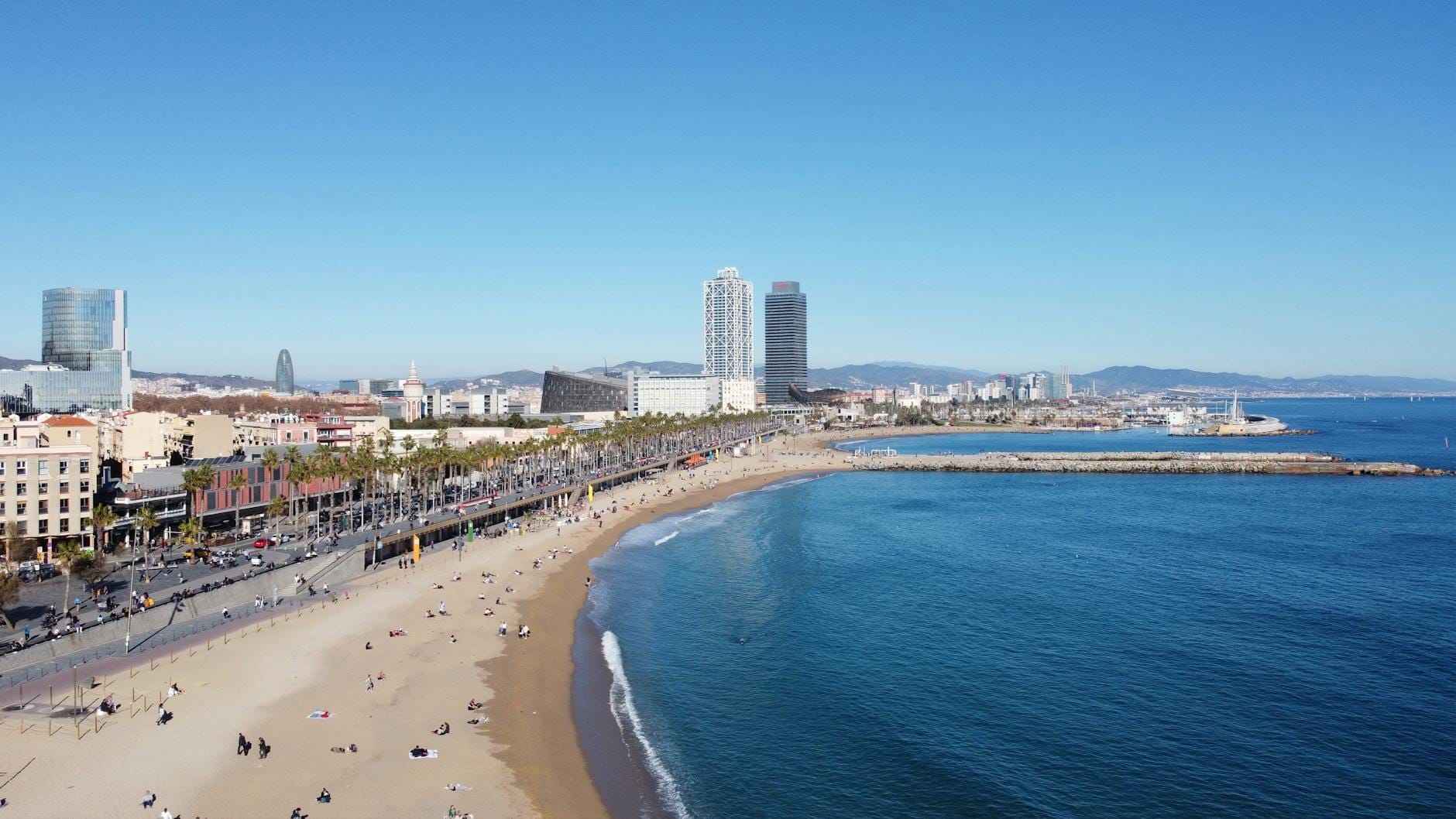
Barceloneta occupies a triangular peninsula jutting southeast from the old city. Its northern tip connects to the Port Vell marina, its western edge faces the inner harbor, and its long eastern side runs directly along the beach. The neighborhood is part of Ciutat Vella, Barcelona's historic district, though it feels completely different from the Gothic Quarter or El Born that flank it to the northwest.
The neighborhood lies east of the old town and the port, a short walk from the Gothic Quarter and El Born along the seafront. Walk south from Plaça de Catalunya along Las Ramblas and you will reach the waterfront in about 15 minutes. From there, the Barceloneta neighborhood stretches southeast along the coast. The beach itself, Barceloneta Beach, extends for roughly 1.1 kilometres before giving way to the Nova Icária and Bogatell beaches further up the coast toward Poblenou.
To the north, across the Passeig de Joan de Borbó, sits the marina district and El Born, which bleeds into La Ribera and the broader Ciutat Vella. The boundary between Barceloneta and El Born is informal but palpable: once you cross Passeig de Joan de Borbó and the streets start narrowing and climbing slightly, you have left the seaside grid behind. Understanding this layout matters for choosing where to stay. Barceloneta gives you the beach on your doorstep. El Born gives you quieter streets and easier access to the medieval city.
Character & Atmosphere
The streets inside Barceloneta proper are narrow by design. The 18th-century urban plan divided the triangular plot into long, thin blocks oriented to catch sea breezes, with Carrer de la Barceloneta and its parallel lanes creating a grid unlike anything else in the old city. The apartment buildings are low and close together. Laundry hangs between windows. A pharmacy, a bakery, a corner bar: the basic infrastructure of a neighborhood that people actually live in, not just visit.
Early mornings here belong to residents. By seven o'clock the cafés on Plaça de la Barceloneta are serving coffee to workers, and the light coming off the Mediterranean at that hour is genuinely worth waking up for: pale gold, flat, and still. The beach is nearly empty. Walk the Passeig Marítim, the seafront promenade running the length of the shoreline, and you will share it mostly with joggers and dog walkers.
By midday in July or August, the dynamic shifts entirely. The beach fills up fast. The Passeig Marítim becomes congested with tourists, rental bikes, and beach vendors. The seafood restaurants along Carrer del Mar and Passeig de Joan de Borbó fill up quickly, and waits of 30-45 minutes for lunch are common at well-known spots. If you are coming in peak summer, arrive at the beach before ten or after six.
After dark, Barceloneta has a split personality. The beach bars, known as chiringuitos, start filling up around sunset and run late into the night in summer. The clubs near the beach attract a young, international crowd and can be noisy well past midnight. The interior streets of the neighborhood, away from the waterfront, are quieter and more residential. Anyone staying here expecting silence after 11pm on a summer weekend will be disappointed.
⚠️ What to skip
Barceloneta beach is one of the most pickpocket-prone areas in Barcelona. Keep valuables in a bag you can hold in front of you, and never leave belongings unattended on the sand. The Passeig Marítim and the stretch near the beach bars see the highest concentration of petty theft in summer.
What to See & Do
The beach is the obvious starting point. Barceloneta Beach is broad, well-maintained, and backed by the Passeig Marítim. It has lifeguards in summer, outdoor showers, and a line of beach bars. It can get crowded, but the sheer scale of it means you can usually find space if you walk further from the main access points at the foot of Carrer de la Marina.
At the southwestern tip of the neighborhood, where the harbor meets the sea, stands the Mirador de Colom, the tall column topped with a statue of Columbus pointing out to sea. It marks the end of Las Ramblas and the entry to the waterfront. From the top, on a clear day, you can see the full sweep of the coastline from Montjuïc to the northeast beaches. The lift inside the column is worth the small entry fee for the perspective it provides.
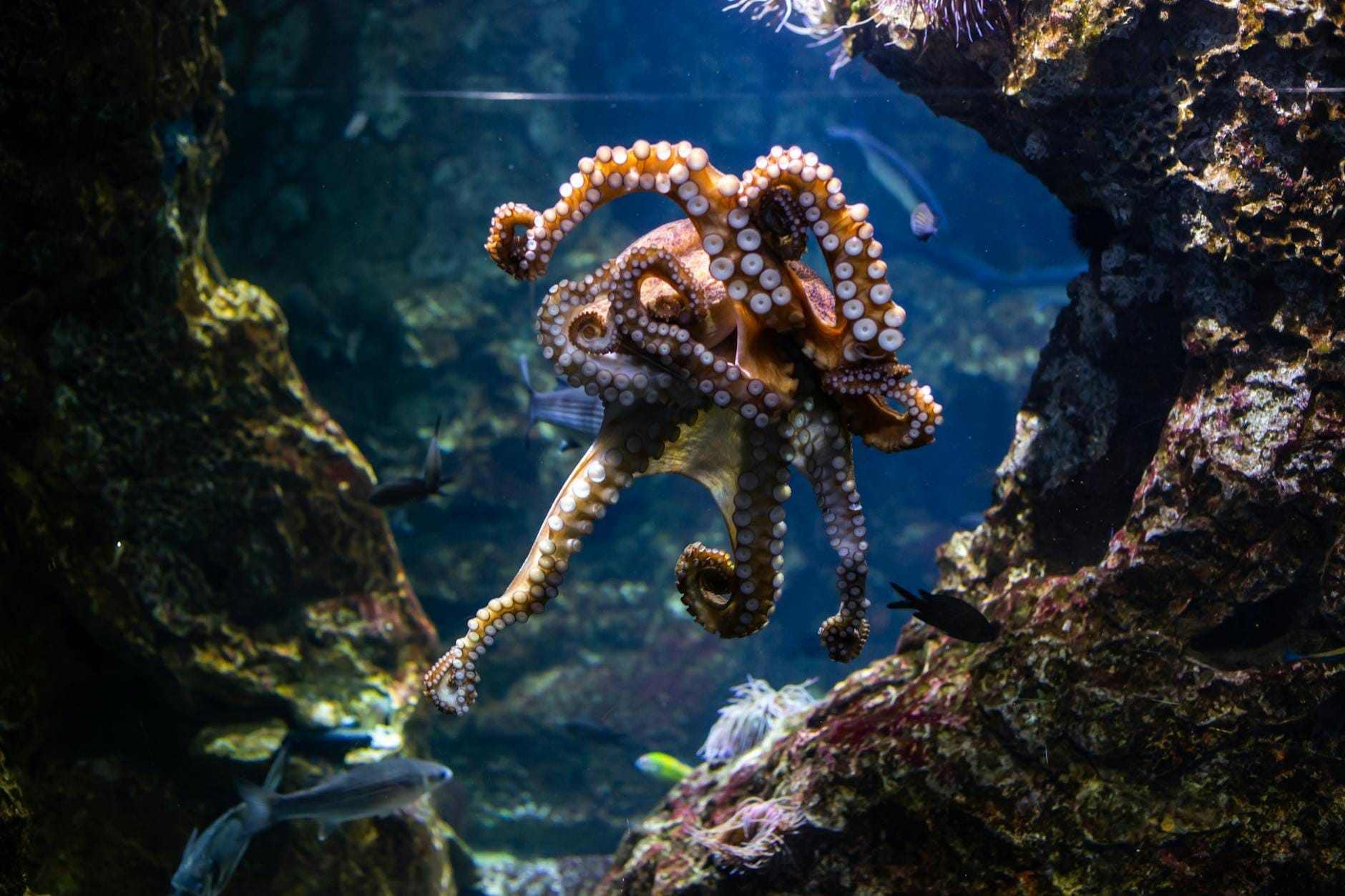
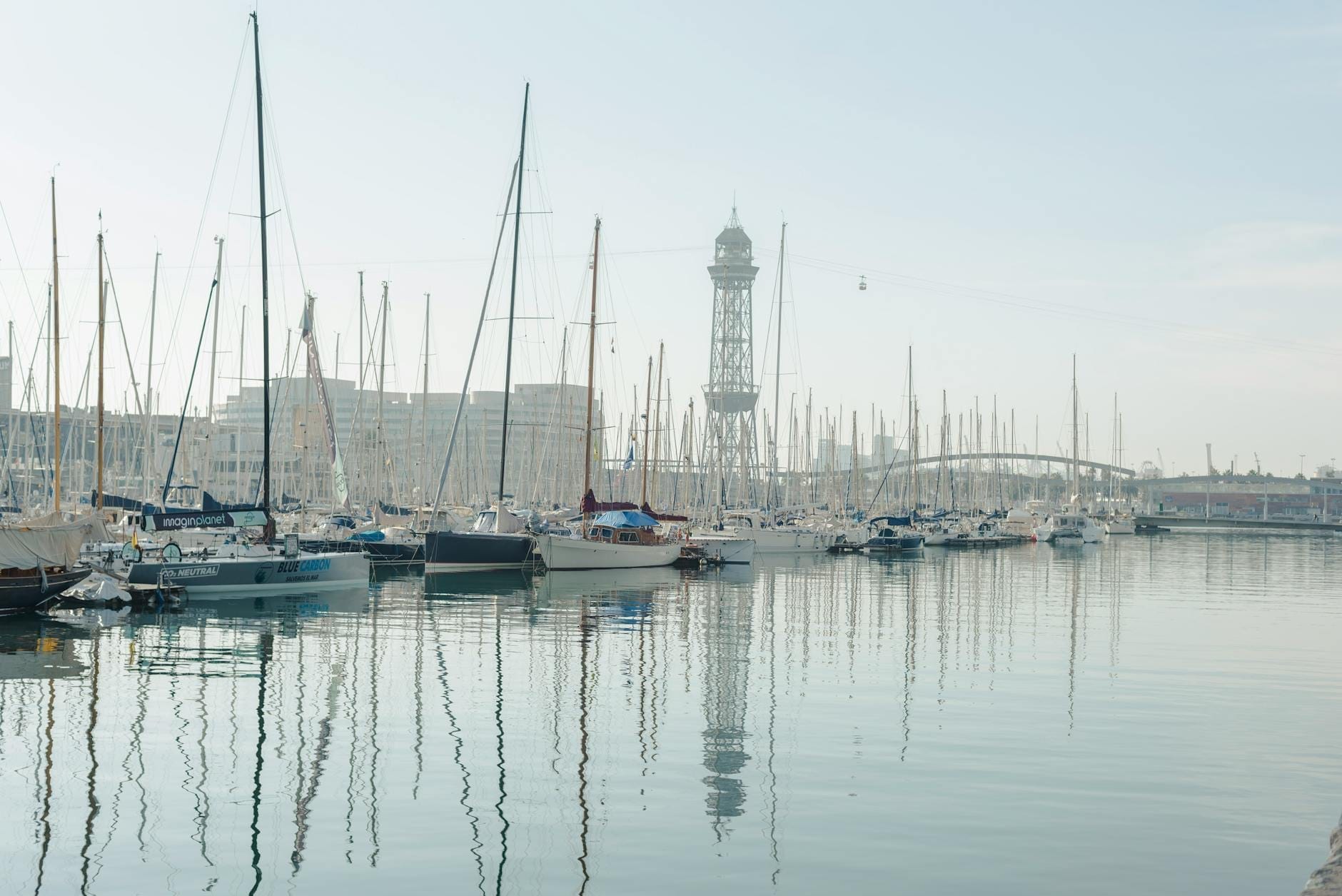
The Port Vell marina, directly adjacent to Barceloneta, has the Maremàgnum shopping and leisure complex on a pier, the Barcelona Aquarium, and various boat tour operators. The aquarium is one of the largest in Europe and particularly good if you are travelling with children. Boat tours of the harbor depart regularly from the quay and offer a different perspective on the city's coastline.
Walking north along the coast from Barceloneta, the Passeig Marítim leads to the Parc de la Ciutadella, one of Barcelona's main green spaces. The park contains the Cascada Monumental, a large ornamental fountain, as well as the Barcelona Zoo and boating lake. It is a 15-20 minute walk from the heart of Barceloneta and a good option on days when the beach feels too crowded.
Barceloneta Beach: main sandy stretch, best before 10am or after 6pm in summer
Passeig Marítim: the seafront promenade, good for walking and cycling the full coastal route
Port Vell marina: boat tours, Barcelona Aquarium, waterfront views
Mirador de Colom: Columbus monument with lift access and panoramic views
Plaça de la Barceloneta: the neighborhood's central square, quieter than the beachfront
Parc de la Ciutadella: green space 15 minutes north by foot, with the Cascada Monumental and zoo
💡 Local tip
Rent a bike from one of the many hire points along the Passeig Marítim and cycle north through the beachfront cycle path past Bogatell and Poblenou. The further you go from Barceloneta, the quieter and more local the beaches become.
Eating & Drinking
Seafood is the defining cuisine of Barceloneta, and deservedly so. The neighborhood's fishing heritage is baked into its culinary identity. The most iconic local dish is fideuà, a noodle-based paella cooked in seafood stock, traditionally finished in the oven. Suquet de peix, a Catalan fish stew, is another specialty that appears on menus throughout the area. Fresh grilled fish, razor clams, and gambas a la plancha (grilled prawns) are staples.
The restaurants along Passeig de Joan de Borbó, the wide boulevard running parallel to the harbor on the neighborhood's western edge, range from tourist-oriented to genuinely excellent. The trick is distinguishing between them. Places with laminated photo menus and touts outside are generally aimed at visitors with low expectations. The better spots are typically on the side streets running into the neighborhood's interior, or on the small squares tucked away from the main promenade.
For a more affordable meal, the interior market at Barceloneta's covered market hall, Mercat de la Barceloneta on Plaça de la Font, offers fresh produce and basic prepared foods. The bars along Carrer de Sant Carles and the streets radiating from Plaça de la Barceloneta serve tapas at prices aimed more at locals than tourists. Come at lunch rather than dinner if you want the local midday menu, typically a three-course meal with wine for around 12-15 euros.
The beach bar scene, concentrated along the Passeig Marítim, is best approached as atmosphere rather than serious food. The chiringuitos serve cold beer, basic sandwiches, and cocktails at prices that reflect the real estate. Sunset here is genuinely spectacular, with the light catching the water and the city skyline behind you. Having a drink while watching that is a legitimate use of your time and money, as long as you know what you are paying for.
ℹ️ Good to know
Barcelona's tap water is safe to drink but has a notably mineral taste. Most locals drink bottled water at home. In restaurants, you can ask for tap water (agua del grifo) to save money; it will be brought without complaint in most places.
Getting There & Around
The most direct metro connection is the Barceloneta station on Line 4 (the yellow line), which sits at the northern edge of the neighborhood near the junction with El Born. From there it is a five-minute walk south to reach the beach. Line 4 also connects directly to the Arc de Triomf and Jaume I stations to the north, and to the Ciutadella/Vila Olímpica station a short distance up the coast, which is useful for reaching the Olympic Village beach area.
From Plaça de Catalunya, the most convenient walk to Barceloneta follows Las Ramblas south to the harbor, then turns left along Passeig de Colom and crosses into the neighborhood via Passeig de Joan de Borbó. The total walking distance is roughly 1.5 kilometres and takes about 18-20 minutes at a moderate pace. For context on the broader transit network, the guide to getting around Barcelona covers metro zones, T-Casual cards, and bus options in detail.
Several bus lines serve the waterfront. Bus 59 connects the beach area to Eixample and Gràcia. Bus 45 runs along the coast toward Poblenou. The V15 and V17 are vertical and diagonal express lines that reach different parts of the city quickly. For the beach in summer, the bus can be slower than walking from the city center due to traffic, but it is useful for connections further afield.
Cycling is genuinely practical here. The seafront cycle path runs the full length of the beach and connects north to Poblenou and south toward the port. Bicing, Barcelona's municipal bike-share scheme, has docking stations throughout the neighborhood. Rental bikes are available from multiple operators along the Passeig Marítim. Be aware that cycling on the pedestrian sections of the boardwalk is prohibited and fines are issued.
Where to Stay
Barceloneta is a reasonable base if beach access is your top priority, though it comes with trade-offs that matter more for some travelers than others. For a broader comparison of neighborhoods and accommodation types, the where to stay in Barcelona guide covers the city's main areas against different travel styles and budgets.
Hotels in Barceloneta itself are relatively limited compared to Eixample or the Gothic Quarter. The area has a mix of mid-range hotels, apartment rentals, and some higher-end seafront options. The most practical locations for hotel guests are on or just off Passeig de Joan de Borbó, which gives easy access to both the beach and the metro at Barceloneta station. Rooms facing the beach tend to command a premium and come with noise: the promenade stays active late in summer.
The neighborhood suits travelers who are primarily in Barcelona for the beach, for the seafood culture, or for easy access to the waterfront at the expense of being further from central attractions like the Sagrada Família or Passeig de Gràcia. Those attractions are reachable by metro in 20-30 minutes, but if you are spending most of your day sightseeing across the city, staying in Eixample or near the Gothic Quarter may be more efficient. Barceloneta works best as a base for short stays, summer beach trips, or anyone who wants to walk out of their front door directly onto the sand.
Short-term apartment rentals are common in the neighborhood but have faced increasing regulation. Barcelona's city government has been tightening rules on tourist apartment licenses in Barceloneta specifically, given the impact on local residents. If you are considering a rental, check that the listing carries a valid tourist license number, which should appear in the listing description.
Nearby Neighborhoods Worth Combining
Barceloneta's greatest practical advantage is its proximity to several of Barcelona's most rewarding areas. A 10-minute walk northwest brings you into the El Born quarter, with the Basilica de Santa Maria del Mar and the Museu Picasso Barcelona both within easy reach. The contrast between the two areas is part of what makes them work well together: the open waterfront of Barceloneta followed by the dark, narrow medieval lanes of El Born is one of the better urban transitions in the city.
Further north, about 30 minutes by metro, the Poblenou neighborhood offers a calmer version of the beachfront experience with a more local character. Its Rambla del Poblenou is a tree-lined pedestrian street with considerably fewer tourists than Las Ramblas. If Barceloneta feels overly commercial on your visit, the coastal walk or bike ride to Poblenou is a practical alternative.
TL;DR
Barceloneta is Barcelona's main beach neighborhood: compact, well-connected by metro, and genuinely good for seafood and waterfront walks.
Best suited for travelers prioritizing beach access, summer atmosphere, and proximity to El Born and the Gothic Quarter.
Peak summer brings significant crowds and noise, especially at night. The interior streets are quieter than the seafront, but this is not a peaceful neighborhood after dark in July or August.
Petty theft is a real concern on the beach and the Passeig Marítim. Treat valuables accordingly.
Works best as a short-stay base or a half-day excursion from a hotel elsewhere in the city, rather than as a week-long home for travelers focused primarily on cultural sightseeing.
Barcelona transforms after sunset. Locals dine at 10 PM, the Magic Fountain draws crowds until midnight, and Gaudí's buildings glow in a way daylight simply cannot match. This guide covers the best ways to spend your evenings, from free spectacles to world-class performances.
Barcelona has nearly 5.5 kilometres of urban beaches stretching along the Mediterranean coast, all reachable by metro, bus, or bike. This guide covers every beach, what to do nearby, and how to make the most of the waterfront from the old port to the modern Diagonal Mar district.
Barcelona is an exceptional base for exploring Catalonia and beyond. These are the best day trips you can make from the city, from mountain monasteries and Roman ruins to Costa Brava beaches and Dalí's surrealist universe, most reachable by affordable public train.
Three days in Barcelona is enough to cover the city's greatest landmarks without rushing, if you plan smartly. This itinerary balances iconic Gaudí architecture, medieval streets, seafront walks, and local markets, with honest advice on what to skip, what to book ahead, and how to move between neighborhoods efficiently.
Barcelona is Spain's most expensive city, but it rewards smart travelers with free museums, cheap tapas, and world-class architecture you can admire for nothing. This guide breaks down exactly how to stretch your euros further without missing anything essential.
Barcelona rewards families with an extraordinary range of experiences: world-class science museums, a historic hilltop amusement park, beaches, Gaudí's fantastical architecture, and free fountain shows. This guide cuts through the noise to focus on what genuinely works with children in tow.
Choosing the best time to visit Barcelona depends on more than just sunshine. This guide breaks down every season by temperature, crowd levels, events, and value, so you can match your trip to your priorities rather than defaulting to peak summer.
Barcelona rewards those who look up and out. From hilltop ruins to Modernista rooftops, these are the city's best vantage points, ranked and described with practical detail so you can plan the perfect panorama.
Antoni Gaudí left seven UNESCO World Heritage Sites across Barcelona, each one a window into his obsessive genius. This guide covers every major work, from the soaring Sagrada Família to his earliest commission in Gràcia, with tips on booking, routing, and what to see inside each building.
Barcelona has one of Europe's most comprehensive urban transport networks, but knowing which option to use when can save hours and euros. This guide covers every mode of transport in the city, from the TMB metro and night buses to ride-hailing apps, cycling, and how to reach the airport.
Barcelona rewards those who look beyond the obvious. These 18 attractions reveal the city that locals actually love: Civil War ruins with unbeatable views, Gaudí buildings the tour buses miss, neighbourhood promenades, and market halls that outshine the famous ones.
Barcelona packs extraordinary architecture, world-class food markets, sun-soaked beaches, and centuries of history into 101 square kilometres. This guide cuts through the hype to tell you what's genuinely worth your time, what to skip, and how to do it all without wasting a day.
Barcelona's food scene runs far deeper than paella and tapas. This guide covers essential Catalan dishes, the best markets, standout restaurants by neighborhood, and the seasonal specialties most visitors miss entirely.
Choosing where to stay in Barcelona shapes your entire trip. This guide breaks down every major neighborhood by location, atmosphere, price range, and who it actually suits, so you can book with confidence.