Rambla del Poblenou: The Promenade Barcelona Actually Lives On
Rambla del Poblenou is a 1-kilometre pedestrian boulevard cutting through one of Barcelona's most genuinely local neighbourhoods. Free, unhurried, and lined with cafes and century-old trees, it offers a window into everyday Catalan life that the tourist-saturated Las Ramblas no longer can.
Quick Facts
- Location
- Poblenou, Sant Martí district, Barcelona
- Getting There
- Metro L4 – Llacuna or Poblenou station (3–5 min walk)
- Time Needed
- 45–90 minutes for a relaxed stroll; longer if you stop for coffee or explore side streets
- Cost
- Free (public street, open 24/7)
- Best for
- Slow mornings, neighbourhood atmosphere, local cafe culture, post-beach walks
What Rambla del Poblenou Actually Is
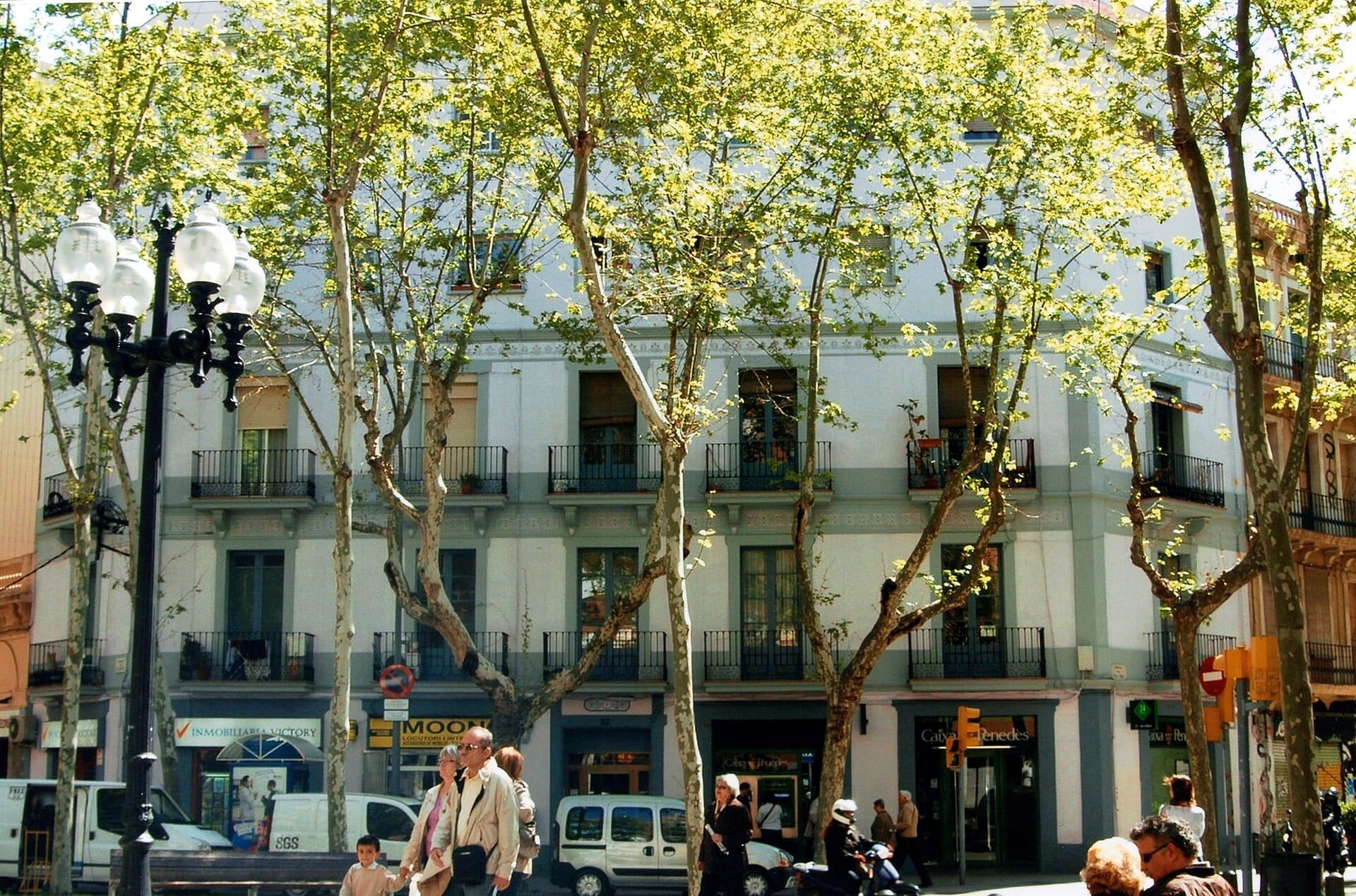
Rambla del Poblenou is a broad, tree-shaded pedestrian promenade running roughly one kilometre through the heart of the Poblenou neighbourhood in Barcelona's Sant Martí district. It stretches from the major intersection at Gran Via de les Corts Catalanes down toward the waterfront, ending close to Bogatell beach. Unlike the famous Las Ramblas, this boulevard has no souvenir stalls, no human statues competing for tips, and no significant tourist infrastructure. What it has instead is the unpolished rhythm of a neighbourhood going about its day.
The rambla traces its origins to 1853, when it was laid out as part of Ildefons Cerdà's ambitious expansion plan for Barcelona. Originally known as Passeig del Triomf, it was formally renamed Rambla del Poblenou in 1986, a period when the neighbourhood was beginning its long transformation from a dense industrial zone into the mixed-use, creatively charged district it is today. Understanding that history matters: Poblenou was once called the Manchester of Catalonia because of its concentration of textile mills and factories. Echoes of that industrial past still surface in the neighbourhood's converted warehouses, wide street grids, and the occasional cast-iron detail on an old building facade.
💡 Local tip
Start your walk from the Gran Via end in the morning when bakeries and cafes are opening. The light filters through the plane trees from the east at that hour, and you'll have the central walking strip almost to yourself.
The Walk: What You See and Feel
The promenade has a distinctive layout: a wide central pedestrian strip flanked by two narrower traffic lanes on either side, then narrow pavements with low-rise buildings. The central strip alternates between rectangular and circular paved sections, creating a gentle rhythm underfoot. Mature plane trees arch overhead along most of the route, providing dense shade in summer, when the temperature under the canopy can feel several degrees cooler than on adjacent open streets.
At street level, the rambla is lined with small cafes, independent pharmacies, bakeries, and corner bars. Many have outdoor terraces spilling onto the pedestrian strip. The chairs here are occupied by people actually reading newspapers and talking to each other, not primarily posing for photos. On weekend mornings, older residents claim the outdoor seats early; by midday, the crowd shifts younger, with families and cyclists passing through.
The textures underfoot are mostly smooth stone paving, with a few rough patches near utility covers, so it is manageable with a pram or wheelchair. There are no steep inclines. The street is wide enough that even when moderately busy, it never feels crowded in the way that the Gothic Quarter's narrow lanes can.
At the southern end near the beach, the rambla opens toward a more modern-feeling stretch where the 22@ innovation district's newer architecture begins to intrude on the traditional low-rise streetscape. This is not unpleasant, but it does shift the mood noticeably. If you prefer the older, more intimate character, spend your time in the northern two-thirds of the route.
Tickets & tours
Live prices and dates from our booking partner. If you book, we may earn a commission at no extra cost to you.
Columbus Monument Admission Tickets
From 8 €Instant confirmationFree cancellationSanta Maria del Mar Guided Tour Through the Interior and Terraces
From 19 €Instant confirmationFree cancellationBarcelona Highlights tour
From 50 €Instant confirmationFree cancellationBohemian neighbourhoods eBike tour
From 40 €Instant confirmationFree cancellation
Time of Day: How the Experience Shifts
Early mornings, particularly on weekdays before 9am, are genuinely quiet. The smell of bread from local bakeries mixes with the slight salt humidity drifting up from the nearby seafront. A few joggers pass, street cleaners finish their rounds, and cafe staff set up chairs with a practiced efficiency. This is the hour when the rambla most clearly belongs to the people who live here.
By late morning and early afternoon, the street fills steadily. Lunchtime brings workers from the surrounding offices and the 22@ tech district. The outdoor terraces reach capacity around 2pm, which is the traditional Spanish lunch hour. This is a good time to observe how seriously Barcelona takes its midday meal: conversations are long, wine is ordered without ceremony, and no one seems to be eating at their desk.
Late afternoon through early evening is arguably the most appealing window for a first visit. The heat drops, the light turns amber-gold, and the passeig culture that defines Catalan city life comes into full effect. Families walk slowly, stopping to greet neighbours. Groups of friends gather on benches. The sensory quality of the rambla at 7pm in September is distinct from almost anywhere else in Barcelona: unhurried, local, and faintly reminiscent of what all of Barcelona might have felt like before mass tourism concentrated itself so heavily in the city centre.
ℹ️ Good to know
Weekends between 11am and 2pm bring the liveliest atmosphere, with occasional street performers and a small craft or food market presence near the southern end. Check locally for market schedules, as these vary seasonally.
Neighbourhood Context: Why Poblenou Matters
Poblenou is one of Barcelona's most actively evolving districts, and the rambla sits at its social centre. The neighbourhood has shifted significantly since the early 2000s, when the city designated the area as the 22@ district, a policy intended to attract technology, media, and creative companies into former industrial land. The result is an unusual coexistence: old working-class apartment blocks and corner bars sit directly alongside co-working spaces and design studios. Walking the rambla and its side streets, you encounter both with no sense of one having displaced the other entirely, at least not yet. For a broader sense of how the city is changing, the things to do in Barcelona guide puts Poblenou in useful context against the city's more established attractions.
The neighbourhood's industrial heritage shows up in unexpected details: a bricked-up factory gate on a side street, a chimney stack converted into a residential tower, or the unusually wide cross streets that were designed to accommodate heavy freight movement. Poblenou was largely cut off from the seafront until the mid-1990s, when the redevelopment for the 1992 Olympic Games opened up the waterfront and integrated what had been a blocked-off industrial edge into the city's coastal identity.
The rambla's proximity to the beach is one of its practical strengths. Walking the full length from Gran Via to the southern end and continuing another ten minutes on foot brings you directly to Bogatell, one of Barcelona's calmer urban beaches. This makes the rambla a natural part of a half-day itinerary that combines neighbourhood exploration with time at the water's edge. See the full Barcelona beaches guide for help choosing which stretch of coast suits you best.
Photography and Visual Character
The rambla photographs well in the early morning or late afternoon, when the angle of light cuts across the tree canopy and creates strong contrast between shadow and lit pavement. Midday light in summer is harsh and flat, which makes photos of the street itself less interesting, though it is fine for photographing the cafe facades and architectural details at close range.
Side streets branching off the rambla are worth exploring with a camera. The grid structure of Poblenou means these streets are predictable and easy to navigate, but some contain remarkable surviving examples of early 20th-century Modernista residential architecture, modest in scale compared to the showpieces on Passeig de Gràcia but genuinely beautiful in their detailed ironwork balconies and painted tile details.
If architectural photography is a priority, consider pairing the rambla with a visit to the nearby Hospital de Sant Pau, one of Barcelona's most extraordinary Modernista complexes, accessible in under 20 minutes by metro from Poblenou station.
Getting There and Practical Logistics
The most straightforward access is via Metro Line 4 (the yellow line), alighting at Poblenou station. From the station exits, the rambla is a short walk of roughly three to five minutes. The metro runs from early morning until midnight on weekdays, with extended hours on weekends. Multiple bus lines also serve the area, and the neighbourhood is well-connected to the city's cycling infrastructure if you are travelling by bike.
If you are coming from the Gothic Quarter or El Born, the rambla is also reachable on foot along the seafront, which makes for a pleasant approach: walk east along the waterfront past the Port Vell marina, continue past Barceloneta, and turn inland at Bogatell. The full walk from El Born takes approximately 35–40 minutes at a relaxed pace. For transport options across the city, the getting around Barcelona guide covers metro, bus, and bike routes in detail.
There is no entry fee, no ticket queue, and no booking required. Rambla del Poblenou is a public street, open at all hours. Wear comfortable shoes: the paving is generally smooth but some sections near the northern end have uneven joints between stone slabs. Bring water in summer, as the shade is good but the heat is still real. Most cafes on the rambla offer water and coffee at standard local prices, without the tourist premium you encounter near Las Ramblas.
⚠️ What to skip
Avoid peak summer midday hours if heat is a concern. Between noon and 4pm in July and August, surface temperatures on unshaded sections of the pavement can be uncomfortable. The tree canopy covers most of the central strip, but not all of it.
Honest Assessment: What This Is and What It Isn't
Rambla del Poblenou is not a spectacle. It has no landmark building at its end, no dramatic viewpoint, no single feature that justifies a long detour from the city centre purely on its own. Its value is atmospheric and cumulative: it rewards visitors who are willing to slow down, order a coffee, and observe. Travellers with only 48 hours in Barcelona and a long checklist of major sights may find it hard to justify the time. Those who have already seen the Sagrada Família, Casa Batlló, and Parc Güell and are wondering what Barcelona looks like when it is not performing for tourists will find the rambla quietly revelatory.
It also works well as a starting point for exploring Poblenou's wider street life, the 22@ architecture, and the nearby Rambla del Poblenou market days. If you are trying to understand Barcelona beyond its architectural highlights, the hidden gems in Barcelona guide identifies several other less-trafficked spots across the city that operate on a similar logic.
Insider Tips
- The cafes at the northern end of the rambla, closest to Gran Via, tend to be cheaper and less crowded than those near the beach end, where foot traffic from Bogatell increases prices slightly.
- Walk the side streets east and west of the rambla, particularly Carrer del Pallars and Carrer de Roc Boronat, to find the best surviving examples of Poblenou's early 20th-century residential architecture, including Modernista details largely unknown to visitors.
- If you visit on a weekend morning, check whether the local market is operating near the southern section. Small food and craft markets appear seasonally and are almost entirely local in character.
- For the best light on the central tree canopy, arrive between 8am and 9am in spring or autumn when the low sun filters through the leaves from an angle that midday light cannot replicate.
- The rambla connects naturally to Bogatell beach at its southern end, which is significantly quieter than Barceloneta on summer weekends and has better-maintained facilities. It is worth knowing this if you are planning a beach day.
Who Is Rambla del Poblenou For?
- Travellers who have already covered the major sights and want to see how Barcelona functions as a city for its own residents
- Slow-morning explorers who prefer coffee at a neighbourhood bar over a queue at a ticketed attraction
- Photographers interested in everyday urban texture and Modernista residential architecture
- Visitors combining a neighbourhood walk with a beach afternoon at the quieter Bogatell
- Families looking for a flat, safe, shaded route that requires no planning or booking
Planning a trip? Discover personalized activities with the Nomado app.