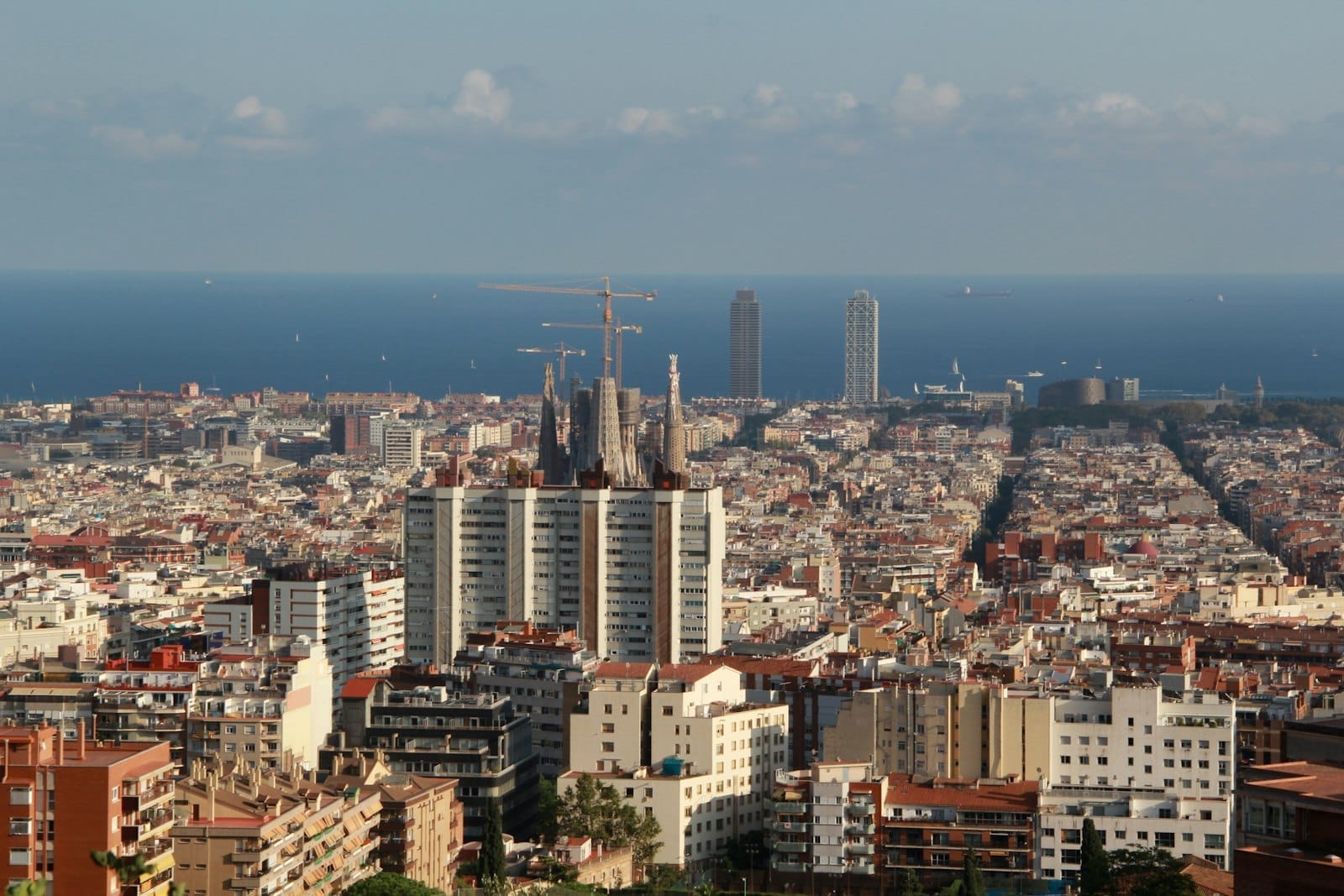
Poblenou and the Olympic Village sit on Barcelona's northeastern waterfront, where a former industrial wasteland was reinvented for the 1992 Summer Olympics and has since matured into one of the city's most liveable, unhurried coastal districts. Wide avenues lead directly to the sea, twin landmark towers define the skyline, and the neighbourhood balances genuine residential life with easy beach access.
Poblenou and the Olympic Village represent Barcelona's most dramatic urban transformation: a derelict industrial zone converted into a planned waterfront neighbourhood for the 1992 Olympics, where approximately 2,000 apartments were originally built to house Olympic athletes and later sold as permanent residences, with the broader area now home to tens of thousands of residents and a coastline that rivals anything in the Mediterranean. Less tourist-saturated than Barceloneta and more polished than its working-class roots might suggest, this stretch of the Sant Martí district rewards travellers who want sea air, modern architecture, and a quieter pace without sacrificing easy access to the rest of the city.
Orientation
Poblenou and the Olympic Village occupy the northeastern edge of Barcelona's coastline, sitting within the Sant Martí district between El Born to the west and the Diagonal Mar neighbourhood further northeast. The area is broadly divided into two overlapping zones: the Olympic Village proper (La Vila Olímpica del Poblenou), a planned residential grid built on 38 hectares of former industrial land around the ancient Icària neighbourhood, and the wider Poblenou barri stretching inland, which retains more of its original working-class and light-industrial character.
The street layout follows the logic of Ildefons Cerdà's iconic Eixample grid, extended deliberately toward the sea. Wide, tree-lined avenues like Avinguda d'Icària and Avinguda del Bogatell run perpendicular to the waterfront, making navigation straightforward. The beachfront itself connects southward to Barceloneta and northward toward Bogatell and Mar Bella beaches. To the west, Parc de la Ciutadella forms a green boundary with El Born.
The neighbourhood's southern anchor is the Port Olímpic, a marina ringed with restaurants and bars. Just inland from the port, the twin towers of Hotel Arts and Torre Mapfre (both 154 metres tall, completed in 1992) serve as unmissable orientation points visible from much of coastal Barcelona. For context on how Poblenou connects to the broader city, the where to stay in Barcelona guide places it well within the city's coastal arc.
Character & Atmosphere
Early mornings in the Olympic Village have a particular rhythm: joggers and cyclists trace the beachfront passeig before the sun gets high, elderly residents walk dogs along the shaded interior streets, and the smell of espresso drifts from neighbourhood cafés that haven't yet filled with tourists. The wide avenues create a sense of openness that feels almost suburban compared to the compressed medieval lanes of the Gothic Quarter. Light bounces off the Mediterranean at the end of every north-south street, pulling you toward the water even when you hadn't planned to go.
By midday the beaches fill up and the Port Olímpic's restaurant strip comes alive, drawing a mix of locals eating long lunches and visitors who've arrived specifically for the seafood. The area between the port and the beach around Nova Icària is particularly relaxed compared to Barceloneta: fewer beach sellers, more space between towels, and a slightly older demographic of families and residents rather than the pure beach-party crowd. The Frank Gehry golden fish sculpture, Peix d'Or, gleams in the afternoon light at the port entrance and acts as the neighbourhood's unofficial mascot.
After dark, the Port Olímpic is where the character shifts most sharply. The marina itself is lined with bars and clubs that cater to a young, often international crowd well into the small hours. The streets directly behind the port are quieter by contrast, their residential blocks returning to a calm that the rest of the city's coastal nightlife districts rarely manage. If you want to be close to the sea without being inside a permanent party, the residential grid of the Olympic Village delivers exactly that.
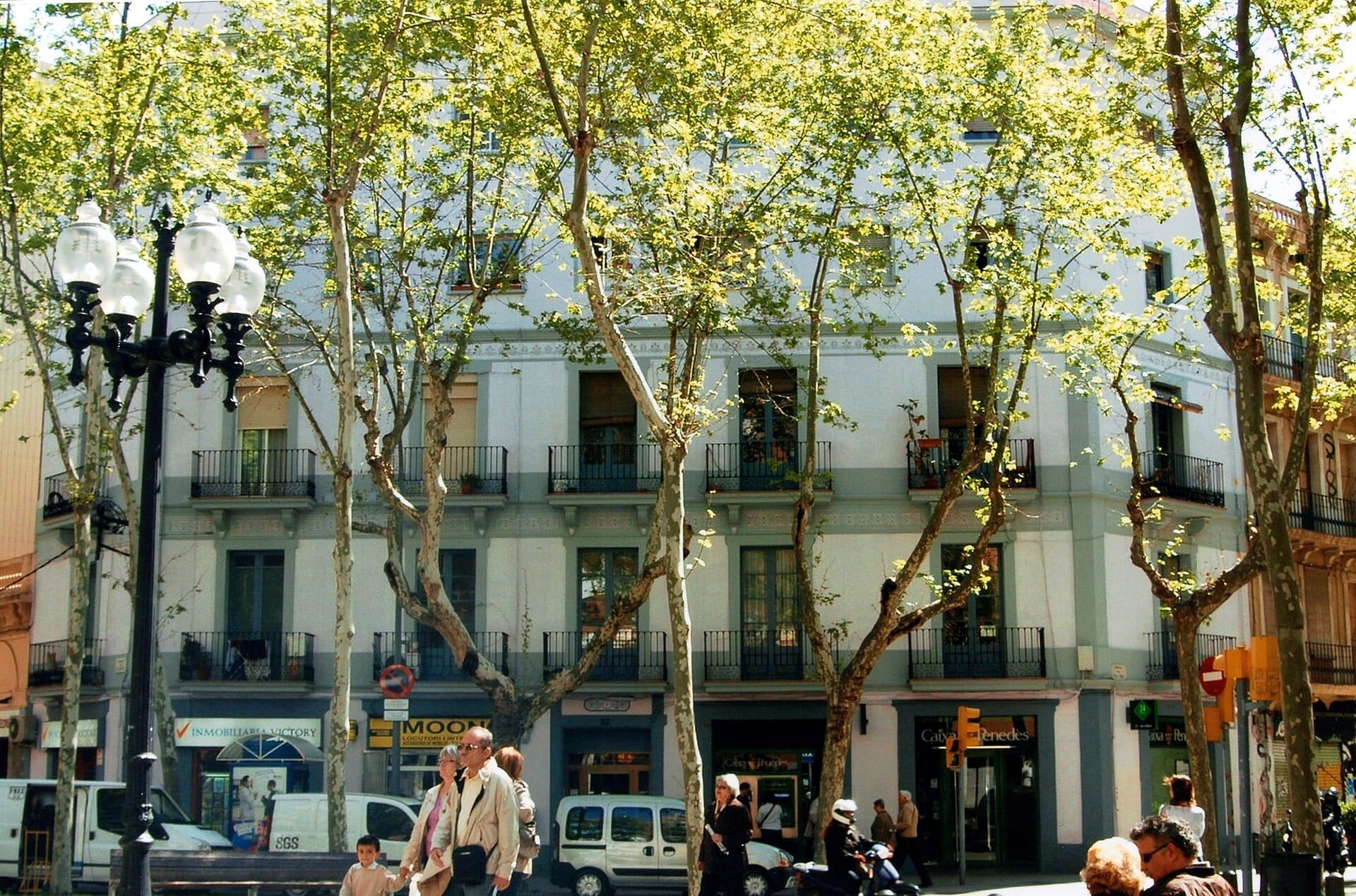
Poblenou proper, the older neighbourhood inland along Rambla del Poblenou, has its own separate atmosphere: a pedestrianised promenade of neighbourhood bakeries, hardware shops, and local restaurants that functions as the social spine of the barri. This is where you see what the neighbourhood was before the Olympics and what it is becoming now, with creative industry offices and design studios increasingly filling former factory spaces.
ℹ️ Good to know
The Rambla del Poblenou is not the same street as Las Ramblas. It runs through the older part of Poblenou and is almost entirely local in character, with far fewer tourist-oriented businesses.
What to See & Do
The neighbourhood's most photographed feature is Frank Gehry's Peix d'Or, the large golden fish sculpture installed at the Port Olímpic for the 1992 Games. Made of interwoven steel mesh that catches and scatters light differently throughout the day, it stands between the Hotel Arts tower and the marina entrance and is genuinely worth pausing at rather than just photographing from a passing tram.
Nova Icària beach, the stretch of sand directly in front of the Olympic Village, is one of Barcelona's cleaner and better-serviced urban beaches. It connects to the broader Barcelona beaches network, which extends from Barceloneta in the south to the more local beaches of Bogatell and Mar Bella to the north. The beach has showers, sun lounger hire, and beach volleyball courts. Walking south along the passeig takes you to Barceloneta in about fifteen minutes.
Casino Barcelona sits at the northern end of the Port Olímpic and operates as one of the city's main gaming venues. It is worth knowing about as a landmark even if you have no interest in gambling, since it defines the northern visual boundary of the marina. Just west of the neighbourhood, Parc de la Ciutadella provides the nearest large green space, with boating lakes, the Cascada Monumental fountain, and the city zoo. It is a ten-to-fifteen minute walk from the Olympic Village metro station.
The Rambla del Poblenou is worth a slow walk in either direction for a sense of the barri's pre-Olympic identity. Further inland, Poblenou's @22 innovation district has converted former factories into offices and research centres, giving the area a character that feels different from any other neighbourhood in Barcelona. For views that go beyond the neighbourhood, the best viewpoints in Barcelona guide includes rooftop options that put the Olympic Village's coastal geography into perspective.
Peix d'Or (Frank Gehry's golden fish sculpture) at Port Olímpic
Nova Icària beach and the beach promenade
Hotel Arts and Torre Mapfre twin towers (exterior architecture)
Rambla del Poblenou for local neighbourhood life
Port Olímpic marina for a waterfront stroll
Parc de la Ciutadella (15-minute walk west)
Eating & Drinking
The eating options here divide fairly cleanly into two categories: the tourist-facing seafood restaurants and bars of the Port Olímpic strip, and the more everyday neighbourhood places on and around the Rambla del Poblenou. The Port Olímpic restaurants are convenient and consistent, serving grilled fish, paella, and fresh seafood at prices slightly above what you'd pay in residential Barcelona. The quality is generally acceptable rather than exceptional, and the settings, with marina views and outdoor terraces, can justify the premium on a warm evening.
For better value and a more local experience, walk ten minutes inland to the Rambla del Poblenou and the cross streets running off it. This is where neighbourhood restaurants serve menú del día lunches (a two- or three-course set lunch with wine or water) at prices considerably lower than the waterfront. Catalan home cooking, tapas bars aimed at office workers and residents, and a small number of more creative restaurants reflecting the neighbourhood's incoming design and tech crowd all sit within a few blocks of each other.
Coffee culture is strong in Poblenou, partly because of the influx of creative-industry workers who have moved into the district over the past decade. Specialty coffee shops and brunch spots have appeared alongside the traditional neighbourhood cafés without displacing them entirely. For a broader picture of Barcelona's food scene and where Poblenou fits within it, the where to eat in Barcelona guide covers the city's neighbourhood-by-neighbourhood eating landscape.
💡 Local tip
Avoid the first row of restaurants directly facing the Port Olímpic marina if you are on a budget. Walk one or two blocks inland toward Avinguda d'Icària and prices drop noticeably while quality often improves.
Nightlife drinking is concentrated at the Port Olímpic, which has a cluster of bars and clubs operating until dawn. The scene here is louder and more international than the cocktail bars in El Born or the neighbourhood pubs of Gràcia. If you are staying nearby and value sleep, be aware that noise from the marina carries further than you'd expect on warm nights when windows are open.
Getting There & Around
The most direct metro connection is Line 4 (the yellow line), with the Ciutadella / Vila Olímpica station serving the heart of the Olympic Village and providing straightforward access from the city centre. From Barceloneta station, one stop further south on Line 4, you can reach the neighbourhood in under three minutes by metro or roughly fifteen minutes on foot along the beach promenade.
Several bus routes serve Poblenou and connect it to the wider city. The T4 tram line runs along the coast from Ciutadella / Vila Olímpica toward Diagonal Mar and the Forum area to the northeast, which is useful if you are exploring further up the coast. For comprehensive guidance on navigating Barcelona's public transport network, the getting around Barcelona guide covers metro, bus, tram, and cycling options in detail.
Cycling is genuinely practical in this neighbourhood. The flat terrain, wide avenues, and dedicated bike lanes that run along the coast and through the Olympic Village grid make it one of the more cyclist-friendly parts of Barcelona. Bicing, the city's public bike-share system, has docking stations throughout the area. Renting a bike from one of the shops near Barceloneta and cycling northeast along the seafront is a logical and efficient way to explore the entire coastal strip from the old port to Poblenou and beyond.
On foot, the neighbourhood is very walkable within itself. From the Ciutadella / Vila Olímpica metro exit, the beach is a five-minute walk east, the Port Olímpic is about ten minutes southeast, and the Rambla del Poblenou is roughly ten minutes northeast. Walking west from the metro toward El Born takes around fifteen minutes and passes through the edge of Parc de la Ciutadella.
⚠️ What to skip
Taxis and ride-hailing apps (Uber, Bolt, Cabify) operate freely in Barcelona but can be slow to arrive at the Port Olímpic late at night due to demand. Book in advance or allow extra time if leaving after midnight.
Where to Stay
The Olympic Village was purpose-built as a residential neighbourhood and the vast majority of its approximately 2,000 original apartments are now private homes. Hotels are present but not numerous, with the two dominant options being the Hotel Arts Barcelona (one of the twin towers, a five-star Ritz-Carlton property with direct beach access) and a number of smaller hotels and aparthotels on the avenues running inland from the port. The area does not have the density of tourist accommodation you find in Barceloneta or the Gothic Quarter.
Staying here suits travellers who prioritise beach access and a quieter overnight atmosphere over being within walking distance of the city's main historic sights. The Gothic Quarter, El Born, and the Eixample are all reachable in fifteen to twenty minutes by metro, so the Olympic Village is not an isolated choice. It works well for those visiting during summer who want to combine city sightseeing with genuine beach time without moving between neighbourhoods.
For travellers weighing up the various coastal and central options, the where to stay in Barcelona guide provides a neighbourhood-by-neighbourhood comparison. Those who find the Olympic Village too quiet at night but still want a coastal base should consider Barceloneta, which has a broader range of accommodation at various price points and a more continuous nightlife scene.
History & Context
Before the 1992 Summer Olympics, the land now occupied by the Olympic Village was a mix of decaying industrial infrastructure, rail yards, and marginal housing that had accumulated along Barcelona's northeastern waterfront over more than a century. The area's historical name, Icària, referred to a workers' settlement established in the nineteenth century. By the 1980s much of it was derelict, and the coastline was effectively cut off from the rest of the city by rail lines and factory walls.
The city used the 1992 Games as a catalyst for one of the most ambitious urban regeneration projects in modern European history. Over 38 hectares were cleared and rebuilt according to a master plan that extended Cerdà's Eixample grid to the sea, removed the coastal rail lines, created new beach access, and constructed approximately 2,000 apartments intended to house Olympic athletes and then be sold as permanent residences. The Port Olímpic marina was dug and the twin towers built as the neighbourhood's vertical landmarks.
The result is a neighbourhood that is architecturally coherent and almost entirely planned, which gives it a quality that is simultaneously its greatest asset and its occasional limitation. The wide avenues and generous public spaces are genuinely pleasant to live in and move through. The neighbourhood lacks the organic messiness of historically layered areas like the Gothic Quarter or Gràcia. It is more city planning than city, though over thirty years of actual habitation have softened that distinction considerably.
The Olympic Village transformation also reopened Barcelona's relationship with its waterfront, a process that continued with the renovation of the port area and the beaches visible from Barceloneta. The 1992 Games effectively gave the city back its coastline, and the Olympic Village was the most visible proof that the project had worked.
TL;DR
Poblenou and the Olympic Village are best suited to travellers who want beach access, a calmer residential atmosphere, and easy metro connections to central Barcelona.
The neighbourhood was purpose-built for the 1992 Olympics on cleared industrial land and has matured into a genuine residential district with over 5,000 inhabitants.
Key landmarks include the Port Olímpic marina, the twin Hotel Arts and Torre Mapfre towers, Frank Gehry's Peix d'Or sculpture, and Nova Icària beach.
The Port Olímpic area is lively after dark with bars and clubs; travellers sensitive to noise should choose accommodation on the inland residential streets rather than directly beside the marina.
Not the right choice for travellers whose priority is proximity to historic sights or bohemian neighbourhood life: for that, El Born or Gràcia are stronger alternatives.
Barcelona transforms after sunset. Locals dine at 10 PM, the Magic Fountain draws crowds until midnight, and Gaudí's buildings glow in a way daylight simply cannot match. This guide covers the best ways to spend your evenings, from free spectacles to world-class performances.
Barcelona has nearly 5.5 kilometres of urban beaches stretching along the Mediterranean coast, all reachable by metro, bus, or bike. This guide covers every beach, what to do nearby, and how to make the most of the waterfront from the old port to the modern Diagonal Mar district.
Barcelona is an exceptional base for exploring Catalonia and beyond. These are the best day trips you can make from the city, from mountain monasteries and Roman ruins to Costa Brava beaches and Dalí's surrealist universe, most reachable by affordable public train.
Three days in Barcelona is enough to cover the city's greatest landmarks without rushing, if you plan smartly. This itinerary balances iconic Gaudí architecture, medieval streets, seafront walks, and local markets, with honest advice on what to skip, what to book ahead, and how to move between neighborhoods efficiently.
Barcelona is Spain's most expensive city, but it rewards smart travelers with free museums, cheap tapas, and world-class architecture you can admire for nothing. This guide breaks down exactly how to stretch your euros further without missing anything essential.
Barcelona rewards families with an extraordinary range of experiences: world-class science museums, a historic hilltop amusement park, beaches, Gaudí's fantastical architecture, and free fountain shows. This guide cuts through the noise to focus on what genuinely works with children in tow.
Choosing the best time to visit Barcelona depends on more than just sunshine. This guide breaks down every season by temperature, crowd levels, events, and value, so you can match your trip to your priorities rather than defaulting to peak summer.
Barcelona rewards those who look up and out. From hilltop ruins to Modernista rooftops, these are the city's best vantage points, ranked and described with practical detail so you can plan the perfect panorama.
Antoni Gaudí left seven UNESCO World Heritage Sites across Barcelona, each one a window into his obsessive genius. This guide covers every major work, from the soaring Sagrada Família to his earliest commission in Gràcia, with tips on booking, routing, and what to see inside each building.
Barcelona has one of Europe's most comprehensive urban transport networks, but knowing which option to use when can save hours and euros. This guide covers every mode of transport in the city, from the TMB metro and night buses to ride-hailing apps, cycling, and how to reach the airport.
Barcelona rewards those who look beyond the obvious. These 18 attractions reveal the city that locals actually love: Civil War ruins with unbeatable views, Gaudí buildings the tour buses miss, neighbourhood promenades, and market halls that outshine the famous ones.
Barcelona packs extraordinary architecture, world-class food markets, sun-soaked beaches, and centuries of history into 101 square kilometres. This guide cuts through the hype to tell you what's genuinely worth your time, what to skip, and how to do it all without wasting a day.
Barcelona's food scene runs far deeper than paella and tapas. This guide covers essential Catalan dishes, the best markets, standout restaurants by neighborhood, and the seasonal specialties most visitors miss entirely.
Choosing where to stay in Barcelona shapes your entire trip. This guide breaks down every major neighborhood by location, atmosphere, price range, and who it actually suits, so you can book with confidence.