Mirador de Colom: Barcelona from the Top of the Columbus Monument
Standing at the foot of Las Ramblas where the city meets the sea, the Mirador de Colom lifts visitors 60 metres above street level inside a 19th-century iron column. The viewing platform offers a rare low-altitude panorama that takes in the port, the Gothic Quarter rooftops, and the Eixample grid in a single sweep.
Quick Facts
- Location
- Plaça del Portal de la Pau, 1, 08001 Barcelona
- Getting There
- Metro L3 Drassanes; buses 59, 120, D20, H14, V13
- Time Needed
- 30–45 minutes
- Cost
- General: 6€; Reduced: 4.20€ (children 4–12, seniors 65+); Free under 4
- Best for
- First-time visitors, architecture enthusiasts, port-side photography
- Official website
- www.barcelonaturisme.com/wv3/en/page/456/mirador-de-colom.html
What Is the Mirador de Colom?
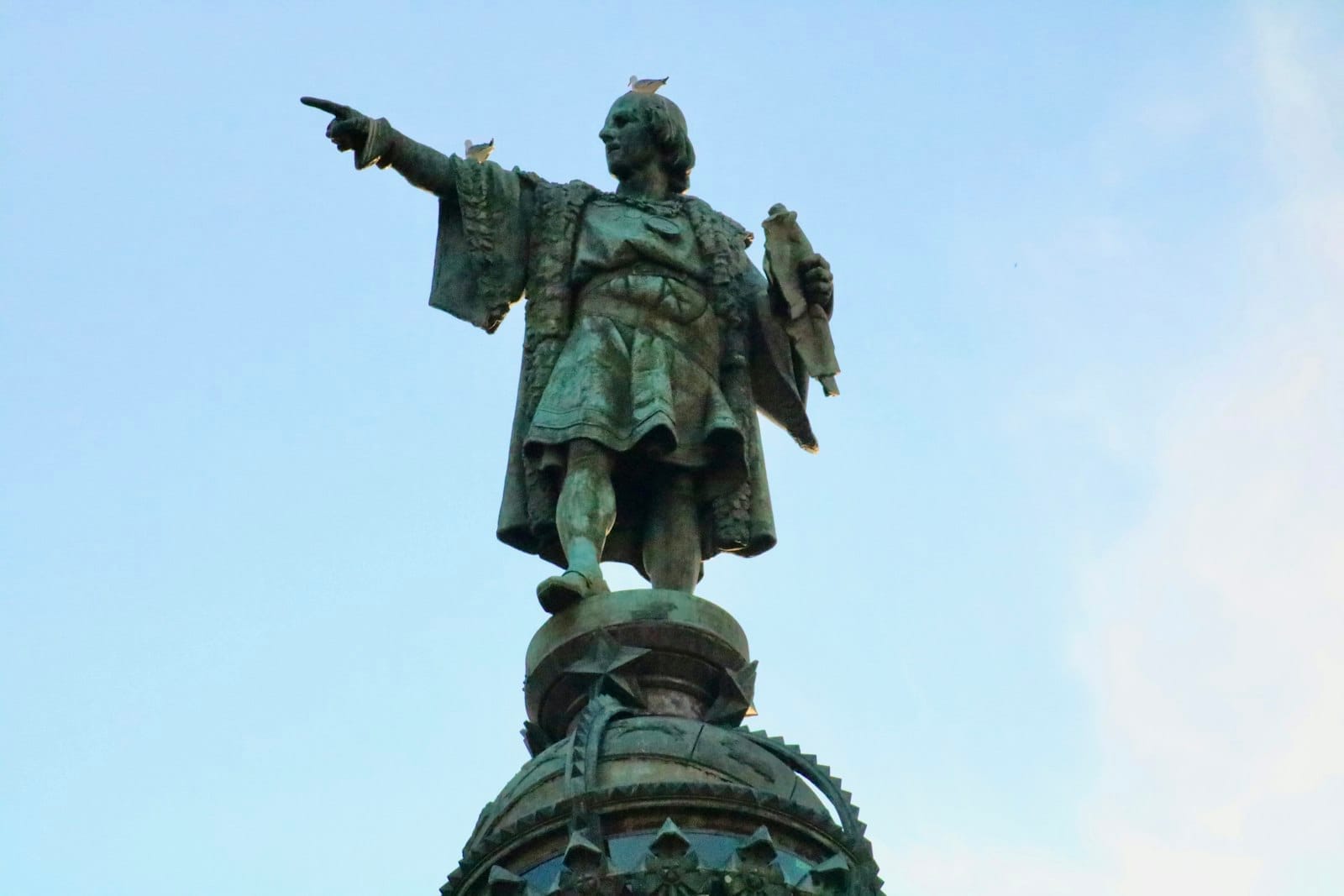
The Mirador de Colom is a 60-metre Corinthian iron column topped by a 7-metre bronze statue of Christopher Columbus, standing at the southern end of Las Ramblas where the boulevard meets the old port. Built in 1888 for the Barcelona Universal Exposition, the monument weighs 233 tonnes and was one of the first structures in Spain to use a hydraulic passenger lift, later converted to electric. Today that lift carries up to six or seven people at a time to a compact circular viewing platform just below the statue's base.
The monument marks the spot where Columbus is said to have been received by the Catholic Monarchs after returning from his first voyage to the Americas in 1493. Whether or not the exact geography of that meeting is historically precise, the column has served for over a century as Barcelona's symbolic hinge between the old city and the sea.
ℹ️ Good to know
Opening hours are seasonal. Summer (April to mid-October): 8:30–20:30, last entry 20:00. Winter (mid-October to March):: 8:30–14:30, last entry around 13:30–14:00. Closed 1 & 6 January, 11 September, and 24 & 25 December. The last lift runs 30 minutes before closing.
The View from the Top: What You Actually See
At 60 metres, this is not Barcelona's highest viewpoint, and it should not be compared to a rooftop terrace on a tall building. What it offers instead is a mid-level panorama that keeps the city legible. To the north, Las Ramblas cuts a straight line through the density of the Gothic Quarter and El Raval. On a clear day you can trace the grid of the Eixample all the way to the hills of Collserola, with the towers of the Sagrada Família visible above the roofline.
To the south and east, the view opens across the Port Vell marina toward Barceloneta, with the Rambla del Mar footbridge visible directly below. On the clearest days, the horizon dissolves into open Mediterranean. The platform is enclosed by glass panels, which keep the wind manageable but also introduce some reflection in photography, particularly when shooting into direct light.
The viewing level is narrow, roughly 5–6 people wide all the way around, so on busy days circulation becomes awkward. For better rooftop alternatives without the squeeze, some visitors prefer the terraces of Casa Milà (La Pedrera) or the sweeping panoramas from Bunkers del Carmel, which cover more of the city at greater height.
Tickets & tours
Live prices and dates from our booking partner. If you book, we may earn a commission at no extra cost to you.
Mirador Torre Glories admission tickets
From 18 €Instant confirmationColonia Guell Combinat entrance with audio guide + train ticket from Barcelona
From 15 €Instant confirmationGaudi Crypt in Colonia Guell guided tour
From 13 €Instant confirmationGaudi Crypt in Colonia Guell entrance tickets with audioguide
From 10 €Instant confirmation
How the Experience Changes by Time of Day
Morning visits, particularly before 10:00, are noticeably quieter. The light comes in from the east over the sea, which means the port side is well-lit and the city stretches into soft shadow toward the hills. The smell of salt air is stronger at this hour, before the traffic around Plaça del Portal de la Pau builds up. The base of the monument at this time feels calm, and the queue for the lift, if there is one, rarely exceeds 10 minutes.
Midday between 11:00 and 14:00 is the peak period. Tour groups arrive from the cruise terminal at the nearby port, and the queue can stretch to 20–30 minutes. The platform gets genuinely crowded at this hour, with little room to linger. If you arrive at midday, buy your ticket online in advance.
Late afternoon, roughly 17:00 to 19:00 in summer, is arguably the best window. The angle of the sun drops toward the hills behind the city, casting warm tones across the Eixample grid and the port, and crowd levels fall sharply after 17:30. The monument stays open until 20:30 in summer, giving ample time for a relaxed visit as the day cools.
💡 Local tip
For photography: shoot from the sea-facing side in the morning (light behind you) and from the city-facing side in the late afternoon (golden light on the Eixample). Avoid midday — harsh overhead light flattens the view and the glass panels reflect sun glare.
The Monument Up Close: Architecture and Historical Context
The column's design draws on classical Corinthian proportions but is constructed entirely from cast and wrought iron, a choice that reflected both the industrial ambitions of the 1888 Exposition and the Catalan iron industry of the period. The base is ringed by eight iron lions and eight allegorical figures representing the regions of Spain, along with relief panels depicting scenes from Columbus's voyages. Most visitors walk past these without stopping, which is a mistake: the craftsmanship at eye level is among the finest surviving details from the Exposition period.
The 1888 Exposition transformed this entire area of Barcelona. The event also gave the city the Arc de Triomf and reshaped the Parc de la Ciutadella into a public green space. Understanding the Columbus monument in isolation misses its original purpose as part of a coordinated urban statement about Barcelona's industrial and maritime ambitions.
One persistent point of interest: Columbus's outstretched arm points roughly southeast, toward the open Mediterranean, not toward the Americas. Various explanations have been offered, from navigational symbolism to practical constraints of the design, but none is fully conclusive. It remains one of those small details that guidebooks mention without resolving.
Getting There and Getting In
The most direct route is Metro Line 3 (green) to Drassanes, a three-minute walk to the monument base. Several bus lines, including 59, 120, D20, H14, and V13, stop nearby. The area is also walkable from the Gothic Quarter and from Barceloneta in about 10–15 minutes on foot along the waterfront.
The entrance is at the base of the column, marked by a red sign, with steps leading down to an underground ticketing area. A lift inside the column carries visitors to the top. General admission is 6€; reduced tickets (children 4–12 and seniors 65+) are 4.20€; children under 4 enter free. Tickets can be purchased on-site or through official channels. The Barcelona Card and some city passes include entry. The monument also sits on the route covered by the Barcelona on a budget guide for visitors watching their spending.
⚠️ What to skip
The lift is small, holding 6–7 people at a time. It is not recommended for anyone with severe claustrophobia. The viewing platform itself is not wheelchair accessible due to the constraints of the column interior, though lift access is available.
The Surrounding Area: What to Combine With Your Visit
The monument sits at the point where Las Ramblas ends and the waterfront begins. Walking north from the base takes you directly into the boulevard's lower stretch, past flower stalls and the entrance to the Boqueria market. Walking east along the waterfront brings you into the Port Vell marina and eventually to Barceloneta in about 15 minutes.
The Drassanes, Barcelona's medieval shipyards, sit immediately adjacent and now house the Museu Marítim, one of the city's more undervisited historical institutions. If you have an interest in maritime history, the combination of the Drassanes visit with the Columbus monument makes for a coherent half-day around the port. Families with children often continue east to the Barcelona Aquarium at Moll d'Espanya, a 10-minute walk along the waterfront.
The plaza at the monument's base is a natural transit point and tends to collect a steady flow of people throughout the day: cyclists, pedestrians moving between the old city and the port, and tourists pausing to photograph the monument from below. It is not a quiet place to linger, but it functions well as a starting or ending point for a waterfront circuit.
Who Will Get the Most from This Visit, and Who Might Not
The Mirador de Colom works best for first-time visitors to Barcelona who want a quick spatial orientation of the city from above without committing to a longer excursion. The visit is short, the cost is low relative to most attractions, and the historical context around the 1888 Exposition adds real substance if you take 10 minutes to read the base reliefs.
Travelers who have already visited Barcelona or who have been to higher viewpoints, such as the Sagrada Família towers, the hill at Bunkers del Carmel, or the Montjuïc cable car, may find the platform underwhelming. The view is genuinely limited by the 60-metre height in a city where the surrounding hills offer far more dramatic panoramas at no cost. If expansive views are your priority, factor that in before spending the entry fee.
Insider Tips
- Buy tickets online in advance if visiting between late June and early September. The lift queue during peak season can add 25–30 minutes to your wait even on weekdays.
- Walk around the full base of the column before going up. The bronze relief panels and allegorical figures at ground level are often overlooked and reward close attention, especially the scenes depicting Columbus's first voyage.
- The plaza directly below the monument is one of the better spots in the lower city to photograph the column itself in full. Step back toward the Rambla del Mar bridge for a clean angle with the sea behind the monument.
- Winter hours cut the afternoon slot dramatically, closing around 14:30. If you are visiting between November and March, plan the Columbus monument as a morning activity rather than an afternoon one.
- Columbus's outstretched finger points southeast toward the Mediterranean. Ask any local which direction he is actually pointing and you will get a different answer every time, a useful conversation starter.
Who Is Mirador de Colom For?
- First-time visitors wanting a quick city orientation from above
- Architecture and history enthusiasts interested in the 1888 Universal Exposition
- Families with children who can combine the visit with the nearby aquarium
- Photographers looking for mid-morning port and waterfront angles
- Travelers building a half-day waterfront route from Las Ramblas to Barceloneta
Nearby Attractions
Other things to see while in Barceloneta & the Waterfront:
- Barcelona Aquarium
L'Aquàrium de Barcelona occupies the Port Vell waterfront and holds one of Europe's most impressive collections of Mediterranean marine life. With 35 tanks, 11,000 animals across 451 species, and an 80-metre underwater tunnel through a 3.7-million-litre oceanarium, it offers a genuinely immersive experience. The key is knowing when to arrive and what to prioritise.
- Barceloneta Beach
Platja de la Barceloneta is Barcelona's closest and most frequented beach, stretching over 1,100 metres along the Mediterranean coast. Free to access year-round, it combines city convenience with genuine sea air, public art, and a beach culture that runs from early morning swimmers to late-night volleyballers.
- Port Vell & Maremagnum
Port Vell is Barcelona's historic inner harbor, rebuilt for the 1992 Olympics into a waterfront promenade with the Maremagnum shopping and dining complex at its heart. Free to enter and open late, it works best as an evening stroll rather than a destination in itself.
Planning a trip? Discover personalized activities with the Nomado app.