L'Aquàrium de Barcelona: What to Know Before You Visit
L'Aquàrium de Barcelona occupies the Port Vell waterfront and holds one of Europe's most impressive collections of Mediterranean marine life. With 35 tanks, 11,000 animals across 451 species, and an 80-metre underwater tunnel through a 3.7-million-litre oceanarium, it offers a genuinely immersive experience. The key is knowing when to arrive and what to prioritise.
Quick Facts
- Location
- Moll d'Espanya del Port Vell, 08039 Barcelona
- Getting There
- Metro L4 (Barceloneta); buses V15, H16, 39, 45, 59
- Time Needed
- 2 to 3 hours
- Cost
- €27 adults, €19 children 5-10, €14 children 3-4, €24 seniors 65+
- Best for
- Families with children, marine life enthusiasts, rainy-day visitors
- Official website
- www.aquariumbcn.com/en
What L'Aquàrium de Barcelona Actually Is
L'Aquàrium de Barcelona sits at the end of a wooden boardwalk over the Port Vell marina, roughly a ten-minute walk from the Columbus Monument. It opened in 1995 and remains one of the largest aquariums in Europe dedicated specifically to Mediterranean ecosystems. The complex holds 5 million litres of seawater distributed across over 80 aquariums, and the centrepiece is an oceanarium 36 metres in diameter and 5 metres deep, holding 3.7 million litres on its own.
The number that tends to stop people mid-step: 11,000 animals from 451 species, the majority native to the Mediterranean. This is not a sprawling tropical fish collection. The focus is on the sea immediately outside the building, which gives the aquarium a coherent identity that many larger facilities lack.
💡 Local tip
Book tickets online at aquariumbcn.com before arriving. Walk-up queues can stretch well past the entrance during summer mornings and weekends. Online prices match ticket office prices, so there is no cost reason to wait in line.
The Oceanarium Tunnel: the Real Draw
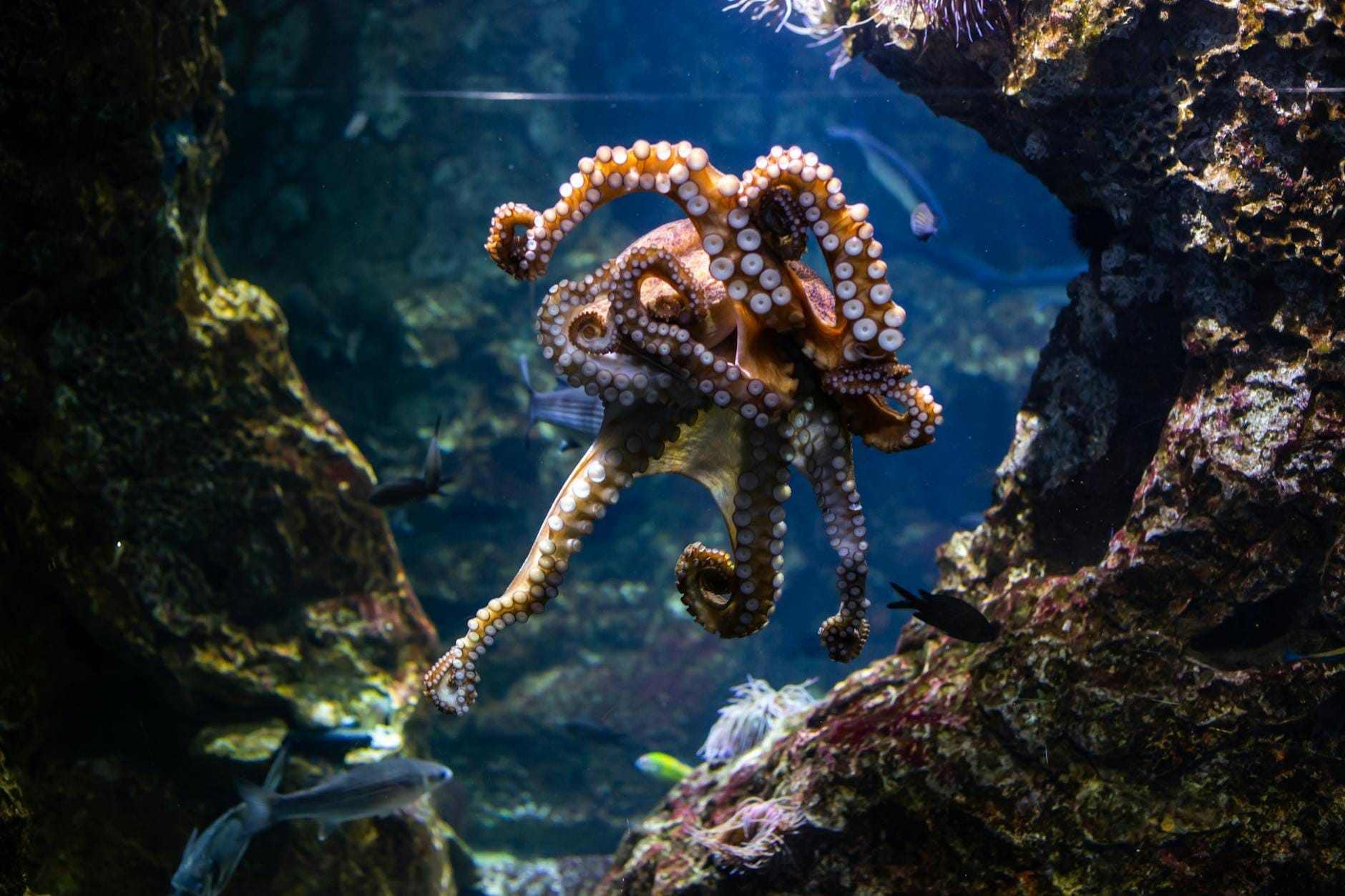
The 80-metre transparent tunnel running through the base of the oceanarium is the facility's signature feature, and it earns that status. You stand on a slow-moving walkway below roughly 3.7 million litres of water while sharks, rays, and large schools of fish circle overhead and press against the glass at arm's reach. The species present include sandbar sharks, nurse sharks, southern stingrays, and various grouper species that grow large enough to dwarf most visitors.
Early arrivals before 11:00 AM get the tunnel nearly to themselves, which makes a significant difference. Later in the day, the walkway fills with school groups and pushchairs, and the sensory effect of the tunnel is partially lost in the noise. The lighting inside is deliberately dim and blue-toned, meant to replicate the feel of open water at depth. The ambient sound design adds to this, mixing filtered ambient hums with occasional water movement.
Photography in the tunnel is possible but challenging. The glass produces reflections, and the low light means many phone cameras struggle. A wide-angle lens and disabling flash will produce better results. The moving walkway also means you need to step off to the stationary side strip if you want to linger over a shot.
Tickets & tours
Live prices and dates from our booking partner. If you book, we may earn a commission at no extra cost to you.
Beyond the Tunnel: 35 Tanks and What They Cover
The aquarium is structured as a circuit. Before reaching the oceanarium, you move through a sequence of themed tanks covering specific Mediterranean habitats: rocky coasts, sandy beds, Posidonia seagrass meadows, deep-sea zones, and coastal lagoons. Each tank is labelled in Catalan, Spanish, and English, with readable depth on the ecology of the species inside.
The seahorse and jellyfish displays are consistently popular and worth slowing down for. The jellyfish tanks use backlighting that shifts colour, which produces some of the most photogenic moments in the building. The touch pool area lets younger children handle sea stars and urchins under staff supervision, which tends to be the highlight for under-tens.
There is also a section called Planeta Aqua focused on freshwater and polar species. This shifts away from the Mediterranean theme and includes penguins, which children tend to respond to strongly. The penguin viewing area gets crowded during feeding times, usually scheduled twice daily, so check the posted schedule near the entrance on arrival.
ℹ️ Good to know
Opening hours are check official website for current seasonal hours (typically 10:00 AM - 7:00/9:00 PM). Hours can shift seasonally, so confirm on the official website before planning your day around a specific closing time.
Getting There and Fitting It Into Your Day
The aquarium is located at Moll d'Espanya in Port Vell. Metro Line 4 drops you at Barceloneta station, from which it is about a ten-minute walk along the waterfront. Buses V15, 39, 45, and 59 also serve the area. There is no practical reason to take a taxi unless you are traveling with heavy luggage or young children in buggies.
The surrounding area rewards a longer visit. The Barceloneta neighbourhood begins just across the marina and has some of the city's best seafood restaurants along the beachfront promenade. Combining the aquarium with lunch in Barceloneta and an afternoon at the beach makes for a natural full-day circuit, particularly if you are travelling with children.
Port Vell itself connects to several other points of interest. The Columbus Monument is a ten-minute walk along the waterfront, and the historic Gothic Quarter begins just behind it. If you are managing a Barcelona itinerary across multiple days, the aquarium pairs well with a morning in El Born or the Gothic Quarter before heading down to the water.
Admission, Accessibility, and What Things Cost
Ticket prices as of the latest published information: adults (12 and over) pay €27; children aged 5 to 10 pay €19; children aged 3 to 4 pay €14; seniors over 65 pay €24. Visitors with reduced mobility (65% or greater certified disability) pay €19 for adults and €13 for children, and a free carer ticket is available. These reduced tickets must be purchased at the ticket office, not online.
The facility is fully adapted for wheelchair users and pushchairs. The tunnel walkway has a stationary side lane alongside the moving belt, and all transitions between levels use lifts. If you are visiting with a pushchair, the central circulation areas are wide enough to manage comfortably, though peak hours do create congestion near the more popular tanks.
⚠️ What to skip
Children under 3 enter free, but are not listed as a ticketed category online. If you have a child in that age range, simply do not select a ticket for them. Bring any relevant documentation if you are purchasing reduced-mobility tickets, as these require proof of certification at the ticket office.
Honest Assessment: Who This Is For and Who Might Be Disappointed
The aquarium is well-run, clean, and clearly organised. For families with children between roughly 4 and 14 years old, it is one of the more reliable indoor experiences in Barcelona, particularly on a hot afternoon or a rainy day. The oceanarium tunnel genuinely impresses most age groups, and the tactile elements and feeding demonstrations give children something active to engage with.
Experienced aquarium visitors or marine biologists may find the collection less remarkable than the marketing suggests. The Mediterranean focus, while coherent, limits the variety compared to facilities dedicated to global ocean species. The €29 adult admission is on the higher end for what is on offer, particularly when compared to other Barcelona attractions at similar price points.
Solo travellers or couples without children who are working through a Barcelona itinerary may find their time better spent on architecturally or historically significant sites. The aquarium makes the most sense as part of a coastal day that also includes Barceloneta beach or a walk through Port Vell, rather than as a standalone destination.
Budget-conscious visitors should note that at €27 per adult, a family of four with two children aged 5 to 10 will pay around €94. Factor this into planning, especially if the trip also includes the Sagrada Família or Park Güell. The aquarium does not offer the kind of transformative cultural experience those sites do, but it delivers on its more specific promise: a close encounter with Mediterranean marine life in well-maintained surroundings.
Practical Tips for the Visit Itself
The building maintains a stable temperature year-round, which makes it a genuine relief from summer heat. Wear light layers if visiting in July or August, since the transition between the air-conditioned interior and the summer heat outside can be sharp. In winter, the indoor temperature is comfortable even on cold days.
There is a café inside and a gift shop near the exit. The café is functional but not particularly good value. A better option is to plan lunch in Barceloneta after your visit. The gift shop skews toward children's merchandise: plush sharks, educational books, branded items. It is a logical final stop if you have children who made it through the full circuit.
If you are visiting Barcelona with children more broadly, the aquarium fits naturally into a day that could also include the Parc de la Ciutadella, which has open space for running around and the Cascada Monumental. For a full guide to family-appropriate experiences across the city, the Barcelona with kids guide covers logistics and priorities in detail.
Insider Tips
- Arrive at opening time (10:00 AM) to experience the oceanarium tunnel before school groups arrive. The difference in crowd density between 10:00 AM and 12:00 PM is substantial, especially on weekdays.
- The stationary side strip in the tunnel allows you to stand still while the rest of the moving walkway passes. Step to this side if you want to wait for a shark to pass overhead rather than being carried past.
- Check the feeding schedule board at the entrance on arrival. Penguin and shark feeding demonstrations happen at set times and are genuinely worth timing your circuit around.
- The jellyfish tanks are near the start of the circuit and are often bypassed quickly by visitors rushing toward the oceanarium. Spend five minutes here. The lighting makes for some of the best photography in the building.
- If visiting with a pushchair, enter via the main entrance and inform staff. They will guide you to lift access rather than the standard staircase routing that some parts of the early circuit use.
Who Is Barcelona Aquarium For?
- Families with children aged 4 to 14 looking for an immersive indoor activity
- Visitors who want a weather-independent afternoon option in summer heat or rain
- Anyone with an interest in Mediterranean marine ecosystems and local coastal species
- First-time Barcelona visitors combining a Port Vell waterfront day with Barceloneta beach
- Travellers with reduced mobility seeking a fully accessible indoor attraction
Nearby Attractions
Other things to see while in Barceloneta & the Waterfront:
- Barceloneta Beach
Platja de la Barceloneta is Barcelona's closest and most frequented beach, stretching over 1,100 metres along the Mediterranean coast. Free to access year-round, it combines city convenience with genuine sea air, public art, and a beach culture that runs from early morning swimmers to late-night volleyballers.
- Mirador de Colom
Standing at the foot of Las Ramblas where the city meets the sea, the Mirador de Colom lifts visitors 60 metres above street level inside a 19th-century iron column. The viewing platform offers a rare low-altitude panorama that takes in the port, the Gothic Quarter rooftops, and the Eixample grid in a single sweep.
- Port Vell & Maremagnum
Port Vell is Barcelona's historic inner harbor, rebuilt for the 1992 Olympics into a waterfront promenade with the Maremagnum shopping and dining complex at its heart. Free to enter and open late, it works best as an evening stroll rather than a destination in itself.
Planning a trip? Discover personalized activities with the Nomado app.