Barceloneta Beach: What to Expect at Barcelona's Most Famous Shoreline
Platja de la Barceloneta is Barcelona's closest and most frequented beach, stretching over 1,100 metres along the Mediterranean coast. Free to access year-round, it combines city convenience with genuine sea air, public art, and a beach culture that runs from early morning swimmers to late-night volleyballers.
Quick Facts
- Location
- Passeig Marítim de la Barceloneta, 08003 Barcelona (Barceloneta neighborhood)
- Getting There
- Metro Line L4 (Yellow) – Barceloneta stop
- Time Needed
- 2–4 hours for a beach visit; full day if eating and exploring the waterfront
- Cost
- Free public access. Sun lounger + umbrella rental extra (prices vary by vendor)
- Best for
- Sunbathers, morning swimmers, families, sculpture spotters, people-watchers
- Official website
- www.barcelonaturisme.com/wv3/en/page/1272/barceloneta-beach.html
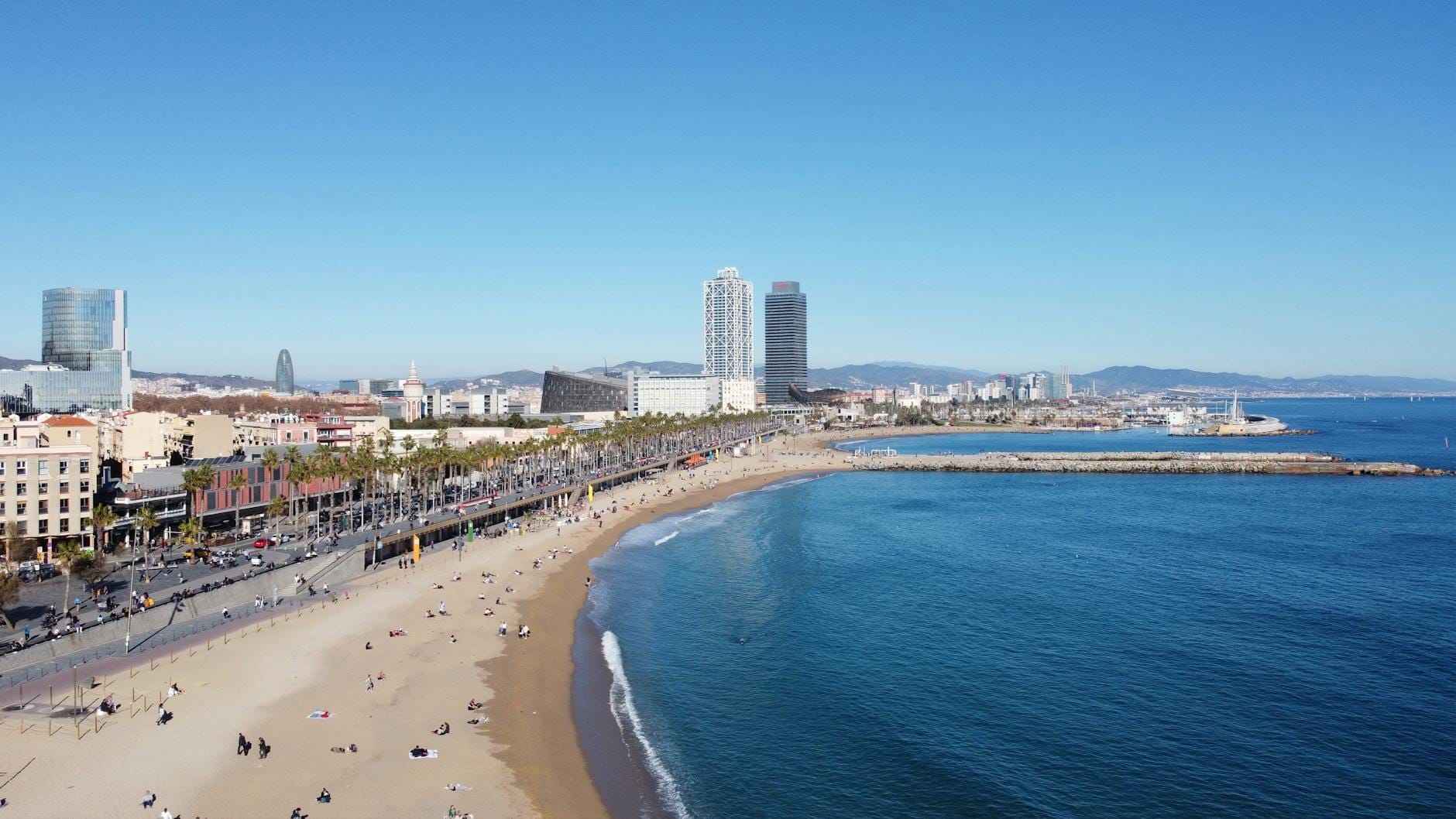
What Barceloneta Beach Actually Is
Platja de la Barceloneta is the closest of Barcelona's nine public beaches to the city center, and by a significant margin the most visited. It stretches over 1,100 metres of gently sloping Mediterranean shoreline in the Barceloneta neighborhood, running roughly from the base of the old fishing quarter toward the Port Olímpic marina. Entry is completely free, there are no gates or booking systems, and it draws over four million visitors annually from every demographic imaginable.
The beach sits at the edge of one of Barcelona's most distinctive neighborhoods. Barceloneta was constructed in the 18th century as a planned district to house residents displaced during the building of the Ciutadella fortress. Its narrow grid streets, once home to fishermen and dockworkers, now back up directly onto the Passeig Marítim promenade that borders the sand. That combination of urban density and open sea gives the beach its particular energy: you're never far from a restaurant, a metro stop, or a cold drink.
💡 Local tip
Smoking is prohibited across the entire beach and has been enforced since 2022. Plan accordingly if this affects your group.
The Beach at Different Times of Day
Arrive before 9 AM in July or August and the beach is calm enough to feel like a different place entirely. A few dedicated swimmers are in the water. Dog walkers pace the wet sand before the pet ban kicks in. The light is low and golden, and the smell of the sea is strong before the day's sunscreen and churros stalls take over. This window is genuinely the best time to swim: the water is clear, lanes feel wide, and the beach is cool underfoot.
By mid-morning, particularly on weekends between June and September, the sand fills fast. Sun loungers for rent line the beach in organized rows closer to the promenade; the free zones beyond fill with towels pressed together tightly. Portable speakers, children building sandcastles, and the steady hum of the Passeig Marítim traffic create a backdrop that is social rather than tranquil. The beach volleyball courts see their first games around 10 AM and run almost continuously until sunset.
Late afternoon, roughly 5–7 PM, brings a second distinct wave. The punishing midday heat eases slightly, the water is at its warmest, and local residents tend to arrive as tourists begin heading back toward the Gothic Quarter or their hotels. The light shifts to the kind of warm amber that makes the water look almost Caribbean. Photographers targeting that quality of light should plan for the hour before sunset, when the promenade and Rebecca Horn's sculpture catch it particularly well.
⚠️ What to skip
Peak summer weekends (July–August) between 11 AM and 5 PM can be extremely crowded. If you want a patch of sand without negotiating around strangers' towels, arrive before 9:30 AM or after 6 PM.
Tickets & tours
Live prices and dates from our booking partner. If you book, we may earn a commission at no extra cost to you.
Bus Nautic boat ride from La Rambla to Barceloneta
From 6 €Instant confirmationFree cancellationBarceloneta Interactive Self-Guided Discovery Walk
From 26 €Instant confirmationFree cancellationNautic bus tickets with Barceloneta Port Memories Game and reward
From 11 €Instant confirmationFree cancellationPicasso Museum guided tour
From 30 €Instant confirmationFree cancellation
The Art on the Beach: Two Sculptures Worth Finding
Barceloneta Beach has two significant public artworks that most visitors walk past without registering. Both reward a closer look.
The first is Rebecca Horn's 'L'Estel Ferit' (The Wounded Star), a stack of rusting iron cubes rising from the sand near the northern end of the beach. It was installed in 1992 as a deliberate memorial to the xiringuitos, the informal beach-shack restaurants that lined this shore for generations before Barcelona's Olympic makeover cleared them away. The rust is intentional. Horn designed it to look wounded, to signal loss. Standing next to it, the scale surprises: it's taller than it appears in photographs, and the iron surface has a rough, almost geological texture.
The second sculpture is Frank Gehry's 'Peix d'Or' (Golden Fish), located where the beach meets the Port Olímpic marina. The copper and steel fish scales catch the sun in a way that makes the piece almost difficult to look at directly in the afternoon. It was also created for the 1992 Olympics and has become one of the most photographed objects on the Barcelona waterfront. It's technically outside the beach zone but a short walk along the promenade. Both sculptures sit within what is a broader waterfront regeneration story that transformed this entire coastline before the Games. For more on the area's walking potential, the full Barcelona activities guide covers the wider waterfront circuit.
Facilities: What's Available and What Costs Extra
For a free public beach, Barceloneta is unusually well-equipped. Free freshwater showers are positioned at regular intervals along the beach edge. Changing rooms and lockers are available. Lifeguard and safety services operate seasonally: full service (high bathing season) runs from 24 May to 11 September (10:30 AM to 7:30 PM), with reduced hours (mid bathing season) from 12 to 28 September (10:30 AM to 6:30 PM).[1] Outside these hours, swimming is unsupervised.
Sun lounger and umbrella rentals are handled by private concessionaires stationed along the beach. Prices vary and are typically displayed at each stand; expect demand-based pricing on peak weekends. Bicycle rental and parking is available near the promenade. There are beach volleyball courts and ping pong tables that operate on a first-come basis, and a skate park at the northern end of the beach near the Barceloneta neighborhood entrance.
Accessibility is taken seriously here. The Espai de Mar facility at Passeig Marítim de la Barceloneta, 5 provides fully adapted amenities including adapted showers and toilets, and equipment hire including surfboards and paddle surf boards for users with mobility requirements. The beach itself has firm access paths leading to the water's edge.
ℹ️ Good to know
Topless sunbathing is widely practiced and fully permitted across all of Barcelona's public beaches.
Historical Context: Why This Neighborhood Exists
Barceloneta's history explains a lot about its character. When Philip V ordered the construction of the Ciutadella military fortress in the early 18th century, the houses of the Ribera district were demolished to create the buffer zone the fortress required. The displaced population needed somewhere to go, and a new planned neighborhood was engineered on the narrow sandbar between the city and the sea. The grid was tight by design: long, thin apartment blocks of uniform height, with street widths calculated for military access as much as civilian comfort.
That original neighborhood still exists, largely intact, behind the beach. Walk two blocks inland from the promenade and the scale shifts sharply: the streets narrow, the buildings press close, and the area feels genuinely distinct from the rest of the city. There are also literary connections attached to this shoreline. The beach is cited as the setting for the final duel scene in Book 2 of Cervantes' 'Don Quixote,' where the Knight of the White Moon defeats Don Quixote and forces him to abandon his quest. The exact historical accuracy of that connection is debated, but the location is referenced in the novel's text. For the deeper history of the medieval city that preceded this neighborhood, the Gothic Quarter is a short walk west from the beach.
Getting There and Practical Logistics
The most straightforward route from central Barcelona is Metro Line L4 (Yellow) to the Barceloneta stop. From the exit, the beach is a 5–7 minute walk southeast through the neighborhood. Alternatively, **D20, H14, H16 and V27 bus lines** stop along the Passeig Marítim promenade and the Barceloneta streets. On foot from the Gothic Quarter or El Born, the walk takes 15–20 minutes and is pleasant along the waterfront.
Cycling is a viable option: the Passeig Marítim has a dedicated bike lane running parallel to the beach. The Bicing public bike-share system has docking stations in the neighborhood. Be aware that cycling on the beach itself is prohibited. If you're combining the beach with a meal, the Barceloneta neighborhood's seafood restaurants on and around Carrer de l'Almirall Cervera and the parallel streets offer straightforward paella and grilled fish. Prices are tourist-oriented but quality varies; look for restaurants with table turnover rather than aggressive touts. For broader food guidance in the city, the where to eat in Barcelona guide covers neighborhoods beyond the waterfront with better value options.
The beach is open year-round. In winter (December to February), the sand is almost empty on weekday mornings, the water is cold for swimming (around 13–15°C), but the promenade walk is genuinely enjoyable in mild weather. The area's bars and restaurants remain open, and locals use the space for running and walking in a way that's quite different from the summer experience.
💡 Local tip
If you're visiting in May, June, September, or October, the beach offers the best overall conditions: warm enough to swim, far fewer bodies per square metre of sand, and the water quality tends to be at its clearest.
Photography Notes and Who Might Want to Skip This
For photography, the morning light from the east hits the beach directly and creates strong contrast between the wet sand and the sea. The promenade's palm trees provide foreground framing for wider shots. The Gehry fish sculpture is best photographed in late afternoon when the copper scales catch the low light from the west. The beach itself in peak summer is visually chaotic and the backgrounds are typically crowded; it's not an easy subject between 11 AM and 5 PM in July.
Travelers expecting a quiet, unspoiled beach experience will be disappointed by Barceloneta in summer. This is a city beach in the full sense: dense, loud, serviced, and social. If that's not what you're after, Barcelona's other beaches along the same coastline (Mar Bella, Bogatell) are further from the center but noticeably less crowded. Barceloneta works best if you embrace it on its own terms: as an urban experience with the sea attached, rather than a retreat from the city. For the fuller picture of Barcelona's coastal options, the Barcelona beaches guide covers all nine city beaches with honest comparisons.
Insider Tips
- The free shower facilities fill with queues after peak swimming hours. Rinse off before 6 PM or after 8 PM to avoid waiting.
- Lockers are limited in number and go quickly on hot summer days. Arrive early or use your hotel's luggage storage rather than relying on beach lockers.
- The northern end of the beach near the Barceloneta park entrance is marginally less packed than the central section because it's slightly further from the metro exit. A five-minute walk along the sand makes a noticeable difference in crowd density.
- Pickpocketing on the Passeig Marítim promenade is a known issue. Leave valuables at your accommodation. The beach has no safes or security boxes beyond the paid locker service.
- Rebecca Horn's 'L'Estel Ferit' sculpture looks completely different at different times of day. The rusted iron glows amber at sunset and appears almost black in overcast light. Visit it at both ends of the day if you're interested in the piece.
Who Is Barceloneta Beach For?
- Travelers who want a city beach within easy reach of central Barcelona without paying for transport or entry
- Families with children who need facilities, shallow water entry, and nearby food options in one place
- Early risers who want to swim before the crowds arrive and then explore the Barceloneta neighborhood on foot
- Architecture and art enthusiasts combining the beach with the Gehry and Horn sculptures and the historic neighborhood grid behind it
- Winter visitors who want to walk the Mediterranean waterfront in low-season calm
Nearby Attractions
Other things to see while in Barceloneta & the Waterfront:
- Barcelona Aquarium
L'Aquàrium de Barcelona occupies the Port Vell waterfront and holds one of Europe's most impressive collections of Mediterranean marine life. With 35 tanks, 11,000 animals across 451 species, and an 80-metre underwater tunnel through a 3.7-million-litre oceanarium, it offers a genuinely immersive experience. The key is knowing when to arrive and what to prioritise.
- Mirador de Colom
Standing at the foot of Las Ramblas where the city meets the sea, the Mirador de Colom lifts visitors 60 metres above street level inside a 19th-century iron column. The viewing platform offers a rare low-altitude panorama that takes in the port, the Gothic Quarter rooftops, and the Eixample grid in a single sweep.
- Port Vell & Maremagnum
Port Vell is Barcelona's historic inner harbor, rebuilt for the 1992 Olympics into a waterfront promenade with the Maremagnum shopping and dining complex at its heart. Free to enter and open late, it works best as an evening stroll rather than a destination in itself.
Planning a trip? Discover personalized activities with the Nomado app.