Bunkers del Carmel: Barcelona's Best Free Panorama
Perched atop Turó de la Rovira in the El Carmel neighbourhood, the Bunkers del Carmel are the ruins of a Spanish Civil War anti-aircraft battery that now serve as Barcelona's most sweeping free viewpoint. The 360-degree panorama stretches from the sea to Tibidabo, with the Sagrada Família rising unmistakably from the Eixample grid below.
Quick Facts
- Location
- Turó de la Rovira, Carrer de Marià Labèrnia, Gràcia, Barcelona
- Getting There
- Bus 24, 94, V17, or 22 (10-15 min walk uphill); Metro Guinardó or Alfons X (25-30 min hike)
- Time Needed
- 1 to 2 hours
- Cost
- Free, no ticket required
- Best for
- Panoramic views, sunset watching, photography, history enthusiasts
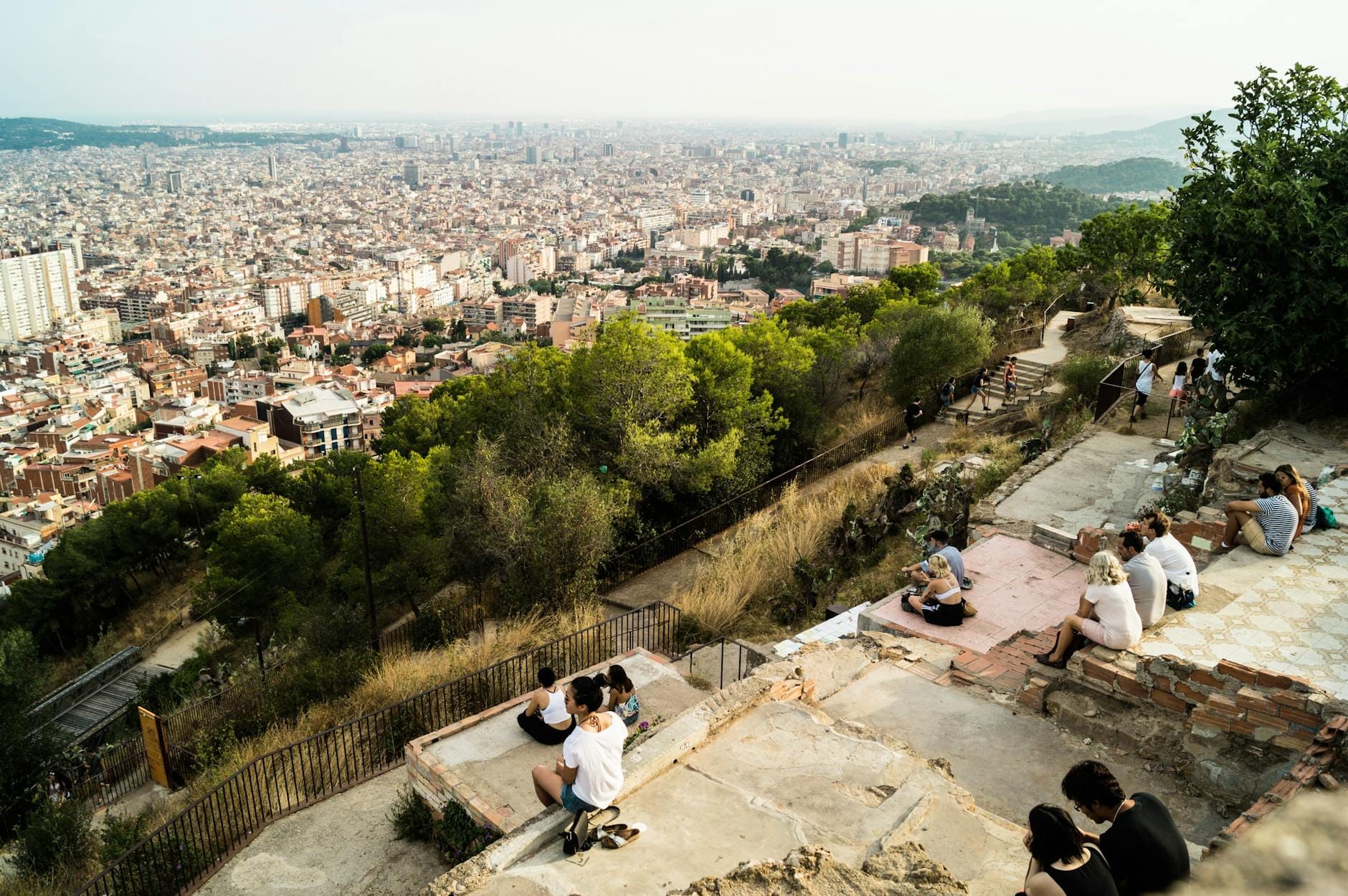
What Are the Bunkers del Carmel?
The Bunkers del Carmel, officially known as Turó de la Rovira, are the remains of an anti-aircraft battery installed during the Spanish Civil War (1936-1939). Positioned at 262 metres above sea level on a hill above the Gràcia and Carmel neighbourhoods, the circular concrete platforms and low crumbling walls once held artillery pieces aimed at defending the city from aerial bombardment. Today, those same platforms serve as informal terraces from which visitors survey all of Barcelona in a single unobstructed sweep.
The site was later used as a shantytown during the Franco dictatorship, when families built informal homes directly onto the military ruins. Those structures were demolished in the 1990s as part of urban renewal efforts, and the site was eventually converted into an open archaeological and heritage space. The result is a layered place: military history, social history, and a contemporary gathering point all compressed into a single hilltop.
ℹ️ Good to know
Open 24 hours as a public park. No restricted hours or fence.
The View: What You Actually See
From the top of the concrete platforms, the panorama is genuinely comprehensive. Looking south, the Eixample grid unfolds with geometric precision, and the towers of the Sagrada Família are close enough to read their silhouette clearly. The sea appears as a flat blue horizon beyond Barceloneta. Swing left and Montjuïc rises with its castle, and on clear days the coastal plains stretch toward the Llobregat delta. To the north, Tibidabo's amusement park and its church crown the Collserola ridge. The city below looks orderly, dense, and surprisingly green.
Unlike viewpoints on Montjuïc or Tibidabo, the Bunkers sit at a middle elevation that keeps the city close without making it feel abstract. Buildings are still readable at this height. Neighbourhood blocks have character rather than becoming a featureless carpet. That proximity is what makes the panorama feel real rather than remote.
Photographers note that the west-facing orientation rewards late afternoon and sunset sessions. The warm light rakes across the Eixample rooftops, and the Sagrada Família catches gold tones roughly an hour before sunset. Early morning visits offer a cooler, softer light and considerably thinner crowds.
💡 Local tip
Photography tip: Arrive 60 to 90 minutes before sunset for the best light on the Sagrada Família and the Eixample roofscape. Bring a wide-angle lens; the view is too broad for a standard kit zoom to capture in a single frame.
Tickets & tours
Live prices and dates from our booking partner. If you book, we may earn a commission at no extra cost to you.
Santa Maria del Mar Guided Tour Through the Interior and Terraces
From 19 €Instant confirmationFree cancellationBarcelona Highlights tour
From 50 €Instant confirmationFree cancellationBohemian neighbourhoods eBike tour
From 40 €Instant confirmationFree cancellationGaudi highlights eBike tour
From 40 €Instant confirmationFree cancellation
How the Experience Changes by Time of Day
Morning arrivals between 9:00 and 11:00 a.m. find the site almost empty. The air is cooler, there is birdsong rather than conversation, and the light is soft and directional. This is the window for anyone who wants the view without the social event that surrounds it later in the day.
By early afternoon, especially on weekends, the platforms fill steadily. Groups of friends spread out picnic supplies across the concrete, speakers appear, and the atmosphere shifts toward a social gathering with a backdrop. The crowd is predominantly local on weekdays and mixed with tourists on weekends and in summer. The concrete radiates heat after midday in July and August, so bring water and shade if you plan to stay.
The hour before sunset is the peak period and has been for years. Lines of visitors queue along the path, and the upper platforms can become genuinely crowded. Standing space exists but choosing a spot requires arriving 30 to 45 minutes early. crowds dissipate quickly after sunset as visitors leave, which actually makes the post-sunset departure faster than it once was.
⚠️ What to skip
The site is open 24 hours. No staff, gates, or closing enforcement.
Getting There: The Practical Reality
There is no direct metro stop at the base of the hill. The most practical approach for most visitors is to take bus 24 to the stop closest to the summit, which leaves a 10 to 15 minute walk uphill on a paved but steep path. Bus lines 94, V19, and 22 also serve the area. From central Barcelona the journey by bus takes roughly 20 to 30 minutes depending on your starting point.
Metro users can alight at Guinardó or Alfons X on Line 4 (yellow line), but the walk from either station to the summit is 25 to 30 minutes and involves consistent uphill climbing. It is a perfectly pleasant walk through the upper Gràcia and Carmel neighbourhoods, but factor that into your time and energy budget, especially in summer heat. Taxis and rideshare apps (Uber, Bolt, Cabify) can drop you near the base of the final path, reducing the walk to under 10 minutes.
⚠️ What to skip
Accessibility: The Bunkers del Carmel are not wheelchair accessible. The final approach involves steep, uneven terrain without ramps or lifts. This is also not suitable for pushchairs.
Historical and Cultural Context
The Turó de la Rovira has been a strategic high point above Barcelona for centuries, but its most significant period began in 1937 when Republican forces installed anti-aircraft artillery here to defend the city from Nationalist air raids. The battery remained operational until the fall of Barcelona in January 1939. After the war, the hilltop transitioned into a different kind of occupation: under Franco's dictatorship, economic migrants from southern Spain built informal housing directly onto the old military platforms, a neighbourhood known locally as Can Carmel. At its peak, hundreds of families lived in conditions of considerable poverty on this hill. The Gràcia district spread below was already established and prosperous by comparison, making the hilltop settlement a sharp social contrast.
The informal settlement was cleared in 1990, and the site was eventually excavated and studied as an archaeological site of the Civil War period. The concrete anti-aircraft platforms, the mounting rings for the guns, and the low revetment walls are all preserved in situ. Interpretive panels on the site explain the military layout and the post-war shantytown, in both Catalan and Spanish. Guided tours are available through the city's heritage network; contact Barcelona heritage services for information.
What to Bring and How to Prepare
The climb is not technically demanding but it is sustained. Wear shoes with grip; the path is paved but can be slippery after rain. In summer, sun exposure on the open summit is total and intense. Bring at least one litre of water per person, sunscreen, and a hat. There are no food or drink vendors on or near the summit.
If you plan to stay through sunset, bring a layer for after. The hilltop catches wind even when the city below is still, and evenings cool noticeably once the sun drops behind Collserola. Many visitors spread a jacket on the concrete to sit on, which also helps with the heat that the platforms retain from full afternoon sun.
The Bunkers pair naturally with a walk through Gràcia before or after your visit. The neighbourhood's squares and independent cafes sit 20 to 30 minutes downhill on foot. Combine the two for a half-day itinerary that costs almost nothing. For a broader perspective on Barcelona's panoramic viewpoints, the best views in Barcelona guide compares this site against alternatives like Montjuïc and the Sagrada Família towers.
Who This Viewpoint Is Not For
If you are not comfortable walking uphill for 10 to 30 minutes on an exposed path, or if mobility is a consideration, the Bunkers are not the right choice. The site offers zero shade, no seating infrastructure, no toilets, and no food or water. Visitors who need those provisions should consider other viewpoints.
Visitors who find crowded hilltop social scenes frustrating may also want to reconsider a sunset visit. The Bunkers at golden hour has become a well-documented phenomenon and the atmosphere is lively rather than contemplative. For a quieter panoramic experience, the Montjuïc Castle or the Museu Nacional d'Art de Catalunya terrace offer broad views with less crowd intensity.
Insider Tips
- Arrive on a weekday morning between 9:00 and 10:30 a.m. for the combination of good light, cool temperature, and virtually no other visitors. The view is identical; the experience is entirely different.
- Bus 24 is the most efficient way up. Take it to the last stop before the summit and follow the clear signage. The walk is short enough to warm up your legs before the full climb.
- Bring a picnic. The concrete platforms are perfectly shaped for sitting with food spread around you, and having something to eat while watching the city below is a genuinely good way to spend an hour. There is nothing to buy on site.
- The anti-aircraft mounting rings are still visible in the concrete. Look for the circular grooves and bolt holes at the centre of each platform; they are an easy detail to overlook but bring the military history of the site to life.
- Check the weather forecast before going. A clear day makes the view extend to the sea and the coastal plains. On hazy summer days, the far distances wash out. The clearest visibility typically follows rain, particularly in autumn and spring.
Who Is Bunkers del Carmel For?
- Photographers seeking the city's widest free panorama at golden hour
- History-conscious travellers interested in Spanish Civil War sites
- Budget travellers who want a memorable view without a ticket queue
- Visitors willing to walk uphill for a viewpoint that rewards the effort
- Those building a half-day itinerary around the Gràcia neighbourhood
Nearby Attractions
Other things to see while in Gràcia:
- Casa-Museu Gaudí
Tucked inside Park Güell in the Gràcia district, Casa-Museu Gaudí is the pink Neo-Gothic house where Antoni Gaudí lived from 1906 until 1925. Today it functions as an intimate museum preserving his furniture, personal objects, and architectural drawings — offering something no cathedral or apartment building can: a sense of the man behind the monuments.
- Casa Vicens
Built between 1883 and 1885, Casa Vicens was the project that announced Antoni Gaudí to the world. Long overlooked in favor of his later masterpieces, this UNESCO World Heritage Site in the Gràcia neighborhood rewards visitors who seek it out with intricate tilework, Moorish-influenced interiors, and a rare glimpse at the origins of one of architecture's most singular minds.
- Park Güell
Perched on the southern slope of Turó del Carmel hill in the Gràcia district, Park Güell is Antoni Gaudí's most whimsical large-scale work. A UNESCO World Heritage Site since 1984, the park combines Catalan Modernisme architecture with sculpted nature across 19 hectares of terraces, viaducts, and ceramic-tiled plazas. This guide covers what you'll actually see, how to time your visit, and how to book the timed-entry tickets you'll need to get past the gate.
Planning a trip? Discover personalized activities with the Nomado app.