Barcelona Zoo (Parc Zoològic de Barcelona): What to Know Before You Visit
Occupying over 14 hectares inside the historic Parc de la Ciutadella, Barcelona Zoo is one of Europe's oldest urban zoos, open since 1892. It balances conservation work with family-friendly programming, though the setting inside a 19th-century park gives it a character quite different from modern safari-style zoos.
Quick Facts
- Location
- Parc de la Ciutadella, El Born, Barcelona
- Getting There
- Metro L4 – Ciutadella/Vila Olímpica or Arc de Triomf
- Time Needed
- 2–4 hours
- Cost
- Paid admission; family season pass approx. €80. Check official site for current prices.
- Best for
- Families with children, animal lovers, a relaxed half-day out
- Official website
- zoobarcelona.cat/en
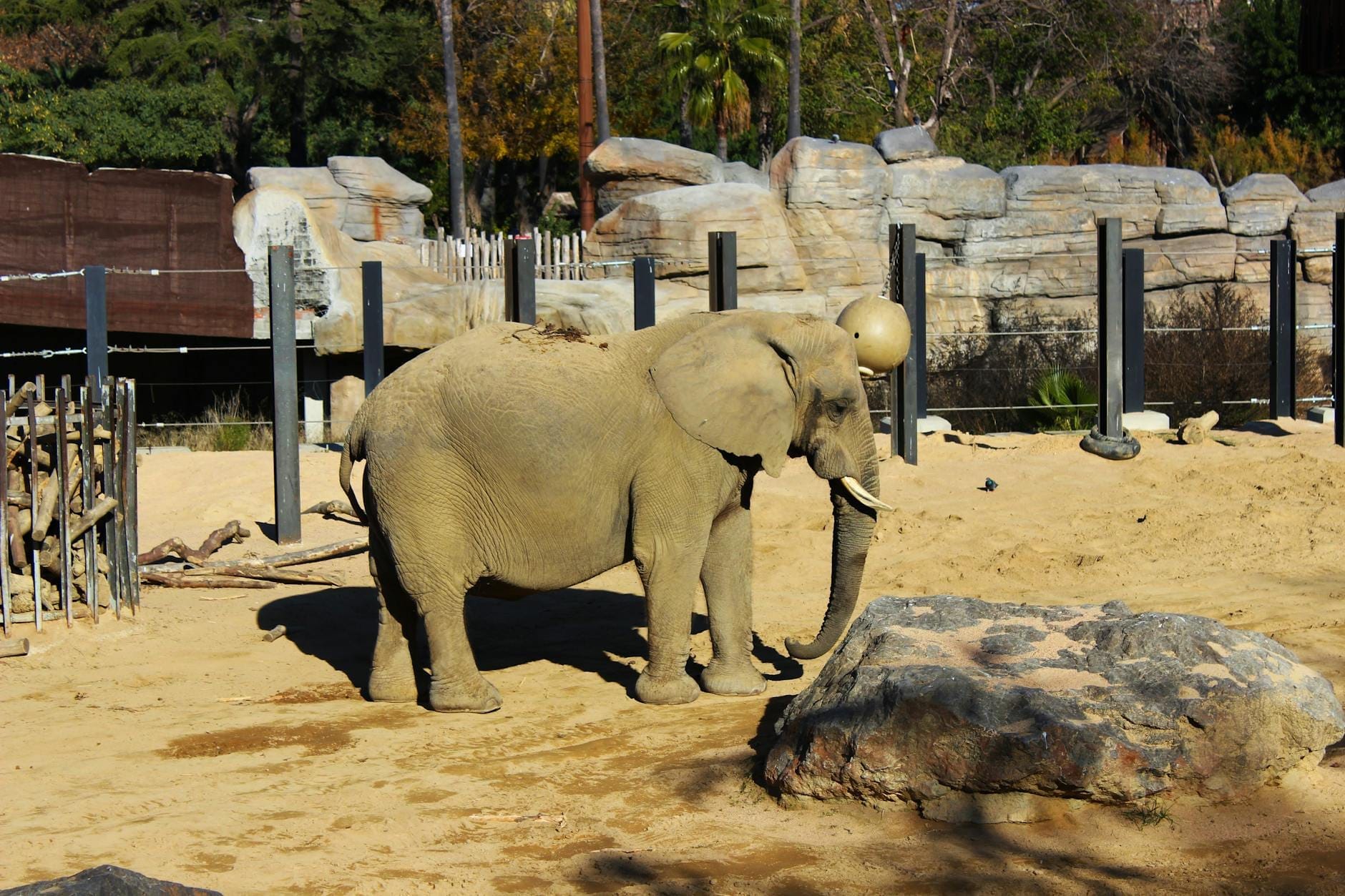
What Is Barcelona Zoo, and Is It Worth Your Time?
The Parc Zoològic de Barcelona, more commonly known as Barcelona Zoo, has occupied the southeastern corner of Parc de la Ciutadella since its inauguration on September 1892. That makes it one of the oldest continuously operating zoos in southern Europe, older than most of the city's famous Modernista landmarks.
For families traveling with children, it earns its place on a Barcelona itinerary. For adults visiting solo or as a couple, it requires honest expectation-setting: the zoo's enclosures reflect a mix of eras, and while conservation efforts are genuine, this is not a cutting-edge safari park. What it does offer is a quietly absorbing half-day inside one of the city's finest green spaces, just steps from the rest of Parc de la Ciutadella.
💡 Local tip
Buy tickets online via the official Zoo Barcelona website before you arrive. Walk-up queues at the main entrance can be slow on weekends and school holiday mornings, and online pricing is typically the same as the gate.
The Setting: A Zoo Inside a Park Inside a City
The zoo covers over 14 hectares within the larger Parc de la Ciutadella, the 19th-century park that replaced a military citadel demolished after 1869. This history matters because it shapes everything about the visit: the paths are wide and tree-lined, the architecture mixes Victorian-era pavilions with mid-century additions, and the whole space feels more like a formal garden with animals than a purpose-built zoological facility.
Mature plane trees provide canopy over much of the zoo, which has a practical benefit: summer visits, even in Barcelona's reliably warm July and August, feel more manageable in the shaded interior zones than you might expect. The terrarium (opened 1972) and the aviary (renovated in 2002) are two of the more notable structures, the latter offering a walk-through format that younger visitors in particular tend to find engaging.
The zoo shares its park with the Cascada Monumental, a grand fountain where a young Antoni Gaudí reportedly assisted as a student. Arriving through the park rather than directly at the zoo entrance adds context to the visit and costs nothing extra.
Tickets & tours
Live prices and dates from our booking partner. If you book, we may earn a commission at no extra cost to you.
Snowflake and the Zoo's Place in Barcelona's Memory
Barcelona Zoo is internationally associated with one animal: Snowflake (Floquet de Neu in Catalan), an albino western lowland gorilla who lived at the zoo from 1966 until his death in 2003. He was the only known albino gorilla to have lived in captivity and became one of Barcelona's most recognizable symbols, appearing on souvenirs, postcards, and civic branding for decades. The zoo continues to acknowledge his legacy, and for many local visitors, a first childhood memory of the zoo involves seeing Snowflake.
Beyond this singular history, the zoo has genuinely evolved its conservation mission over the decades. It participates in European breeding programs for endangered species and has shifted its public communication toward conservation education, particularly for school groups. Whether you find this convincing depends partly on your views about urban zoos in general, a question the zoo itself acknowledges in its programming.
What to Expect When You Visit: A Practical Walkthrough
The main entrance faces the interior of Parc de la Ciutadella. Arriving from Metro Line 4 at Ciutadella/Vila Olímpica, the walk through the park takes roughly 10 minutes. From Arc de Triomf station (also Line 4), add another 5 minutes through the northern park entrance. Both routes are flat and straightforward.
Inside, the layout is circular enough that it is difficult to miss major sections, though first-time visitors often underestimate how much ground the over 14 hectares covers. The zoo is divided into themed zones: primates, big cats, reptiles, birds, farm animals, and an aquatic section. The children's farm and petting areas tend to generate the most persistent crowds during weekday mornings when school groups arrive, so if you have young children who want to interact with animals, arriving at opening time (10:00) gives you the most space.
Feeding demonstrations and keeper talks happen on a rotating schedule that changes seasonally. The zoo posts the day's schedule near the main entrance, and it is worth checking before you start walking so you can plan your route around any talks that interest you. The dolphin and sea lion facilities have been a subject of ongoing debate about the zoo's conservation commitments, and the future of cetacean keeping here has been publicly discussed by city authorities.
⚠️ What to skip
On peak summer days (July and August), the zoo reaches capacity in the early afternoon and sometimes limits entry. Arriving before noon is strongly advised in high season.
Best Times to Visit and How Light Changes the Experience
Early morning, especially on weekdays, is the most rewarding time to visit. The light through the plane tree canopy is softer before 11:00, the animals tend to be more active before midday heat sets in, and the paths have breathing room. By 13:00 on a Saturday in July, the main paths can feel crowded with strollers and school groups.
Spring (April and May) and early autumn (September and October) offer the most comfortable conditions overall. Temperatures are moderate, daylight is long, and the zoo's extended opening hours in summer (until 19:00 from mid-May through mid-September) allow for a late afternoon visit that misses the noon peak entirely. Arriving around 16:00 in summer often means the morning crowds have left, the animals are moving again as temperatures drop, and the light is good for photographs.
If you are combining the zoo with a broader El Born visit, the neighborhood's bars and restaurants are within easy walking distance for a post-zoo lunch or early dinner. The area around Carrer del Comerç, just north of the park, has a good density of options.
Photography, Accessibility, and Practical Logistics
Photography conditions vary considerably by enclosure. The aviary, with its walk-through format and natural light, produces the most interesting images. The great ape enclosures have decent glass-free viewing areas, though midday sun from the south creates flat lighting. A polarizing filter is useful if you shoot through glass. For families with young children, the open enclosures near the children's farm section give closer views without any barrier obstruction.
The zoo's paths are paved throughout and generally accessible for strollers and wheelchairs, with the flat terrain of Ciutadella making this one of Barcelona's more physically forgiving attractions. For detailed accessibility information including adapted toilets and any specific facility notes, consult the official website directly before visiting, as provisions are updated periodically.
Visitors combining the zoo with the wider park may also want to note that Arc de Triomf is a short walk north and makes a logical bookend to a morning in this part of the city, requiring no additional transit.
ℹ️ Good to know
Seasonal opening hours: 10:00–17:00 (1 Jan–26 Mar and 30 Oct–31 Dec); 10:00–18:00 (27 Mar–15 May and 16 Sep–29 Oct); 10:00–19:00 (16 May–15 Sep). Open daily including holidays; closes at 14:00 on 25 December.
Who Will Enjoy This Most, and Who Might Not
Barcelona Zoo works well for families with children between roughly 3 and 12 years old, animal enthusiasts who enjoy observing keeper care routines, and anyone who wants a relaxed, walkable half-day that is not an art museum or an architectural landmark. The combination of shade, varied terrain, and different animal sections keeps children engaged for 2 to 3 hours without difficulty.
Travelers who have visited large, landscape-scale zoos elsewhere in Europe or North America may find the urban format constraining. Adults visiting Barcelona on a short trip focused on architecture, food, and culture will likely find the time better spent at nearby attractions like Museu Picasso or the Basilica de Santa Maria del Mar, both within walking distance in El Born. The zoo is not a shortcut to understanding Barcelona as a city.
Those with strong feelings against urban animal captivity will not find Barcelona Zoo's conservation framing sufficient justification. That is a personal decision, but it is worth clarifying before purchasing tickets rather than after.
Insider Tips
- Check the keeper talk schedule posted at the main entrance as soon as you arrive. Reptile and primate talks are usually the most informative and least crowded, unlike the sea lion presentations which draw large audiences.
- The zoo's northern exit connects directly into the heart of Parc de la Ciutadella, allowing you to walk through the park toward the Cascada Monumental and the boating lake after your visit without backtracking.
- Family season passes (around €80 as of the most recent pricing) pay for themselves in two visits for a family of four, and they include benefits like priority entry during peak periods. Worth considering if you are staying in Barcelona for more than a few days with children.
- School groups typically arrive between 9:30 and 11:00 on weekday mornings. If you visit on a weekday, aim to enter at 10:00 on the dot to beat them, or wait until after 13:00 when most groups have left.
- The zoo cafe prices are predictably inflated. Bringing water and snacks is practical, especially in summer. There are picnic benches in several areas, and the park just outside has additional green space for a proper picnic before or after.
Who Is Barcelona Zoo For?
- Families with children aged 3–12 looking for a half-day of outdoor activity
- Travelers who want to combine a zoo visit with time in Parc de la Ciutadella
- Animal conservation enthusiasts curious about European zoo breeding programs
- Those revisiting Barcelona who have already covered the major architectural landmarks
- Anyone wanting a physically undemanding, fully flat walking experience in central Barcelona
Nearby Attractions
Other things to see while in El Born (Sant Pere):
- Arc de Triomf
Built as the ceremonial entrance to Barcelona's 1888 Universal Exhibition, the Arc de Triomf stands at the top of a wide pedestrian promenade leading to Parc de la Ciutadella. It's free, always accessible, and one of the few grand monuments in the city where you can simply stop and look without queuing or paying.
- Basilica of Santa Maria del Mar
Built entirely between 1329 and 1383, the Basílica de Santa Maria del Mar stands as the finest example of Catalan Gothic architecture in existence. Funded and constructed by the waterfront workers of the Ribera district, it carries a human story that its stone geometry quietly amplifies. Fewer crowds, better proportions, and a profound atmosphere make it one of the most rewarding stops in Barcelona.
- Cascada Monumental
The Cascada Monumental is a sweeping neoclassical waterfall fountain inside Parc de la Ciutadella, designed in 1875 by Josep Fontserè and partially shaped by a young Antoni Gaudí. Free to visit and open daily, it rewards early morning visitors with calm light and empty paths, and makes for a striking photography subject at any hour.
- El Born Centre de Cultura i Memòria
El Born Centre de Cultura i Memòria is one of Barcelona's most unexpected cultural spaces: a soaring Victorian iron market hall sheltering the excavated ruins of an entire neighbourhood destroyed in 1714. Entry to the archaeological site is free, and the experience is unlike anything else in the city.
Planning a trip? Discover personalized activities with the Nomado app.