El Born Centre de Cultura i Memòria: A City Buried and Rediscovered
El Born Centre de Cultura i Memòria is one of Barcelona's most unexpected cultural spaces: a soaring Victorian iron market hall sheltering the excavated ruins of an entire neighbourhood destroyed in 1714. Entry to the archaeological site is free, and the experience is unlike anything else in the city.
Quick Facts
- Location
- Plaça Comercial, 12, El Born, Ciutat Vella, Barcelona
- Getting There
- Metro L4 (Barceloneta or Jaume I), 5–10 min walk
- Time Needed
- 1 to 2 hours
- Cost
- Free (main site); optional paid exhibition €4
- Best for
- History lovers, architecture fans, curious travellers on a budget
- Official website
- elbornculturaimemoria.barcelona.cat/en/visit/the-center
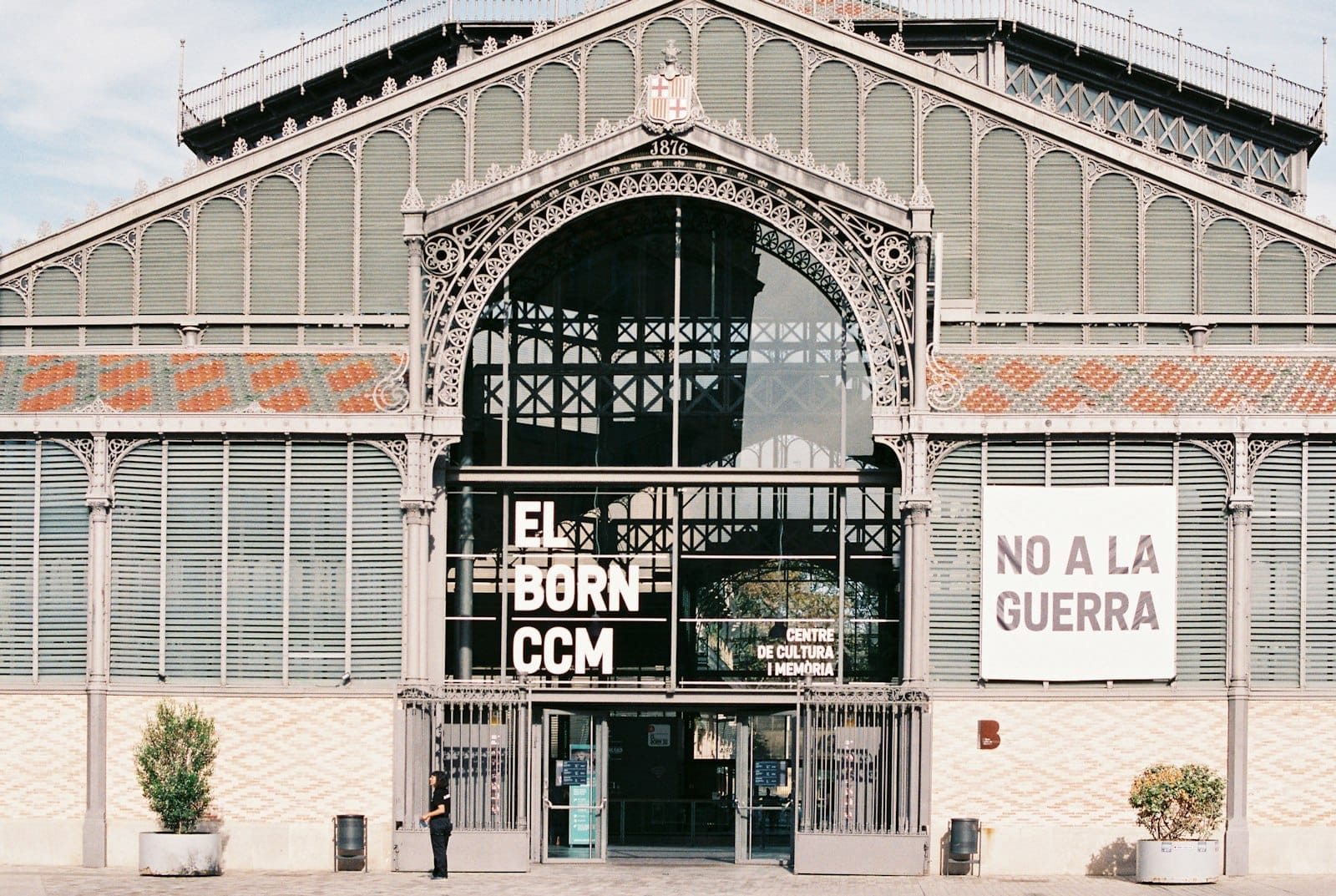
What You're Actually Looking At
El Born Centre de Cultura i Memòria is not a conventional museum. There are no glass cases crammed with artefacts, no chronological corridors to follow. What you see when you enter the building and look down from the elevated walkways is a neighbourhood: streets, doorways, wells, hearths, workshop floors, and the outlines of homes that were demolished by order of the victorious Bourbon forces on 1 September 1714, in the aftermath of the War of the Spanish Succession. The rubble was levelled and a military citadel was built over it. The neighbourhood of La Ribera simply ceased to exist.
The ruins lay undisturbed beneath the ground for nearly three centuries. They were discovered in the early 2000s during renovation works on the old Mercat del Born market hall, which was being converted into a library. The scale and completeness of the find changed the plan entirely. Instead of a library, Barcelona now has one of the most compelling archaeological sites in Spain, preserved exactly where it was found, inside one of the finest examples of 19th-century cast-iron industrial architecture in Europe.
ℹ️ Good to know
Entry to the main archaeological space and raised walkways is free. A separate paid exhibition costs €4. English-language guided tours run daily at 16:30 and are well worth the time if you want to understand the full historical context.
The Building Itself: Mercat del Born
Before you look down, look up. The structure above you is the Mercat del Born, designed by architect Josep Fontserè i Mestre and completed in 1876. It was Barcelona's main wholesale market for decades, and the iron-and-glass canopy that covers the ruins is a genuine architectural achievement: wide nave, elegant trusses, and light filtering through the upper clerestory windows in long diagonal shafts that shift slowly through the day.
In the morning, the interior is cool and relatively quiet. The light enters at a low angle, throwing shadows across the exposed stonework below and giving the ruins a crisp, almost photographic quality. By midday the light flattens, but the space still impresses through sheer scale. Late afternoon, particularly in summer, brings a warm amber tone through the western panels that makes the iron framework glow. If you are interested in the building as architecture, arriving around 17:00 on a clear day gives you the most dramatic interior light.
Fontserè is also the architect behind the Cascada Monumental in the nearby Parc de la Ciutadella, and a young Antoni Gaudí worked in his studio during the same period. That connection is not incidental: the engineering ambition of this building belongs to the same moment in Barcelona's history that would later produce Modernisme.
Tickets & tours
Live prices and dates from our booking partner. If you book, we may earn a commission at no extra cost to you.
In-app self-guided audio tour to explore the El Born neighborhood
From 11 €Instant confirmationIKONO Barcelona immersive art experience at the Arenas Shopping Centre
From 16 €Instant confirmationFree cancellationEl Born Bites: Local Food and Wine Tasting Tour in Barcelona
From 119 €Instant confirmationFree cancellationPicasso Museum skip-the-line tickets with El Born walking audio tour
From 29 €Instant confirmation
Walking the Ruins: What You See and How to Read It
The walkways are raised wooden platforms that circle and cross above the excavated site. You are never at ground level with the ruins themselves, which preserves the archaeology and gives you a map-like perspective that is actually very useful for reading the urban layout. You can clearly make out the grid of streets, the footprints of individual buildings, the location of shared courtyards, and the outline of what appear to be commercial premises along the main thoroughfares.
Interpretation panels are placed at intervals along the walkways in Catalan, Spanish, and English. They are detailed without being overwhelming, and they anchor specific features in the ground below to the historical record. Some panels reference the names of families who lived on particular streets, drawn from civic registers that survived the destruction. That specificity is what separates this site from a generalised archaeological experience: you are standing above the home of a named person who was forcibly expelled from this spot in 1714.
Visitors who move slowly and read the panels thoroughly will find an hour passes quickly. Those who treat it as a visual experience only can cover the walkways in 30 to 40 minutes. Children tend to respond well to the overhead perspective and the visible domestic details: the round outline of a well, the threshold stones of a doorway, the remains of a cooking area. There are family education programmes available; check the official website for current schedules.
💡 Local tip
Take the free audio guide if one is available at reception, or download the centre's app before you arrive. The panels alone are good, but the audio content adds context that the text format cannot carry.
Historical Context: Why 1714 Matters in Catalonia
The War of the Spanish Succession ended with the fall of Barcelona on 1 September 1714, a date commemorated every year as Catalonia's national day, La Diada. The Bourbon forces of Philip V took the city after a siege, and the punishment for Barcelona's resistance was systematic: the La Ribera neighbourhood was razed to make way for a military fortress, the Ciutadella, designed to keep the population under control rather than defend the city from outside attack.
More than a thousand families were displaced. Their neighbourhood, one of the most commercially active in the medieval city, was gone within months. The political weight of what happened here in 1714 remains live in Catalan culture and identity in ways that can be surprising to visitors unfamiliar with the region's history. The centre presents this history clearly and factually, without editorialising, but the political resonance is impossible to miss when you understand what you are standing over.
For a broader orientation to how this history fits into Barcelona's urban geography, the Gothic Quarter nearby contains Roman and medieval layers of the city that predate 1714 by many centuries, giving a useful long-view comparison.
Practical Walkthrough: Getting There, Getting In, and Getting the Most Out of It
The centre is located at Plaça Comercial, 12, on the edge of El Born and directly beside the Parc de la Ciutadella. The closest metro stations are Barceloneta (L4) and Jaume I (L4), both around five to ten minutes on foot depending on your starting point. The walk from Jaume I passes through the core of El Born, which is worth taking slowly.
El Born is a compact, walkable neighbourhood with some of Barcelona's best independent food and wine shops, bookshops, and the remarkable Basilica de Santa Maria del Mar, a 14th-century Gothic church built by the people of La Ribera themselves. Pairing Born CCM with a visit to Santa Maria del Mar gives you a vivid before-and-after picture of the neighbourhood's history in a single afternoon.
Entry to the main space is free and does not require advance booking. The optional €4 exhibition, which changes periodically, requires a ticket that can usually be purchased at reception. The café and bookshop are accessible without entering the archaeological area and are worth a look: the bookshop has a solid selection of titles on Catalan history and Barcelona architecture, and the café overlooks the ruins.
⚠️ What to skip
Opening hours have varied since the centre's integration into the MUHBA network in 2025. Verify current hours on the official website before visiting, particularly on Mondays and public holidays when many Barcelona museums are closed.
Who This Is For — and Who Might Be Disappointed
El Born Centre de Cultura i Memòria rewards visitors who come with some interest in history, urban archaeology, or architecture. The experience is largely intellectual and visual: there is no spectacle, no dramatic re-enactment, and no collection of portable objects to examine up close. If you are looking for a fast-paced, interactive experience or something primarily aimed at young children without an adult accompanying interest in history, this may not hold attention for long.
That said, the building alone justifies a visit for anyone interested in 19th-century architecture, and the site is genuinely affecting once you understand what you are looking at. It is also one of the few major cultural attractions in Barcelona where free entry to the main experience is not a compromise: the core of what makes this place significant costs nothing to see.
If you are building a full day in this part of the city, the Museu Picasso Barcelona is a short walk away on Carrer de Montcada, and the El Born neighbourhood has enough good places to eat and drink to fill an afternoon easily.
Insider Tips
- The English-language guided tour at 16:30 is run by knowledgeable staff and typically lasts 45 to 60 minutes. It consistently draws small groups, which means you can ask questions without competing for the guide's attention.
- The café inside the building has a small terrace with a direct view down over the ruins. It is a genuinely unusual place to have a coffee and worth using even if you are already familiar with the site.
- The bookshop stocks titles in English on Catalan history that are hard to find elsewhere in the city, including academic and popular accounts of the 1714 siege. It is worth browsing even without a specific title in mind.
- The light inside the iron hall is best in the morning and in the late afternoon. Midday in summer can feel flat and slightly overexposed if you are photographing the ruins. A wide-angle lens or smartphone panorama mode captures the scale of the hall better than a standard frame.
- The site is less crowded than most major Barcelona attractions, but it does fill up on weekend afternoons during peak season. Arriving on a weekday morning gives you the walkways almost to yourself.
Who Is El Born Centre de Cultura i Memòria For?
- Travellers with an interest in Catalan history and the events of 1714
- Architecture enthusiasts drawn to 19th-century industrial ironwork
- Budget-conscious visitors who want a substantive cultural experience without the cost
- Slow travellers who prefer depth over box-ticking
- Anyone pairing the visit with a half-day in El Born and Parc de la Ciutadella
Nearby Attractions
Other things to see while in El Born (Sant Pere):
- Arc de Triomf
Built as the ceremonial entrance to Barcelona's 1888 Universal Exhibition, the Arc de Triomf stands at the top of a wide pedestrian promenade leading to Parc de la Ciutadella. It's free, always accessible, and one of the few grand monuments in the city where you can simply stop and look without queuing or paying.
- Barcelona Zoo
Occupying over 14 hectares inside the historic Parc de la Ciutadella, Barcelona Zoo is one of Europe's oldest urban zoos, open since 1892. It balances conservation work with family-friendly programming, though the setting inside a 19th-century park gives it a character quite different from modern safari-style zoos.
- Basilica of Santa Maria del Mar
Built entirely between 1329 and 1383, the Basílica de Santa Maria del Mar stands as the finest example of Catalan Gothic architecture in existence. Funded and constructed by the waterfront workers of the Ribera district, it carries a human story that its stone geometry quietly amplifies. Fewer crowds, better proportions, and a profound atmosphere make it one of the most rewarding stops in Barcelona.
- Cascada Monumental
The Cascada Monumental is a sweeping neoclassical waterfall fountain inside Parc de la Ciutadella, designed in 1875 by Josep Fontserè and partially shaped by a young Antoni Gaudí. Free to visit and open daily, it rewards early morning visitors with calm light and empty paths, and makes for a striking photography subject at any hour.
Planning a trip? Discover personalized activities with the Nomado app.