Montjuïc Cable Car (Telefèric de Montjuïc): Barcelona From Above
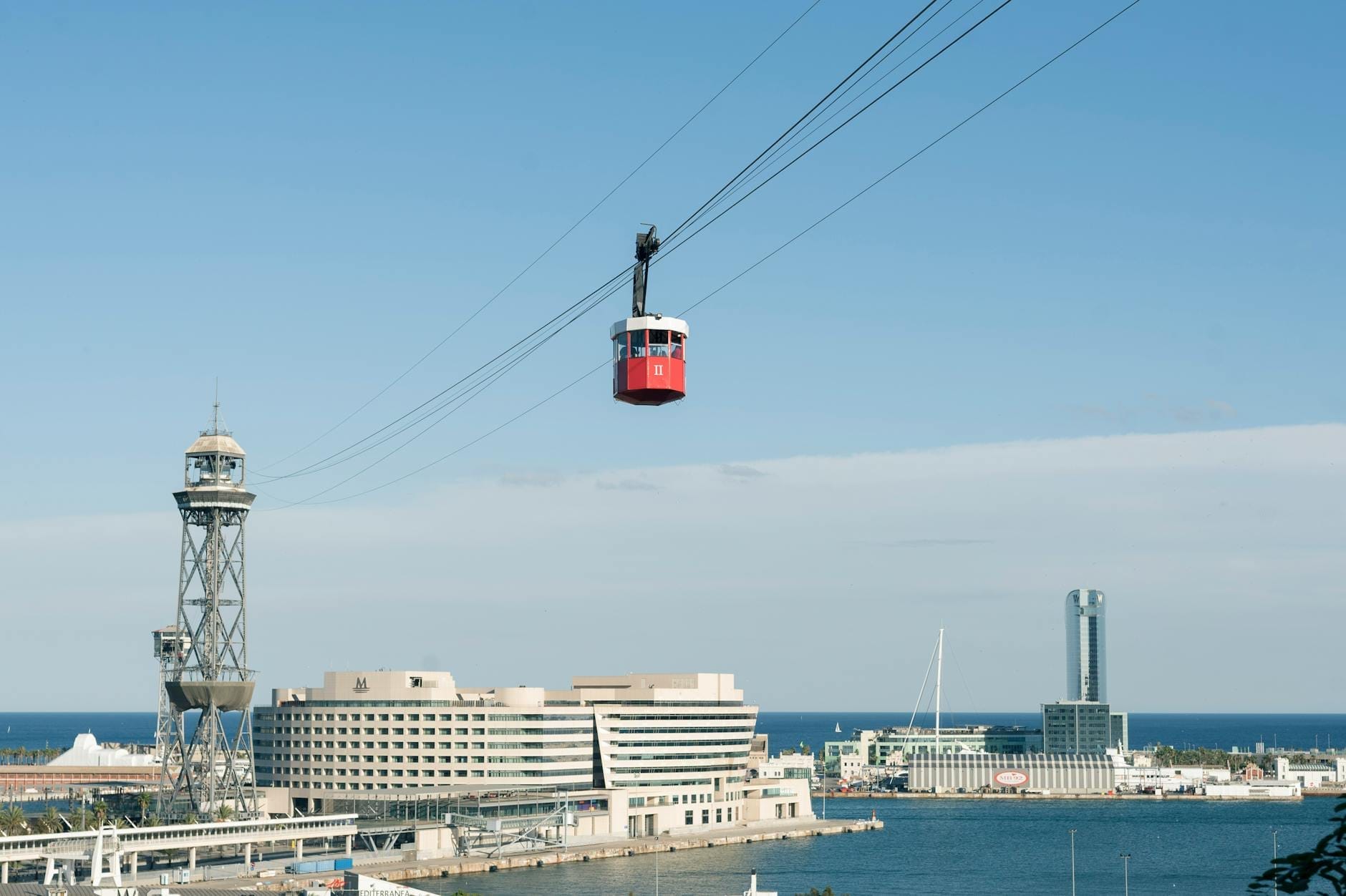
The Telefèric de Montjuïc carries passengers 85 meters above sea level in just 3.5 minutes, delivering panoramic views over the port, the city grid, and the Mediterranean. Originally designed in 1926 for the International Exposition, the modernized gondola lift is as much a piece of Barcelona's urban history as it is a practical way to reach Montjuïc Castle.
Quick Facts
- Location
- Avinguda de Miramar, 30, 08038 Barcelona (Montjuïc)
- Getting There
- Paral·lel (L2/L3), then Montjuïc Funicular to Parc Montjuïc station; Buses 55 and 150 also serve the lower station
- Time Needed
- 30–60 minutes for the ride itself; allow a half-day if combining with Montjuïc Castle or Fundació Joan Miró
- Cost
- Covered by standard TMB fare; multi-journey T-Casual cards and Hola BCN! travel cards are valid. Verify current single-trip price at tmb.cat
- Best for
- Panoramic city views, photography, families, and anyone visiting Montjuïc Castle without wanting to walk the full hill
- Official website
- www.telefericdemontjuic.cat/en
What the Telefèric de Montjuïc Actually Is
The Montjuïc Cable Car, known officially as the Telefèric de Montjuïc, is a gondola lift that spans 750 meters across the southern face of Montjuïc hill, rising from the Avinguda de Miramar station up to the walls of Montjuïc Castle at 173 meters above sea level. The journey takes roughly 3.5 minutes. That sounds brief, and it is. But those 3.5 minutes deliver some of the most unobstructed views available anywhere in the city: the entire port spread out below you, the grid of Eixample stretching to the horizon, and on clear days, the faint silhouette of the Pyrenees to the north.
It is worth being clear about what this is and is not. The Telefèric de Montjuïc is a functional urban transport link as well as a tourist experience. It connects the Parc de Montjuïc station with the castle at the summit. It is not a scenic loop. You go up, and then you come back down, unless you plan to walk one direction on the hill paths. Most visitors ride both ways.
ℹ️ Good to know
Do not confuse the Telefèric de Montjuïc with the older Transbordador Aeri del Port, a separate aerial tramway that crosses the harbor from Barceloneta to Montjuïc. They serve different routes, have different operators, and require separate tickets.
A Century of History in the Cable Car's Design
The cable car was originally conceived in 1926 by Carles Buigas, with collaborators Ramon Calzada and Josep M. Roda, as part of the infrastructure prepared for the 1929 International Exposition held on Montjuïc. The goal was to connect the exposition grounds with the maritime section of the event, giving visitors an elevated crossing over what was then a largely inaccessible hillside. Buigas is perhaps better known today as the designer of the Magic Fountain at the foot of the hill, another 1929 commission that has outlasted its original context.
The cable car you ride today is not the original. The current GD8 gondola lift system was installed in 2007 by Austrian manufacturer LEITNER, replacing the older mechanism while preserving the same route. The stations retain their mid-century character, and the lower station at Miramar still feels like something out of a Barcelona postcard from the 1960s. For more on the hill's layered history, including its role as a Cold War-era fortress and its 1992 Olympic revival, the Montjuïc hill guide covers the full picture.
Tickets & tours
Live prices and dates from our booking partner. If you book, we may earn a commission at no extra cost to you.
The Experience: What You See on the Way Up
The gondola cabins are enclosed and glass-sided, which means your view is uninterrupted. As the car lifts off from Miramar station, the first thing that opens up is the port: cargo terminals, cruise ships, the marina of Port Vell, and the thin strip of Barceloneta beach. On a clear morning, the water takes on a deep cobalt color that you simply cannot appreciate from street level.
As the cable car climbs, the city grid clicks into focus. The Eixample's famous octagonal blocks, designed by Ildefons Cerdà in 1859, are perfectly legible from this angle. You can trace Passeig de Gràcia like a spine running north, and on good days you can spot the cranes still working on the Sagrada Família towers. The industrial port gives way to the recreation area of Port Olímpic further along the coast.
Near the summit, the terrain shifts. The cable car passes over pine forest and rocky outcrops, and the air noticeably cools compared to the city below. The castle battlements come into view just before the upper station, framed by the Mediterranean behind you. It is a genuinely dramatic arrival.
💡 Local tip
For the best views on the ascent, position yourself on the port-facing side of the gondola (right side as you board at Miramar). On the descent, the same side gives you the city grid panorama.
Time of Day: How the Experience Changes
Morning visits, roughly between 10:00 and 11:30, are the least crowded and offer the clearest light for photography. The coastal haze that often builds up by midday has not yet settled, and the sea genuinely glitters. Queue times at the lower station are minimal.
Midday and early afternoon bring the longest queues, particularly from April through October. This is when tour groups arrive after morning visits to the Fundació Joan Miró or the Montjuïc Castle, and the wait at the lower Miramar station can stretch to 20 or 30 minutes. If you are visiting in summer, the gondola cabins also retain heat at this hour.
Late afternoon is arguably the best time for visual drama. The sun drops toward the horizon behind the Llobregat delta, and the city below takes on warm amber tones. The cable car operates until around sunset, which varies significantly by season, so check the official schedule at telefericdemontjuic.cat before planning a golden-hour visit. If you are combining the cable car with a sunset view from the castle ramparts, the Montjuïc Castle terrace faces west and is one of the better sunset positions in the city.
Getting There: The Practical Route
The most straightforward route from the city center is to take Metro lines L2 or L3 to Paral·lel station, then transfer to the Montjuïc Funicular Railway. The funicular is operated by TMB (Transports Metropolitans de Barcelona) and the 2-minute ride is covered by the same transport fare as the metro. It deposits you at Parc de Montjuïc station, from where the cable car lower station at Miramar is a short walk.
Buses 55 and 150 also serve the lower cable car station directly, which is useful if you are coming from the Barceloneta or El Born side of the city without wanting to change transport modes. Bus 150 is the dedicated hill bus that loops around Montjuïc, connecting several attractions including the Fundació Joan Miró and the Olympic Stadium. For a full breakdown of how to move around the hill efficiently, the getting around Barcelona guide covers all transport options in detail.
💡 Local tip
The cable car ticket is integrated into the standard TMB fare network. If you have a T-Casual (10-trip card) or a Hola BCN! travel card, it is already covered. There is no separate cable car ticket to buy at the station, which catches some visitors off guard.
Photography, Practicalities, and Who This Is Not For
The glass-enclosed gondolas are reasonably clean and photography through the glass is workable, though you will get some reflection at certain angles. A circular polarizing filter eliminates most glare if you are shooting with an interchangeable lens camera. Phone cameras perform fine in daylight. Do not expect to open any windows: the gondola is sealed, which also means sound from the city below does not reach you at all. The ride is surprisingly quiet.
Accessibility: the stations have elevator access and the gondola itself is level with the platform when it docks, making wheelchair boarding straightforward. Verify current accessibility arrangements with the operator before visiting, as this can vary with maintenance schedules.
Who should consider skipping this: travelers with a genuine fear of heights or enclosed spaces will find the exposed gondola uncomfortable. The ride is smooth and there is no significant swaying, but you are hanging from a cable above a steep hillside for the full 3.5 minutes. The views from the Miramar terrace just below the lower station are substantial and free, and for some visitors, that will be enough without boarding the cable car at all. Similarly, walkers who enjoy the Montjuïc trails may prefer to hike up through the gardens and take the cable car back down as a one-way trip.
Those focused strictly on the castle itself should also weigh the cable car cost against the walk: the path from Miramar to the castle takes around 20 to 25 minutes through pine-shaded switchbacks, and it is a genuinely pleasant route. See what else the broader Montjuïc neighborhood has to offer before deciding how to structure your day.
Combining the Cable Car With a Larger Montjuïc Day
The cable car works best as one component of a longer Montjuïc visit rather than a standalone trip. A well-structured half-day might start at the Fundació Joan Miró, continue to the cable car for the ascent, spend an hour at the castle, then descend on foot through the gardens before catching Bus 150 back to the city. This way you ride up, which is the more spectacular direction, and walk down at a relaxed pace through shaded Mediterranean scrub and terraced gardens.
In the evenings, if you are visiting during the summer season when the cable car operates until sunset, the return trip down from the castle as the city lights begin to switch on is a genuinely memorable experience. The port lights reflect off the water, the Eixample grid becomes a glowing matrix, and the Sagrada Família towers pick up the last of the daylight. It is the kind of view that earns its reputation without needing to be talked up.
Insider Tips
- The Miramar terrace, right at the lower cable car station, has a restaurant and open-air viewing area with port views almost as good as from the gondola itself. If queues are long and you are short on time, this terrace is a free alternative that most visitors walk straight past.
- Visit on a weekday morning in spring or autumn to avoid weekend crowds. Saturday afternoons in summer are the single most congested time at the lower station.
- The cable car is suspended and weather-sensitive. Strong winds occasionally cause temporary closures, particularly in winter. Check the official website or call ahead if visiting during unsettled weather.
- If you are using the T-Casual metro card, the funicular and cable car are both covered within the same journey tap. You do not need to re-tap at the cable car station itself, but habits vary by inspector: keep your card accessible.
- Note there is a Mirador station used only for down-bound trips: the cable car runs from Parc de Montjuïc (lower) to the castle (upper), with optional stop at Mirador on return. Plan your itinerary accordingly rather than expecting to hop on and off partway.
Who Is Montjuïc Cable Car (Telefèric de Montjuïc) For?
- Photographers and view-seekers who want an aerial perspective unavailable from ground-level miradors
- Families with children who want a memorable, short ride without a long hike
- Visitors combining a Montjuïc Castle visit with a scenic approach that adds context to the hilltop setting
- Travelers building a full Montjuïc day that takes in gardens, museums, and the Olympic sites
- Anyone visiting Barcelona in the late afternoon who wants to watch the city transition from day to evening from above
Nearby Attractions
Other things to see while in Montjuïc:
- CaixaForum Barcelona
CaixaForum Barcelona occupies a meticulously restored 1911 textile factory near Plaça d'Espanya, pairing Catalan Modernista architecture with rotating international exhibitions, film cycles, and cultural programming. It is one of the most architecturally distinctive cultural spaces in the city, and admission is remarkably affordable.
- Fundació Joan Miró
Perched on the slopes of Montjuïc, Fundació Joan Miró is Barcelona's first contemporary art museum and one of the most cohesive artist foundations in Europe. The building, the collection, and the outdoor spaces combine into an experience unlike any other major art institution in the city.
- Jardí Botànic de Barcelona
Perched on the slopes of Montjuïc, the Jardí Botànic de Barcelona spreads across 14 hectares of carefully arranged Mediterranean flora from five continents. It offers a rare combination of botanical depth, architectural landscape design, and sweeping views over Barcelona, all without the crowds that dominate the city's headline attractions.
- Magic Fountain (Font Màgica)
The Font Màgica de Montjuïc is a monumental choreographed fountain at the foot of Montjuïc hill, combining jets of water reaching up to 50 metres with coloured lights and music. It's free to attend, open on select evenings year-round, and consistently draws one of Barcelona's largest spontaneous crowds.
Planning a trip? Discover personalized activities with the Nomado app.