CaixaForum Barcelona: Where Industrial History Meets Contemporary Art
CaixaForum Barcelona occupies a meticulously restored 1911 textile factory near Plaça d'Espanya, pairing Catalan Modernista architecture with rotating international exhibitions, film cycles, and cultural programming. It is one of the most architecturally distinctive cultural spaces in the city, and admission is remarkably affordable.
Quick Facts
- Location
- Av. Francesc Ferrer i Guàrdia, 6-8, Montjuïc, Barcelona
- Getting There
- Metro L1 or L3 to Plaça Espanya, then 5-min walk
- Time Needed
- 1.5 to 2.5 hours depending on current exhibitions
- Cost
- General €8, Reduced €4 (verify for current exhibitions)
- Best for
- Architecture lovers, art enthusiasts, budget-conscious culture seekers
- Official website
- caixaforum.org/ca/barcelona/home
What CaixaForum Actually Is
CaixaForum Barcelona is a social and cultural center run by the "la Caixa" Foundation, housed inside the former Casaramona textile factory on the lower slopes of Montjuïc. It opened to the public in 2002 after a careful restoration and now operates as one of the city's most active exhibition spaces, hosting four or five major rotating shows at any given time alongside film screenings, lectures, and family workshops.
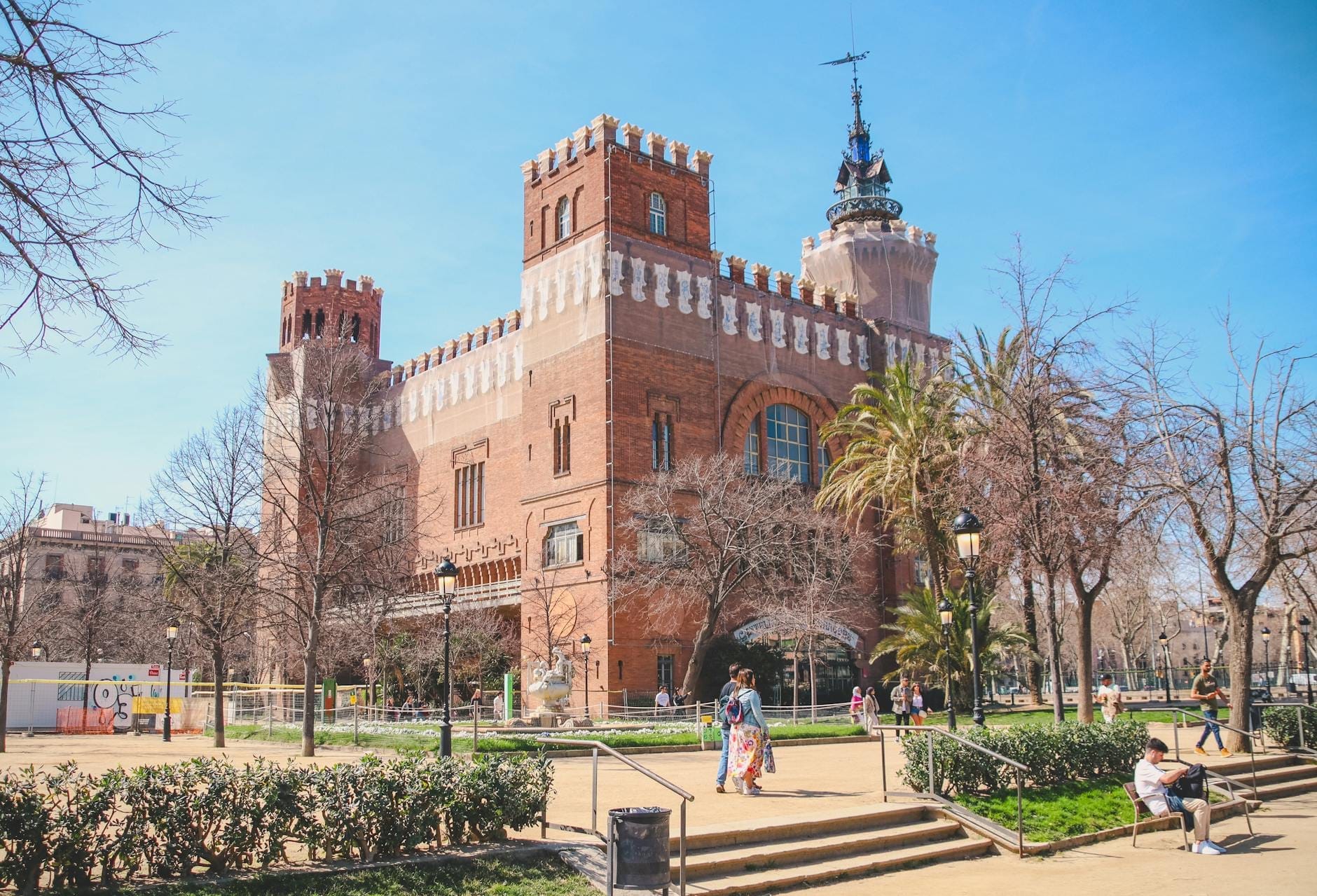
The building itself is the first reason to come. Designed in 1911 by Josep Puig i Cadafalch, one of the leading figures of Catalan Modernisme alongside Domènech i Montaner and Gaudí, the Casaramona factory is a rare example of industrial Modernista architecture. Unlike the ornate residential and civic buildings most visitors associate with the movement, this structure was built for function: long brick pavilions, slender towers topped with iron crosses, and a disciplined use of Gothic-influenced arches that somehow remain elegant at warehouse scale.
💡 Local tip
Check the CaixaForum website before you visit. Exhibitions rotate frequently and some require separate tickets or timed entry. Planning around a specific show significantly improves the experience.
CaixaForum sits at the foot of Montjuïc hill, roughly midway between Plaça d'Espanya and the Fundació Joan Miró. Visitors exploring the hill for a half-day or full day often combine it with the Fundació Joan Miró or the Museu Nacional d'Art de Catalunya, turning it into a coherent cultural circuit rather than an isolated stop.
The Architecture: Reading the Building Before You Enter
Before stepping inside, spend a few minutes at street level looking at the exterior. The original Casaramona factory runs along Avinguda de Francesc Ferrer i Guàrdia as two long, low brick pavilions separated by a central courtyard. The white-brick facade carries the kind of decorative detail, thin pilasters, arched windows framed with ceramic tile accents, that Puig i Cadafalch reserved even for industrial clients. In 1900, this was genuinely radical: factories were not supposed to be beautiful.
What you see at the entrance, however, is not Puig i Cadafalch's work. In 2002, Japanese architect Arata Isozaki designed a new underground entrance hall and a raised steel walkway that lifts visitors above street level into the complex. The contrast between the red brick of 1911 and Isozaki's cool, precise metalwork is deliberate and mostly successful. The walkway cuts through a gap in the original structure rather than over or through it, which preserves the factory's massing while announcing that something new is happening inside.
The interior circulation is largely subterranean. Isozaki excavated below the factory floor to create gallery space without disturbing the Modernista shell above. This means the exhibition halls feel like proper contemporary galleries, high-ceilinged and well-lit, while the original brick arches and iron columns appear unexpectedly overhead in certain corridors, a reminder of what the space once was.
Tickets & tours
Live prices and dates from our booking partner. If you book, we may earn a commission at no extra cost to you.
Vermouth time and sailing experience in Barcelona
From 36 €Instant confirmationFree cancellationOne-day tour to Andorra and France from Barcelona
From 109 €Instant confirmationFree cancellationBest of Gaudi private walking tour in Barcelona with a local guide
From 90 €Instant confirmationFree cancellationInteractive Spanish cooking experience in Barcelona
From 65 €Instant confirmationFree cancellation
What to Expect from the Exhibitions
CaixaForum does not maintain a permanent collection in the traditional sense. Instead, it runs a high-volume program of temporary exhibitions drawn from international partnerships with institutions including the British Museum, the Musée d'Orsay, and the Smithsonian. On any given visit, you might find a retrospective of a 20th-century European painter alongside a documentary photography show and a science or society-themed installation. The range is wide, the quality is generally high, and the programming is serious without being academic.
This approach has a trade-off. There is no guaranteed anchor. Unlike the Museu Picasso, which draws visitors year-round on the strength of its permanent collection, CaixaForum's appeal on a given day depends entirely on what is showing. A visitor who arrives between major exhibitions, or who has no interest in the current program, will leave feeling the space is underwhelming. Checking the schedule before arrival is not optional, it is essential.
The admission price, currently around €6 for general entry, makes this one of the more reasonably priced major cultural spaces in the city. Visitors on a tight budget will find the overall value strong. For a broader look at how to stretch your cultural budget across Barcelona, see our Barcelona on a budget guide.
ℹ️ Good to know
Some CaixaForum exhibitions carry an additional ticket surcharge on top of general admission. This is clearly indicated on the website and at the box office. The base €6 ticket typically grants access to two or three concurrent shows.
How the Experience Changes by Time of Day
CaixaForum opens at 10:00 a.m. and closes at 8:00 p.m. daily. The first hour after opening is noticeably quiet. The galleries have good air conditioning, the lighting is calibrated for art viewing, and the absence of crowds makes it possible to spend real time in front of individual works without feeling pressured to move on. This is the recommended time if you are interested in photography or deep engagement with the exhibitions.
Midday, particularly from 11:30 a.m. to 2:00 p.m., brings school groups and tour parties. The entrance hall and cafe can feel crowded, and the narrower gallery corridors fill up quickly. If you arrive during this window, consider starting with the upper-level exhibitions, which tend to attract fewer casual visitors, and working downward.
Late afternoon, from around 5:00 p.m. onward, is a second quieter period. Many tourists are heading back to their hotels or toward the waterfront, and the visitor numbers drop. The natural light in the courtyard becomes warmer and the exterior brickwork takes on a richer color, making this the best time for architectural photography of the Casaramona facade.
Getting There and Practical Logistics
The building is located at Avinguda de Francesc Ferrer i Guàrdia, 6-8, directly below the Avinguda Reina Maria Cristina, about a five-minute walk from Plaça d'Espanya. Take Metro Line 1 (red) or Line 3 (green) to Plaça Espanya, exit toward the Pavelló Olímpic, and walk up toward the magic fountain. CaixaForum is on your left before you reach the cascading stairs. The walk is flat, well-signed, and straightforward.
Plaça d'Espanya is one of Barcelona's main transit hubs, which means CaixaForum is unusually easy to reach from most parts of the city. It also sits at the start of the Montjuïc hill corridor, so combining it with the Magic Fountain of Montjuïc or the Montjuïc Castle is straightforward if you have a full day.
The building is fully accessible for visitors with reduced mobility. There is lift access between all levels, and the wide corridors in the gallery spaces accommodate wheelchairs comfortably. The raised Isozaki walkway has a ramp alternative.
💡 Local tip
The on-site cafe is a decent lunch stop with good coffee and a terrace facing the courtyard. It is not remarkable as a restaurant, but the seating is quiet and the prices are reasonable by central Barcelona standards.
Who Will Get the Most Out of This Visit
CaixaForum rewards visitors who come prepared and with some genuine curiosity about what is showing. If you have spent the morning at Sagrada Família or the Museu Picasso and are looking for somewhere with a different pace and a lower entry price, this is an excellent choice. The building itself offers enough to justify the ticket even if the current exhibitions are not to your taste.
Travelers on a cultural itinerary with limited time should be honest with themselves. If the current program does not include anything that interests you, the €6 ticket is not money wasted, but the experience will be thinner than if you had planned around a specific show. CaixaForum is not the kind of institution where you wander in and are surprised by something you love, though that does happen. It works best as a deliberate visit.
Visitors traveling with children will find the family workshop program genuinely well-designed. CaixaForum invests seriously in educational programming, and the children's activities tied to current exhibitions are thoughtfully put together rather than bolted on as an afterthought. Check the schedule for family-specific sessions, which often run on weekends and school holidays.
If your primary interest is Catalan Modernisme and architecture rather than contemporary exhibitions, you may find that your time is better spent at Hospital de Sant Pau or Palau de la Música Catalana, where the architecture is the main event and is fully accessible. That said, CaixaForum offers the rare combination of Modernista architecture with genuinely international contemporary programming, which neither of those sites provides.
Insider Tips
- The rooftop terrrace above the Isozaki entrance building is not always publicized but offers a direct view over the Casaramona roofline and the towers that Puig i Cadafalch topped with iron crosses. Ask at the information desk whether it is open during your visit.
- CaixaForum offers free admission for under 16s and residents on Wednesdays after 3pm; check website for special promotions. This is widely known, so arrive at opening time to avoid the longest queues of the year.
- The bookshop near the exit carries a good selection of architecture and design titles, including serious monographs on Catalan Modernisme that are difficult to find elsewhere in the city. Worth browsing even if you are not a buyer.
- If you are visiting Montjuïc across a full day, buy your CaixaForum ticket at the door and keep the receipt: the staff can sometimes direct you to concurrent free activities in the courtyard that are not advertised at the entrance.
- The pavilions on either side of the central courtyard are used differently depending on the current program. If one is empty or under installation, it is still worth walking through: the original factory floor tiles and the iron column grid are visible, and give a clearer sense of what the building looked like before restoration.
Who Is CaixaForum Barcelona For?
- Architecture enthusiasts interested in Catalan Modernisme beyond Gaudí
- Travelers seeking affordable, serious cultural programming in a non-touristy atmosphere
- Families with children, thanks to well-structured weekend workshops tied to current exhibitions
- Visitors combining a full day on Montjuïc hill with multiple cultural stops
- Rainy-day visitors looking for a spacious, comfortable interior alternative to the city's busier museums
Nearby Attractions
Other things to see while in Montjuïc:
- Fundació Joan Miró
Perched on the slopes of Montjuïc, Fundació Joan Miró is Barcelona's first contemporary art museum and one of the most cohesive artist foundations in Europe. The building, the collection, and the outdoor spaces combine into an experience unlike any other major art institution in the city.
- Jardí Botànic de Barcelona
Perched on the slopes of Montjuïc, the Jardí Botànic de Barcelona spreads across 14 hectares of carefully arranged Mediterranean flora from five continents. It offers a rare combination of botanical depth, architectural landscape design, and sweeping views over Barcelona, all without the crowds that dominate the city's headline attractions.
- Magic Fountain (Font Màgica)
The Font Màgica de Montjuïc is a monumental choreographed fountain at the foot of Montjuïc hill, combining jets of water reaching up to 50 metres with coloured lights and music. It's free to attend, open on select evenings year-round, and consistently draws one of Barcelona's largest spontaneous crowds.
- Montjuïc Cable Car (Telefèric de Montjuïc)
The Telefèric de Montjuïc carries passengers 85 meters above sea level in just 3.5 minutes, delivering panoramic views over the port, the city grid, and the Mediterranean. Originally designed in 1926 for the International Exposition, the modernized gondola lift is as much a piece of Barcelona's urban history as it is a practical way to reach Montjuïc Castle.
Planning a trip? Discover personalized activities with the Nomado app.