Kadriorg is Tallinn's most refined neighborhood, built around a baroque palace and park commissioned by Peter the Great in the early 18th century. Today it combines grand art museums, the Estonian presidential residence, and quiet residential streets shaded by old linden trees, making it one of the most rewarding areas in the city to explore on foot.
Kadriorg is Tallinn's most graceful district, where a tsar's baroque palace sits at the center of a 70-hectare park flanked by world-class art museums and calm residential streets. Two kilometers east of the Old Town, it feels like a different city entirely: unhurried, leafy, and built to impress on a grand scale.
Orientation
Kadriorg occupies roughly 1.46 square kilometers on the western shore of Tallinn Bay, sitting about 2 km east of the Old Town and just north of the main Narva maantee corridor that connects the city center to the eastern districts. Administratively it is a subdistrict of Kesklinn, Tallinn's city center borough, though its character is nothing like the commercial core.
The neighborhood's main artery is Narva maantee, a wide boulevard that carries trams and heavy traffic along its southern edge. From there, the streets climb gently northward through the park toward the Baltic coast. August Weizenbergi and Jaan Poska streets form the cultural spine of the area, leading directly past Kumu Art Museum, Kadriorg Palace, and the formal gardens. Pirita tee runs along the waterfront to the north and east, connecting Kadriorg to the Pirita district further up the coast.
To the west, Kadriorg transitions into the Sadama and Torupilli subdistricts, and beyond them into the city center. To the east, the neighborhood borders Maarjamäe, home to the Soviet-era memorial complex and the Maarjamäe Palace. To the north, the coastline opens toward Pirita and the sea. Understanding this layout helps: almost everything worth seeing in Kadriorg is north of Narva maantee, arranged in a loose arc around the park.
Character & Atmosphere
Kadriorg carries the weight of its history lightly. The streets around the palace and park are wide, quiet, and lined with mature linden and oak trees that close over the road in summer to create long, shaded corridors. The residential streets off Jüri Vilmsi and Lydia Koidula are filled with pre-war wooden villas and art nouveau apartment buildings, many in careful repair. This is where Tallinn's diplomats, architects, and professors tend to live, and the neighborhood reflects that: orderly, proud, and largely free of the commercial noise you find closer to the city center.
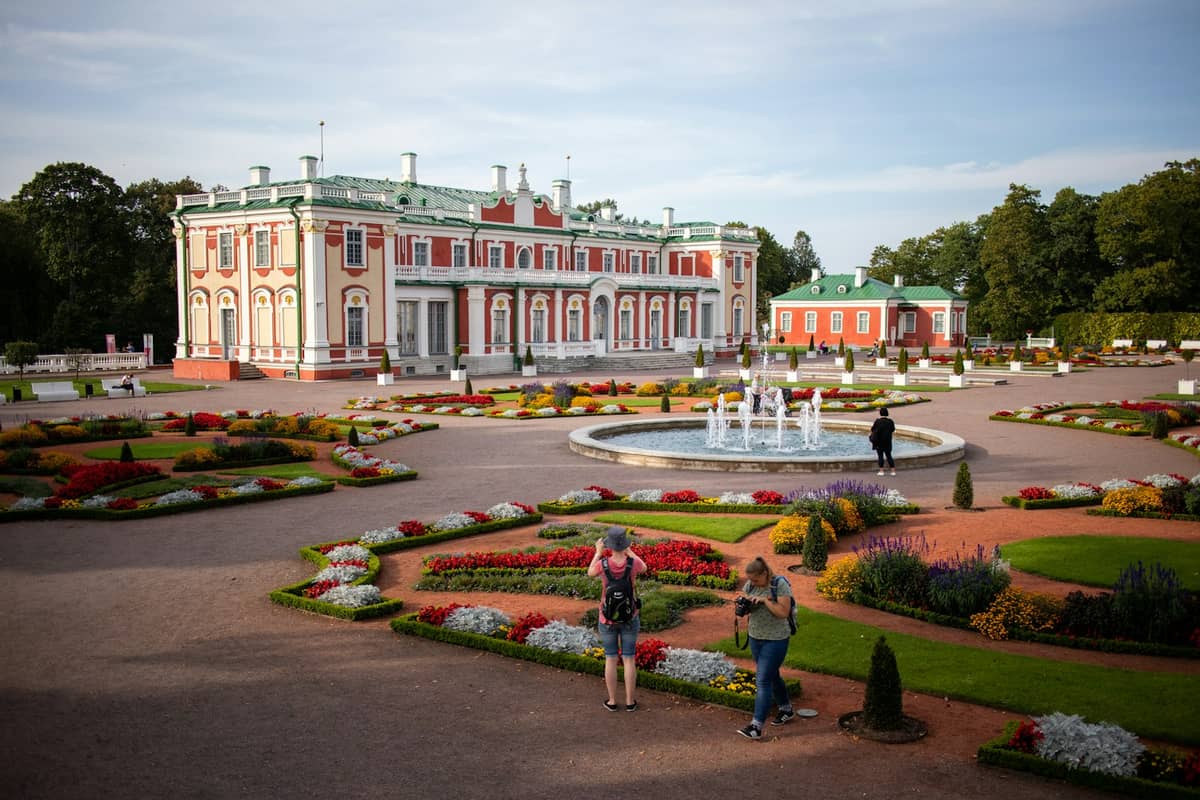
In the mornings, especially on weekends, the park belongs to joggers, dog walkers, and families with small children moving between the formal French garden near the palace and the wilder woodland paths toward the coast. The light comes in low through the trees at that hour, and the fountains in the baroque garden are often still. By midday in summer, the park fills considerably as visitors arrive from the Old Town, and the area around Kumu and the palace becomes genuinely busy. Late afternoon is the best window for photography: the warm light catches the ochre and cream facade of the palace from the formal garden path, and the crowds thin as people head back toward the city.
After dark, Kadriorg is quiet in a way that surprises many visitors. The park is lit but not heavily trafficked at night, the cafes close at reasonable hours, and the streets return to their residential calm. This is not a nightlife district. The tradeoff is that you get genuine peace in a central location, which is not easy to find in Tallinn during the summer months.
💡 Local tip
Visit the formal garden beside Kadriorg Palace on a weekday morning in late spring or early summer, when the tulips and roses are in bloom and the crowds have not yet arrived. The combination of the baroque facade and the French-style parterre is one of Tallinn's most striking sights.
History & Background
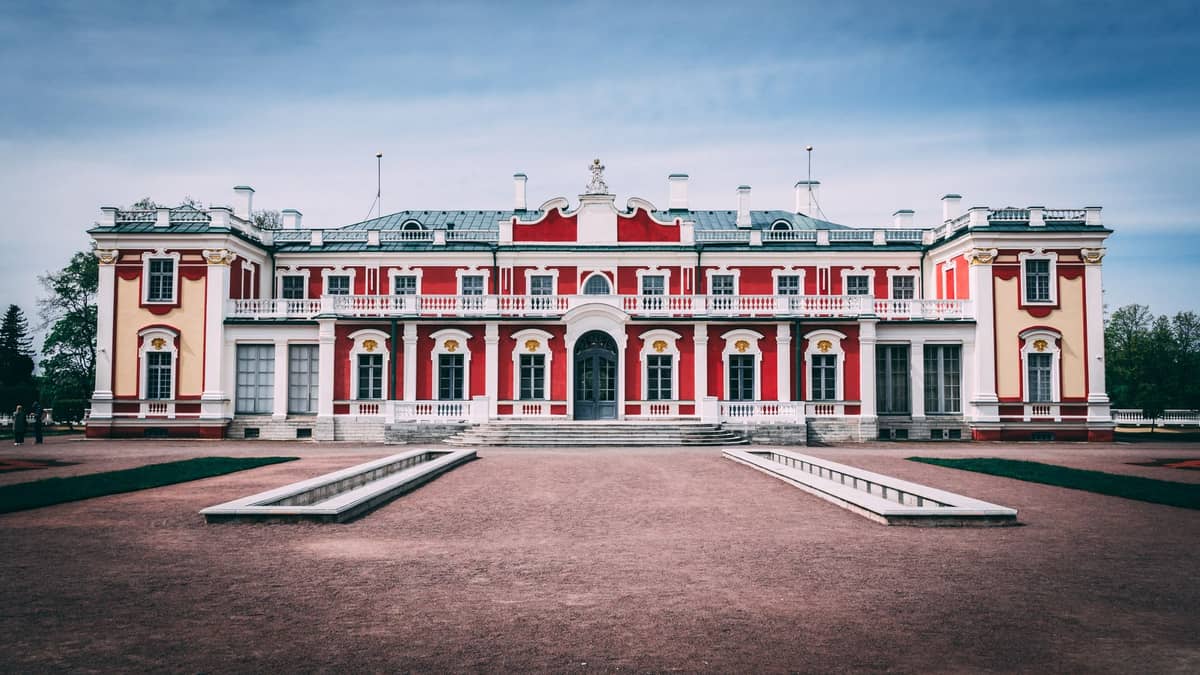
The name Kadriorg means 'Catherine's Valley' in Estonian, a translation of the German 'Katharinental.' The district owes its existence entirely to Peter the Great, who ordered the construction of a summer palace here in 1718 as a gift for his wife Catherine I. The Italian architect Nicola Michetti designed the baroque palace, and the surrounding park was laid out in the formal European manner. Peter never saw the project completed; he died in 1725, the year before the palace was finished.
For the next two centuries the area developed slowly as a aristocratic and later bourgeois retreat from the city, its tree-lined avenues and coastal position making it one of the most desirable addresses in Reval, as Tallinn was then known. After Estonian independence in 1918, the new republic chose a newly built presidential palace within the Kadriorg park ensemble as the official presidential residence, a symbolic statement of continuity and national confidence. The Soviet occupation shifted the palace's function toward cultural use, and the art museum collections now housed there are a direct legacy of that period. Since re-independence in 1991, the presidential residence has returned to its historic location within the park ensemble.
What to See & Do
The anchor of the neighborhood is Kadriorg Palace, which now houses the foreign art collection of the Art Museum of Estonia. The interior is relatively compact but beautifully restored, with the Great Hall ceiling fresco being the most dramatic space. Even if you skip the interior, the exterior and formal garden are free to walk through and worth significant time.
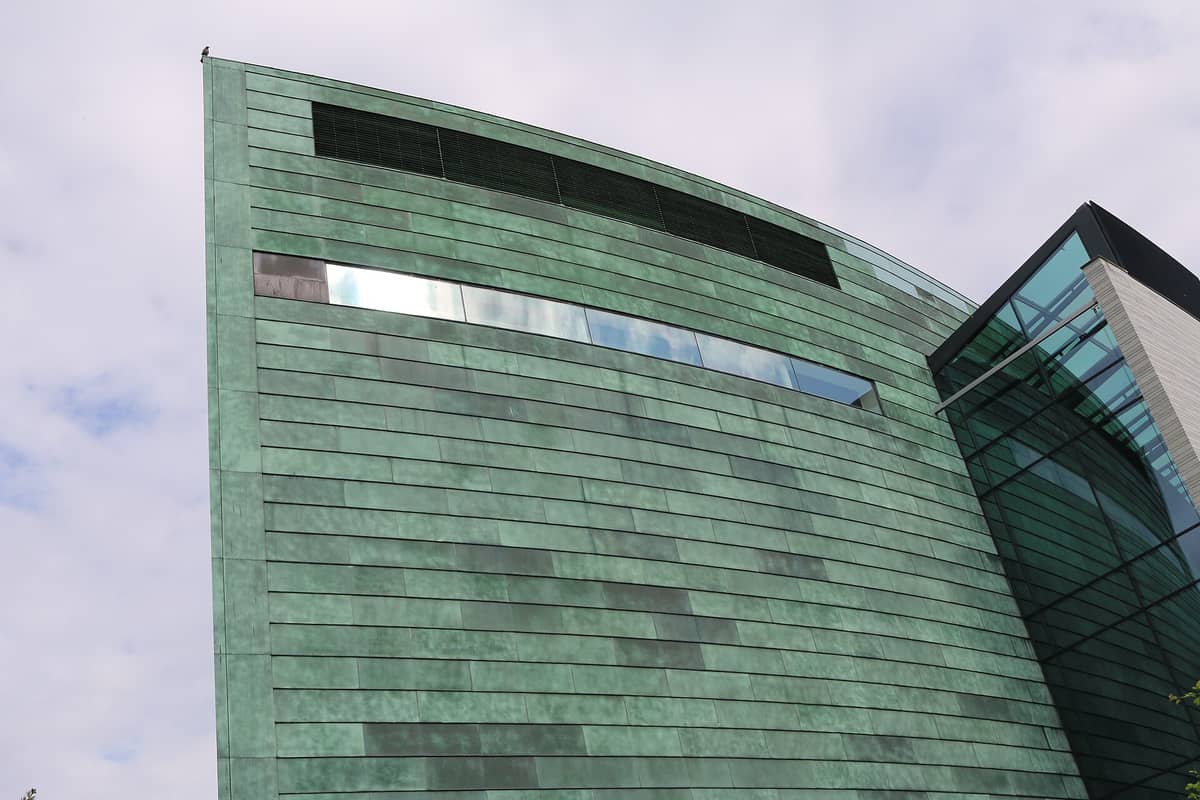
A five-minute walk through the park along August Weizenbergi brings you to Kumu Art Museum, the main building of the Art Museum of Estonia and one of the largest art museums in northern Europe. The building itself, designed by Finnish architect Pekka Vapaavuori and completed in 2006, is partially embedded in a limestone escarpment and worth seeing as a piece of architecture. The permanent collection covers Estonian art from the 18th century to the Soviet period, and the temporary exhibitions are consistently strong.
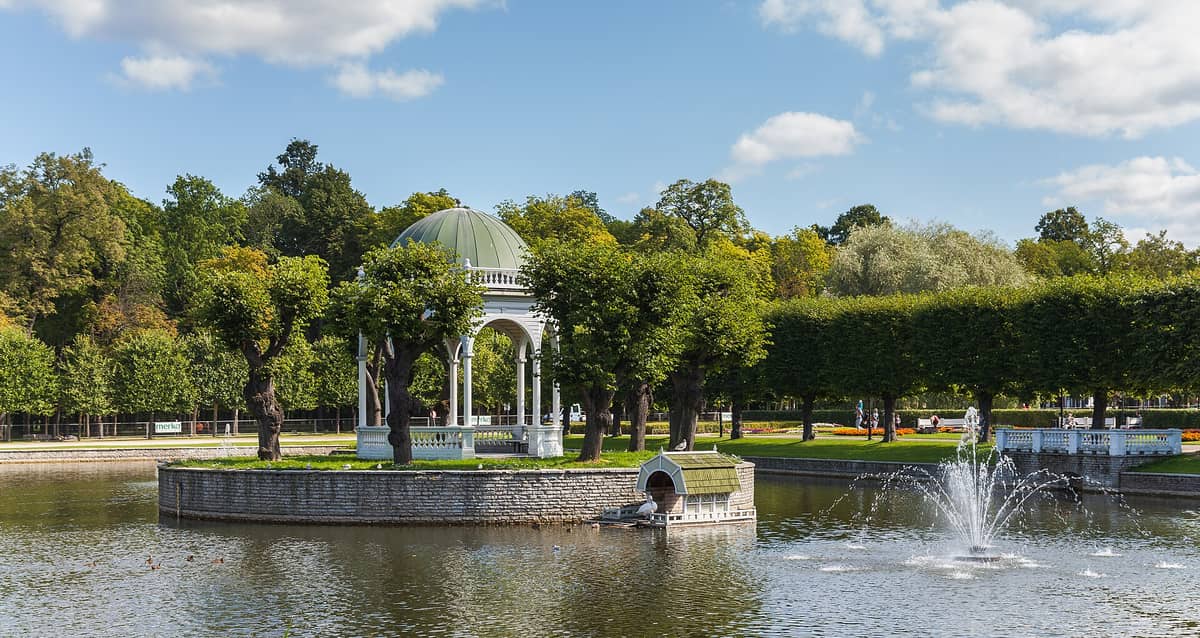
Kadriorg Park: 70 hectares of woodland, formal gardens, and ponds. Free to enter, open year-round.
Kadriorg Palace and its baroque garden: The palace houses the foreign art collection; the garden is free.
Kumu Art Museum: Estonia's premier art institution, with a permanent collection and major temporary shows.
Presidential Palace: The official residence of the Estonian president, visible but not open to the public in the ordinary way.
A. H. Tammsaare Museum and Eduard Vilde Museum: Smaller literary museums in the residential streets near the park.
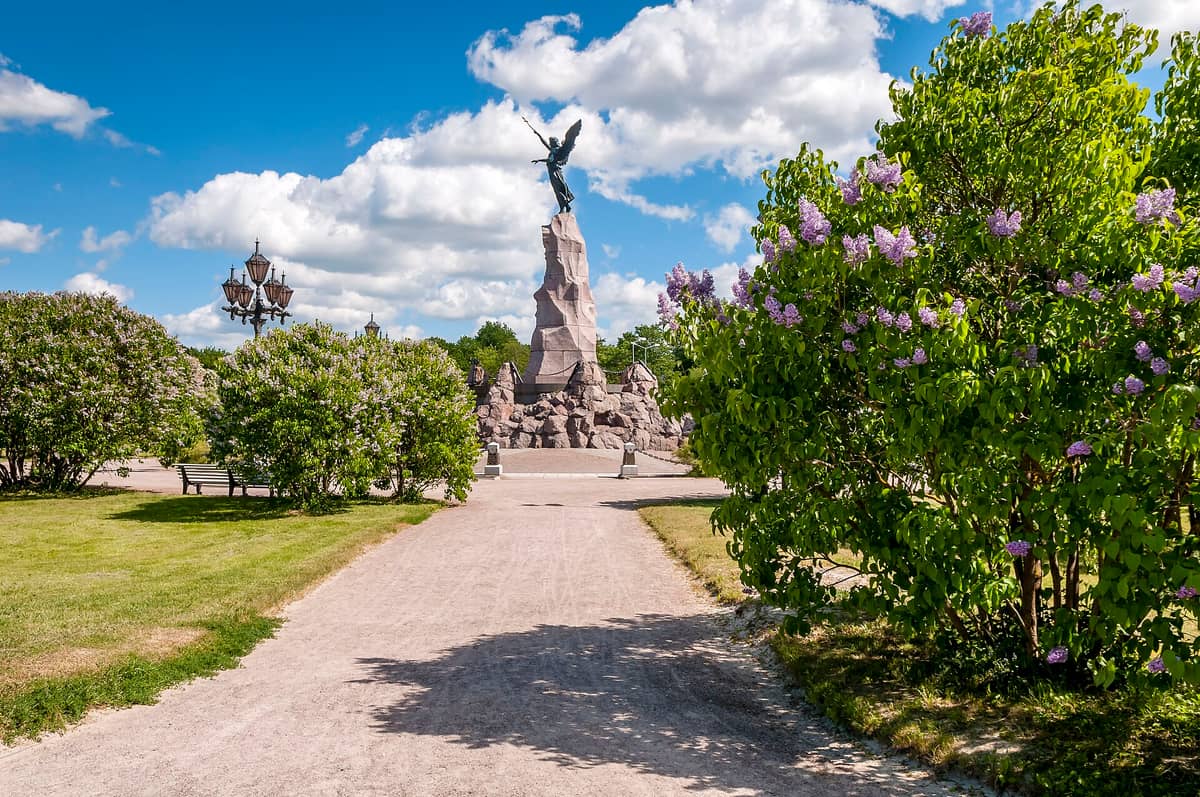
Russalka Memorial: A bronze angel monument on the coastal path commemorating the 1893 sinking of a Russian warship.
The Russalka Memorial stands at the edge of Kadriorg where the park meets the coast, facing out across Tallinn Bay. It is a quieter sight than the main palace complex but the coastal setting and the monument's scale make it one of the more atmospheric spots in the neighborhood, particularly in the late afternoon when the light comes off the water.
ℹ️ Good to know
The Tallinn Card covers free entry to both Kumu Art Museum and Kadriorg Palace, making it worth calculating against individual ticket prices if you plan to visit both. Check the current card benefits before your trip, as inclusions can change.
If you have a full day, the neighborhood connects naturally to a longer eastward route toward Maarjamäe and, beyond that, to Pirita along the coast. The walk from the Russalka Memorial along Pirita tee to Pirita beach takes about 30 to 40 minutes on foot and passes through a stretch of coastal woodland. For a guided approach to the whole area, the Tallinn walking tour guides often include Kadriorg as an extension from the Old Town.
Eating & Drinking
Kadriorg is not a dining destination in the way that the Old Town or Telliskivi are, but it has a handful of places worth knowing about. The neighborhood's eating scene is small and mostly clustered near the park entrances and along the streets closest to Narva maantee. Prices are generally mid-range, reflecting the residential character of the area rather than tourist-zone markups.
The cafe at Kumu Art Museum is one of the better museum cafes in Tallinn, with a terrace that looks across the park and a menu that goes beyond sandwiches. It is a reasonable lunch stop even if you are not visiting the museum. Near the palace, there are a couple of small cafes suited to a coffee and a pastry after walking the garden. The residential streets off Jaan Poska have a few neighborhood restaurants and bakeries that cater mostly to local residents, with straightforward Estonian and European cooking at sensible prices.
For a broader range of restaurants and bars, most visitors head back toward Narva maantee or into the city center. The area around Telliskivi Creative City, about 20 to 25 minutes by tram, has the most interesting independent food scene in Tallinn if that is what you are looking for. Kadriorg itself closes early and is not the place to come if you want a late dinner or a bar.
⚠️ What to skip
Food options in Kadriorg are limited, especially outside of lunch hours. If you are planning a full day in the park and museums, either eat before you arrive, plan your timing around the museum cafe, or bring something with you. Options are sparse by mid-evening.
Getting There & Around
Kadriorg is straightforwardly connected to the city center by tram. Lines 1 and 3 run from the Hobujaama stop near the Viru shopping center along Narva maantee to the Kadriorg terminus, a journey of around 10 to 12 minutes. The Kadriorg tram stop puts you at the southern edge of the park, from which the palace is about a 10-minute walk north through the trees along August Weizenbergi. Kumu is visible from the park entrance and takes less than five minutes to reach from the tram stop.
Several bus lines also serve the area, including lines 1, 5, 8, 31, 34, 38, 42, 66, and 67, which stop along Narva maantee and the surrounding streets. If you are coming from Balti jaam (the main train and bus station) or from Kalamaja, trams 1 and 3 connect directly without needing to transfer.
Walking from the Old Town is feasible and pleasant in good weather. From the Viru Gate at the eastern edge of the Old Town, the walk to the Kadriorg tram terminus takes about 25 to 30 minutes along Narva maantee. A more interesting route cuts through the Südalinn district and approaches the park from the west. For full transit guidance and current fares, see the getting around Tallinn guide.
Within Kadriorg itself, everything worth seeing is walkable. The park covers a large area but its paths are well-maintained and easy to navigate. From the tram stop to the Russalka Memorial on the coast is about 20 minutes on foot through the park. Cycling is possible along Pirita tee and some park paths, and bike share options are available in the warmer months.
Where to Stay
Kadriorg is primarily a residential district, and hotel options here are limited compared to the Old Town or the city center. What exists tends to be smaller boutique hotels, guesthouses, and apartment rentals in the residential streets around the park. Staying here suits travelers who prioritize quiet surroundings and easy park access over proximity to the medieval center. The tram connection to the Old Town is reliable enough that staying in Kadriorg does not feel isolating, but the 10-to-15-minute tram ride is a real factor if you plan to spend most of your time in the historic core. For a broader overview of Tallinn's accommodation zones, the where to stay in Tallinn guide compares the main options across neighborhoods.
Travelers who would most enjoy staying in Kadriorg are those who want a calm base for a longer visit, who are specifically here to spend time with the museums and park, or who appreciate having a genuine neighborhood experience rather than a tourist-center hotel. Families with children who want quick park access morning and evening, and couples looking for something quieter than the Old Town, are well-served by this location.
Practical Notes for Visitors
Kadriorg is appropriate for all types of visitors and has no particular safety considerations beyond standard urban awareness. The park is well-lit and well-used. Because Kumu and the palace are the main draws, weekends in summer can see real crowds at both venues; arriving at opening time or later in the afternoon helps. The best museums in Tallinn guide covers Kumu in more depth and helps contextualize it within the city's broader cultural offer.
The park is beautiful in all seasons. In winter, snow on the baroque garden and palace creates a striking image, and the park is rarely crowded. In autumn, the large deciduous trees turn in late September and October, making the avenues genuinely impressive. For timing advice across the year, the best time to visit Tallinn guide provides seasonal context for the whole city.
TL;DR
Kadriorg is Tallinn's foremost cultural and park district: baroque palace, 70-hectare park, and Kumu Art Museum all within a 20-minute walk of each other.
About 2 km east of the Old Town, connected by trams 1 and 3 in roughly 10 to 12 minutes from the Viru area.
Best for: culture-focused travelers, museum visitors, families wanting park space, couples wanting a quiet and elegant neighborhood.
Not ideal for: those wanting nightlife, a wide restaurant scene, or immediate proximity to the medieval center.
The neighborhood is calm and residential after hours: plan your eating around the museum cafe at Kumu, or come fed and focused on the park and culture.
Two days is enough to cover Tallinn's medieval heart, its finest museums, and a taste of the city's creative neighbourhoods. This itinerary is structured day by day, starting with the Old Town's UNESCO-listed streets and working outward to Kadriorg and Kalamaja.
Three days is the ideal amount of time to experience Tallinn properly. This itinerary takes you from the medieval Old Town through creative Kalamaja, out to the elegant Kadriorg district, and to the seaside, covering the city's essential sights without rushing.
Tallinn's skyline is defined by its churches. The medieval Old Town alone holds centuries of Lutheran, Orthodox, and Catholic history within a few walkable blocks. This guide covers the finest religious buildings in the city, from active cathedrals to a deconsecrated Gothic church housing world-class medieval art.
Tallinn stands out for museum culture. This guide covers the city's finest institutions, from a fortress-turned-medieval-art-gallery to one of Europe's most dramatic maritime museums, with practical advice on saving money and planning your visits.
Tallinn rewards visitors in every season, but the right time to go depends entirely on what you want. This guide breaks down weather, crowd levels, pricing, and key events month by month so you can make an informed decision.
Tallinn rewards those who look up and out. Whether you want the classic medieval rooftop panorama, sweeping Baltic Sea vistas, or the highest point in Estonia, this guide covers every viewpoint worth your time, from the free hilltop terraces of Toompea to a Soviet-era tower with a glass floor.
Tallinn sits at the perfect launching point for exploring Estonia's wild coast, ancient forests, and dramatic landscapes. These are the best day trips from Tallinn, covering everything from national parks and island escapes to medieval ruins and surreal Soviet-era sites.
Tallinn rewards budget travellers generously. The medieval Old Town is freely walkable, city museums open their doors for free on the first Sunday of each month, and the parks, beaches, and viewpoints cost nothing at all. This guide covers the best free experiences in the city, organised so you can plan a full day without spending a cent.
Tallinn is a compact city, but knowing which transport option to use, and when, saves time and money. This guide covers public transport tickets, trams, buses, taxis, ride-hailing apps, airport connections, and the biggest misconceptions visitors run into.
Tallinn is one of Europe's most intact medieval capitals, a UNESCO-listed city that pairs cobblestoned Old Town lanes with a surprisingly modern, tech-forward culture. This guide cuts through the hype to tell you exactly what you'll get, what it costs, and when to go.
Tallinn sits on the Gulf of Finland, and its coastline delivers genuine beach options within minutes of the city centre. This guide covers the best sandy stretches, island beaches reached by ferry, and scenic coastal stops worth combining with a swim.
The Tallinn Card promises free entry to 50+ attractions and unlimited public transport for 24, 48, or 72 hours. But does it actually save you money? This guide breaks down the real costs, the best-value attractions, and the scenarios where skipping the card makes more sense.
The Tallinn Christmas Market transforms Town Hall Square into one of Europe's most atmospheric winter destinations. This guide covers exact dates, opening hours, food and drink to try, the best times to visit, and practical tips for getting the most out of your trip.
Tallinn is one of Europe's most effortlessly romantic cities, with a medieval Old Town, baroque parks, and a waterfront that rewards slow exploration. This guide covers the best experiences for couples, from golden-hour viewpoints and art museum dates to island escapes and atmospheric cobblestone lanes.
Tallinn rewards those who look beyond the postcard views. From a flooded Soviet quarry to a bog walk inside city limits, these are the experiences that separate a good Tallinn trip from a great one.
Summer transforms Tallinn into its most animated version, with nearly endless daylight, major festivals, and the Old Town packed with visitors. This guide covers the climate, key events, best activities, and practical advice on crowds and pricing so you can plan a summer trip that actually works.
Tallinn in winter is cold, atmospheric, and significantly cheaper than summer — but it rewards visitors who go in with realistic expectations. This guide covers the climate, costs, seasonal highlights, transport, and the honest truth about snow guarantees.
Tallinn preserves one of Europe's most intact medieval city centres, shaped by Danish kings, Hanseatic merchants, and the Livonian Order. This guide covers the history, the key sites, and how to explore them without wasting a day.
Tallinn is surrounded by bogs, forests, islands, and coastline within an hour of the city centre. This guide covers the best outdoor escapes, from wild island day trips and waterfall walks to urban parks and Estonia's most dramatic landscapes.
Tallinn stands out when it comes to nightlife. Whether you want cocktails in a 13th-century cellar, craft beer in a converted factory yard, or a club that runs until 05:00, this guide breaks down exactly where to go, what to pay, and when to show up.
Everything you need to walk Tallinn's UNESCO-listed medieval Old Town on your own terms. This guide covers the full route from Viru Gate to Toompea Hill, admission costs for key stops, seasonal crowd patterns, and practical tips for getting the most from 2-4 hours on foot.
Tallinn is one of Northern Europe's most rewarding cities for budget travelers. Between its largely free medieval Old Town, weekday lunch deals, and efficient public transport, a comfortable visit is achievable for €32-45 per day. This guide covers exactly where to save and what's genuinely worth paying for.
Shopping in Tallinn spans medieval souvenir lanes, a three-storey Baltic market with 300 traders, contemporary Estonian design studios, and sprawling Soviet-era food halls. This guide covers every major area, what each does best, realistic prices, and the seasonal quirks that affect when and where you should go.
Tallinn carries its Soviet-era history in concrete and memory. This guide covers the key museums, former KGB facilities, Soviet monuments, and practical tips for exploring one of Europe's most layered occupation histories — from the Vabamu Museum to Linnahall and beyond.
The Tallinn to Helsinki ferry is one of Europe's most convenient short sea crossings, taking as little as 2 hours with up to 10 daily departures year-round. This guide covers every operator, realistic prices, seasonal scheduling, day trip logistics, and what to expect on board.
Tallinn stands out for family travel. Medieval towers to climb, a full-size submarine to explore, a zoo with polar bears, and island ferry trips make it genuinely exciting for children. This guide covers the best family activities across the city and beyond.
Tallinn rewards visitors well beyond its famous Old Town. This guide covers the best things to do in Tallinn across history, culture, nature, and nightlife, with practical advice on what to skip, when to go, and how to make the most of your time in Estonia's capital.
Estonian cuisine is more nuanced than most visitors expect. This guide covers the essential dishes, the best neighbourhoods to eat well, realistic price ranges for 2026, and practical advice on where the food is worth it and where it is not.
Tallinn's dining scene stretches far beyond the medieval Old Town, with Michelin-recognized kitchens, creative Kalamaja eateries, and modernist Estonian cuisine in the Rotermann Quarter. This guide breaks down where to eat, what to spend, and which tourist traps to avoid.
Tallinn divides neatly into distinct neighbourhoods, each with a different atmosphere, price point, and trade-off. This guide breaks down every major area so you can choose the right base for your trip, whether you want cobblestones and cathedral views or hip cafés and local pricing.