Kadriorg Palace: Peter the Great's Baroque Legacy in Tallinn
Built by Russian Tsar Peter I in 1718 as a gift for his wife Catherine, Kadriorg Palace is one of the finest Petrine Baroque buildings in Northern Europe. Today it houses the Kadriorg Art Museum and sits within a beautifully maintained park just east of Tallinn's city centre.
Quick Facts
- Location
- A. Weizenbergi tn 37, Kesklinna linnaosa, Tallinn
- Getting There
- Tram or bus to Kadriorg stop, then a short walk through the park
- Time Needed
- 1.5 to 3 hours, more if you linger in the park
- Cost
- Paid admission; check kadriorumuuseum.ekm.ee for current ticket prices
- Best for
- History lovers, art enthusiasts, couples, and anyone wanting a calm alternative to Old Town
- Official website
- kadriorumuuseum.ekm.ee/en/introduction/history-and-building
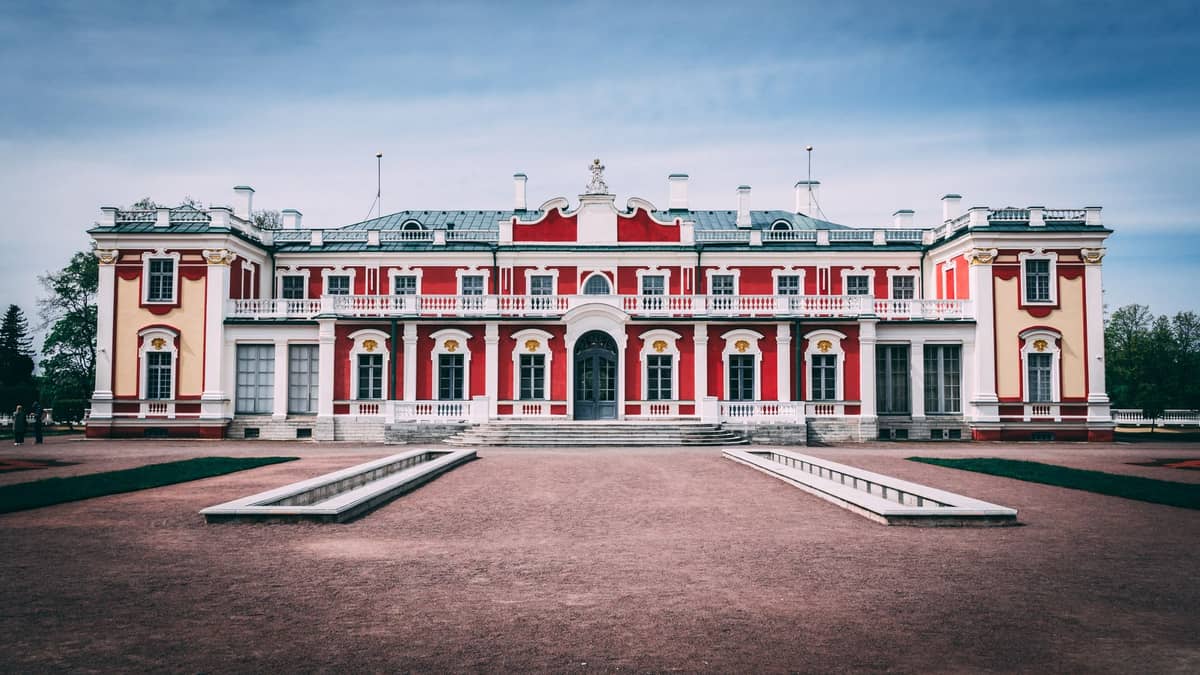
What Kadriorg Palace Actually Is
Kadriorg Palace is an 18th-century Petrine Baroque palace commissioned by Russian Tsar Peter I and built between 1718 and 1725. Peter chose the site on the wooded coastline east of Tallinn's medieval centre. The palace and the surrounding ensemble were later named Kadriorg, derived from the German Catharinenthal, meaning Catherine's Valley, in honour of his wife. The palace was designed by Italian architect Nicola Michetti and completed under Gaetano Chiaveri and Mikhail Zemtsov. It is one of the very few purpose-built royal residences of that era still standing in the eastern Baltic region.
Since 2000, the palace has operated as the Kadriorg Art Museum, a branch of the Art Museum of Estonia, displaying a curated collection of Western European and Russian art from the 16th to 20th centuries. The building is therefore both a historic monument and a functioning art museum, which makes it more rewarding than a simple guided tour stop. You move through ornate period rooms while also encountering genuine paintings, decorative objects, and porcelain.
ℹ️ Good to know
The palace is open Tuesday and Thursday through Sunday from 10:00 to 18:00, with extended hours on Wednesdays until 20:00. It is closed on Mondays. Seasonal or public holiday changes may apply, so check the official site before visiting.
The Architecture and Interior
From the street, the salmon-pink facade is immediately striking, especially against the surrounding greenery of Kadriorg Park. The two-storey building follows the Petrine Baroque style that Peter championed across his empire: symmetrical massing, rusticated stonework on the ground floor, tall arched windows, and decorative stucco detailing. It is confident without being overwhelming, sized more like a grand summer villa than a full royal palace, which gives it an approachable quality that larger Baroque residences in central Europe often lack.
The interior centrepiece is the Great Hall on the main floor, a double-height ceremonial room decorated with elaborate ceiling frescoes and ornamental plasterwork. The quality of the craftsmanship reflects the ambition behind the commission: Peter brought European artisans to the Baltic to execute a building that would signal Russian cultural sophistication. The smaller side rooms are finished with period furniture and decorative arts that reinforce the museum's core theme of European artistic exchange across two centuries.
Accessibility information, including details about entrances and facilities for visitors with reduced mobility, is available on the Art Museum of Estonia's dedicated accessibility page.
Tickets & tours
Hand-picked options from our booking partner. Prices are indicative; availability and final rates are confirmed when you complete your booking.
Architectural walking tour of Tallinn with a Local
From 177 €Instant confirmationFree cancellationCity Sightseeing hop-on hop-off bus tour of Tallinn
From 60 €Instant confirmationFree cancellationSelf-guided Discovery Walk of Tallinn city contrasts beyond the medieval walls
From 26 €Instant confirmationFree cancellationTallinn's art and culture tour with a local
From 62 €Instant confirmationFree cancellation
The Collection: What You'll Find Inside
The Kadriorg Art Museum holds Western European paintings, drawings, and decorative art alongside Russian art, reflecting the palace's own historical connections. Dutch and Flemish Old Masters feature prominently, including smaller-scale works that suit the intimate scale of the rooms. Russian porcelain and silverware, displayed in several of the side chambers, trace the imperial taste that shaped the building's original interior.
The collection is not encyclopedic in the way of a national gallery, but it is well-matched to its setting. Visitors who appreciate seeing art in a context that makes historical sense will find the combination of architecture and collection unusually coherent. Those expecting a comprehensive survey of Estonian art should note that Estonian works are held primarily at KUMU Art Museum, a short walk away in the same park.
For the full picture of Estonian art history, KUMU Art Museum is within easy walking distance and makes an excellent companion visit on the same day.
The Formal Garden and the Surrounding Park
The palace sits within a formal parterre garden on its south side, laid out with low geometric hedges, gravel paths, and a central fountain basin. In summer, the flower beds are in full colour and the garden is one of the most photogenic spots in Tallinn. In early morning, before the day-trippers arrive, the garden is almost entirely quiet, with the sound of the fountain and birds in the surrounding linden trees. The light at that hour catches the palace facade cleanly, without the contrast problems that midday sun creates.
The wider Kadriorg Park extends well beyond the formal garden and includes woodland paths, a rose garden, and the Kadriorg Pond. The park is popular with Tallinn residents for morning runs and weekend walks, which gives the whole area a lived-in feeling rather than a purely tourist atmosphere. Visiting on a weekday morning places you alongside locals rather than tour groups.
The park and its surrounding neighbourhood are covered in more detail in the Kadriorg neighbourhood guide, which includes the Song Festival Grounds, Russalka Memorial, and the Pirita coastline to the north.
How the Experience Changes by Time and Season
Kadriorg Palace is one of those places that genuinely rewards timing your visit. Midday in summer, particularly on weekends, brings coach tour groups that can make the main floor rooms feel crowded. Arriving at opening time or on a Wednesday evening, when the museum stays open until 20:00, gives you the interior largely to yourself. The Wednesday late opening is a particularly good option in summer, when the evening light comes from the northwest and the garden takes on a warm, low-angle glow.
In winter, the formal garden loses its colour but the palace facade against snow or a grey Baltic sky has its own austere appeal. The park is often underused in winter, and the museum interior is noticeably quieter. Bring a warm coat: the walk from the tram stop through the park takes about ten minutes and the wind off the bay can be sharp from November through March.
Spring is arguably the most rewarding season for the combination of palace and park. The lilacs and cherry trees in the wider park bloom in May, the formal garden is freshly planted, and visitor numbers have not yet peaked. The palace grounds are popular with Tallinn photographers during this window.
💡 Local tip
Wednesday evening visits offer a quieter interior and better summer light in the garden. It is the least-crowded time to see the Great Hall.
Getting There and Planning Your Visit
Kadriorg Palace is about 2 kilometres east of Tallinn's Old Town, a distance that feels manageable in good weather but is too far for a comfortable walk with young children or in wet conditions. The most direct public transport option is the tram line running east along Narva maantee from the city centre to the Kadriorg stop, from which the palace is a few minutes' walk through the park. The route is well-served and takes under fifteen minutes from the Old Town end.
If you are combining the visit with KUMU, the Song Festival Grounds, or a walk along the Pirita coast, plan for a half-day in the Kadriorg area rather than a short detour. The neighbourhood rewards slow exploration.
The Tallinn Card covers free public transport and includes entry to many city museums, which can make it cost-effective if you are visiting multiple sites. The Tallinn Card guide explains what is included and how to decide whether it is worth buying.
⚠️ What to skip
Ticket prices and any included discounts change periodically. Always verify current admission fees on kadriorumuuseum.ekm.ee before visiting, as the information in printed guides and third-party sites quickly becomes outdated.
Who Should Consider Skipping It
Visitors with very limited time in Tallinn who are focused on the medieval Old Town may find the 20-minute round trip by tram a stretch if their schedule is tight. The palace collection, while well-presented, is not the reason most people come to Tallinn, and travellers with no particular interest in Baroque architecture or European decorative arts might feel the interior disappoints relative to the effort of getting there.
Families with very young children may find the formal rooms difficult to manage, though the park and garden outside are excellent for a break. The palace is most rewarding for visitors who come prepared to slow down and treat it as part of a wider Kadriorg neighbourhood walk rather than a quick stop.
Insider Tips
- Wednesday evenings are the best-kept timing secret: the museum stays open until 20:00, crowds are thin, and in summer the low northwesterly light hits the palace facade at a flattering angle for photography.
- The formal parterre garden on the south side of the palace is freely accessible even when the museum is closed. If you only have fifteen minutes, walk through the garden and around the exterior before deciding whether to buy a ticket.
- KUMU Art Museum is a ten-minute walk through the park and covers Estonian art from medieval times to the present. Combining both in a single half-day gives you a complete picture of the area without backtracking.
- The tram stop is called Kadriorg, but the walk from there takes you through the park's northern edge. Follow the signs rather than relying on a map app, which sometimes routes you around the outside of the park and adds unnecessary distance.
- In May, the park's linden and cherry trees are in bloom and the formal garden is freshly planted. This is one of the genuinely best weeks of the year to visit, before summer crowds arrive and while the garden is at its most photogenic.
Who Is Kadriorg Palace For?
- Art and architecture enthusiasts interested in Petrine Baroque design and European decorative arts
- Couples looking for a quieter, more atmospheric alternative to the Old Town
- Visitors combining a museum visit with a longer walk through Kadriorg Park and along the coast
- Photographers, particularly in spring or on summer evenings with low light
- Travellers on a two-day or three-day Tallinn itinerary who want to move beyond the medieval centre
Nearby Attractions
Other things to see while in Kadriorg:
- Kadriorg Park
Kadriorg Park is Tallinn's largest and most historically significant urban park, spanning around 70 hectares just east of the city centre. Founded by Russian Tsar Peter I in 1718, it combines formal baroque gardens, swan ponds, mature forest paths, and a cluster of world-class museums. Entry to the park itself is free, and it rewards visitors across all seasons.
- Kumu Art Museum
Kumu Art Museum is the largest and most architecturally striking art museum in Estonia, built into a limestone cliff at the edge of Kadriorg Park. Spanning Estonian art from the 18th century to the present day, it offers a serious, rewarding museum experience that stands well beyond the Old Town tourist circuit.
- Russalka Memorial
Standing at the edge of Kadriorg Park where the city meets the Gulf of Finland, the Russalka Memorial is a bronze angel atop a granite column, erected in 1902 to honour the sailors lost when the Russian warship Russalka sank in 1893. It is free, open year-round, and takes about 20 to 30 minutes to visit properly.