Kumu Art Museum: Estonia's Grand Gallery in Kadriorg
Kumu Art Museum is the largest and most architecturally striking art museum in Estonia, built into a limestone cliff at the edge of Kadriorg Park. Spanning Estonian art from the 18th century to the present day, it offers a serious, rewarding museum experience that stands well beyond the Old Town tourist circuit.
Quick Facts
- Location
- Weizenbergi 34 / Valge 1, Kesklinn, Tallinn
- Getting There
- Tram line 1 or 3 to Kadriorg stop; short walk through the park
- Time Needed
- 2 to 3 hours for a thorough visit; 90 minutes minimum
- Cost
- Standard admission varies; occasional special discount days apply such as Museum Night. Check kunstimuuseum.ekm.ee for current prices.
- Best for
- Art lovers, architecture enthusiasts, rainy-day culture seekers
- Official website
- kumu.ekm.ee/en
What Is Kumu Art Museum?
Kumu Art Museum (Estonian: Kumu kunstimuuseum) is the main exhibition building of the Art Museum of Estonia and the country's largest single art venue. It opened in February 2006, ending a decades-long gap in Estonia's cultural infrastructure, and immediately became a landmark for the city. The name itself is a compression of the Estonian words for art and museum: kunst and muuseum, shortened to KUMu. That naming logic captures the institution's practical ambition. This is not a vanity project or a boutique gallery. It is the primary repository of Estonian visual art, from 18th-century portraits to contemporary installations.
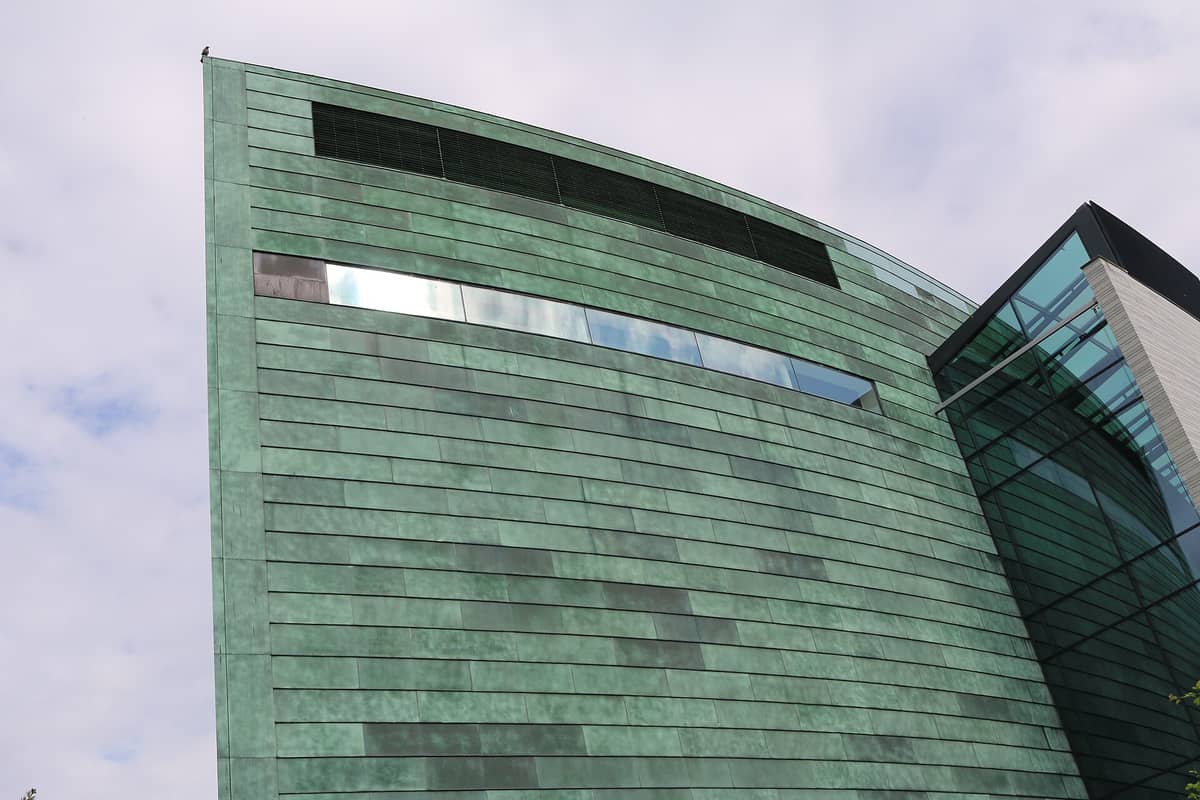
Kumu sits at the northwestern edge of Kadriorg, the elegant parkland district east of central Tallinn. The building is wedged between Kadriorg Park and the limestone escarpment that separates the park from the Lasnamäe plateau above. That geological feature is not incidental. Finnish architect Pekka Vapaavuori designed the seven-storey structure to step down into the cliff face, making it largely invisible from the park itself. You approach along a formal gravel path through birch trees, and the building reveals itself gradually: a curving copper-and-glass facade that catches light differently at every hour of the day.
💡 Local tip
Budget tip: Watch for special discount campaigns such as Museum Night or other promotional days advertised by the Art Museum of Estonia. This is the best value way to visit and the museum is rarely crowded on weekday evenings.
The Architecture: Built Into the Cliff
The Kumu building won the European Museum of the Year Award in 2008, recognising both the museum’s collections and its distinctive architecture. Vapaavuori's design distributes seven floors across the limestone slope, with the upper levels flush with the park and the lower levels descending into the escarpment. The result is a building that feels larger on the inside than any exterior glimpse would suggest.
The primary facade material is local limestone, giving the building a warm, slightly sandy tone that changes dramatically depending on the weather. On overcast winter days the stone looks grey and monolithic. On clear summer mornings it turns pale gold. Glass panels and copper detailing run along the curved roofline. Inside, the atrium is genuinely impressive: a tall, light-filled space that orients visitors before they enter the galleries. Natural light penetrates deep into the building through skylights and glazed corridors, which matters because it creates a contemplative quality most large museums struggle to achieve with artificial lighting alone.
If architecture interests you at all, allow time to walk around the building's exterior before going inside. The rear elevation, visible from the upper terrace, reveals the full seven-storey drop into the cliff. There is also a rooftop terrace accessible from the upper floors that offers a view across the park canopy toward Kadriorg Palace, though it is not always open.
Tickets & tours
Hand-picked options from our booking partner. Prices are indicative; availability and final rates are confirmed when you complete your booking.
Tallinn's art and culture tour with a local
From 62 €Instant confirmationFree cancellationArchitectural walking tour of Tallinn with a Local
From 177 €Instant confirmationFree cancellationCity Sightseeing hop-on hop-off bus tour of Tallinn
From 60 €Instant confirmationFree cancellationSelf-guided Discovery Walk of Tallinn city contrasts beyond the medieval walls
From 26 €Instant confirmationFree cancellation
The Collection: Estonian Art from 1700 to Now
The permanent collection covers Estonian art from the 18th century to the contemporary period. The chronological hang begins with portraits and landscapes from the period when Estonia was part of the Russian Empire, moves through the national awakening of the late 19th century, and arrives at the modernist experiments of the 1920s and 30s, which are among the most interesting rooms in the building. Estonian artists of that era were working in dialogue with German Expressionism and Scandinavian modernism, producing work that is relatively unfamiliar to international visitors but rewards careful attention.
The Soviet-era galleries occupy a significant portion of the permanent collection. This section is handled with unusual honesty: it covers both officially sanctioned socialist realism and the underground or semi-underground work that circulated privately. The contrast between the two is instructive and, at times, genuinely moving. Works that were made to be hidden, or that were only shown in private apartments, carry a different kind of weight than museum-commissioned canvases. For visitors interested in the region's 20th-century history, this section of Kumu offers context that no amount of Old Town walking will provide.
The contemporary floors host rotating temporary exhibitions alongside the permanent display. These vary considerably in quality and subject, so it is worth checking the current program on the official site before visiting. Kumu also hosts temporary shows that address wider Baltic and Northern European art scenes, occasionally making it a destination in its own right for visitors already familiar with Estonian art. For a broader picture of how Estonian cultural history fits together, Tallinn City Museum provides useful historical context that complements what you see here.
How the Experience Changes by Time of Day
Morning visits, especially on weekdays, are the quietest. The atrium fills with natural light by mid-morning, and the galleries are largely empty before noon. This is when the building's spatial quality is most apparent. You can stand in front of a large canvas without anyone else in the room, which is a rarity in any major European museum.
Thursday evenings, when the museum stays open until 20:00, have a noticeably different atmosphere. Local visitors tend to come after work, and the gallery takes on a more relaxed, social quality. The cafe is usually busier and the noise level rises slightly. This is not necessarily worse, just different. If you prefer solitude with art, morning is better. If you like the sense of a museum as a living part of a city, Thursday evening is worth trying.
Weekend afternoons bring the largest crowds, concentrated mostly in the temporary exhibition floors. The permanent collection galleries remain relatively calm even then, because many casual visitors do not realize how extensive the permanent holdings are and move quickly through them toward the featured show. If you walk the permanent galleries first and leave the temporary exhibition for last, you can largely reverse the usual crowd pattern.
ℹ️ Good to know
Opening hours: Tuesday and Wednesday 10:00–18:00, Thursday 10:00–20:00, Friday to Sunday 10:00–18:00. Closed on Mondays. Always confirm on the official site before visiting, as holiday closures can vary.
Getting There and the Surrounding Area
Tram lines 1 and 3 run from central Tallinn to Kadriorg and are the simplest way to arrive. The tram stops near the park entrance, and Kumu is a 10 to 15 minute walk through the park from there. That walk is worth treating as part of the visit: the tree-lined paths of Kadriorg Park are genuinely pleasant, especially in spring when the chestnuts are in flower or in autumn when the birches turn yellow. In winter, the same walk takes on a starker quality but is still manageable if you dress for the cold.
The museum is also an easy addition to a Kadriorg day that includes Kadriorg Palace and, if you walk a little further east, the Russalka Memorial on the shoreline. The combination of palace, park, and contemporary art museum in a single neighborhood makes Kadriorg the most culturally coherent area of Tallinn outside the Old Town.
Taxis and ride-hailing apps such as Bolt are reliable alternatives if you prefer door-to-door transport. Journey time from Old Town is typically 10 to 15 minutes by car, depending on traffic. There is no significant parking complexity near the museum for those arriving by car.
⚠️ What to skip
The path from the tram stop through the park is mostly flat but includes some uneven cobblestone sections. Visitors with mobility limitations should check the museum's accessibility information directly via kumu.ekm.ee before visiting, as the building spans multiple levels on a cliff slope.
Practical Details and Honest Caveats
Kumu has a cafe on the ground floor that is decent without being remarkable. It serves coffee, light meals, and a changing menu of daily specials. The museum shop carries art books, prints, and design objects, with a good selection of Estonian-language and bilingual publications on Estonian art history. These make more considered souvenirs than anything sold in the Old Town.
Photography is generally permitted in the permanent collection without flash, though some temporary exhibitions restrict it. Labels and interpretive text are available in Estonian and English throughout the museum, so language is not a barrier. The Tallinn Card includes free entry to Kumu, which represents good value if you are already planning to use the card for transport and other museums during your stay.
One honest note: visitors expecting the scale or encyclopedic breadth of a major Western European national museum will find Kumu smaller in scope. The collection is deep in Estonian art but, naturally, limited in international holdings. That is not a flaw. It is the museum's explicit purpose. The question to ask before visiting is whether you are genuinely curious about how a small northern European nation developed a visual culture across three centuries of occupation, independence, re-occupation, and eventual freedom. If you are, Kumu is one of the most focused and intelligent museums in the region. If you are looking for an international art survey, it will feel narrow.
For travelers planning a broader cultural itinerary, combining Kumu with the Vabamu Museum of Occupations and Freedom creates a powerful one-two account of Estonia's 20th century: Vabamu covers the political history, Kumu reveals what was happening in the studios.
Insider Tips
- Occasional special discount days, such as Museum Night or other campaigns, can offer significantly reduced admission. Check the Art Museum of Estonia's tickets page before your visit to see if any promotions apply during your stay.
- The upper terrace on the roof-level floors occasionally opens in good weather and provides one of the quieter elevated views across Kadriorg's treetops. Ask at the information desk whether it is accessible on the day you visit.
- The Soviet-era galleries are on the lower floors and are frequently bypassed by visitors who exhaust their energy on the upper levels. Start your visit from the bottom and work upward if you want to see the full collection without fatigue cutting the visit short.
- The atrium cafe tables nearest the window look directly into the birch forest on the park slope. In autumn this view is exceptional and the cafe is rarely full on weekday mornings.
- Kumu turns 20 in 2026 and has been running a year-long anniversary program with special exhibitions and events. Check the official site for any scheduled programming tied to this milestone before your visit.
Who Is Kumu Art Museum For?
- Art enthusiasts wanting a serious, focused collection rather than a highlight reel
- Travelers interested in Soviet history and its cultural dimensions beyond political monuments
- Architecture admirers: the building itself justifies the visit independently of the collection
- Rainy or cold-weather days when outdoor sightseeing loses its appeal
- Visitors on a second or third trip to Tallinn who have already covered the Old Town
Nearby Attractions
Other things to see while in Kadriorg:
- Kadriorg Palace
Built by Russian Tsar Peter I in 1718 as a gift for his wife Catherine, Kadriorg Palace is one of the finest Petrine Baroque buildings in Northern Europe. Today it houses the Kadriorg Art Museum and sits within a beautifully maintained park just east of Tallinn's city centre.
- Kadriorg Park
Kadriorg Park is Tallinn's largest and most historically significant urban park, spanning around 70 hectares just east of the city centre. Founded by Russian Tsar Peter I in 1718, it combines formal baroque gardens, swan ponds, mature forest paths, and a cluster of world-class museums. Entry to the park itself is free, and it rewards visitors across all seasons.
- Russalka Memorial
Standing at the edge of Kadriorg Park where the city meets the Gulf of Finland, the Russalka Memorial is a bronze angel atop a granite column, erected in 1902 to honour the sailors lost when the Russian warship Russalka sank in 1893. It is free, open year-round, and takes about 20 to 30 minutes to visit properly.