Tallinn City Museum: Eight Centuries of Urban Life in a Medieval Merchant's House
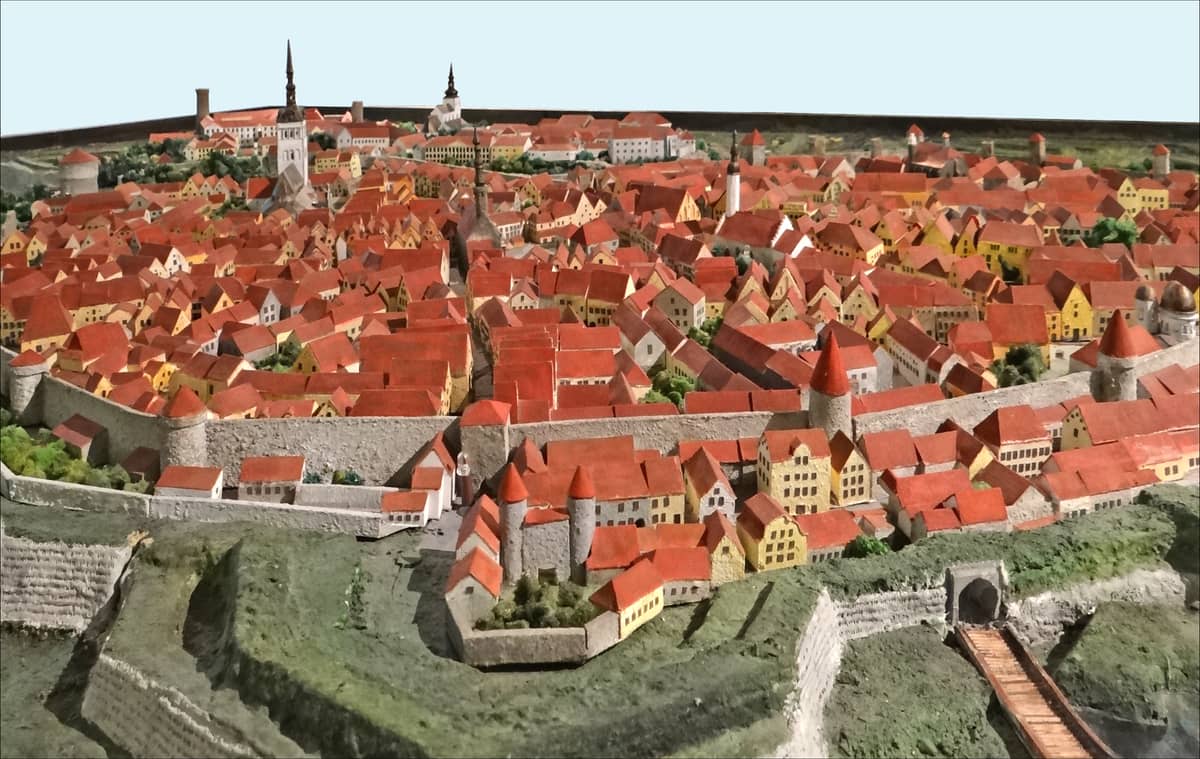
Housed in a 600-year-old merchant's dwelling on Vene Street, the Tallinn City Museum walks visitors through the city's layered history, from its earliest settlements to Soviet occupation and the restoration of independence in 1991. It is one of the few places in Old Town where the building itself is as much the exhibit as what hangs on the walls.
Quick Facts
- Location
- Vene 17, Tallinn Old Town (a few minutes' walk from Town Hall Square)
- Getting There
- Walk from the Old Town tram stops on Viru or Narva mnt; the museum is reachable on foot from almost anywhere in Old Town
- Time Needed
- 1.5 to 2.5 hours for a thorough visit
- Cost
- Approx. €4 adults / €3 concessions / €7 family — verify current prices at linnamuuseum.ee before visiting
- Best for
- History lovers, architecture enthusiasts, travelers who want context beyond cobblestones
- Official website
- www.linnamuuseum.ee/en
⚠️ What to skip
The main building at Vene 17 has been undergoing renovation. Visit Tallinn indicates it is the Tallinn City Life Museum; confirm current status at linnamuuseum.ee or with Visit Tallinn before making this a centerpiece of your itinerary.
What the Tallinn City Museum Actually Is
The Tallinn City Museum, known in Estonian as Tallinna Linnamuuseum, is the city's primary institution dedicated to urban history. Its main building sits at Vene 17 in the heart of Tallinn's Old Town, a few minutes on foot from Town Hall Square along a street whose name, Vene (meaning 'Russian'), hints at the medieval trading networks that once pulsed through this part of the city. The institution was founded in 1937 as the Historic Museum of the City of Tallinn, though the building it occupies is far older: a medieval merchant's dwelling that has been absorbing Tallinn's history through its limestone walls for centuries.
The exhibitions span five floors and cover Tallinn's past from prehistoric times through to the restoration of Estonian independence in 1991. That 1991 end date is deliberate. This is not a museum about contemporary Tallinn; it is a carefully curated record of how a small Baltic port became one of medieval Europe's most prosperous trading hubs, survived multiple occupations, and eventually reclaimed sovereignty. In recent years the main building has been rebranded the Tallinn City Life Museum, reflecting a shift toward more experiential, thematic presentation rather than strictly chronological display.
The Building: Why the Architecture Matters
Many city museums are housed in purpose-built or adapted 19th-century civic buildings. Vene 17 is different. The structure is a genuine medieval merchant's house, and the physical experience of moving through it, narrow stairwells, uneven floors, low-ceilinged storerooms and tall reception rooms, gives the history on display a tangibility that flat exhibition panels cannot.
Medieval Tallinn was built for trade. Merchants from Lübeck, Riga, Novgorod and beyond converged on this city because of its position on the Gulf of Finland. The house on Vene Street would have been a workplace, a warehouse and a residence simultaneously: goods stored below, business conducted in the middle floors, family life arranged above. Walking those floors with that context in mind makes the exhibits considerably more absorbing than they might seem from a museum brochure.
If the architecture of Old Town interests you more broadly, the Tallinn Town Hall and the Great Guild Hall nearby offer complementary perspectives on how medieval merchant society organized itself in stone.
Tickets & tours
Hand-picked options from our booking partner. Prices are indicative; availability and final rates are confirmed when you complete your booking.
Self-guided Discovery Walk of Tallinn city contrasts beyond the medieval walls
From 26 €Instant confirmationFree cancellationTallinn's art and culture tour with a local
From 62 €Instant confirmationFree cancellationHistorical walking tour of Tallinn with a local
From 599 €Instant confirmationFree cancellationIntroductory walking tour of Tallinn with a local guide
From 109 €Instant confirmationFree cancellation
What You Will See: The Permanent Collection
The collection moves through Tallinn's history in broad thematic and chronological arcs. Early sections deal with the prehistoric and medieval foundations of the city, including material culture, trade goods, and the social hierarchies of Hanseatic Tallinn (known then as Reval). The city was a member of the Hanseatic League, the medieval trading confederation that stretched from Bruges to Novgorod, and at its peak it was one of the wealthiest cities on the Baltic. This period is presented with artifacts, maps, and reconstructed interiors.
The later floors bring the narrative through Swedish and Russian imperial rule, through the first period of Estonian independence in the 1920s and 1930s, and then into the darker chapters of Soviet occupation. The Soviet-era material is handled with seriousness: everyday objects, documents, photographs, and spatial installations that convey how occupation restructured daily life in a city that had known relative prosperity. The 1991 end point, when Estonia declared the restoration of its independence, gives the collection a clear narrative arc with a definitive conclusion.
💡 Local tip
Allow at least 90 minutes for the permanent collection alone. The five-floor layout means visitors who try to rush tend to miss the nuanced thematic rooms on the upper floors, which many find the most affecting part of the visit.
When to Visit and What to Expect at Different Times
The museum sits on Vene Street, which is quieter than the main Old Town pedestrian arteries but still sees steady tourist foot traffic in summer. Mornings on weekdays are the calmest: the school groups and organized tours typically arrive mid-morning, so arriving at opening time gives you the ground floor almost to yourself. By early afternoon on summer Saturdays, the narrow stairwells can become bottlenecks.
In winter, when daylight in Tallinn is short and outdoor attractions lose some of their appeal, the museum becomes one of the most rewarding places to spend two hours. The thick stone walls hold the cold out, the rooms are small enough to feel intimate rather than cavernous, and the crowd is thin enough that you can stop and read exhibit text without someone standing at your shoulder. If you are visiting during the Christmas market period, pairing the museum with a walk through Old Town in the early evening is a particularly effective combination.
For guidance on timing your overall trip, see the best time to visit Tallinn guide, which breaks down what each season offers across the city.
Getting There and Practical Details
Vene 17 is in the lower town of Old Town, roughly three to four minutes on foot from Town Hall Square. From the Viru Gate, the main pedestrian entrance to Old Town from the modern city centre, the walk takes about five to seven minutes through the old street grid. There is no dedicated parking nearby; visitors arriving by car should use the peripheral car parks on the edge of Old Town and walk in.
Public transport options involve trams and buses stopping near Viru or along Narva maantee; from those stops, the Old Town is compact enough that walking to Vene Street takes under ten minutes. The Tallinn Card, which covers admission to many of the city's museums, is accepted here, making it worth calculating whether the card pays off if you are visiting multiple institutions in a short stay.
Details on whether the Tallinn Card makes financial sense for your itinerary are covered in the Tallinn Card guide.
Seasonal opening hours (when fully open): 1 May to 30 September, Monday to Sunday 11:00 to 18:00. From 22 November to 30 April, Tuesday 11:00 to 19:00, Wednesday to Saturday 11:00 to 18:00, and Sunday 11:00 to 16:00. These hours apply to the building when it is operational; given the ongoing renovation status, verify at linnamuuseum.ee before visiting.
Accessibility and Who Should Temper Their Expectations
The medieval structure is genuinely medieval, which means it was not designed with accessibility in mind. Five floors connected by original stone stairways present real challenges for visitors with mobility impairments, those using wheelchairs, or anyone who has difficulty with uneven surfaces and steep steps. If full accessibility is essential, contact the museum directly before visiting to understand which areas can be reached and which cannot.
Visitors expecting a large, modern, multimedia-heavy museum experience may find the scale modest. This is not a sprawling national institution like the Kumu Art Museum across the city; it is a focused, intimate museum in a constrained historic building. Families with very young children who have limited patience for text-based exhibits may find the visit challenging to sustain, though the physical environment of the building itself tends to hold children's attention better than conventional gallery spaces do.
For a broader look at what Tallinn's museum landscape offers, the best museums in Tallinn guide compares the major institutions across the city by type and audience.
Fitting It into Your Tallinn Itinerary
The museum works best as an anchor for an Old Town afternoon rather than as a standalone destination. Pair it with a walk along the Tallinn city wall towers and the nearby St Catherine's Passage, and you have a half-day that covers both the physical fabric and the social history of medieval Tallinn without doubling back on yourself.
If your interest runs to the Soviet chapter of Estonian history specifically, the Vabamu Museum of Occupations and Freedom near Freedom Square handles that period with greater depth and more contemporary exhibition design. The two museums complement rather than duplicate each other.
For a structured route that places the City Museum in the context of the full Old Town experience, the Tallinn Old Town walking tour guide maps out a logical sequence for covering the area's key sites.
Insider Tips
- The ticket desk is visible immediately on arrival, but it is worth pausing to look at the building's original stone facade from the street before going in. Vene 17 has one of the better-preserved medieval merchant facades in the lower town.
- If you are visiting in winter, Tuesday evenings until 19:00 offer an extended window compared to other days. The longer opening hours can make it a good time to visit.
- The museum is part of the Tallinna Linnamuuseum network, which also manages several smaller branch museums around the city. A ticket at the main site sometimes grants reduced entry to affiliated branches; ask at the desk about current combined offers.
- Vene Street itself is worth a slow walk: the name reflects the old Russian merchants' quarter, and several buildings along the block retain medieval or early modern details that most visitors overlook in their rush toward Town Hall Square.
- Photography inside is generally permitted for personal use, but the lighting in the upper-floor rooms is low and warm. A phone with a decent low-light camera will outperform a basic point-and-shoot in the interior spaces.
Who Is Tallinn City Museum For?
- History travelers who want substantive context before exploring Old Town's streets
- Architecture enthusiasts interested in medieval domestic building typology
- Visitors on a second or third trip to Tallinn who have covered the headline outdoor sights
- Travelers visiting in winter or during rain when outdoor exploration is less appealing
- Anyone following Estonian history from the Hanseatic era through to 1991 independence
Nearby Attractions
Other things to see while in Tallinn Old Town:
- Alexander Nevsky Cathedral
Rising above Toompea Hill with five gilded onion domes and a facade that dominates every Old Town panorama, Alexander Nevsky Cathedral is Tallinn's most visually assertive building. Built between 1895 and 1900, it remains an active Orthodox place of worship and a window into the city's layered Russian and Estonian history.
- Danish King's Garden
Tucked into the western slope of Toompea hill, the Danish King's Garden is a small, free public park woven into Tallinn's medieval fortifications. Open around the clock and steps from the Old Town's main streets, it offers a rare moment of calm alongside ancient towers and stone walls with an 800-year-old backstory.
- Fat Margaret
Fat Margaret (Paks Margareeta) is a squat, round cannon tower that has guarded the northern gate of Tallinn's Old Town since the early 16th century. Today it houses the Estonian Maritime Museum, with exhibits on seafaring history and a rooftop terrace overlooking the harbour. It is one of the few surviving medieval structures in Tallinn where you can explore both the architecture and a well-curated permanent collection under the same roof.
- Freedom Square
Freedom Square sits at the southern edge of Tallinn Old Town, anchoring the city's civic identity with the striking War of Independence Victory Column. Open around the clock and free to enter, it serves as a gathering point for national celebrations, winter markets, and everyday Tallinn life.