Tallinn City Wall: A Living Fortress in the Heart of Old Town
One of the best-preserved medieval defensive circuits in Northern Europe, the Tallinn City Wall stretches roughly 1.85 km around the Old Town and still stands to its original height in several sections. Street-level access is free year-round, while paid tower climbs offer a closer look at centuries of military engineering.
Quick Facts
- Location
- Tallinn Old Town (Vanalinn), Tallinn, Estonia
- Getting There
- 5–10 min walk from Balti jaam (Baltic Station); Old Town is compact and entirely walkable from the city centre
- Time Needed
- 45 min for a street-level circuit; 2 hrs if visiting multiple towers
- Cost
- Free at street level; tower sections approx. €3–€6 per person (verify with operator)
- Best for
- History lovers, photographers, architecture enthusiasts, and curious walkers
- Official website
- www.visittallinn.ee/eng/visitor/see-do/neighbourhoods/old-town
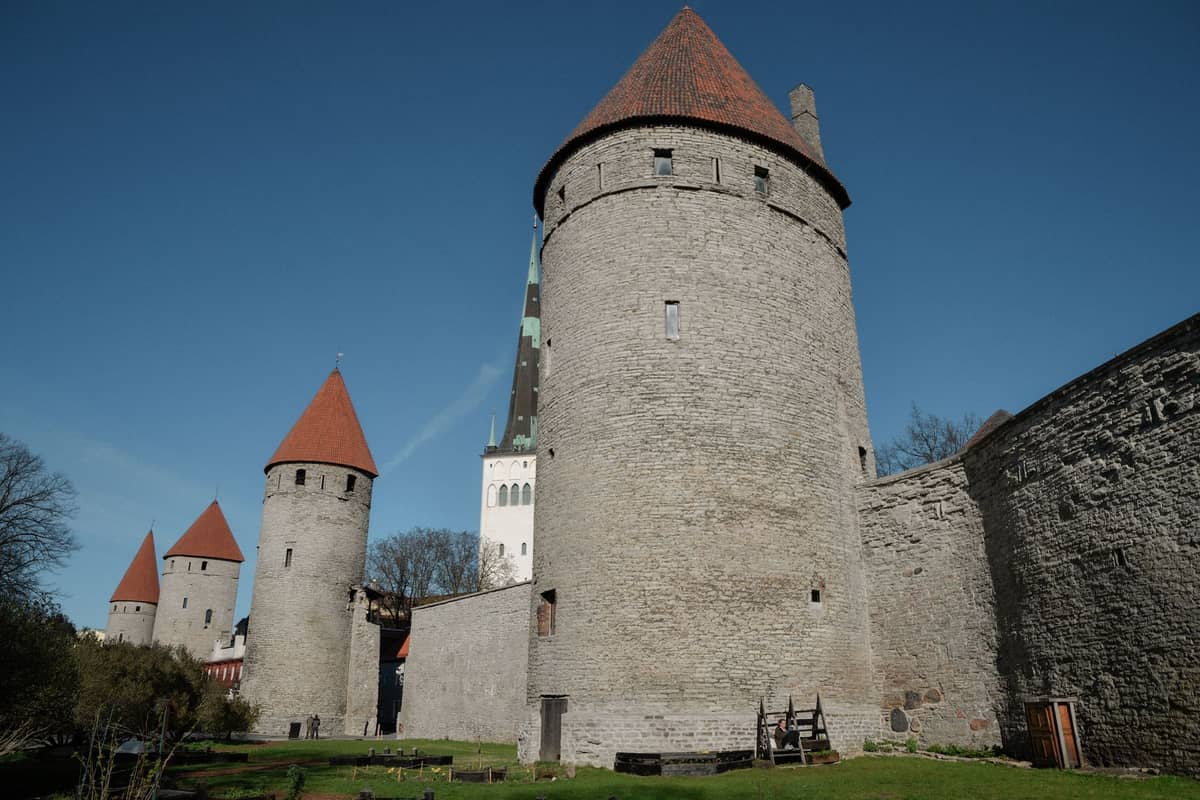
What the Tallinn City Wall Actually Is
The Tallinn City Wall, known in Estonian as Tallinna linnamüür, is a medieval limestone fortification that once formed a complete defensive ring around the Lower Town. Today roughly 1.85 km of the original 2.4 km circuit survives, along with approximately 26 of the original towers. That survival rate is extraordinary by any European standard, and it is a significant reason why Tallinn's Old Town carries UNESCO World Heritage status.
The wall does not sit behind a fence or a ticket booth. It rises directly from the city streets, and in several places buildings have been constructed right up against it, giving the impression that medieval Tallinn simply never finished growing. Walking along Laboratooriumi or Suur-Kloostri streets, the wall looms two or three storeys above you, its limestone blocks worn smooth in places, dark with lichen in others. It feels less like a monument and more like civic infrastructure that never became obsolete.
💡 Local tip
The entire street-level perimeter of the wall is free to walk at any time of day or night. You do not need to buy a ticket to appreciate the bulk of this attraction.
Seven Centuries of Defensive History
Construction began in earnest around 1265 when Margaret Sambiria ordered the first circuit of walls, a section that became known as the Margaret Wall. This was not a finished fortress but a starting point. Over the following 150 years, the city kept building. By the early 15th century, the wall had reached its most complete form: a double-ringed circuit of towers, gates, and curtain walls reinforced with an outer wall and moat system on the most exposed approaches.
The towers were not decorative. Each one was designed to allow defenders to fire along the curtain wall in both directions, eliminating dead ground. The spacing between them was deliberate. Some towers were controlled by specific guilds, who were responsible for their maintenance and defense, which created an unusual civic stake in the city's military readiness. The Brotherhood of Blackheads, the Great Guild, and other merchant associations all had designated sections.
For broader context on how this fortification fits into Tallinn's medieval story, the Tallinn medieval history guide covers the full arc from Danish conquest through the Hanseatic period.
As artillery improved through the 16th century, high stone walls became a liability rather than an asset. Tallinn's wall survived precisely because the city never faced a sustained modern siege that would have required its demolition. Later centuries saw sections dismantled for construction materials or absorbed into private buildings, but enough remained that by the 19th century the wall had acquired romantic status rather than military relevance.
Tickets & tours
Hand-picked options from our booking partner. Prices are indicative; availability and final rates are confirmed when you complete your booking.
Self-guided Discovery Walk of Tallinn city contrasts beyond the medieval walls
From 26 €Instant confirmationFree cancellationTallinn's art and culture tour with a local
From 62 €Instant confirmationFree cancellationHistorical walking tour of Tallinn with a local
From 599 €Instant confirmationFree cancellationIntroductory walking tour of Tallinn with a local guide
From 109 €Instant confirmationFree cancellation
The Street-Level Experience: Walking the Circuit
The most rewarding approach is a counterclockwise circuit starting from Viru Gate, the two surviving gatehouse towers on the eastern edge of Old Town. From here, heading north along Müürivahe Street, you walk directly at the base of the wall. In summer, local craftspeople and vendors set up a row of stalls against the wall's inner face here, using the stone as a windbreak. The smell of smoked wool and leather mingles with coffee from nearby cafes. It is genuinely pleasant in a way that does not feel performed for tourists.
Continuing northwest past the Dominican Monastery ruins, the wall begins to show its best-preserved sections. On Laboratooriumi Street, three towers, Loewenschede, Plate, and Sauna, are open to visitors for a fee (approximately €3–€6; verify current prices directly with the operator before visiting). The staircase inside is narrow stone spiral, and the ceilings are low. If you are tall, bring your attention to the doorframes. The views from the top across the red rooftops of the Old Town are clear on a good day, though the window slits are medieval-width and designed for arrow loops, not panoramic photography.
⚠️ What to skip
Tower interiors involve steep spiral staircases with no handrails on all sections. They are not suitable for visitors with limited mobility and may feel claustrophobic in tight spaces. Children should be supervised carefully.
The western and southern sections of the wall are less visited and worth seeking out. Along Suur-Kloostri and Väike-Kloostri streets, the wall stands tall against a quieter residential backdrop, with fewer crowds and better light in the afternoon hours. Some towers on this stretch are incorporated into private buildings or storage areas and are not open to the public, which is part of the appeal. This is a city wall that has been lived with, not museumified.
The wall circuit connects naturally to the Viru Gate, one of the most photographed entry points to Old Town, and a logical start or end for the walk.
How the Wall Changes Through the Day
Early morning, before 8 am, the wall belongs to dog walkers and the occasional jogger. The light in summer hits the limestone at an oblique angle, and the texture of the stone is far more visible than it becomes once the sun climbs. If you are interested in photography, the eastern-facing sections near Viru Gate are lit well between 7 and 9 am.
By mid-morning, tour groups begin arriving, and the Müürivahe craft market fills with foot traffic. The tower sections at Laboratooriumi attract steady visitor flow from around 11 am onward through the afternoon. The towers are open primarily from spring through autumn, typically around 11:00 to 18:00, though these hours may shift by season and operator. Check current schedules before planning a specific tower visit.
In the evening, after the day-tour coaches have left, the wall takes on a different quality. The stone glows amber under the Old Town's streetlights, and the crowd thins significantly. The western sections near Kiek in de Kök are particularly atmospheric at dusk. If you are visiting in winter, the wall is accessible year-round at street level, and the snow-covered ramparts are genuinely striking, though the towers may be closed.
For a broader overview of elevated vantage points that pair well with a wall circuit, the best viewpoints in Tallinn guide includes several spots that are within easy walking distance.
Connecting the Wall to Nearby Attractions
The wall does not exist in isolation. Kiek in de Kök, the powerful artillery bastion at the southwestern corner of the circuit, now operates as a museum with subterranean bastion tunnels you can enter with a separate ticket. The name translates roughly as 'peek into the kitchen' in Low German, a reference to the tower's height and the view it once gave into the chimneys and domestic life of the town below.
The Kiek in de Kök tower and bastions are worth combining with a wall walk, especially if you want indoor historical exhibits to complement the outdoor circuit.
A short walk from the northern towers leads to the Fat Margaret cannon tower at the harbour entrance, technically a separate structure from the main wall but part of the same defensive logic. It now houses the Estonian Maritime Museum.
The entire Old Town is compact enough that the wall circuit can be integrated into a broader half-day exploration without feeling rushed. From Viru Gate to Toompea Hill and back covers the major anchors of medieval Tallinn in a single morning if you start early.
Practical Details and Who Should Know What
Footwear matters more than most people expect. The cobblestone streets along the wall perimeter, particularly on Müürivahe and the northern approach to Laboratooriumi, are uneven and can be slippery in wet weather. Flat, closed shoes are recommended over sandals or heels.
There is no single entrance or ticket office for the wall as a whole. The Nunna-Sauna-Kuldjala tower complex on Laboratooriumi Street is one organised access point. Another commonly cited entry for a wall climb is near the corner of Suur-Kloostri and Väike-Kloostri streets. Signage in the Old Town is generally clear, and the wall is hard to miss once you are in the vicinity.
If you are visiting on a tight budget, the wall pairs well with other free attractions covered in the free things to do in Tallinn guide.
ℹ️ Good to know
The Tallinn Card includes entry to several Old Town museums and towers. If you plan to visit multiple paid attractions, it may reduce your total cost. Verify current inclusions at visittallinn.ee before purchasing.
Rain affects the experience noticeably. The streets along the wall base can flood briefly in heavy downpours, and the tower interiors, while sheltered, smell strongly of damp stone. A light waterproof layer is sensible for most months outside high summer. Conversely, a fresh coat of rain does extraordinary things to the colour of the limestone, turning it from pale grey to deep charcoal with veins of orange.
Visitors who prefer polished, fully interpreted museum experiences may find the street-level wall underwhelming without context. The stones are simply there, without extensive panels or audio guides. If that sounds like a limitation rather than a feature, the combination of Kiek in de Kök's basement exhibition and the Tallinn City Museum will provide the structured narrative layer that the wall itself does not supply.
Insider Tips
- The section of wall on Müürivahe Street facing the craft market is photographed relentlessly from the inside. Cross to the opposite pavement for an unobstructed exterior shot that most visitors never take.
- The Nunna-Sauna-Kuldjala towers are at their quietest immediately after opening, around 11:00-11:30. Arrive then to climb without queueing on the staircase, which is only wide enough for one person at a time.
- The western wall sections near Suur-Kloostri and Väike-Kloostri streets see a fraction of the foot traffic of the northern circuit. If you want the wall mostly to yourself, start there.
- In late October and November, before the Christmas market transforms Town Hall Square, the wall is often completely free of tour groups. The light is low and golden, and the crowds are genuinely sparse.
- Look for the cannonball pockmarks still visible on several tower surfaces. They are not marked or interpreted, but they are real, and spotting them is one of the small pleasures of paying attention to the stonework.
Who Is Tallinn City Wall For?
- History and architecture enthusiasts who want to read a city through its physical remains rather than through museum labels
- Photographers working in early morning or evening light on textured stone and medieval rooflines
- Walkers who want a structured circuit that connects the major anchors of Old Town without requiring a guided tour
- Budget travelers who want a significant attraction at zero cost at street level
- Families with older children who can handle uneven cobblestones and steep tower staircases
Nearby Attractions
Other things to see while in Tallinn Old Town:
- Alexander Nevsky Cathedral
Rising above Toompea Hill with five gilded onion domes and a facade that dominates every Old Town panorama, Alexander Nevsky Cathedral is Tallinn's most visually assertive building. Built between 1895 and 1900, it remains an active Orthodox place of worship and a window into the city's layered Russian and Estonian history.
- Danish King's Garden
Tucked into the western slope of Toompea hill, the Danish King's Garden is a small, free public park woven into Tallinn's medieval fortifications. Open around the clock and steps from the Old Town's main streets, it offers a rare moment of calm alongside ancient towers and stone walls with an 800-year-old backstory.
- Fat Margaret
Fat Margaret (Paks Margareeta) is a squat, round cannon tower that has guarded the northern gate of Tallinn's Old Town since the early 16th century. Today it houses the Estonian Maritime Museum, with exhibits on seafaring history and a rooftop terrace overlooking the harbour. It is one of the few surviving medieval structures in Tallinn where you can explore both the architecture and a well-curated permanent collection under the same roof.
- Freedom Square
Freedom Square sits at the southern edge of Tallinn Old Town, anchoring the city's civic identity with the striking War of Independence Victory Column. Open around the clock and free to enter, it serves as a gathering point for national celebrations, winter markets, and everyday Tallinn life.