Great Guild Hall: Tallinn's Medieval Merchant Powerhouse
One of Tallinn's most striking Gothic buildings, the Great Guild Hall at Pikk 17 has anchored the city's merchant quarter since the early 15th century. Today it houses the Estonian History Museum, making it one of the most historically layered stops in the Old Town.
Quick Facts
- Location
- Pikk 17, Tallinn Old Town (Vanalinn)
- Getting There
- Walkable from anywhere in the Old Town; nearest parking at Rannamäe street 5 (zone P4)
- Time Needed
- 1 to 2 hours
- Cost
- €13 standard; €9 reduced admission
- Best for
- History enthusiasts, architecture lovers, rainy-day culture
- Official website
- ajaloomuuseum.ee/great-guild-hall
What Is the Great Guild Hall?
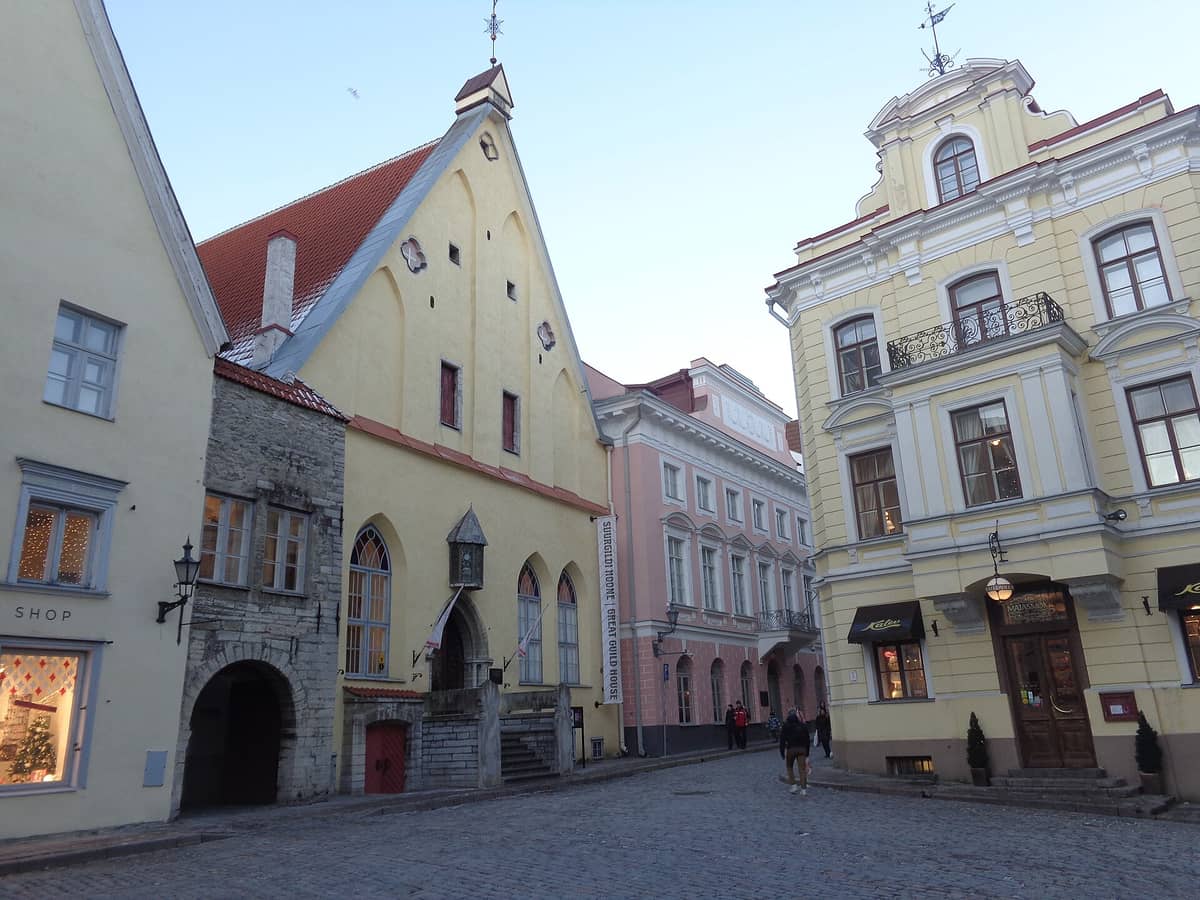
The Great Guild Hall is one of the oldest and most architecturally significant secular buildings surviving in Tallinn's medieval core. Built between 1407 and 1410 for the Great Guild, an association of the city's wealthiest German-speaking merchants, it served as the social and commercial nerve centre of Hanseatic Tallinn for centuries. The building stands at Pikk 17, on the same street as the House of the Blackheads and the Church of the Holy Spirit, making this one of the most historically dense stretches in the entire Old Town.
Since 1952, the building has been home to the Estonian History Museum, which uses the space to trace the full arc of Estonian history from prehistoric times to the present day. The combination of an exceptional Gothic shell and a well-curated permanent collection makes it a more rewarding stop than it might first appear from the outside.
ℹ️ Good to know
Opening hours are seasonal. April through September: Tuesday to Sunday, 10:00–18:00. October through March: Wednesday to Sunday, 10:00–18:00. The hall is closed Mondays year-round, and also closed Tuesdays from October to March.
The Building: Gothic Architecture in a Merchant Context
From the street, the Great Guild Hall announces itself with a broad, symmetrical limestone facade rising above the cobblestones of Pikk Street. The Gothic tracery around the windows and the carved stone portal at the entrance are unusually refined for a non-religious building of this period, which reflects just how much wealth and prestige the Great Guild commanded in 15th-century Tallinn. This was not a warehouse or a trading post. It was a statement.
Step through the entrance and the interior shifts the scale. The main hall features ribbed vaulted ceilings that rise well above head height, supported by stone columns that divide the space without dominating it. The proportions feel both grand and functional, which makes sense given the building's original purpose: hosting merchant assemblies, banquets, and civic negotiations. The stonework is largely intact, and even under museum lighting the medieval character of the space holds. It is one of the few places in the Old Town where you can stand inside a building and feel its original weight and intention.
Architecture enthusiasts visiting Tallinn will find it useful to compare this building with the nearby House of the Blackheads, which served a related but distinct merchant brotherhood. Both are on Pikk Street and both reward close attention, but the Great Guild Hall is the older and architecturally purer of the two.
Tickets & tours
Hand-picked options from our booking partner. Prices are indicative; availability and final rates are confirmed when you complete your booking.
Self-guided Discovery Walk of Tallinn city contrasts beyond the medieval walls
From 26 €Instant confirmationFree cancellationTallinn's art and culture tour with a local
From 62 €Instant confirmationFree cancellationHistorical walking tour of Tallinn with a local
From 599 €Instant confirmationFree cancellationIntroductory walking tour of Tallinn with a local guide
From 109 €Instant confirmationFree cancellation
The Estonian History Museum: What You'll Actually See
The permanent exhibition covers Estonian history from the Stone Age through to the restoration of independence in 1991 and beyond. The collection is substantial, with objects ranging from Bronze Age artifacts and medieval metalwork to guild documents, period costumes, and material culture from the Soviet occupation. The curation is clear and accessible, with English-language labels throughout, so you do not need a guide to follow the narrative.
The medieval and early modern sections feel most at home in this building. Seeing guild seals, merchant ledgers, and civic silverware displayed in the very kind of hall that once housed such objects creates a coherence that purpose-built museum spaces rarely achieve. The later sections covering the 19th-century national awakening and the 20th-century occupations are informative, though the physical connection between objects and space loosens somewhat as the history moves forward in time.
If you are planning a deeper dive into Estonian history, the Great Guild Hall works well as a first stop before visiting the Vabamu Museum of Occupations and Freedom, which covers the Soviet and Nazi occupation periods in far greater detail and with more interactive exhibits.
💡 Local tip
Buy your ticket at the door or check the museum website for online options. Holders of the Tallinn Card receive free or discounted entry to many Old Town museums, so it is worth calculating whether the card pays off for your itinerary before purchasing individual tickets.
When to Visit and What to Expect by Time of Day
Pikk Street sees a steady flow of visitors during summer months, particularly in the late morning after cruise ship passengers from Tallinn's port have made their way into the Old Town. Inside the Great Guild Hall, crowd levels are generally manageable compared to the exterior streets, but the main hall can feel close during peak summer weekends when school groups and tour groups overlap. Arriving at opening time, 10:00, gives you the best chance of having the vaulted interior largely to yourself.
Winter visits have a different character entirely. Between October and March, the building is closed Tuesdays as well as Mondays, so plan accordingly. On a grey winter afternoon, the stone interior is atmospheric in a way that summer visits rarely match. The low light through the Gothic windows, the near-silence in the halls, and the absence of tour groups make the building feel genuinely old. If you are visiting Tallinn in the colder months, this is one of the indoor stops that earns its place.
For more context on visiting Tallinn across different seasons, the guide on the best time to visit Tallinn covers weather patterns, crowd dynamics, and seasonal event calendars in detail.
Getting There and Practical Details
The Great Guild Hall sits on Pikk Street in the lower part of Tallinn's Old Town, a few minutes' walk from Viru Gate, the main pedestrian entry point from the modern city centre. From Town Hall Square, Pikk Street runs roughly northward and the building is easy to find without navigation. The address is Pikk 17, 10123 Tallinn.
There is no dedicated transit stop at the door, but the Old Town is compact enough that public transport connections at the edge of the walled city are a short walk away. If you are driving, the nearest parking is at Rannamäe street 5 (zone P4), at the intersection of Suurtüki and Rannamäe streets. Paid parking fills quickly during summer weekends, so walking or using public transport is the more reliable option.
The building is a medieval structure with original stone floors and stairs, and some areas involve uneven surfaces. Visitors with mobility requirements should contact the museum directly before their visit at +372 696 8690 or post@ajaloomuuseum.ee to confirm current accessible routes.
⚠️ What to skip
The Great Guild Hall is closed every Monday year-round, and also closed on Tuesdays from October through March. Arriving on one of these days means a locked door. Double-check before you go, especially around public holidays.
Fitting It Into Your Old Town Itinerary
The Great Guild Hall pairs naturally with other buildings along Pikk Street. The Church of the Holy Spirit is a short walk away and offers one of the best-preserved medieval interiors in the city. Further along, St. Olaf's Church dominated the medieval skyline and remains a key reference point for understanding how the city looked in its Hanseatic prime.
If you are working through a structured visit to the Old Town, the Tallinn Old Town walking tour guide maps out a logical sequence that includes Pikk Street and integrates the Great Guild Hall into a half-day route with minimal backtracking.
Allow 90 minutes for a thorough visit to the museum, or a focused 45 minutes if you are primarily interested in the architecture and the medieval collection. The building's cafe or seating areas, if available on the day, make a useful pause point mid-visit. After the museum, the rest of Pikk Street and the surrounding lanes reward slow walking: the textures of the limestone facades, the worn cobblestones, and the irregular rooflines are as much a part of the experience as the objects inside.
Is It Worth It?
The Great Guild Hall is not the most dynamic museum in Tallinn. Visitors expecting interactive displays, audiovisual drama, or a sleek modern experience may find the permanent exhibition pacing slow in places. The €13 standard ticket is also at the higher end for a single Old Town attraction, which is worth factoring into a budget-conscious itinerary.
That said, for anyone interested in Baltic or Northern European medieval history, the building itself justifies the admission. There are very few Gothic secular interiors of this quality open to the public anywhere in the region, and the museum curates its objects carefully. Children and visitors primarily interested in contemporary culture or outdoor experience will likely find better value elsewhere in the city.
If cost is a consideration, the Tallinn Card covers entry to this museum along with many others and can represent good value if you are planning a full day of cultural visits across the Old Town and beyond.
Insider Tips
- Arrive at 10:00 on a weekday, especially outside July and August. The vaulted main hall is quietest in the first hour and the quality of light through the Gothic windows is at its best in the morning.
- Look up when you enter the main hall. The ribbed vaulting is the single most impressive architectural feature and it is easy to miss if you move straight toward the exhibits.
- The medieval and early modern sections of the permanent exhibition are the strongest. If you are short on time, prioritize these floors over the later historical periods, which are covered in greater depth at other Tallinn museums.
- The building is on Pikk Street, which has several other significant historic buildings within a five-minute walk. Plan to walk the full length of the street rather than treating the Great Guild Hall as an isolated stop.
- If you are visiting in winter, note the Tuesday closure. The museum's seasonal hours trip up many visitors who assume weekday access from October onward.
Who Is Great Guild Hall For?
- History enthusiasts with a specific interest in medieval Baltic trade and the Hanseatic League
- Architecture lovers who want to experience intact Gothic civic interior spaces
- Travelers on a rainy day looking for a substantial indoor stop in the Old Town
- First-time visitors to Estonia who want broad historical context before exploring other sites
- Anyone combining a walk along Pikk Street with visits to the Holy Spirit Church and the House of the Blackheads
Nearby Attractions
Other things to see while in Tallinn Old Town:
- Alexander Nevsky Cathedral
Rising above Toompea Hill with five gilded onion domes and a facade that dominates every Old Town panorama, Alexander Nevsky Cathedral is Tallinn's most visually assertive building. Built between 1895 and 1900, it remains an active Orthodox place of worship and a window into the city's layered Russian and Estonian history.
- Danish King's Garden
Tucked into the western slope of Toompea hill, the Danish King's Garden is a small, free public park woven into Tallinn's medieval fortifications. Open around the clock and steps from the Old Town's main streets, it offers a rare moment of calm alongside ancient towers and stone walls with an 800-year-old backstory.
- Fat Margaret
Fat Margaret (Paks Margareeta) is a squat, round cannon tower that has guarded the northern gate of Tallinn's Old Town since the early 16th century. Today it houses the Estonian Maritime Museum, with exhibits on seafaring history and a rooftop terrace overlooking the harbour. It is one of the few surviving medieval structures in Tallinn where you can explore both the architecture and a well-curated permanent collection under the same roof.
- Freedom Square
Freedom Square sits at the southern edge of Tallinn Old Town, anchoring the city's civic identity with the striking War of Independence Victory Column. Open around the clock and free to enter, it serves as a gathering point for national celebrations, winter markets, and everyday Tallinn life.