Vabamu – Museum of Occupations and Freedom: Estonia's Most Museum of Occupations and Freedom
Vabamu – Museum of Occupations and Freedom confronts five decades of Soviet and Nazi occupation with unflinching honesty, personal testimony, and thoughtfully designed exhibition spaces. Located at the foot of Toompea Hill, it is one of the most intellectually serious museums in the Baltic states.
Quick Facts
- Location
- Toompea 8, Tallinn – at the base of Toompea Hill, edge of Old Town
- Getting There
- 10-minute walk from Viru Gate; tram and bus stops on Kaarli Boulevard nearby
- Time Needed
- 2–3 hours minimum; allow longer if you engage with the interactive stations
- Cost
- Adults €15 | Students & pensioners €10 | Family €30 (verify before visiting)
- Best for
- History lovers, those curious about Soviet life, travellers who want context beyond cobblestones
- Official website
- vabamu.ee/en
What Vabamu Actually Is
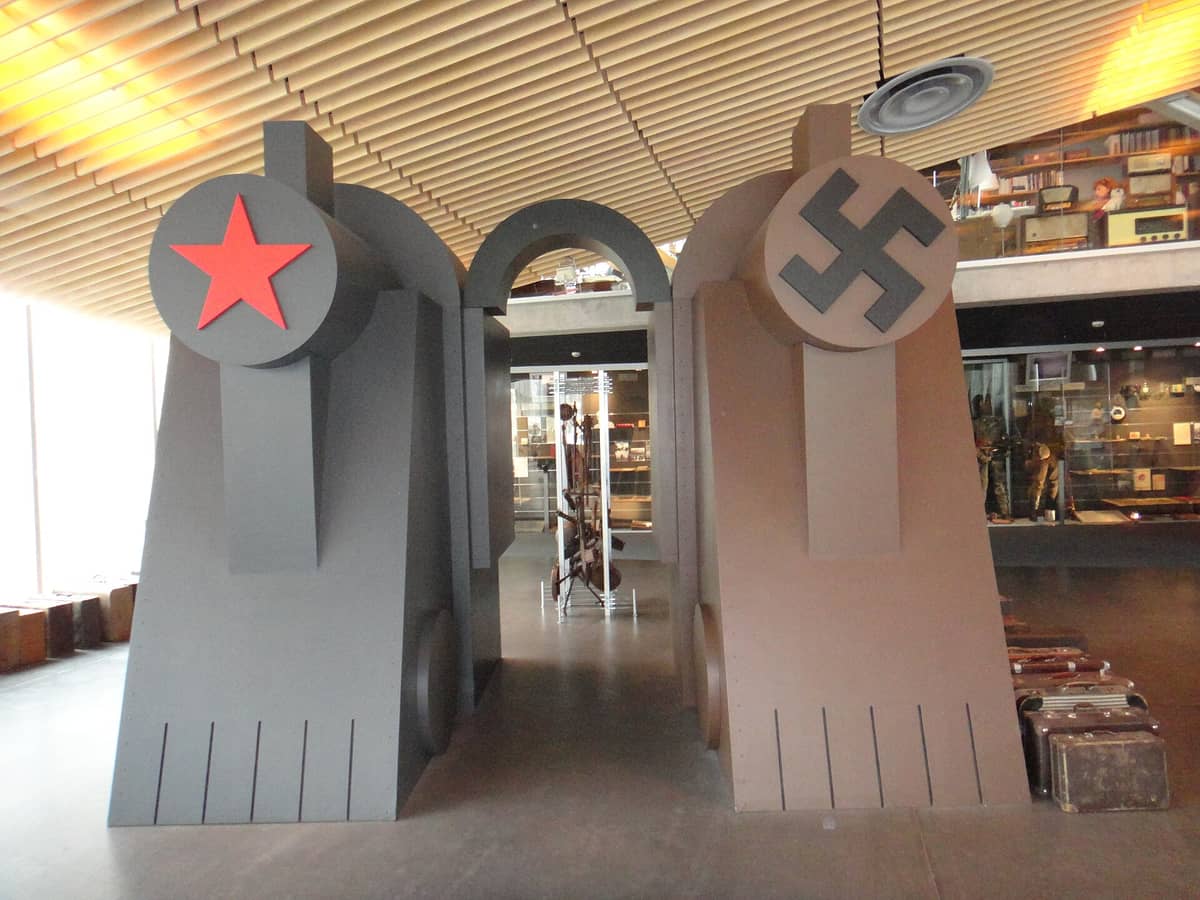
Vabamu – Museum of Occupations and Freedom is Estonia's primary institution dedicated to the years 1940–1991, when the country endured two separate occupations: first by the Soviet Union, then briefly by Nazi Germany, and then by the Soviets again for nearly five decades. The museum was originally opened on 1 July 2003 under the name Museum of Occupations, supported significantly by Olga Kistler-Ritso, an Estonian-American philanthropist whose family had fled during the war. In 2018, a major expansion and rebranding transformed it into Vabamu, a word combining the Estonian roots for 'freedom' and 'us'. The new name signals a deliberate shift in emphasis: this is not only a catalogue of suffering but a museum about the human experience of living under occupation and the long, complicated road to freedom.
The building sits at Toompea 8, at the corner of Toompea Street and Kaarli Boulevard, right where the Old Town's medieval hill meets the modern city grid. It is a deliberately contemporary structure, which creates an interesting visual conversation with the limestone fortifications rising behind it. From the outside, the architecture announces that this is a place designed for the present, not preserved as a relic.
ℹ️ Good to know
Opening hours change seasonally. From 1 May to 30 September the museum opens daily 10:00–18:00. From 1 October to 30 April it opens Tuesday to Sunday only, 11:00–18:00. Check vabamu.ee/en/visit-us/ before you go, especially on Mondays in winter, when it is closed.
Walking Through the Exhibition
The permanent exhibition is organized chronologically and thematically across multiple floors, moving from the prewar Republic of Estonia through the Soviet deportations, the German occupation, the post-war Stalinist period, the long years of late Soviet stagnation, and finally to the Singing Revolution and the restoration of independence in 1991. But what makes Vabamu distinct from a standard historical museum is its scale of personal testimony. Display cases and interactive stations are built around individual objects: a suitcase packed before a deportation, children's toys left behind, handwritten letters smuggled out of Siberia.
The audio and video installations throughout the exhibition feature real Estonians speaking about their own or their families' experiences. You can sit in a recreated Soviet-era apartment interior and listen to accounts of how ordinary life actually functioned under the system: the shortages, the surveillance, the small acts of cultural resistance. These are not dramatized reconstructions. They are oral histories recorded from real witnesses, and that distinction is felt immediately.
Upper-floor galleries deal with the resistance movement, the underground press, and the Singing Revolution, when Estonians formed a 675-kilometre human chain across the three Baltic states in 1989. For visitors who arrive knowing little about this period of history, these sections can be genuinely surprising. For visitors with Estonian heritage, they are frequently deeply moving.
💡 Local tip
Budget at least two hours. Visitors who try to rush through in under 90 minutes consistently report feeling they missed the most important parts. The interactive stations, particularly those with personal testimonies, are where the exhibition earns its reputation.
Tickets & tours
Hand-picked options from our booking partner. Prices are indicative; availability and final rates are confirmed when you complete your booking.
Self-guided Discovery Walk of Tallinn city contrasts beyond the medieval walls
From 26 €Instant confirmationFree cancellationTallinn's art and culture tour with a local
From 62 €Instant confirmationFree cancellationHistorical walking tour of Tallinn with a local
From 599 €Instant confirmationFree cancellationIntroductory walking tour of Tallinn with a local guide
From 109 €Instant confirmationFree cancellation
Time of Day and Crowd Patterns
Vabamu draws a more contemplative, slower-moving crowd than the Old Town's more touristic attractions. Mornings, particularly on weekdays, tend to be quiet. This is the best time to engage with the audio stations without competition for headsets or seating, and the natural light in the upper galleries is softer in the morning hours before midday.
Late mornings and early afternoons on summer weekends bring tour groups, sometimes several at once. The building handles groups reasonably well because the exhibition flows across multiple zones, but the basement-level deportation exhibits and the oral history listening stations can feel congested when a guided group parks itself in the same space. If you are visiting solo or as a couple, arriving when the museum opens or after 15:00 gives you noticeably more room to move through at your own pace.
In winter, the reduced opening days (Wednesday to Sunday) mean that Thursday and Friday mornings are sometimes almost entirely empty. The atmosphere in an empty Vabamu is particularly affecting: the sounds of the testimonies carry in the silence, and there is no background noise from other visitors to break the weight of what you are hearing.
Historical and Cultural Context
Understanding why this museum exists requires understanding what Estonia experienced. Under the Molotov-Ribbentrop Pact of 1939, the Soviet Union and Nazi Germany secretly divided Eastern Europe into spheres of influence. Estonia fell to the Soviet sphere. In June 1940, Soviet troops occupied the country. Mass deportations followed: in June 1941 alone, around 10,000 Estonians were deported to Siberia in a single week. After the German occupation of 1941–1944, the Soviets returned and the deportations resumed. Estonia lost a significant proportion of its population to deportation, execution, and wartime flight. These are not abstract statistics at Vabamu. They are the faces and names on the walls. For broader historical context, the Tallinn medieval history guide and the Tallinn Soviet history guide provide useful background reading before your visit.
The museum is careful to present this history without triumphalism. The post-independence sections acknowledge the complexity of transition, not just its celebration. This measured approach is part of what gives Vabamu intellectual credibility. It does not flatten a complicated history into a simple narrative of victims and villains, even when the historical record is damning.
Practical Details for Visitors
The museum is fully accessible for visitors with mobility impairments, with step-free access confirmed for the main exhibition areas. Staff at the entrance are accustomed to international visitors and communicate comfortably in English. Exhibition labels are available in Estonian and English throughout, and audio guides add additional depth at specific stations.
Admission is €15 for adults, €10 for students and pensioners, and €30 for a family ticket (prices are subject to change; always verify at vabamu.ee before visiting). The Tallinn Card includes free entry to Vabamu, which makes it worth factoring into your planning if you intend to visit multiple museums in a single trip.
Photography is generally permitted in the exhibition, but some areas with personal testimonies and archival materials ask visitors to be considerate. Wide-angle shots of the exhibition design work well; the interplay of natural light and the stark display cases makes for compelling documentary-style images. Flash photography is not appropriate given the nature of the content.
Vabamu sits a short walk from several other significant sites. The Toompea Castle, now home to Estonia's parliament, is visible from the museum entrance. The Kiek in de Kok fortification tower and the city's medieval walls are also within a five-minute walk. If your interest runs toward the darker chapters of the Soviet period, the KGB Prison Cells at the Hotel Viru offers a more visceral, site-specific complement to what Vabamu presents through objects and testimony.
Is Vabamu Right for You?
This is not a light attraction. Vabamu deals with mass deportation, political terror, and the suppression of an entire nation's culture and identity. Visitors who want a cheerful introduction to Tallinn, or who are looking for a quick hour between lunch and their next scheduled stop, will find the experience uncomfortable in ways they were not expecting. That discomfort is largely the point, but it is worth knowing in advance.
Families with children can visit, but parents should think carefully about age-appropriateness. The exhibition does not use graphic imagery gratuitously, but the subject matter of deportation and occupation is genuinely heavy. The museum is probably best suited to teenagers and above. Younger children may struggle to engage with the density of text and audio content, and may find the atmosphere subduing.
For travellers who want to understand the Estonia they are walking through, Vabamu is essential. The cobblestones and medieval towers of Tallinn's Old Town are more legible after two hours spent understanding what happened to the people who lived in these streets in the twentieth century. The beauty of the city takes on a different texture when you know its recent history.
Insider Tips
- The museum's café on the ground floor is worth using as a decompression stop after the heavier sections of the exhibition. Sitting quietly for fifteen minutes before stepping back outside helps with the emotional transition.
- The gift shop carries serious publications on Estonian history, Soviet-era design, and the occupation period that you will not find easily elsewhere in the city. If you are interested in going deeper, budget time to browse the book section.
- If you are visiting in the winter season (October to April), confirm the day of your visit carefully. The museum is closed on Mondays, and arriving that day is a common mistake made by tourists who assume year-round daily opening.
- Tallinn Card holders enter free. If you are already planning to visit Kumu, the Seaplane Harbour, or other paid museums during your trip, the card pays for itself quickly and removes the need to queue for tickets at each venue.
- The second floor oral history stations benefit from good headphones. If you have your own, bring them. The museum provides headsets, but personal earphones make the recorded testimonies feel noticeably more intimate and easier to follow.
Who Is Vabamu – Museum of Occupations and Freedom For?
- Travellers with a serious interest in 20th-century European history
- Visitors who want cultural and historical context before exploring the rest of Tallinn
- Anyone with Estonian, Baltic, or Eastern European family heritage
- History teachers, students, and researchers studying Soviet-era occupation
- Slow travellers who prefer depth over coverage and are willing to spend half a day with a single institution
Nearby Attractions
Other things to see while in Tallinn Old Town:
- Alexander Nevsky Cathedral
Rising above Toompea Hill with five gilded onion domes and a facade that dominates every Old Town panorama, Alexander Nevsky Cathedral is Tallinn's most visually assertive building. Built between 1895 and 1900, it remains an active Orthodox place of worship and a window into the city's layered Russian and Estonian history.
- Danish King's Garden
Tucked into the western slope of Toompea hill, the Danish King's Garden is a small, free public park woven into Tallinn's medieval fortifications. Open around the clock and steps from the Old Town's main streets, it offers a rare moment of calm alongside ancient towers and stone walls with an 800-year-old backstory.
- Fat Margaret
Fat Margaret (Paks Margareeta) is a squat, round cannon tower that has guarded the northern gate of Tallinn's Old Town since the early 16th century. Today it houses the Estonian Maritime Museum, with exhibits on seafaring history and a rooftop terrace overlooking the harbour. It is one of the few surviving medieval structures in Tallinn where you can explore both the architecture and a well-curated permanent collection under the same roof.
- Freedom Square
Freedom Square sits at the southern edge of Tallinn Old Town, anchoring the city's civic identity with the striking War of Independence Victory Column. Open around the clock and free to enter, it serves as a gathering point for national celebrations, winter markets, and everyday Tallinn life.