KGB Prison Cells Tallinn: Inside the Soviet Interrogation Basement
Beneath a quiet street in Tallinn's Old Town lies one of Estonia's most sobering historical sites. The KGB Prison Cells at Pagari 1 preserve the cramped interrogation rooms and holding cells where Soviet security forces detained, questioned, and broke thousands of Estonian citizens during the occupation. Now a museum branch of Vabamu, it offers one of the most direct encounters with totalitarian history available anywhere in the Baltic states.
Quick Facts
- Location
- Pikk 59 (basement entrance), Pagari 1, Tallinn Old Town, Estonia
- Getting There
- Tram 1 or 2 to Linnahall stop, then approx. 5-min walk via Viru Gate and Pikk Street
- Time Needed
- 45–90 minutes
- Cost
- Approx. €10 adult; concessions available. Verify current price at vabamu.ee before visiting.
- Best for
- History travelers, Cold War enthusiasts, those interested in Soviet occupation and human rights
- Official website
- www.vabamu.ee/en
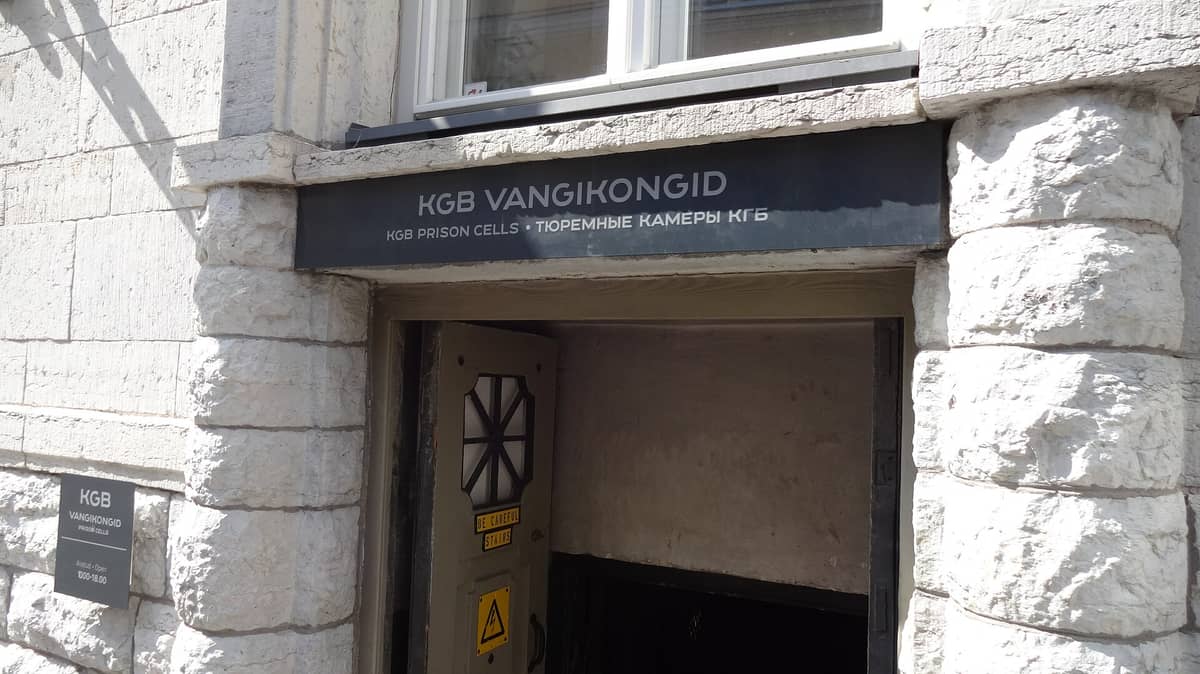
What the KGB Prison Cells Actually Are
The KGB Prison Cells occupy the basement of a building at Pagari 1, with the entrance on Pikk Street in Tallinn's Old Town. The site functioned as the headquarters and pre-trial detention facility of Soviet state security from around 1940 onward, operated first by the NKVD and later the KGB. People arrested for political offenses — real or fabricated — were brought here for interrogation before being sent to labor camps or worse.
The building's history before the Soviets is worth noting. It housed the Estonian Provisional Government in March 1918, and served as the Ministry of War from 1920 to 1940. The Soviet occupation transformed it into something far darker. After Estonia regained independence, the site sat largely untouched for decades before being developed into a memorial museum. In 2017, it became a branch of the Vabamu Museum of Occupations and Freedom, and a permanent exhibition titled "Locked Up Stories: The KGB in Estonia" now occupies the preserved cells.
ℹ️ Good to know
The museum is operated by Vabamu and shares a ticketing system with the main museum. Open May–September Monday–Sunday 10:00–18:00; October–March Wednesday–Sunday 11:00–18:00. April closures for permanent exhibition renovation are typical — check vabamu.ee before your visit.
The Experience of Going Underground
Descending into the KGB Prison Cells is a deliberate physical shift. You leave the cobbled streets of Tallinn's Old Town — tourists with ice cream cones, horse-drawn carriages, the faint smell of wood smoke from a nearby cafe — and enter a narrow staircase that opens into something completely different. The air is cooler. The light is low and institutional. The walls close in.
The cells themselves are small enough that a tall adult must turn sideways to pace them. The doors are heavy metal, each with a viewing slot. The sounds from the street above disappear almost completely. What you're left with is the architecture of isolation: bare concrete, dim bulbs, the silence that was presumably never given to the people held here. It is not melodramatic to say the space communicates something that text cannot.
The permanent exhibition "Locked Up Stories: The KGB in Estonia" uses a combination of original artifacts, personal testimonies, and archival documents to tell the stories of specific individuals who passed through this building. The approach is biographical rather than abstract, which makes it more affecting. You are not reading about Soviet repression in general terms — you are reading about a specific teacher, a specific farmer, a specific student, and the precise mechanisms used against them.
⚠️ What to skip
The basement environment is confined and the subject matter is heavy. Visitors with claustrophobia, or those traveling with young children, should consider this before descending. The space involves narrow corridors and there is no formal accessibility provision for wheelchair users — contact the museum in advance if you have specific mobility needs.
Tickets & tours
Hand-picked options from our booking partner. Prices are indicative; availability and final rates are confirmed when you complete your booking.
Self-guided Discovery Walk of Tallinn city contrasts beyond the medieval walls
From 26 €Instant confirmationFree cancellationTallinn's art and culture tour with a local
From 62 €Instant confirmationFree cancellationHistorical walking tour of Tallinn with a local
From 599 €Instant confirmationFree cancellationIntroductory walking tour of Tallinn with a local guide
From 109 €Instant confirmationFree cancellation
Historical Context: What Happened Here
Estonia was occupied by the Soviet Union twice: briefly in 1940–41, then again from 1944 until independence in 1991. During both periods, Soviet state security organs used the Pagari building as a central instrument of political control. Arrests typically occurred at night. Detainees were held in pre-trial detention — sometimes for months — while interrogators worked to extract confessions, information about associates, or both.
The KGB's role was not purely punitive. It also functioned as an intelligence and surveillance apparatus, and the Pagari building served both functions. Files compiled here fed into deportation lists — most infamously the mass deportations of 1941 and 1949, when tens of thousands of Estonians in total were sent to Siberia. Understanding this broader context is what separates a visit here from dark tourism for its own sake.
For visitors who want to situate this experience within Estonian history more broadly, the Vabamu Museum of Occupations and Freedom on Toompea covers the full arc of both Soviet and Nazi occupations with a larger permanent collection. A combined visit to both sites, ideally on the same day, gives a much more complete picture.
Getting There and Finding the Entrance
The address most commonly cited is Pagari 1, but the entrance visitors use is on Pikk Street — specifically at Pikk 59. Pikk is one of Old Town's main arteries, running from the Lower Town up toward Toompea, so you will almost certainly walk along part of it during any Old Town visit. The entrance to the cells is discreet: a doorway set into a historic building, easily missed if you are not looking for it.
From Tallinn's main transport hub area, trams 1 and 2 stop at Linnahall, from which it is approximately a five-minute walk through Viru Gate and along Pikk Street. From Town Hall Square, the walk is also about five minutes heading north on Pikk.
💡 Local tip
The building exterior gives no dramatic indication of what lies beneath. Look for the museum signage at street level on Pikk Street. If you reach the Church of the Holy Spirit, you've walked slightly too far north — double back.
When to Visit and What to Expect on Arrival
The KGB Prison Cells draw a consistent but not overwhelming crowd. Unlike the main Old Town sights, this is not a place tour groups tend to flood in numbers. Morning visits — particularly on weekday mornings outside summer peak season — offer the quietest experience, and the silence adds to the atmosphere considerably. A large group moving through the narrow corridors diminishes the reflective quality the space naturally has.
Plan for 45 to 90 minutes, depending on how thoroughly you engage with the exhibition texts. The space is not physically large, but the content rewards slow reading. Audio guides or guided tours may be available — check the Vabamu website for current offerings before you visit, as these tend to add meaningful context.
The KGB Prison Cells fit naturally into a broader Soviet history itinerary. The Tallinn Soviet history guide maps out a logical route connecting several relevant sites across the city, including Maarjamäe Palace and the Linnahall complex.
Photography and Practical Notes
Photography is generally permitted in the exhibition areas, though you should confirm at the entrance whether restrictions apply to specific artifacts or documents. The low ambient light means a phone camera will struggle without flash, and flash photography in confined historic spaces is often unwelcome regardless of rules. The architecture itself — the cell doors, the peephole slots, the bare walls — photographs clearly even in low light if you steady against a wall.
There is no gift shop in the conventional sense, and no cafe on site. The compact, serious nature of the museum means most visitors leave quietly and without lingering. Wear comfortable shoes — the surfaces are hard and the stairs can be uneven. There is no coat check, so visiting with a large backpack in high summer is mildly awkward in the narrow passages.
If you are planning a full day of museum visits, the best museums in Tallinn guide helps prioritize based on interest — the KGB Prison Cells pair particularly well with Vabamu or the Tallinn City Museum for those focused on modern history.
Is It Worth Your Time?
The KGB Prison Cells is one of the more emotionally honest attractions in Tallinn. It does not over-explain or dramatize. It does not offer the glossy visitor experience of larger institutions. What it offers instead is direct contact with a very specific history: the physical rooms, the original fixtures, the documented cases of people whose lives were destroyed in this building.
That specificity is both its strength and its limitation. If you have no prior context about the Soviet occupation of Estonia, the experience may feel incomplete — a powerful atmosphere without enough framework to fully interpret it. First-time visitors to Tallinn who are primarily interested in medieval architecture and Old Town charm may find this a jarring detour rather than a natural complement. Those who arrive with some knowledge of Baltic history, or who have already visited Vabamu, will find it quietly devastating in the best possible sense.
For visitors building a full Tallinn itinerary, the 3-day Tallinn itinerary suggests a logical sequence that balances the medieval, the Soviet-era, and the contemporary city without making the trip feel uniformly somber.
Insider Tips
- Visit on a weekday morning outside July and August for the quietest, most atmospheric experience. The sound of your own footsteps in those corridors is part of the point.
- The Vabamu Museum of Occupations and Freedom on Toompea offers a much broader historical framework. Consider visiting Vabamu first, then the Prison Cells — the order matters for comprehension.
- April has seen closures for renovation in recent years. If your visit falls in that month, confirm with vabamu.ee well in advance rather than showing up to a closed door.
- The entrance on Pikk Street is easy to walk past. Look for museum signage at ground level — the building blends into the surrounding historic streetscape with no dramatic exterior markers.
- The Tallinn Card covers admission to many city museums and currently includes the KGB Prison Cells — still check whether it is listed in the current card benefits before buying a separate ticket.
Who Is KGB Prison Cells For?
- Travelers with an interest in Cold War history or Soviet-era Baltic politics
- Those who have already visited Vabamu and want deeper, site-specific context
- History students and researchers looking for primary-location encounters with 20th-century totalitarianism
- Visitors who prefer small, quiet museums over large, crowded attractions
- Anyone spending three or more days in Tallinn and wanting to move beyond the medieval Old Town surface
Nearby Attractions
Other things to see while in Tallinn Old Town:
- Alexander Nevsky Cathedral
Rising above Toompea Hill with five gilded onion domes and a facade that dominates every Old Town panorama, Alexander Nevsky Cathedral is Tallinn's most visually assertive building. Built between 1895 and 1900, it remains an active Orthodox place of worship and a window into the city's layered Russian and Estonian history.
- Danish King's Garden
Tucked into the western slope of Toompea hill, the Danish King's Garden is a small, free public park woven into Tallinn's medieval fortifications. Open around the clock and steps from the Old Town's main streets, it offers a rare moment of calm alongside ancient towers and stone walls with an 800-year-old backstory.
- Fat Margaret
Fat Margaret (Paks Margareeta) is a squat, round cannon tower that has guarded the northern gate of Tallinn's Old Town since the early 16th century. Today it houses the Estonian Maritime Museum, with exhibits on seafaring history and a rooftop terrace overlooking the harbour. It is one of the few surviving medieval structures in Tallinn where you can explore both the architecture and a well-curated permanent collection under the same roof.
- Freedom Square
Freedom Square sits at the southern edge of Tallinn Old Town, anchoring the city's civic identity with the striking War of Independence Victory Column. Open around the clock and free to enter, it serves as a gathering point for national celebrations, winter markets, and everyday Tallinn life.