Maarjamäe Palace: Estonia's History Told Inside a Gothic Revival Manor
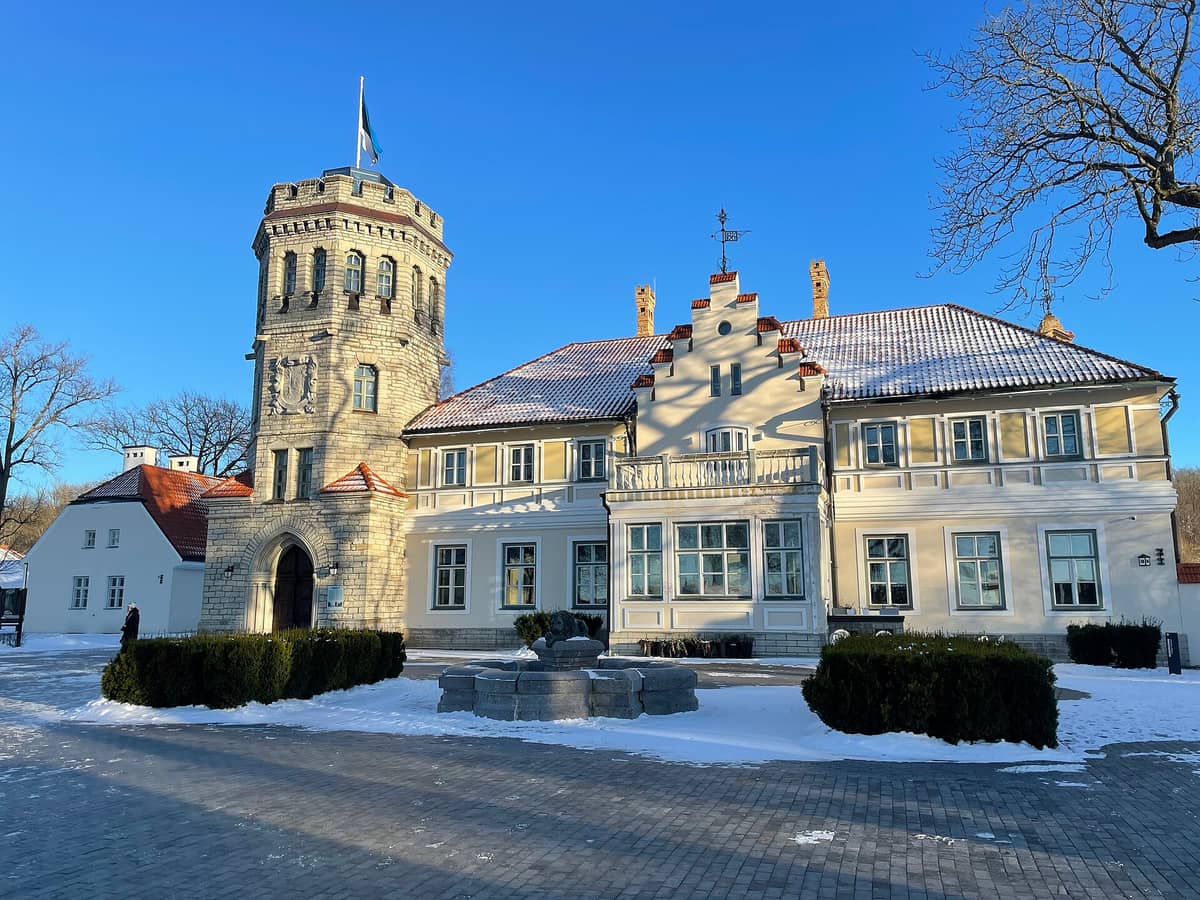
Maarjamäe Palace is a 19th-century Gothic Revival manor on Tallinn's northeastern coast that now houses the Estonian History Museum's flagship permanent exhibition. The building's ornate silhouette, the surrounding Soviet-era memorial complex, and the Gulf of Finland backdrop make it one of the most layered cultural sites in the country.
Quick Facts
- Location
- Pirita tee 56, Maarjamäe, Tallinn (northeast of city centre, between Kadriorg and Pirita)
- Getting There
- City bus toward Pirita (for example, lines such as 1, 5, 8 or 34A) along Pirita tee; alight near Maarjamäe complex
- Time Needed
- 1.5 to 3 hours, depending on how deeply you engage with the exhibitions
- Cost
- Paid admission; exact euro prices listed on the Estonian History Museum website (check before visiting as prices may change)
- Best for
- History enthusiasts, architecture lovers, travelers wanting context before exploring Tallinn's Old Town
- Official website
- ajaloomuuseum.ee/maarjamae-palace
What Maarjamäe Palace Actually Is
Maarjamäe Palace is not a royal residence and never was one. It is a 19th-century Gothic Revival manor house built between 1873 and 1874 as a summer retreat for Russian Count Anatoli Orlov-Davydov. The name translates loosely as Mary's Hill Palace, and the building sits on a low coastal ridge with views toward the Gulf of Finland. Since 1975 it has functioned as a branch of the Estonian History Museum, and a major renovation completed in 2018, timed to coincide with the centenary of the Republic of Estonia, transformed it into one of the most thoughtfully designed history museums in the Baltic states.
The setting is part of what makes this place worth the trip. The manor is flanked on its north side by a Soviet-era memorial complex, a sprawling field of concrete obelisks and symbolic flame monuments built during the occupation period. The contrast between the fussy 19th-century turrets of the palace and the blunt geometry of Soviet memorial architecture is striking and entirely unintentional, which makes it more interesting. You can read half a century of competing ideologies just by turning around in the car park.
💡 Local tip
Opening hours are seasonal. From 1 October to 31 March the palace is open Wednesday to Sunday, 10:00 to 18:00. From 1 April to 30 September it opens Tuesday to Sunday, same hours. It is closed on Mondays year-round. Check the museum's official site for public holiday closures before making a special trip.
The Building: Gothic Revival on a Baltic Shore
The exterior of Maarjamäe Palace is modestly dramatic. It is not a grand palace in the Versailles sense, but rather a compact country house dressed up with pointed turrets, decorative stonework, and arched window surrounds typical of the romantic historicist architecture popular in the Russian Empire during the 1870s. The pale facade catches morning light well, and photographers tend to find the northeast corner, with a turret framed against the pine trees on the slope, the most rewarding angle.
The grounds between the palace and Pirita tee are informal and largely open. In warmer months visitors spread out on the grass, and the sea wind off the Gulf of Finland carries a faint brine smell throughout the property. In winter the bare trees expose the full silhouette of the building against pale sky, and the memorial field to the north takes on a particularly stark character that feels appropriate given its history.
The palace sits roughly midway along the coastal road between Kadriorg Park and Pirita, making it a natural stop if you are walking or cycling the coastal route on a fine day. The distance from Kadriorg's eastern edge to Maarjamäe is about 1.5 km on foot along Pirita tee.
Tickets & tours
Hand-picked options from our booking partner. Prices are indicative; availability and final rates are confirmed when you complete your booking.
Self-guided Discovery Walk of Tallinn city contrasts beyond the medieval walls
From 26 €Instant confirmationFree cancellationTallinn's art and culture tour with a local
From 62 €Instant confirmationFree cancellationHistorical walking tour of Tallinn with a local
From 599 €Instant confirmationFree cancellationIntroductory walking tour of Tallinn with a local guide
From 109 €Instant confirmationFree cancellation
Inside the Museum: My Free Country
The centrepiece of the palace is the permanent exhibition called My Free Country, which covers roughly 100 years of Estonian history from the independence declaration of 1918 through to the restoration of independence in 1991 and beyond. This is not the dry, chronological display you might expect from a state history museum. The 2018 redesign invested heavily in interactive elements, audiovisual installations, and personal testimonies, and the result is a narrative that moves between the political and the deeply personal.
Rooms are organized thematically as well as chronologically. You will move through exhibits covering the brief first period of independence between the wars, the Soviet occupation, deportations to Siberia, the German occupation, the second Soviet period, and the Singing Revolution of the late 1980s that led to restored statehood. Personal objects, letters, clothing, and photographs anchor the larger political story to individual lives, which is where the exhibition earns its emotional weight.
If you want to understand what you are looking at when you visit Vabamu, the Museum of Occupations and Freedom in the Old Town, or when you see Soviet-era infrastructure elsewhere in the city, Maarjamäe Palace provides essential context. The two museums complement each other well and together cover the occupation period from different angles.
ℹ️ Good to know
Audio guides and explanatory panels throughout the museum are available in Estonian and English. Allow at least 90 minutes to move through the permanent exhibition without rushing; the audiovisual rooms alone reward slower visitors.
The Soviet Memorial Complex Next Door
Immediately north of the palace, across a gravel path, lies a large Soviet-era memorial site. The complex includes a memorial to the fallen soldiers of World War II, built during the Soviet occupation and maintained since independence in a state of deliberate preservation. The concrete steles, flame monuments, and formal layout occupy the hillside and extend toward the sea cliffs. There is no ticket required to walk through this area; it is open ground.
This part of the site is one of the more unusual outdoor spaces in Tallinn. The scale is outsized for the setting, a feature characteristic of Soviet memorial culture where size was a statement of ideology as much as a tribute to the dead. On weekday mornings the complex is typically deserted, and the silence, combined with the wind off the water and the smell of damp grass, makes it feel genuinely contemplative rather than tourist-friendly. Weekend afternoons bring more visitors, some of whom arrive specifically for this and skip the palace museum entirely.
Visitors with a strong interest in Soviet-era Tallinn should consider pairing this with a visit to the KGB Prison Cells in the city centre, which covers a completely different but equally formative chapter of the occupation period.
When to Visit and What to Expect at Different Times
Weekday mornings between opening time and noon are the quietest period. The museum receives far fewer visitors than Tallinn's Old Town attractions, and on an average Tuesday or Wednesday morning in spring you may have entire rooms to yourself. This makes the audiovisual installations considerably more effective, since they are designed for immersive individual engagement rather than group crowds.
Summer afternoons bring the highest visitor numbers, partly because Maarjamäe lies on the popular coastal cycling and walking route to Pirita. Families on their way to Pirita Beach sometimes stop in, though the exhibition content is better suited to adults and older teenagers. The museum remains manageable even at peak times; this is not a venue that ever feels dangerously overcrowded.
In winter the coastal wind on the exposed memorial grounds can be sharp. Dress in layers if you plan to spend time outside. The museum interior is well heated, and the shorter daylight hours of November to February actually suit the more somber exhibition content. Arriving just after opening on a grey January morning with the memorial field covered in frost is a different experience entirely from a June visit, and both have their particular atmosphere.
⚠️ What to skip
The coastal road Pirita tee can be busy with fast-moving traffic. There is a proper pedestrian access path to the palace, but if you are walking from Kadriorg, pay attention to the roadside conditions, particularly in winter when verges may be icy.
Getting There and Practical Notes
The palace is located at Pirita tee 56, about 4 to 5 km northeast of Tallinn's Old Town. City buses running toward Pirita along Pirita tee serve a stop close to the complex. Check current routes and timetables at transport.tallinn.ee before you travel. If you are visiting Kadriorg Palace on the same day, the two sites are close enough to connect on foot along the coastal path, which is pleasant in dry weather.
Cycling is a practical option from late spring to early autumn. The coastal cycling path runs directly past the site, and bike rental is available in central Tallinn. A taxi or ride-hailing app (Bolt is widely used in Tallinn) takes about 10 to 12 minutes from the Old Town and is straightforward if you are traveling with children or heavy bags.
On-site parking is available for those arriving by car. The museum entrance is on the ground floor of the palace building. Outdoor access to the memorial grounds is free and unrestricted. The step-free access route to the memorial area comes via a ramp from the south side of the complex. Visitors with mobility needs should contact the museum directly to confirm current indoor accessibility arrangements before visiting.
If you are planning a full day in this part of the city, consider building an itinerary that also takes in Pirita Convent and Pirita Beach to the north. The Tallinn Card includes free entry to several city museums and may be worth calculating against individual admission prices depending on how many sites you plan to visit.
Who Might Want to Skip This
Travelers with very limited time in Tallinn and no particular interest in Estonian or Soviet history may find the 20-minute journey from the Old Town difficult to justify. The palace itself, while attractive, does not compete architecturally with Kadriorg Palace a short distance away. If your afternoon is short and you have already visited Vabamu in the Old Town, the thematic overlap with My Free Country is real, and you may feel you are covering similar ground. The outdoor Soviet memorial complex is genuinely distinctive, but if monumental Soviet-era memorials are not something you seek out, the site as a whole may not reward the round trip.
Insider Tips
- The hill immediately behind the memorial complex offers a coastal viewpoint over the Gulf of Finland that almost no tourist map marks. Walk north past the obelisks to the low cliff edge for an unobstructed sea view with the Tallinn skyline behind you.
- Museum Night (Muuseumiöö), held annually in spring, includes Maarjamäe Palace with a symbolic entrance fee of around 1 euro. It is one of the best evenings to visit, with atmospheric lighting and special programming in the memorial grounds.
- The audiovisual room covering the Singing Revolution period, when mass public choral gatherings became a form of peaceful resistance, is the emotional high point of the exhibition for most visitors. Budget extra time here rather than rushing through.
- If you are coming from Kadriorg on foot, walk along the seaside path rather than Pirita tee. It adds about five minutes but keeps you away from road traffic and offers intermittent water views through the coastal pines.
- The memorial complex is fully accessible outside museum opening hours, and the light on the concrete monuments at golden hour before sunset in summer is particularly photogenic. A late afternoon walk through the grounds costs nothing.
Who Is Maarjamäe Palace For?
- Travelers wanting to understand Estonian history before diving into the Old Town's medieval layer
- Architecture enthusiasts interested in 19th-century Baltic manor house design alongside Soviet memorial aesthetics
- Cyclists on the coastal route between Kadriorg and Pirita looking for a meaningful stop
- Visitors already engaged with Tallinn's Soviet history who want to see outdoor memorial infrastructure in context
- Travelers who prefer quieter, less tour-group-heavy museums where you can set your own pace
Nearby Attractions
Other things to see while in Pirita:
- Pirita Beach
Pirita Beach is Tallinn's largest and most popular beach, stretching 2.4 kilometres along the Gulf of Finland just 15 minutes from the city centre. Free to access year-round, it draws swimmers in summer, joggers in spring and autumn, and winter walkers who come for the frozen sea views. This guide covers what the experience is actually like, when to go, and how to get there.
- Pirita Convent
The roofless Gothic shell of Pirita Convent has stood on the banks of the Pirita River since the early 15th century, outlasting war, occupation, and centuries of Baltic winters. Open year-round and steps from the sea, it is one of the most atmospheric historical sites in the Tallinn region.
- Tallinn Botanic Garden
Set in the forested Kloostrimetsa area of Pirita, Tallinn Botanic Garden is a working botanical institution founded in 1961 (opened to the public in 1970) with a large outdoor landscape and greenhouse collections. It rewards slow exploration and is especially worthwhile in late spring and early summer when the flowering plants peak.
- Tallinn Song Festival Grounds
The Tallinn Song Festival Grounds, known in Estonian as Lauluväljak, is one of the most symbolically charged open-air venues in Europe. With a sweeping arched stage, a park open 24 hours a day, and a direct connection to Estonia's peaceful path to independence, it rewards visitors who look beyond the Old Town.