Pirita Beach: Tallinn's Longest Sandy Shore
Pirita Beach is Tallinn's largest and most popular beach, stretching 2.4 kilometres along the Gulf of Finland just 15 minutes from the city centre. Free to access year-round, it draws swimmers in summer, joggers in spring and autumn, and winter walkers who come for the frozen sea views. This guide covers what the experience is actually like, when to go, and how to get there.
Quick Facts
- Location
- Supluse pst 1, Pirita district, Tallinn
- Getting There
- Buses 1, 1A, 8, 34, 34A or 38 from Viru Centre to 'Pirita' stop (~15–20 min)
- Time Needed
- 1–3 hours depending on season and activity
- Cost
- Free entry. Lifeguards on duty Mon–Fri 09:00–20:00, Sat–Sun 09:00–21:00 (summer season)
- Best for
- Swimming, sunbathing, seaside jogging, family outings
- Official website
- visitestonia.com/en/pirita-beach
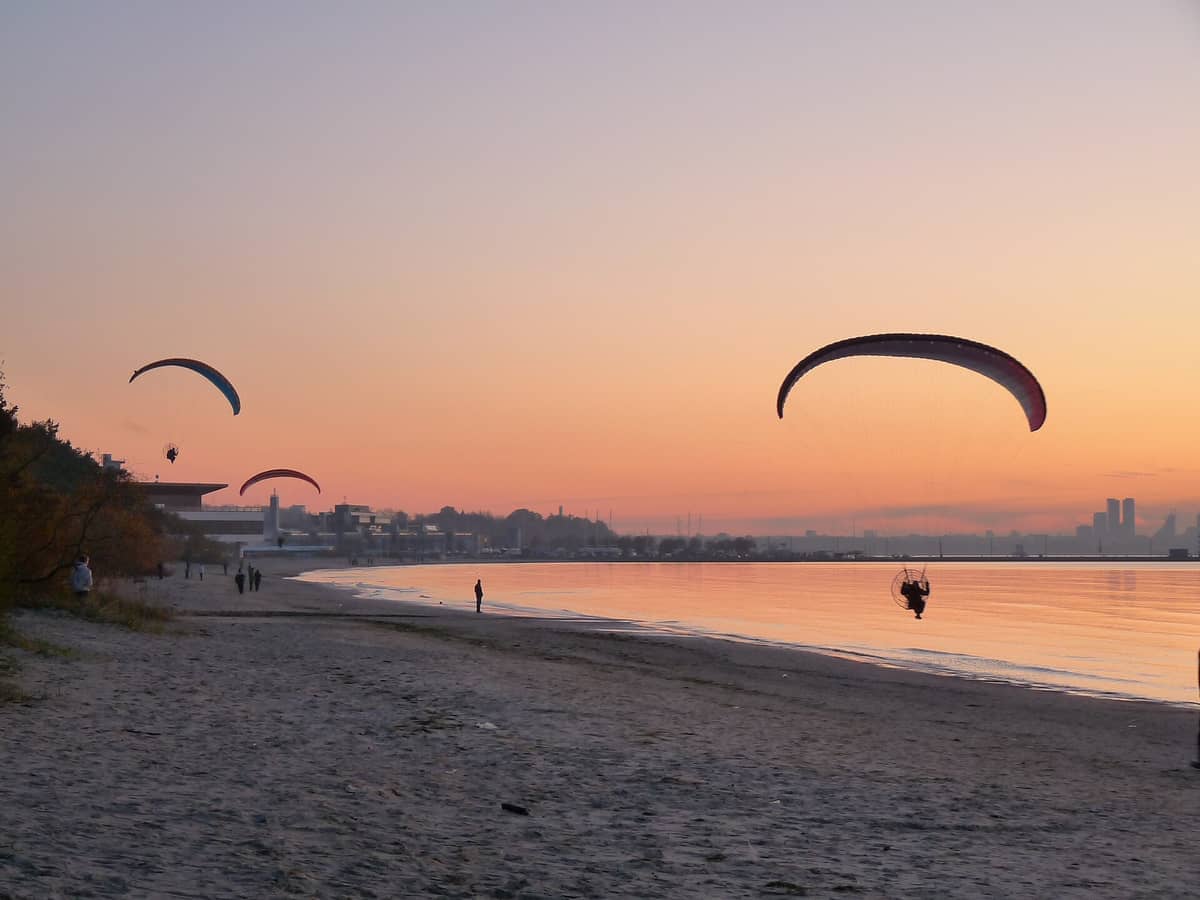
What Pirita Beach Actually Is
Pirita Beach (Estonian: Pirita rand) is the longest and largest sandy beach in Tallinn, running approximately 2.4 kilometres along the southern shore of the Gulf of Finland. It sits in the Pirita district, roughly 6 kilometres northeast of Tallinn's Old Town, close enough for a quick city escape but far enough to feel genuinely removed from the medieval lanes and tourist crowds of the centre.
The beach is wide and gently sloping, with fine pale sand that extends gradually into shallow water. That gradual incline makes it particularly practical for families with young children: there is no sudden shelf or strong current along most of the shore. A long promenade runs parallel to the beach, lined with pine trees that provide shade and a distinctive resinous scent on warm days.
Pirita is part of a larger coastal district that also includes the ruins of Pirita Convent and the Pirita River delta. The area rewards visitors who walk further than the main beach area — the riverbank path is quiet, well-maintained, and offers a different perspective on this coastal edge of the city.
💡 Local tip
The bus ride from Viru Centre takes roughly 15–20 minutes on bus 1, 1A, 8, 34, 34A or 38. Get off at the 'Pirita' stop. The beach is a short walk straight ahead from the stop. No need to pre-plan transport — buses run frequently throughout the day.
History: A Planned Seaside Retreat Since 1925
Pirita was not always a public beach. Development of the recreational shore began in 1925, when the Kloostri Mets sanatorium leased coastal forest land between the Pirita River and the Merivälja area for sixty years to establish a sea bathing facility. The pine forest was already there; the beach was deliberately shaped around it as a leisure destination during the interwar period, when coastal recreation became fashionable across the Baltic capitals.
The area received a more substantial international profile when Tallinn hosted the sailing events of the 1980 Moscow Olympics. The Pirita district was developed and upgraded for the occasion, and the Olympic Sailing Centre still stands at the northern end of the beach area. That Soviet-era infrastructure is visible in some of the larger functional buildings along the seafront, though the beach itself remains a natural, low-key space.
Tickets & tours
Hand-picked options from our booking partner. Prices are indicative; availability and final rates are confirmed when you complete your booking.
Self-guided Discovery Walk of Tallinn city contrasts beyond the medieval walls
From 26 €Instant confirmationFree cancellationTallinn's art and culture tour with a local
From 62 €Instant confirmationFree cancellationHistorical walking tour of Tallinn with a local
From 599 €Instant confirmationFree cancellationIntroductory walking tour of Tallinn with a local guide
From 109 €Instant confirmationFree cancellation
The Beach Experience: How It Changes Through the Day and Year
In high summer, July especially, Pirita operates on a different social register entirely. By mid-morning the promenade fills with locals on bicycles and rollerblades, families arrive with folding chairs, and the water — cold even in August, typically 17–20°C at its warmest — is full of swimmers undeterred by the temperature. Weekends in July can get genuinely crowded, particularly the stretch nearest the bus stop. If you want more space, walk 400–500 metres north along the beach; the crowds thin quickly.
Weekday mornings from May through September offer a more peaceful version of the same scene. The light at 07:00 or 08:00 is extraordinary: flat gold across the water, long shadows from the pine trees, almost no one around except joggers and dog walkers. This is the window for photography. The Baltic morning light at Pirita in summer is soft and directional in a way that the midday glare simply is not.
Autumn and early spring bring a quieter but arguably more atmospheric experience. The beach remains free and open at all hours. The sea takes on a deeper grey-green colour, the pine trees creak in offshore winds, and the promenade belongs almost entirely to runners and Nordic walkers. Winter is genuinely dramatic when the Gulf freezes — which happens in colder winters — because the ice transforms the familiar shoreline into something unrecognisable. Locals walk out onto the ice to fish or simply to say they did it.
⚠️ What to skip
The Gulf of Finland water temperature rarely exceeds 20°C even in peak summer. If you are expecting Mediterranean warmth, adjust your expectations. Most Estonians consider 18°C perfectly swimmable; most visitors from southern Europe do not.
Practical Walkthrough: What You Find When You Arrive
Getting off the bus at Pirita, the first thing you notice is the smell of pine resin and sea air together. The beach is immediately visible from the main road. There are basic changing facilities and showers near the central section of the beach, along with cafes and snack kiosks that operate from late spring through early autumn. Outside those months, facilities are minimal, so bring your own water and snacks if you are visiting in the off-season.
The promenade is surfaced and flat, which makes it walkable for those with pushchairs or mobility considerations. The beach itself is not formally designated as wheelchair accessible with water-access equipment, so visitors with specific mobility needs should contact the city or visit the Visit Tallinn beaches guide in advance to confirm current facilities.
Pirita Beach works well as part of a longer half-day itinerary. From the beach, it is a short walk north to the Pirita Convent ruins, and the Tallinn Botanic Garden is reachable by a short bus or bike ride from the same area. Combining the beach with a convent walk and a cafe stop on the promenade makes for a comfortable three-hour morning.
Photography Tips and Light Conditions
The best light at Pirita is either early morning or the long Nordic evenings in June and July, when the sun sets well after 22:00 and the sky holds a pale amber glow long after that. Sunset photography from the promenade, looking northwest across the water, can be exceptional. The pine trees silhouetted against the evening sky photograph better than the beach itself in flat midday light.
Winter visits offer striking possibilities: frozen shoreline, ice formations, empty promenade. Dress very warmly, protect your camera from the cold, and go on a clear day when the light has depth. Overcast Baltic winter days produce flat, grey images that do not reward effort.
ℹ️ Good to know
Tallinn's summer solstice means the sky never fully darkens in late June. Pirita Beach during midsummer evenings has a surreal pale light that lasts past midnight — worth experiencing even if you are not a photographer.
Who This Beach Is and Is Not For
Pirita Beach suits travellers who want to experience how Tallinn residents actually use their city: jogging routes, family picnics, post-work swims, weekend leisure. It is not a resort beach. There are no sunbeds for hire, no beach clubs, no cocktail service. The infrastructure is functional rather than polished, and that is precisely the point for many visitors. If you want a genuine local summer afternoon rather than a tourist experience, this is where you come.
Visitors looking for a shorter, more urban beach experience closer to the city centre might prefer Stroomi Beach in the Põhja-Tallinn district, which is smaller but easier to combine with a central Tallinn day. Those interested in a broader overview of Tallinn's outdoor options can find more context in the Tallinn beaches guide.
Visitors who dislike cold water, need extensive beach facilities, or find long bus journeys inconvenient may not find Pirita worth the trip in summer. In winter, anyone who struggles with cold wind and minimal shelter should think carefully before visiting — there is little protection from offshore gusts on an open Baltic shoreline in January.
Getting There and Around Pirita
The most straightforward approach is by bus from Viru Centre, the large shopping and transport hub next to Tallinn's Old Town. Buses 1, 1A, 8, 34, 34A and 38 all run to the Pirita stop and take approximately 15–20 minutes. The Tallinn Card covers public transport, so if you have one, there is no additional cost for the journey.
Cycling is a good alternative in summer: a dedicated cycle path connects the city centre with Pirita along the coast road, and bike rental is available in central Tallinn. For more detail on navigating the city generally, the guide to getting around Tallinn covers all the main options including public transport, cycling and taxis.
Taxis and ride-hailing apps (Bolt is the primary option in Tallinn) are also available and take roughly the same time as the bus. The beach area itself is entirely walkable, and the promenade extends in both directions if you want to explore beyond the central section.
Insider Tips
- Walk 400–500 metres north from the main bus stop to leave the crowds behind. The beach is equally good further along and noticeably quieter even on summer weekends.
- The cafes on the promenade closest to the bus stop are tourist-oriented and priced accordingly. Walk slightly further and you will find simpler options where locals actually eat.
- If you visit in late June or early July, come to the promenade after 21:00 for the long Nordic twilight. The sky does not fully darken, the crowds thin, and the light on the water is unlike anything you get in the middle of the day.
- Combine Pirita Beach with the nearby convent ruins and the Botanic Garden for a full half-day itinerary that requires no additional transport planning — all three are walkable or a very short ride apart.
- Water shoes are useful if you plan to swim: the nearshore bottom has patches of small stones and occasional shell fragments beyond the sand. Most locals bring them without thinking about it.
Who Is Pirita Beach For?
- Families with young children, thanks to the gentle slope and shallow water entry
- Joggers, cyclists and walkers looking for a flat, scenic coastal route outside the city centre
- Travellers who want to experience Tallinn as locals use it, rather than as a heritage attraction
- Winter visitors curious about frozen Baltic landscapes and empty Nordic beaches
- Photographers working with early morning or late evening midsummer light
Nearby Attractions
Other things to see while in Pirita:
- Maarjamäe Palace
Maarjamäe Palace is a 19th-century Gothic Revival manor on Tallinn's northeastern coast that now houses the Estonian History Museum's flagship permanent exhibition. The building's ornate silhouette, the surrounding Soviet-era memorial complex, and the Gulf of Finland backdrop make it one of the most layered cultural sites in the country.
- Pirita Convent
The roofless Gothic shell of Pirita Convent has stood on the banks of the Pirita River since the early 15th century, outlasting war, occupation, and centuries of Baltic winters. Open year-round and steps from the sea, it is one of the most atmospheric historical sites in the Tallinn region.
- Tallinn Botanic Garden
Set in the forested Kloostrimetsa area of Pirita, Tallinn Botanic Garden is a working botanical institution founded in 1961 (opened to the public in 1970) with a large outdoor landscape and greenhouse collections. It rewards slow exploration and is especially worthwhile in late spring and early summer when the flowering plants peak.
- Tallinn Song Festival Grounds
The Tallinn Song Festival Grounds, known in Estonian as Lauluväljak, is one of the most symbolically charged open-air venues in Europe. With a sweeping arched stage, a park open 24 hours a day, and a direct connection to Estonia's peaceful path to independence, it rewards visitors who look beyond the Old Town.