Kalamaja is a former working-class fishing district northwest of Tallinn's Old Town that has quietly become the city's most compelling neighborhood. Wooden 19th-century houses line narrow streets, Telliskivi Creative City draws designers and food lovers, and the Seaplane Harbour sits at the waterfront edge. It rewards slow exploration at any time of year.
Kalamaja is what happens when a centuries-old port district gets adopted by artists, architects, and independent cafe owners without losing its soul. Just a 15-minute walk from Tallinn's medieval Old Town, it feels like a completely different city: quieter, more lived-in, and far less rehearsed for tourists.
Orientation
Kalamaja is a subdistrict of Põhja-Tallinn, the northern borough of Tallinn, sitting on the southwestern shore of Tallinn Bay. At roughly 2.4 square kilometres, it is compact but dense with character. The district shares its eastern edge with Sadama and the fringes of the Old Town, making it one of the most walkable neighborhoods from the city centre. To the south it meets Kelmiküla, to the west Pelgulinn, and to the northwest Karjamaa.
The easiest way to build a mental map of Kalamaja is to use three anchors: Balti jaam (Baltic Station) in the southeast corner, Telliskivi Creative City just beyond the station tracks, and the waterfront strip running north toward Noblessner harbour. Telliskivi tänav cuts through the heart of the district, while Kopli tänav runs as the main artery toward the sea. The streets between them, including Tööstuse, Salme, Niine, and Vana-Kalamaja, form a grid of wooden houses, small workshops, and neighborhood cafes.
Kalamaja sits directly between Tallinn's Old Town and the bay, which gives it an unusual geographical advantage: you can walk from a UNESCO-listed medieval street to a converted submarine hangar in under 20 minutes. To the north, the district transitions into the Noblessner waterfront quarter, a former torpedo factory complex that now houses galleries, restaurants, and event spaces.
Character & Atmosphere
The defining feature of Kalamaja is its wooden architecture. Rows of single and two-storey timber houses painted in faded yellows, greens, and reds line streets like Kotzebue and Uus-Kalamaja. Many date from the late 19th and early 20th century, built for factory workers and fishermen who worked the nearby docks. They survived Soviet-era redevelopment largely because the area was considered low priority, and that neglect turned out to be a form of preservation.
In the morning, Kalamaja is a genuine residential neighborhood. Locals walk dogs along Kalaranna, the coastal promenade that runs beside the bay, and cafes on Telliskivi fill with people working on laptops or reading. The light in summer comes in long and low off the water, turning the wooden facades a warm amber. In winter, the same streets feel quieter but no less inhabited: smoke from chimneys, frost on the wooden window frames, and the occasional sauna smell drifting from a backyard.
By early evening, the neighborhood shifts. Telliskivi Creative City picks up pace, with food stalls and bars filling the converted factory courtyards. The Noblessner end of the waterfront draws a younger crowd, especially on weekends. There is no real nightlife strip in the way the Old Town has one, but there are enough bars, music venues, and pop-up events scattered through the district to keep things active until midnight or later.
Tourist activity is concentrated almost entirely in Telliskivi and at the Seaplane Harbour museum. The residential streets beyond those two anchors see almost no tour groups. On Vabriku tänav or Volta, you are sharing the pavement with people heading to the corner shop, not other visitors. That balance is part of what makes Kalamaja worth the short detour from the Old Town.
💡 Local tip
Kalamaja is best explored on a weekend morning. The Balti jaam market is at its fullest, Telliskivi's cafes are unhurried, and the light on the wooden houses is at its best before midday crowds arrive.
History
Kalamaja is one of the oldest continuously inhabited areas of Tallinn. The name translates literally as 'fish house' in Estonian and is commonly understood as 'fish harbour', a direct reference to the fishing community that settled here outside the medieval city walls centuries before the district took its current shape. For much of Tallinn's history, Kalamaja was the largest suburb of the walled city, home to tradespeople, fishermen, and later industrial workers.
The 19th century brought industrialization to the waterfront. The Russian imperial navy established facilities along the bay, and the Noblessner shipyard, built in the early 20th century to manufacture submarines for the Russian fleet, became one of the largest industrial complexes in the region. The wooden residential fabric of the district was built largely to house workers serving these waterfront industries. When Estonia regained independence in 1991, the industrial infrastructure was largely abandoned, leaving a patchwork of historic timber housing, derelict factories, and underused port land.
The transformation since the mid-2000s has been steady rather than sudden. Telliskivi Creative City opened in a former factory complex in 2009 and became a template for creative reuse elsewhere in the city. The Seaplane Harbour museum opened in 2012 inside a set of enormous Art Nouveau concrete hangars built for flying boats. Noblessner followed with a phased conversion that continues today. The district is now designated a scenic area by Tallinn City Government, which places restrictions on new development and protects the wooden housing stock.
What to See & Do
The single most impressive attraction in Kalamaja is the Seaplane Harbour (Lennusadam), a maritime museum housed in three vast reinforced-concrete hangars on the waterfront of Tallinn Bay. The hangars were built between 1916 and 1917 to shelter seaplanes and remain engineering landmarks. Inside, the museum holds a full-size icebreaker you can board, a Soviet-era submarine you can walk through, and dozens of historic vessels and aircraft. It is one of the best museums in the Baltic states and worth at least two hours.
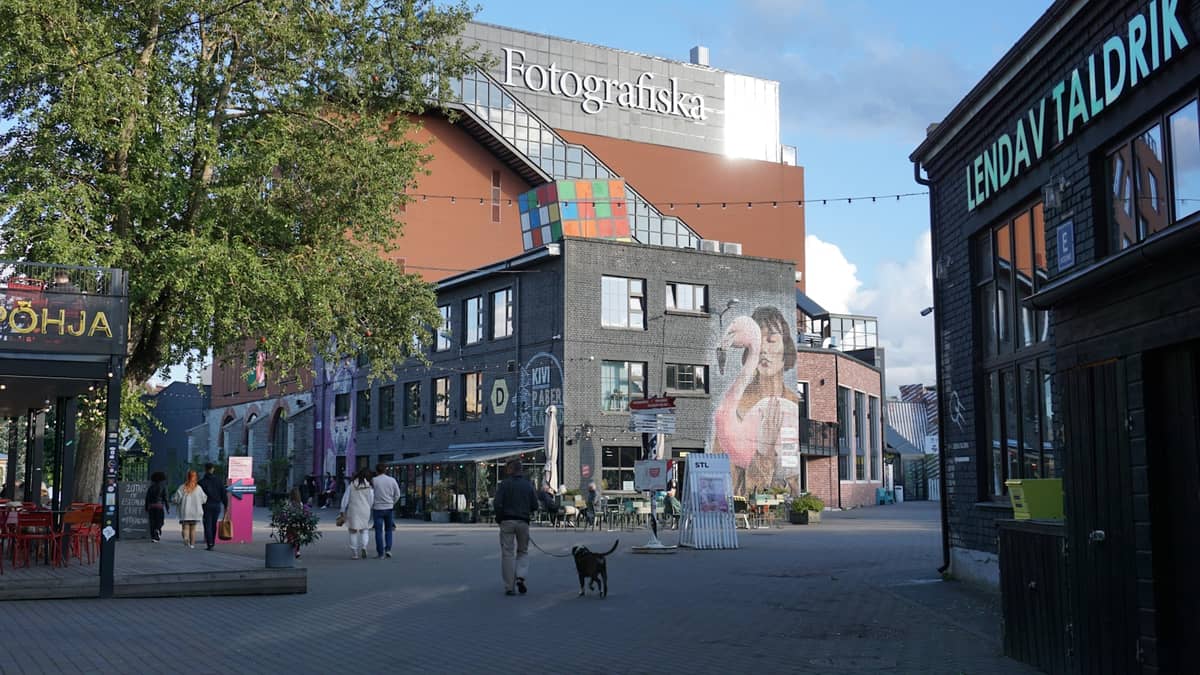
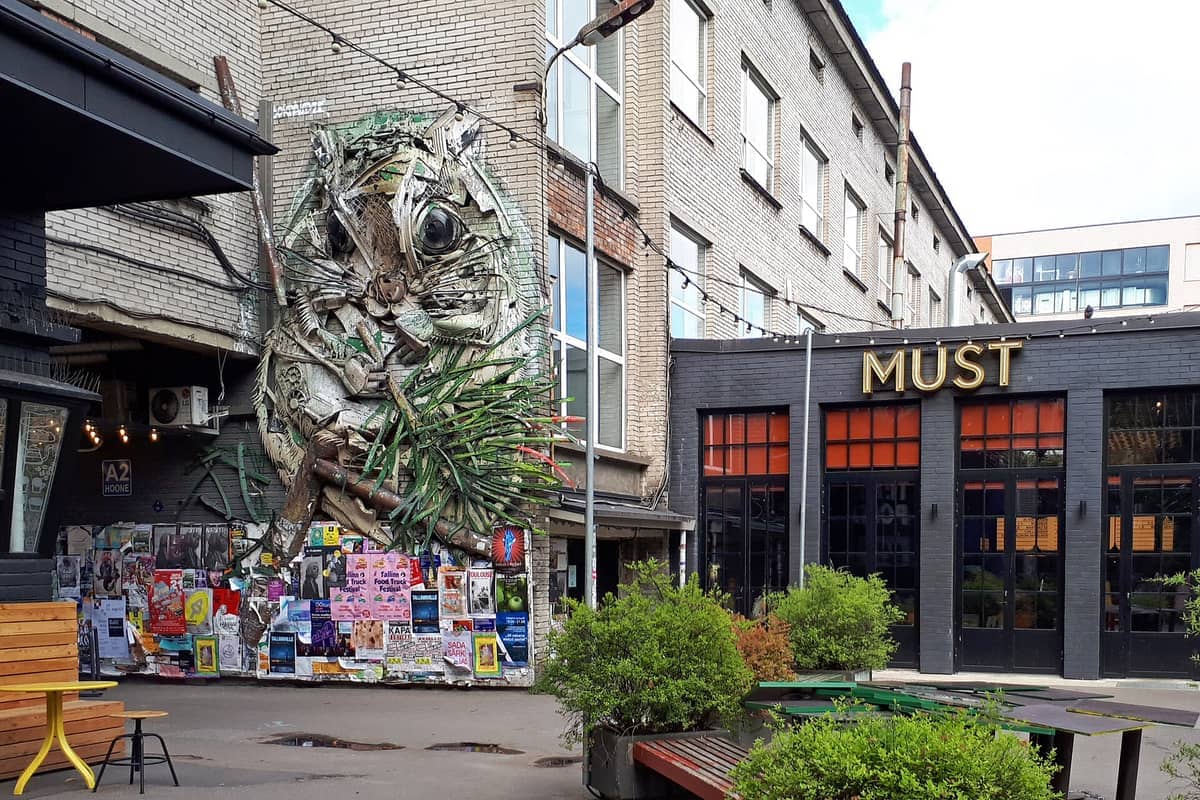
The other major draw is Telliskivi Creative City, a converted industrial complex on Telliskivi tänav that functions as a mixed-use creative campus. It holds independent shops, street food stalls, music venues, yoga studios, and a weekend market. The aesthetic is deliberately rough-edged: exposed brick, painted murals, food trucks parked in gravel courtyards. It is lively without being overwhelming, and the quality of the independent food vendors in particular is consistently high.
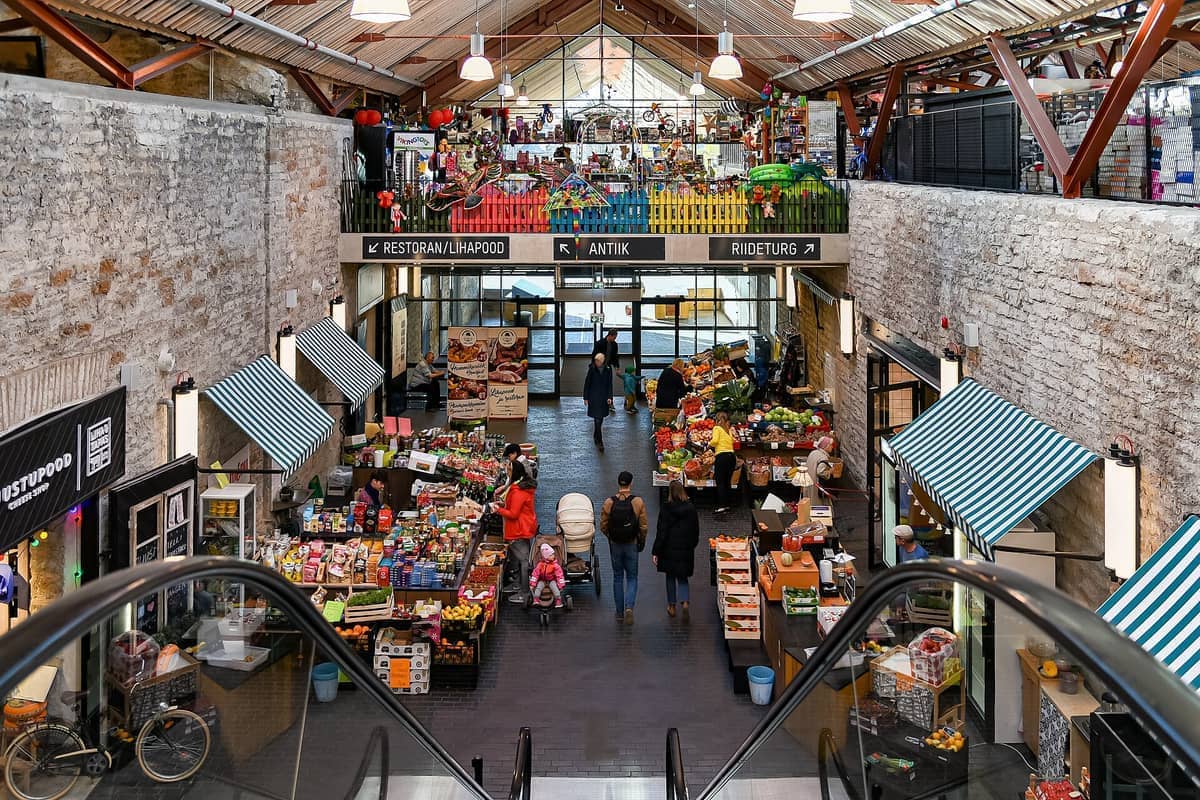
Just southeast of Kalamaja's boundary, Balti jaam market occupies the area beside Baltic Station and spills into the surrounding blocks. It is an authentic mixed-use market where locals buy second-hand goods, seasonal produce, and everything from power tools to smoked fish. Go early: it winds down by early afternoon on weekdays, and while weekends are busier, the serious traders are there from 8am.
The Kalaranna promenade runs along the waterfront between the Seaplane Harbour and the Noblessner complex to the north. It is a straightforward coastal walk with views across Tallinn Bay and, on clear days, toward the islands. It is popular with cyclists and joggers in warmer months and largely empty in winter, when the mood turns atmospheric in a different way.
Seaplane Harbour (Lennusadam): maritime museum in historic hangars, 2-3 hours minimum
Telliskivi Creative City: independent food, shops, and weekend market
Balti jaam market: local flea and produce market, best on weekend mornings
Kalaranna promenade: coastal walk between the Seaplane Harbour and Noblessner
Noblessner waterfront: former shipyard with galleries, restaurants, and event spaces
Wooden house streets: Kotzebue, Uus-Kalamaja, and Vabriku for architecture
Volta quarter: a recently converted factory block with cafes and creative studios
ℹ️ Good to know
The Tallinn Card includes entry to the Seaplane Harbour and provides free public transport. If you plan to visit multiple museums during your stay, it is worth checking whether the card makes financial sense for your itinerary.
Eating & Drinking
Kalamaja has the best independent food scene in Tallinn outside the Old Town, and many locals would argue it has surpassed the Old Town entirely for quality and value. The concentration of good cafes, bakeries, and restaurants along Telliskivi tänav and its surrounding streets is genuinely impressive for a neighborhood of this size.
Breakfast and brunch culture is strong here. Several cafes along Telliskivi and on the side streets of the creative city serve quality coffee alongside Nordic-influenced food: open sandwiches, sourdough toast, porridge with seasonal toppings. These are not tourist-facing operations; the customer base is mostly local professionals and creative-industry workers who have offices in the area.
The street food offer inside Telliskivi Creative City covers considerable ground: Korean, Japanese, Vietnamese, Georgian, and various Eastern European options sit alongside Estonian staples. Prices are reasonable by Western European standards, typically 8-14 euros for a full meal. The quality varies stall to stall, but the overall standard is higher than most casual food markets in comparable European cities.
Bars in Kalamaja tend toward the low-key end of the spectrum. There are craft beer spots, natural wine bars, and a handful of places that double as music venues. The Noblessner end of the waterfront has a more polished restaurant scene, with several places focused on contemporary Estonian cuisine and seafood given the proximity to the bay. Expect to pay 15-25 euros per main course at the better Noblessner restaurants.
For a broader overview of what to eat and where across the city, the where to eat in Tallinn guide covers the full range, but Kalamaja consistently comes up as one of the strongest neighborhoods for independent dining. If you are visiting on a limited budget, the Tallinn on a budget guide has specific tips for eating well without overspending.
Getting There & Around
Kalamaja is accessible on foot from the Old Town in about 10 to 15 minutes, walking northwest through or alongside Balti jaam. From Viru Gate or Freedom Square, the walk takes you past the station and directly into Telliskivi tänav. It is a straightforward route that does not require a map after the first visit.
By tram, lines 1, 2, and 5 run from central Tallinn toward Kopli and stop at or near Telliskivi. The Balti jaam tram stop is the most useful: tram line 2 connects it to Viru, near the Old Town, in around 8 minutes. Check getting around Tallinn for current route maps and ticketing information, since schedules and routes are updated periodically.
Within the district, walking is the only sensible option. The streets are narrow and often one-way, parking is limited, and the distances between points of interest are short enough that a car creates more problems than it solves. From Telliskivi to the Seaplane Harbour on foot takes about 10 to 12 minutes along Kalaranna or through the backstreets. A bicycle is useful for covering the full district quickly, and there are rental options available near Balti jaam.
⚠️ What to skip
Some of the streets in the residential parts of Kalamaja are unpaved or have uneven cobblestones. Wheeled luggage is difficult here. If you are staying in the neighborhood, consider a bag you can carry.
Where to Stay
Kalamaja is not a major hotel district; accommodation options are mostly apartments and smaller guesthouses rather than large hotels. That said, staying here gives you a very different experience of Tallinn compared to the Old Town. You are in a real neighborhood with morning bakeries and local shops rather than souvenir stands. For options across the whole city, the where to stay in Tallinn guide provides a full comparison of neighborhoods.
The best part of Kalamaja to base yourself is the Telliskivi end, within a few minutes walk of the tram stop and the creative city complex. This gives you easy transit access to the Old Town and the rest of the city while keeping you close to the neighborhood's food and social scene. The streets closer to the waterfront are quieter and more residential, which suits some travelers and can feel too remote for others, particularly in winter when foot traffic drops significantly.
Kalamaja works best for independent travelers who prioritize neighborhood character over convenience to major tourist sites. Families with small children will find it manageable. Anyone who wants to be within walking distance of the Old Town's major monuments every evening might find the 20-minute walk tiring after a few days; the Old Town itself has far more hotel density.
Practical Notes
Kalamaja fits naturally into a multi-day Tallinn itinerary rather than a day-trip. If you are working from a 2-day Tallinn itinerary, devoting a morning to Kalamaja and an afternoon to the Old Town covers the two distinct sides of the city well. The Seaplane Harbour alone justifies a dedicated half-day.
In summer, the waterfront and Telliskivi are at their liveliest, with outdoor events, pop-up markets, and long evening light. In winter, the wooden houses under snow have a particular appeal, though some outdoor food vendors at Telliskivi close or reduce hours. The Tallinn in winter guide covers what stays open and what changes between November and March.
TL;DR
Kalamaja is Tallinn's most rewarding neighborhood for independent exploration: wooden 19th-century architecture, a strong independent food and cafe scene, and the world-class Seaplane Harbour museum, all within 20 minutes walk of the Old Town.
Best for: travelers who want to see beyond the medieval centre, food lovers, design and architecture enthusiasts, and anyone staying more than one night in Tallinn.
Not ideal for: visitors on a single-day trip who need to maximize Old Town sightseeing, or travelers who need hotel-dense accommodation options and easy luggage access.
Go to Telliskivi Creative City for food, coffee, and independent shopping; go to the Seaplane Harbour for one of the best maritime museums in Europe; walk Kalaranna for the bay views and a sense of the neighborhood's scale.
Kalamaja is safe, genuinely residential, and increasingly popular without having tipped into overtourism. It rewards arriving without a fixed agenda and simply walking.
Two days is enough to cover Tallinn's medieval heart, its finest museums, and a taste of the city's creative neighbourhoods. This itinerary is structured day by day, starting with the Old Town's UNESCO-listed streets and working outward to Kadriorg and Kalamaja.
Three days is the ideal amount of time to experience Tallinn properly. This itinerary takes you from the medieval Old Town through creative Kalamaja, out to the elegant Kadriorg district, and to the seaside, covering the city's essential sights without rushing.
Tallinn's skyline is defined by its churches. The medieval Old Town alone holds centuries of Lutheran, Orthodox, and Catholic history within a few walkable blocks. This guide covers the finest religious buildings in the city, from active cathedrals to a deconsecrated Gothic church housing world-class medieval art.
Tallinn stands out for museum culture. This guide covers the city's finest institutions, from a fortress-turned-medieval-art-gallery to one of Europe's most dramatic maritime museums, with practical advice on saving money and planning your visits.
Tallinn rewards visitors in every season, but the right time to go depends entirely on what you want. This guide breaks down weather, crowd levels, pricing, and key events month by month so you can make an informed decision.
Tallinn rewards those who look up and out. Whether you want the classic medieval rooftop panorama, sweeping Baltic Sea vistas, or the highest point in Estonia, this guide covers every viewpoint worth your time, from the free hilltop terraces of Toompea to a Soviet-era tower with a glass floor.
Tallinn sits at the perfect launching point for exploring Estonia's wild coast, ancient forests, and dramatic landscapes. These are the best day trips from Tallinn, covering everything from national parks and island escapes to medieval ruins and surreal Soviet-era sites.
Tallinn rewards budget travellers generously. The medieval Old Town is freely walkable, city museums open their doors for free on the first Sunday of each month, and the parks, beaches, and viewpoints cost nothing at all. This guide covers the best free experiences in the city, organised so you can plan a full day without spending a cent.
Tallinn is a compact city, but knowing which transport option to use, and when, saves time and money. This guide covers public transport tickets, trams, buses, taxis, ride-hailing apps, airport connections, and the biggest misconceptions visitors run into.
Tallinn is one of Europe's most intact medieval capitals, a UNESCO-listed city that pairs cobblestoned Old Town lanes with a surprisingly modern, tech-forward culture. This guide cuts through the hype to tell you exactly what you'll get, what it costs, and when to go.
Tallinn sits on the Gulf of Finland, and its coastline delivers genuine beach options within minutes of the city centre. This guide covers the best sandy stretches, island beaches reached by ferry, and scenic coastal stops worth combining with a swim.
The Tallinn Card promises free entry to 50+ attractions and unlimited public transport for 24, 48, or 72 hours. But does it actually save you money? This guide breaks down the real costs, the best-value attractions, and the scenarios where skipping the card makes more sense.
The Tallinn Christmas Market transforms Town Hall Square into one of Europe's most atmospheric winter destinations. This guide covers exact dates, opening hours, food and drink to try, the best times to visit, and practical tips for getting the most out of your trip.
Tallinn is one of Europe's most effortlessly romantic cities, with a medieval Old Town, baroque parks, and a waterfront that rewards slow exploration. This guide covers the best experiences for couples, from golden-hour viewpoints and art museum dates to island escapes and atmospheric cobblestone lanes.
Tallinn rewards those who look beyond the postcard views. From a flooded Soviet quarry to a bog walk inside city limits, these are the experiences that separate a good Tallinn trip from a great one.
Summer transforms Tallinn into its most animated version, with nearly endless daylight, major festivals, and the Old Town packed with visitors. This guide covers the climate, key events, best activities, and practical advice on crowds and pricing so you can plan a summer trip that actually works.
Tallinn in winter is cold, atmospheric, and significantly cheaper than summer — but it rewards visitors who go in with realistic expectations. This guide covers the climate, costs, seasonal highlights, transport, and the honest truth about snow guarantees.
Tallinn preserves one of Europe's most intact medieval city centres, shaped by Danish kings, Hanseatic merchants, and the Livonian Order. This guide covers the history, the key sites, and how to explore them without wasting a day.
Tallinn is surrounded by bogs, forests, islands, and coastline within an hour of the city centre. This guide covers the best outdoor escapes, from wild island day trips and waterfall walks to urban parks and Estonia's most dramatic landscapes.
Tallinn stands out when it comes to nightlife. Whether you want cocktails in a 13th-century cellar, craft beer in a converted factory yard, or a club that runs until 05:00, this guide breaks down exactly where to go, what to pay, and when to show up.
Everything you need to walk Tallinn's UNESCO-listed medieval Old Town on your own terms. This guide covers the full route from Viru Gate to Toompea Hill, admission costs for key stops, seasonal crowd patterns, and practical tips for getting the most from 2-4 hours on foot.
Tallinn is one of Northern Europe's most rewarding cities for budget travelers. Between its largely free medieval Old Town, weekday lunch deals, and efficient public transport, a comfortable visit is achievable for €32-45 per day. This guide covers exactly where to save and what's genuinely worth paying for.
Shopping in Tallinn spans medieval souvenir lanes, a three-storey Baltic market with 300 traders, contemporary Estonian design studios, and sprawling Soviet-era food halls. This guide covers every major area, what each does best, realistic prices, and the seasonal quirks that affect when and where you should go.
Tallinn carries its Soviet-era history in concrete and memory. This guide covers the key museums, former KGB facilities, Soviet monuments, and practical tips for exploring one of Europe's most layered occupation histories — from the Vabamu Museum to Linnahall and beyond.
The Tallinn to Helsinki ferry is one of Europe's most convenient short sea crossings, taking as little as 2 hours with up to 10 daily departures year-round. This guide covers every operator, realistic prices, seasonal scheduling, day trip logistics, and what to expect on board.
Tallinn stands out for family travel. Medieval towers to climb, a full-size submarine to explore, a zoo with polar bears, and island ferry trips make it genuinely exciting for children. This guide covers the best family activities across the city and beyond.
Tallinn rewards visitors well beyond its famous Old Town. This guide covers the best things to do in Tallinn across history, culture, nature, and nightlife, with practical advice on what to skip, when to go, and how to make the most of your time in Estonia's capital.
Estonian cuisine is more nuanced than most visitors expect. This guide covers the essential dishes, the best neighbourhoods to eat well, realistic price ranges for 2026, and practical advice on where the food is worth it and where it is not.
Tallinn's dining scene stretches far beyond the medieval Old Town, with Michelin-recognized kitchens, creative Kalamaja eateries, and modernist Estonian cuisine in the Rotermann Quarter. This guide breaks down where to eat, what to spend, and which tourist traps to avoid.
Tallinn divides neatly into distinct neighbourhoods, each with a different atmosphere, price point, and trade-off. This guide breaks down every major area so you can choose the right base for your trip, whether you want cobblestones and cathedral views or hip cafés and local pricing.