Seaplane Harbour (Lennusadam): Tallinn's Most Spectacular Museum
Lennusadam, the Seaplane Harbour branch of the Estonian Maritime Museum, fills a vast 1916 seaplane hangar with warships, submarines, and historic aircraft. Set on Tallinn Bay in the Noblessner district, it combines world-class engineering heritage with one of the most architecturally striking spaces in the Baltic.
Quick Facts
- Location
- Vesilennuki tn 6, Noblessner district, Tallinn
- Getting There
- Tram or bus to the Kalamaja/Põhja-Tallinn area; roughly 20-25 min walk from Old Town along the waterfront
- Time Needed
- 2-3 hours minimum; allow a full half-day with the waterfront
- Cost
- Paid admission (prices vary by age and season; check meremuuseum.ee for current rates)
- Best for
- History enthusiasts, families, architecture lovers, rainy-day visits
- Official website
- meremuuseum.ee/lennusadam/en
Why Lennusadam Stands Apart
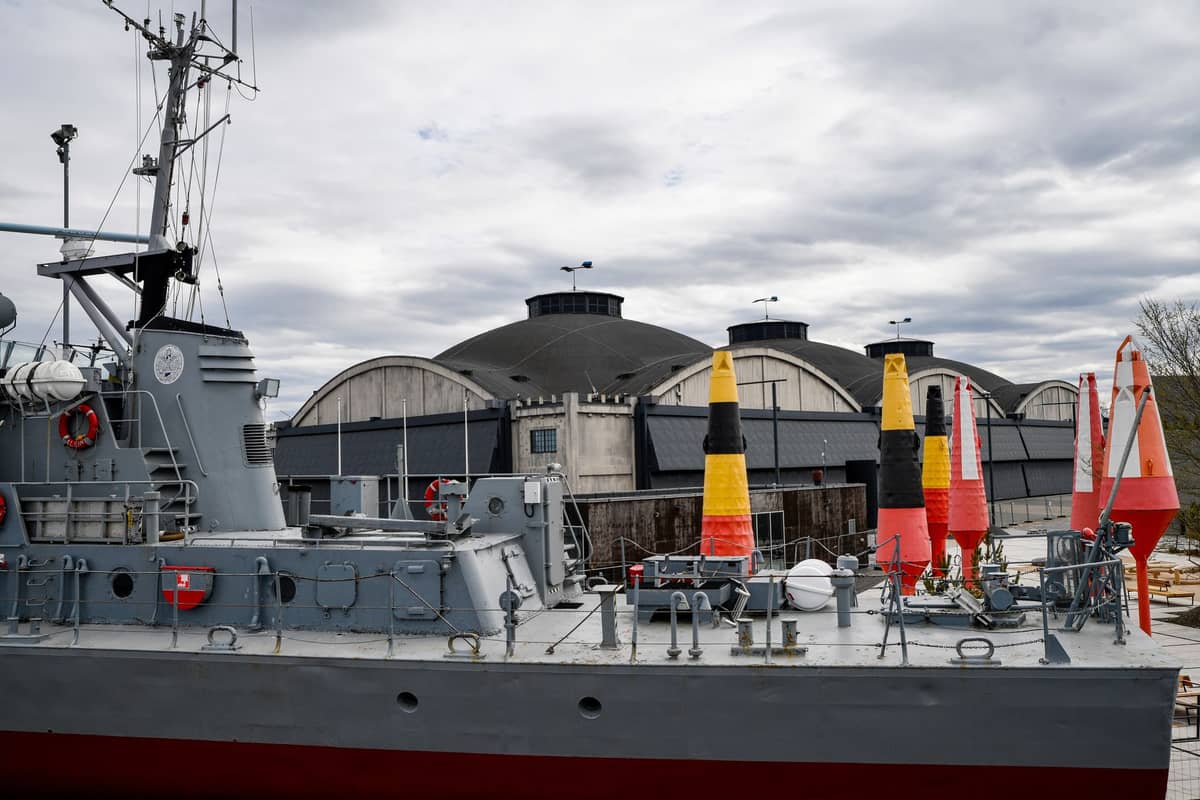
Most museums contain remarkable objects inside unremarkable buildings. Seaplane Harbour (Lennusadam) reverses that equation entirely. The building itself is the first exhibit: a vast 1916 reinforced-concrete seaplane hangar built for the Imperial Russian Navy, covering roughly 5,000 square metres of exhibition floor. The dome, spanning 36 metres without internal supports, was technically extraordinary for its era and remains among the finest examples of early reinforced-concrete shell construction in the world. Walking in for the first time, the scale stops people mid-stride.
Inside this engineering landmark, the Estonian Maritime Museum has assembled a collection that ranges from a fully restored World War Two-era submarine to historic seaplanes, torpedo boats, and a steam-powered icebreaker moored outside. Unlike collections that display objects behind glass, much of Lennusadam's exhibition invites visitors close enough to touch cold steel and peer into cramped engine rooms. The atmosphere is part industrial heritage, part playground for the genuinely curious.
💡 Local tip
Book tickets online before you visit, especially in summer. The museum draws significant visitor numbers in July and August, and the entrance queue during peak hours can be substantial.
The Architecture: A Hangar That Changed Building Science
The hangar was commissioned by the Russian Imperial Navy to shelter seaplanes and flying boats during World War One. Designed by the Danish engineering firm Christiani & Nielsen, the shell-concrete dome was an almost experimental technique at the time, predating many of the reinforced-concrete structures for which the 20th century became famous. The hangar faced the sea through enormous sliding doors, wide enough to roll out a flying boat at water level. Designed by the Danish engineering firm Christiani & Nielsen, the shell-concrete domes were an almost experimental technique at the time, predating many of the reinforced-concrete structures for which the 20th century became famous. The hangars faced the sea through enormous sliding doors, wide enough to roll out a flying boat at water level.
After Estonia's independence in 1918, the complex served various military and civilian functions before falling into disrepair during the Soviet period. By the time restoration began in the 2000s, the buildings required painstaking structural work. The museum opened here in 2012, and the restored interior preserves the raw texture of the original concrete, the broad ribbed vaulting, and a sense of industrial purpose that no amount of modern museological dressing could replicate.
Light inside the main hall shifts noticeably through the day. On a clear morning, natural light filters through clerestory windows high on the vaults, casting long pale bands across the floor. By early afternoon in summer, the interior glows warmly, making photography more flattering. On overcast days the light flattens and the steel exhibits look cooler and more austere, which suits the subject matter well in its own way.
Tickets & tours
Hand-picked options from our booking partner. Prices are indicative; availability and final rates are confirmed when you complete your booking.
Self-guided Discovery Walk of Tallinn city contrasts beyond the medieval walls
From 26 €Instant confirmationFree cancellationTallinn's art and culture tour with a local
From 62 €Instant confirmationFree cancellationHistorical walking tour of Tallinn with a local
From 599 €Instant confirmationFree cancellationIntroductory walking tour of Tallinn with a local guide
From 109 €Instant confirmationFree cancellation
What You Actually See: The Exhibition
The centrepiece is Lembit, a submarine launched in 1936 for the Estonian Navy. It is one of the oldest surviving submarines in the world that visitors can board and walk through. The interior is exactly as claustrophobic as you expect: narrow passageways, valves at every elbow, and a periscope that still swings. Children tend to love it; adults with any hint of claustrophobia may find it a brief visit. The hull's exterior, viewed from the hangar floor, has the mottled grey texture of decades of seawater.
Alongside Lembit, the exhibition includes restored Short Type 184 seaplanes suspended from the vault at angles that suggest they have just lifted off the water, a minelayer, torpedo boats, and an extensive collection of navigation instruments, uniforms, and archival documents. Interactive stations allow visitors to test navigation principles and handle replica equipment, which makes the museum far more engaging for children than a purely contemplative collection would be.
Outside on the waterfront, the steam icebreaker Suur Tõll is moored alongside a historic steam tug. Both vessels are open for boarding during operating hours. Standing on Suur Tõll's deck with Tallinn Bay stretching behind you is one of the better photo opportunities in the city, particularly in the golden light of a late afternoon. Bring a layer even in summer; the sea wind off the bay is sharper than it seems from the shore.
ℹ️ Good to know
Suur Tõll is the largest preserved steam icebreaker in the world that still has its original steam engines. It was built in 1914 in Stettin (now Szczecin) and served the Baltic for decades.
Opening Hours and Practical Details
From 1 May to 30 September, Lennusadam is open daily from 10:00 to 19:00. Between 1 October and 30 April, the museum opens Tuesday through Sunday, 10:00 to 18:00, and is closed on Mondays. Hours can vary around public holidays and special events, so it is worth checking the official site at meremuuseum.ee/lennusadam before making a special trip in the shoulder or winter season.
Admission is charged and prices vary by age, with family and concession rates available. Current tariffs are listed on the museum's ticketing page. The Tallinn Card covers entry as one of its included attractions, which can make it worthwhile if you plan to visit several museums in a short trip.
For visitors combining Lennusadam with broader Tallinn sightseeing, the Tallinn Card guide explains how the card stacks up against paying individually for attractions across the city.
Getting There: Location and Transport
The museum sits at Vesilennuki tn 6 in the Noblessner district, on the northern waterfront of Tallinn roughly 15 to 20 minutes on foot from the Old Town. The walk itself is pleasant in good weather, following the coastal path past Linnahall, the vast Soviet-era cultural complex, and then through the regenerated Noblessner shipyard area. It is a genuinely interesting route that gives you a cross-section of Tallinn's layered history.
Tram and bus routes serve the Põhja-Tallinn area, reducing the walk considerably for those arriving from further afield or in wet weather. For a full overview of getting around the city efficiently, see the guide to getting around Tallinn.
The museum has a car park on site, which is useful in winter when the waterfront walk feels less appealing. Cycling is a practical option in summer: the coastal route from Old Town is flat, and the Noblessner area has become a hub for cycling infrastructure as the waterfront has been developed.
⚠️ What to skip
The waterfront path between Old Town and Lennusadam passes Linnahall, which is a large decaying structure long discussed for renovation. The route is safe but can feel exposed and industrial in places, and is poorly lit after dark. Stick to the path and allow a little extra time if you are unfamiliar with it.
Best Time to Visit and Seasonal Considerations
Because the main exhibition is entirely indoors within the hangars, Lennusadam is one of the few Tallinn attractions that works just as well on a grey November afternoon as on a July morning. This makes it an ideal anchor for a rainy day, and the museum genuinely warrants more attention than most visitors allow in a single visit.
That said, the outdoor vessels and the waterfront setting are most enjoyable in warm, calm weather. Late May and June offer long daylight hours, moderate crowds, and the possibility of bright evening light on the bay if you linger after 18:00. July and August bring the peak visitor numbers; midweek mornings are noticeably quieter than weekend afternoons. September retains good light and sees crowds thin considerably.
Winter visits have their own character. The Noblessner waterfront can be bracingly cold, and ice sometimes forms along the shore. For a full picture of what Tallinn offers across different seasons, the best time to visit Tallinn guide covers the trade-offs in detail.
The Wider Noblessner Context
Lennusadam sits within the Noblessner district, a former submarine and shipbuilding factory that has been transformed into one of Tallinn's most interesting waterfront areas. Surrounding the museum you will find restaurants, a small marina, art spaces, and new residential development, all built around the bones of heavy industry. It is a convincing example of industrial regeneration that has not sanitised away the original character.
The adjacent Kalamaja neighbourhood is a short walk inland and offers some of the best independent cafes and local restaurants in the city, making Lennusadam and a Kalamaja wander a natural combination for a half-day.
The museum has a cafe on site for a mid-visit break, and the quality is reasonable for a museum cafe, with hot drinks, sandwiches and light lunches. It is not a destination in itself, but perfectly adequate if you need a rest mid-way through the collection.
Accessibility and Photography
The main hangar floor is large, flat, and fully accessible for wheelchair users and pushchairs. The vessels themselves present the usual shipboard challenges: steep ladders, narrow hatches, and cramped interiors. Submarine access in particular is genuinely difficult for anyone with limited mobility, and the museum provides information at the entrance about which exhibits are fully accessible. Visitors who cannot board the submarine can still view the hull exterior at close range from the hangar floor, which is itself impressive.
Photography is permitted throughout the museum without restrictions on personal cameras, which makes Lennusadam unusually generous compared to many European institutions. The interior of the hangar is genuinely photogenic: the vaulted concrete ceiling, the suspended aircraft, and the submarine hull all reward a wide-angle lens. Early in the day, light from the upper windows can create attractive shadows across the concrete floor. The outdoor deck of the icebreaker is best photographed in afternoon light when the sun comes from the south and west.
Insider Tips
- Start with the outdoor vessels (Suur Tõll and the tug) before entering the main hangar. In the afternoon, the light on the bay is better for photography, and you will have more energy for the indoor collection afterward. In bad weather, reverse the order.
- The submarine Lembit is the most-visited exhibit and gets congested on weekend afternoons. Arrive when the museum opens if you want to spend time inside without a queue forming behind you.
- The hangar ceiling is just as worth looking at as the exhibits on the floor. Stand under the apex of each vault and look straight up: the ribbed concrete curves are remarkable and almost never photographed.
- Combine the visit with the walk along the waterfront from Old Town, passing Linnahall. The Soviet brutalist scale of Linnahall is striking and gives useful context for understanding Tallinn's layered 20th-century history before you reach a site that spans Tsarist, Estonian, and contemporary chapters.
- The museum shop stocks a good selection of Estonian maritime history books in English, considerably better than the typical souvenir shop fare. If you have an interest in Baltic naval history, it is worth browsing before you leave.
Who Is Seaplane Harbour (Lennusadam) For?
- History and military heritage enthusiasts who want more than a conventional museum experience
- Families with children aged roughly 7 and above who engage well with hands-on, large-scale exhibits
- Architecture and engineering-focused travellers drawn to early 20th-century industrial construction
- Rainy-day visitors looking for a full half-day attraction that holds up regardless of weather
- Photographers seeking interiors with genuine visual drama and a permissive photography policy
Nearby Attractions
Other things to see while in Noblessner:
- PROTO Invention Factory
PROTO Invention Factory is a 2,500 m² interactive science and technology centre in Tallinn's Noblessner waterfront district. Built for curious minds of all ages, it puts invention, engineering, and design directly in your hands. A strong pick if you want something genuinely engaging beyond the Old Town's medieval loop.