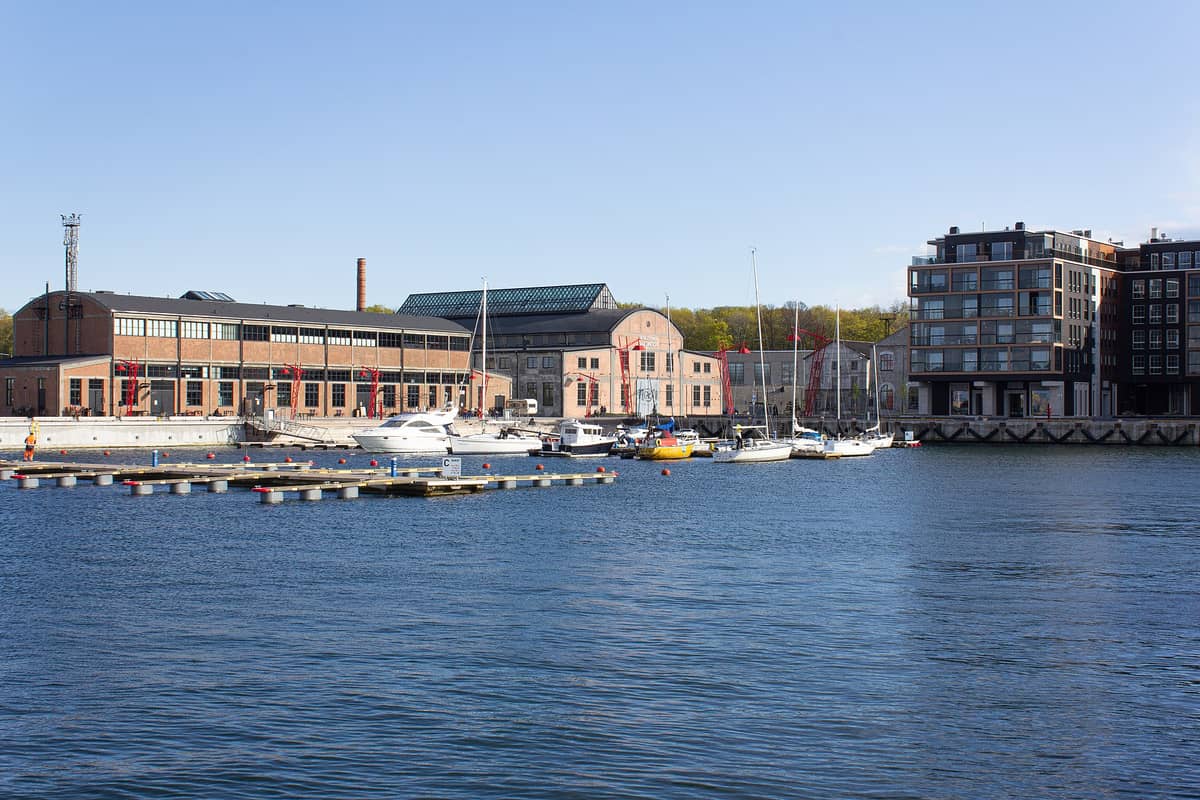
Noblessner is a former submarine shipyard on Tallinn's north coast that has been transformed into one of the city's most distinctive waterfront quarters. With a working marina, repurposed industrial buildings, and a growing food and culture scene, it sits at the edge of Põhja-Tallinn, close to Kalamaja and a short ride from the Old Town.
Noblessner is what happens when heavy industry meets sea air and a city decides to reinvent itself. Built as a tsarist-era submarine factory on Tallinn Bay, this compact waterfront quarter now holds a marina, converted brick warehouses, and some of the city's most atmospheric restaurants, all within sight of the medieval spires rising behind it.
Orientation
Noblessner sits on the western edge of Tallinn Bay, in the district of Põhja-Tallinn (North Tallinn). The quarter is anchored around Staapli tänav and the marina basin, facing north across open water toward the Gulf of Finland. To the immediate south and east lies Kalamaja, Tallinn's most talked-about creative neighbourhood, and beyond that the edges of the city centre. The Old Town's towers are visible from the waterfront on clear days, roughly two kilometres to the south-east in terms of line-of-sight but the walkable route runs around the harbour from Linnahall, making Noblessner effectively around two kilometres north-west of the Old Town.
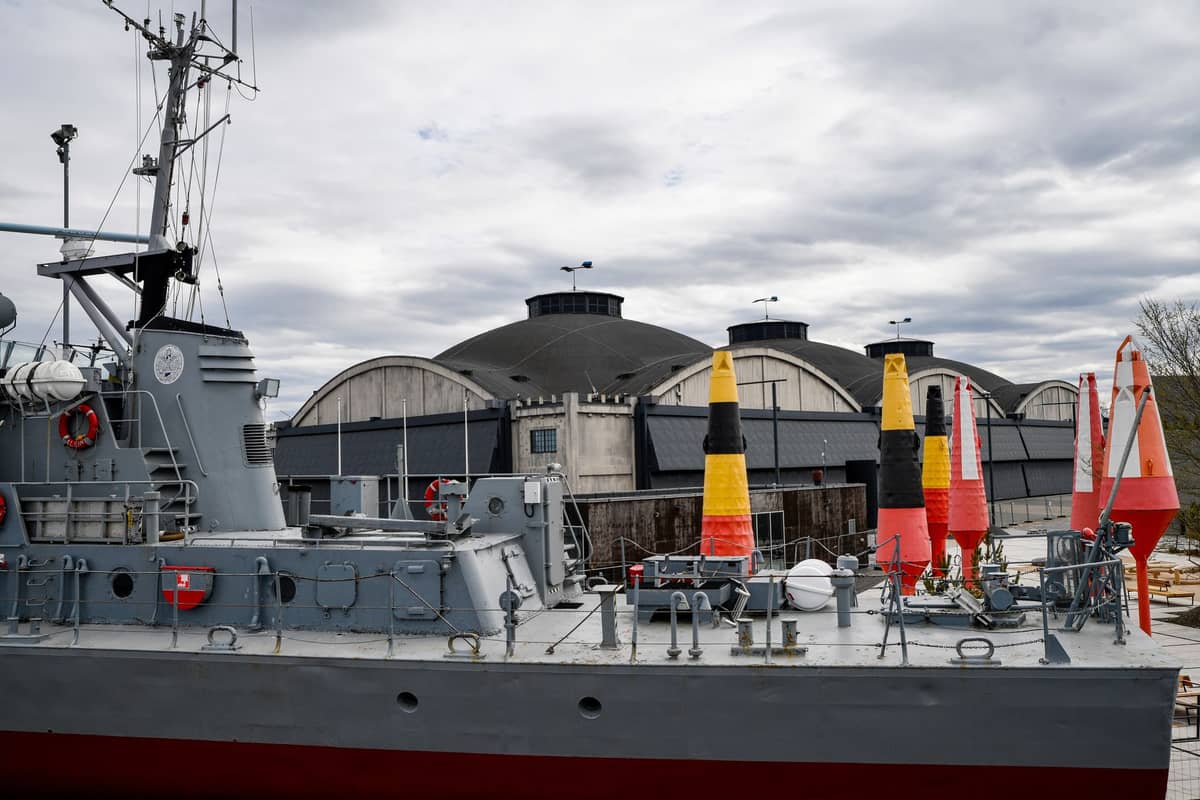
Noblessner shares a boundary with the Seaplane Harbour (Lennusadam) museum complex, which occupies the next cove to the east. This adjacency is important for planning: the two waterfront sites complement each other well, and most visitors combine them into a single half-day along the northern shore.
Further west along the coast is Stroomi Beach, Tallinn's most accessible urban beach, reachable in about fifteen minutes on foot from Noblessner. The wider Põhja-Tallinn district also connects inland to the Telliskivi Creative City and the Balti jaam railway station, giving this corner of the city a surprisingly rich range of things to do within a compact area.
ℹ️ Good to know
Noblessner is not a neighbourhood in the administrative sense. It is a named seafront quarter within Põhja-Tallinn, developed on privately redeveloped land. The official address cluster centres on Staapli tänav, near the marina entrance.
Character and Atmosphere
The industrial bones of Noblessner are its defining feature. The submarine factory was established here in 1912, built by the Nobel and Lessner families (the name is a portmanteau of the two), and for most of the twentieth century this stretch of coast was closed off, first as military-industrial territory under tsarist Russia, then during the Soviet period. That long isolation is why the brick warehouses and slipway structures survived largely intact. When redevelopment began in earnest in the 2010s, the developers chose to preserve rather than demolish, and the result is a district that feels genuinely layered rather than manufactured.
On a weekday morning, Noblessner is quiet in the way that post-industrial waterfronts often are. The marina is active from early: boats being readied, ropes checked, the low percussion of rigging against aluminium masts. The light off the bay in the morning hours is flat and silver, and the brick facades of the old factory buildings absorb it differently from the glass-and-steel additions. There are few tourists at this hour. The people you see are residents of the new apartment blocks, dog walkers, and delivery staff servicing the restaurants.
By mid-afternoon the quarter shifts. On summer weekends especially, the waterfront promenade fills with people drawn by the sea air, the outdoor seating, and the visual spectacle of boats in the marina. The area has a self-consciously design-forward quality: the public spaces are well-maintained, the signage is bilingual and tasteful, and the restaurants lean into the industrial-chic aesthetic. It is polished without feeling artificial, partly because the original structures are real and unignorable.
After dark, the atmosphere depends entirely on the season. In summer, Noblessner's waterfront bars and restaurants stay busy well into the evening, and the long Nordic daylight means it rarely feels truly dark before 10pm in June and July. In winter, the quarter retreats into itself. The marina empties, the outdoor terraces close, and the brick buildings take on a more austere quality in the grey Baltic light. It is not unpleasant in the colder months, but the area's appeal is significantly reduced without the sea-season energy.
History: From Submarine Factory to Seafront Quarter
The Nobel and Lessner factory was purpose-built to manufacture submarines for the Imperial Russian Navy, one of several industrial projects the Nobel family financed along the Baltic coast in the early twentieth century. Construction on this stretch of shoreline was substantial: workshops, slipways, and associated infrastructure were built to handle vessels of considerable size. The First World War interrupted production plans, and the subsequent collapse of imperial Russia ended the factory's original purpose before it had fully operated.
During Estonia's first independence period between the wars, and then again under Soviet rule, the site continued as an industrial area but was closed to the general public for most of the twentieth century. This isolation preserved the architecture. When Estonian independence was restored in 1991 and the privatisation of industrial land followed in subsequent decades, the site eventually passed into the hands of BLRT Grupp in 2001 with ambitious plans for mixed-use waterfront development, and shipbuilding and repairs continued here until 2018. The redevelopment gathered momentum through the 2010s, with the marina opening, restaurants establishing themselves in converted buildings, and residential construction filling in the edges of the site.
Today Noblessner is held up as a successful example of industrial heritage repurposing. It is not yet fully complete as a district: some parcels are still being developed, and the mix of old brick structures and new construction gives parts of the area an unfinished edge. That rawness is part of its character.
What to See and Do
The most significant attraction immediately adjacent to Noblessner is the Seaplane Harbour museum, housed in three restored hangars from the early twentieth century on the next cove east of the marina. It contains one of the most impressive maritime collections in the Baltic states, including a full-size icebreaker, a submarine, and dozens of historic vessels and flying boats. Even if you have limited time in the area, the hangars alone justify the short walk from Noblessner's main square.
Within Noblessner itself, the marina is the anchor of the visit. The basin holds a substantial number of sailing and motor vessels, and in summer it becomes a social hub in its own right. Watching boats navigate the entrance channel, or simply sitting on the stone quay with a coffee, accounts for a significant part of what the quarter offers. The public square at the centre of the development hosts occasional markets and outdoor events, particularly in warmer months.
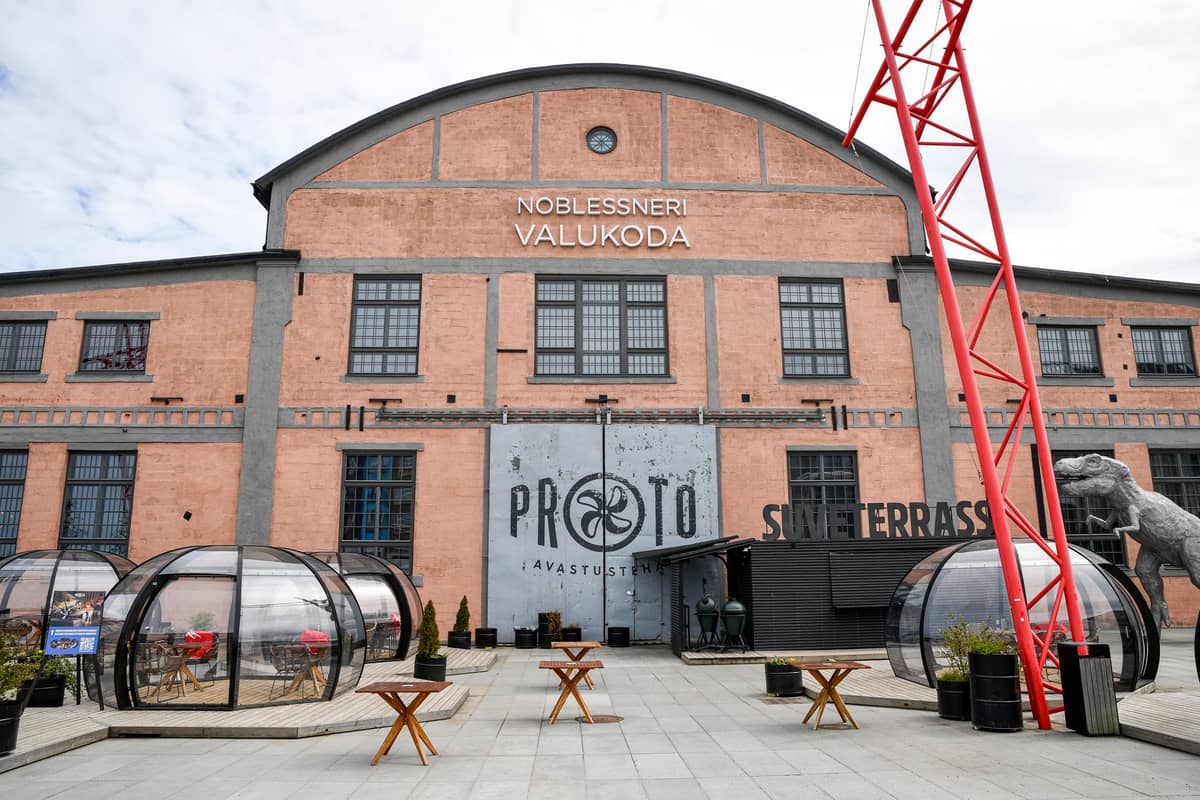
The converted industrial buildings along the waterfront are worth examining closely. Several have been adapted for restaurant, bar, and cultural use while retaining original structural elements: exposed brick, heavy timber beams, and industrial-scale windows. The contrast between these materials and the modern fittings inside makes for genuinely interesting interiors. Walking the perimeter of the marina and along the seafront promenade takes perhaps twenty to thirty minutes at a relaxed pace.
Walk the marina promenade for views across Tallinn Bay and back toward the Old Town skyline
Explore the converted brick warehouses along Staapli tänav
Visit the Seaplane Harbour (Lennusadam) museum complex next door, one of Europe's best maritime museums
Check the events calendar for outdoor markets, concerts, and film screenings on the central square
Continue west along the coast to Stroomi Beach for a longer seafront walk
💡 Local tip
If you visit the Seaplane Harbour, buy your ticket in advance online. The museum is popular with families and tour groups, and queues at the entrance can be significant on summer weekends.
Eating and Drinking
Noblessner has developed a food and drink scene that stands out. The restaurants here are not casual tourist traps: they tend toward the considered end of the spectrum, with kitchens that take the setting seriously and menus that reflect both Estonian produce and broader European influences. The industrial interiors and waterfront terraces give even a straightforward lunch a sense of occasion.
The quarter's restaurants occupy converted factory spaces, with high ceilings, bare brick, and views either into the marina basin or across the bay. In summer, outdoor seating on the waterfront is the obvious choice, and tables fill quickly on warm evenings. The price range is mid to upper-mid: expect to pay more than you would in Kalamaja's neighbourhood spots, but less than the tourist-facing restaurants inside the Old Town walls.
The broader food and drink culture of Põhja-Tallinn, including Kalamaja and Telliskivi, is worth understanding as context. Noblessner sits at the seafront end of a corridor that includes the Balti Jaam Market near the railway station, where you can find cheaper produce, street food, and local goods. If Noblessner's restaurants feel too expensive for a full meal, the market is a fifteen-minute walk away and offers an entirely different price point.
For drinks, the waterfront bars here are best experienced in the evening when the day-tripper crowds thin and the light over the bay takes on a longer, more golden quality. Some venues operate year-round, while others close or reduce hours significantly outside the May-to-September season. It is worth checking ahead in the shoulder months of April and October.
⚠️ What to skip
Noblessner is a small district with a limited number of restaurants. On busy summer weekends, all outdoor terrace seating can fill by early evening. Booking ahead is strongly advisable if you have a specific restaurant in mind.
Getting There and Around
By public bus, the most direct route to Noblessner from the city centre is bus 73, which stops at Noblessneri, the closest stop to the marina. Bus 3 also serves the wider area, with stops including Kungla and Volta in Kalamaja, from which the waterfront is a short walk north. Timetables and route maps are available at transport.tallinn.ee. Tickets can be purchased directly from the driver in cash, or via the Ühiskaart prepaid smartcard.
From the Old Town, Noblessner is approximately two kilometres, which translates to a twenty-five to thirty minute walk along the coastal path that runs north and then west from Linnahall. This walk has merit in its own right: it passes the overgrown concrete amphitheatre of Linnahall, a Soviet-era monument worth seeing, and eventually reaches the Seaplane Harbour before arriving at Noblessner's marina entrance.
Cycling is an effective way to reach and explore this area. Noblessner is served by Tallinn's shared bike network, and the route from the city centre to the waterfront is largely flat. Electric scooters available through various city apps are also commonly used in this part of Põhja-Tallinn. Driving is possible, and parking exists near the marina, but it is not necessary given the reasonable walking and cycling distances from the city centre.
For visitors combining Noblessner with the wider Põhja-Tallinn offer, a logical loop runs from Balti jaam station through Kalamaja and Telliskivi, then north to Noblessner's waterfront, and back east past the Seaplane Harbour. This circuit covers most of the area's highlights in a half-day on foot, or less time by bike.
💡 Local tip
The coastal walk from Linnahall to Noblessner and onward toward Stroomi Beach is one of Tallinn's better free urban routes. It is at its best in the morning before midday heat builds in summer, or on clear autumn afternoons when the bay is visible all the way to Naissaar island.
Where to Stay
Noblessner itself has limited dedicated hotel accommodation given its compact size and the fact that much of the new construction has been residential rather than hospitality-focused. Visitors who want to be within walking distance of the waterfront quarter are generally better served by looking at accommodation in Kalamaja, which sits immediately to the south and has a growing range of boutique guesthouses and apartments, or in the wider city centre where hotel density is highest.
Staying in Kalamaja or the central part of Põhja-Tallinn puts you within fifteen minutes on foot of both Noblessner and Telliskivi, while remaining a manageable distance from the Old Town by bus or a thirty-minute walk. For a full overview of where to position yourself in Tallinn, the where to stay in Tallinn guide covers the trade-offs between neighbourhoods in detail.
Noblessner is best suited as a destination rather than a base. The area's appeal is in its specific waterfront atmosphere, not in its convenience as a hub for reaching the rest of the city. A day visitor or half-day visitor will get the full Noblessner experience without needing to sleep there.
Is Noblessner Worth Visiting?
Noblessner rewards visitors who are interested in Tallinn beyond the medieval walls. It is not a replacement for the Old Town, but it offers something the Old Town cannot: a sense of how a post-industrial city reshapes itself, with the sea as backdrop. The combination of the Seaplane Harbour next door, the marina, the converted industrial architecture, and the waterfront food scene makes for a genuinely satisfying half-day.
That said, Noblessner is not for every traveller. If your time in Tallinn is limited to a day or two, the Old Town, Kadriorg, and perhaps Kalamaja should take priority. Noblessner earns its place on a three-day itinerary, combined with the Seaplane Harbour as the main draw. First-time visitors on a short trip may find it feels a little thin on its own.
The area is most rewarding between May and September. Outside those months, the seasonal businesses close, the marina empties, and the waterfront loses much of its social energy. Winter visits are possible and the industrial architecture has its own appeal in the cold light, but manage expectations accordingly. For those planning a longer stay, the three days in Tallinn itinerary integrates Noblessner naturally into a broader city exploration.
TL;DR
Noblessner is a converted submarine shipyard on Tallinn Bay, now a waterfront quarter with a marina, restaurants, and cultural venues in Põhja-Tallinn.
Best visited from May to September when the marina is active, outdoor terraces are open, and the coastal walk is at its most appealing.
Combine with the adjacent Seaplane Harbour museum and a walk through Kalamaja for a full Põhja-Tallinn half-day.
Reached by bus 73 (Noblessneri stop) or a 25–30 minute coastal walk from the Old Town via Linnahall.
Best suited to travellers on a three-day visit or longer, or anyone interested in post-industrial urban design, maritime history, and waterfront dining beyond the tourist centre.
Two days is enough to cover Tallinn's medieval heart, its finest museums, and a taste of the city's creative neighbourhoods. This itinerary is structured day by day, starting with the Old Town's UNESCO-listed streets and working outward to Kadriorg and Kalamaja.
Three days is the ideal amount of time to experience Tallinn properly. This itinerary takes you from the medieval Old Town through creative Kalamaja, out to the elegant Kadriorg district, and to the seaside, covering the city's essential sights without rushing.
Tallinn's skyline is defined by its churches. The medieval Old Town alone holds centuries of Lutheran, Orthodox, and Catholic history within a few walkable blocks. This guide covers the finest religious buildings in the city, from active cathedrals to a deconsecrated Gothic church housing world-class medieval art.
Tallinn stands out for museum culture. This guide covers the city's finest institutions, from a fortress-turned-medieval-art-gallery to one of Europe's most dramatic maritime museums, with practical advice on saving money and planning your visits.
Tallinn rewards visitors in every season, but the right time to go depends entirely on what you want. This guide breaks down weather, crowd levels, pricing, and key events month by month so you can make an informed decision.
Tallinn rewards those who look up and out. Whether you want the classic medieval rooftop panorama, sweeping Baltic Sea vistas, or the highest point in Estonia, this guide covers every viewpoint worth your time, from the free hilltop terraces of Toompea to a Soviet-era tower with a glass floor.
Tallinn sits at the perfect launching point for exploring Estonia's wild coast, ancient forests, and dramatic landscapes. These are the best day trips from Tallinn, covering everything from national parks and island escapes to medieval ruins and surreal Soviet-era sites.
Tallinn rewards budget travellers generously. The medieval Old Town is freely walkable, city museums open their doors for free on the first Sunday of each month, and the parks, beaches, and viewpoints cost nothing at all. This guide covers the best free experiences in the city, organised so you can plan a full day without spending a cent.
Tallinn is a compact city, but knowing which transport option to use, and when, saves time and money. This guide covers public transport tickets, trams, buses, taxis, ride-hailing apps, airport connections, and the biggest misconceptions visitors run into.
Tallinn is one of Europe's most intact medieval capitals, a UNESCO-listed city that pairs cobblestoned Old Town lanes with a surprisingly modern, tech-forward culture. This guide cuts through the hype to tell you exactly what you'll get, what it costs, and when to go.
Tallinn sits on the Gulf of Finland, and its coastline delivers genuine beach options within minutes of the city centre. This guide covers the best sandy stretches, island beaches reached by ferry, and scenic coastal stops worth combining with a swim.
The Tallinn Card promises free entry to 50+ attractions and unlimited public transport for 24, 48, or 72 hours. But does it actually save you money? This guide breaks down the real costs, the best-value attractions, and the scenarios where skipping the card makes more sense.
The Tallinn Christmas Market transforms Town Hall Square into one of Europe's most atmospheric winter destinations. This guide covers exact dates, opening hours, food and drink to try, the best times to visit, and practical tips for getting the most out of your trip.
Tallinn is one of Europe's most effortlessly romantic cities, with a medieval Old Town, baroque parks, and a waterfront that rewards slow exploration. This guide covers the best experiences for couples, from golden-hour viewpoints and art museum dates to island escapes and atmospheric cobblestone lanes.
Tallinn rewards those who look beyond the postcard views. From a flooded Soviet quarry to a bog walk inside city limits, these are the experiences that separate a good Tallinn trip from a great one.
Summer transforms Tallinn into its most animated version, with nearly endless daylight, major festivals, and the Old Town packed with visitors. This guide covers the climate, key events, best activities, and practical advice on crowds and pricing so you can plan a summer trip that actually works.
Tallinn in winter is cold, atmospheric, and significantly cheaper than summer — but it rewards visitors who go in with realistic expectations. This guide covers the climate, costs, seasonal highlights, transport, and the honest truth about snow guarantees.
Tallinn preserves one of Europe's most intact medieval city centres, shaped by Danish kings, Hanseatic merchants, and the Livonian Order. This guide covers the history, the key sites, and how to explore them without wasting a day.
Tallinn is surrounded by bogs, forests, islands, and coastline within an hour of the city centre. This guide covers the best outdoor escapes, from wild island day trips and waterfall walks to urban parks and Estonia's most dramatic landscapes.
Tallinn stands out when it comes to nightlife. Whether you want cocktails in a 13th-century cellar, craft beer in a converted factory yard, or a club that runs until 05:00, this guide breaks down exactly where to go, what to pay, and when to show up.
Everything you need to walk Tallinn's UNESCO-listed medieval Old Town on your own terms. This guide covers the full route from Viru Gate to Toompea Hill, admission costs for key stops, seasonal crowd patterns, and practical tips for getting the most from 2-4 hours on foot.
Tallinn is one of Northern Europe's most rewarding cities for budget travelers. Between its largely free medieval Old Town, weekday lunch deals, and efficient public transport, a comfortable visit is achievable for €32-45 per day. This guide covers exactly where to save and what's genuinely worth paying for.
Shopping in Tallinn spans medieval souvenir lanes, a three-storey Baltic market with 300 traders, contemporary Estonian design studios, and sprawling Soviet-era food halls. This guide covers every major area, what each does best, realistic prices, and the seasonal quirks that affect when and where you should go.
Tallinn carries its Soviet-era history in concrete and memory. This guide covers the key museums, former KGB facilities, Soviet monuments, and practical tips for exploring one of Europe's most layered occupation histories — from the Vabamu Museum to Linnahall and beyond.
The Tallinn to Helsinki ferry is one of Europe's most convenient short sea crossings, taking as little as 2 hours with up to 10 daily departures year-round. This guide covers every operator, realistic prices, seasonal scheduling, day trip logistics, and what to expect on board.
Tallinn stands out for family travel. Medieval towers to climb, a full-size submarine to explore, a zoo with polar bears, and island ferry trips make it genuinely exciting for children. This guide covers the best family activities across the city and beyond.
Tallinn rewards visitors well beyond its famous Old Town. This guide covers the best things to do in Tallinn across history, culture, nature, and nightlife, with practical advice on what to skip, when to go, and how to make the most of your time in Estonia's capital.
Estonian cuisine is more nuanced than most visitors expect. This guide covers the essential dishes, the best neighbourhoods to eat well, realistic price ranges for 2026, and practical advice on where the food is worth it and where it is not.
Tallinn's dining scene stretches far beyond the medieval Old Town, with Michelin-recognized kitchens, creative Kalamaja eateries, and modernist Estonian cuisine in the Rotermann Quarter. This guide breaks down where to eat, what to spend, and which tourist traps to avoid.
Tallinn divides neatly into distinct neighbourhoods, each with a different atmosphere, price point, and trade-off. This guide breaks down every major area so you can choose the right base for your trip, whether you want cobblestones and cathedral views or hip cafés and local pricing.