Telliskivi Creative City: Inside Tallinn's Most Interesting Neighborhood Hub
Once a Soviet-era railway and electrical engineering factory complex, Telliskivi Creative City has become the cultural and commercial center of Tallinn's Kalamaja district. With free entry, 200+ businesses, open-air markets, and a genuinely local crowd, it offers a compelling contrast to the medieval Old Town.
Quick Facts
- Location
- Telliskivi tn 60a, Kalamaja neighborhood, Põhja-Tallinn district, Tallinn
- Getting There
- Trams 1 or 2 to Balti Jaam or Telliskivi stop; 15–20 min walk from Old Town
- Time Needed
- 1.5–3 hours for a thorough visit; longer if eating or attending events
- Cost
- Free entry to the complex; individual venues priced separately
- Best for
- Independent travelers, design lovers, foodies, and anyone curious about modern Tallinn
- Official website
- telliskivi.cc/en
What Telliskivi Creative City Actually Is
Telliskivi Creative City (Estonian: Telliskivi Loomelinnak) is a repurposed industrial compound in the Kalamaja neighborhood of northern Tallinn. The 25,000-square-meter site was formerly a Soviet railway and electrical engineering factory complex. Today it hosts over 200 businesses and organizations, including independent cafes, design studios, concept stores, galleries, a cinema, co-working spaces, and event venues. It is officially recognized as Estonia's largest creative center.
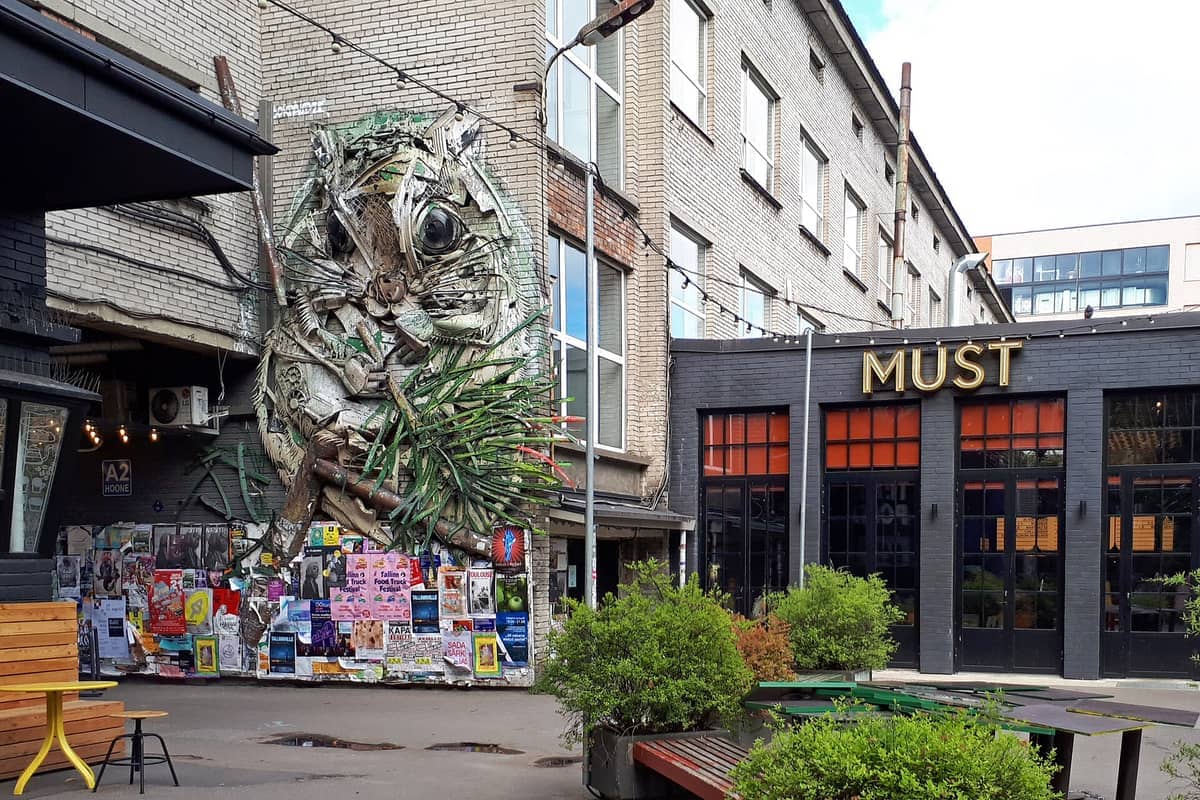
The complex began its transformation in the mid-2000s and formally opened as a creative hub in 2009. What distinguishes Telliskivi from similar repurposed industrial spaces in other European cities is that it remains genuinely mixed-use and locally oriented. You will find a furniture restorer operating next to a specialty coffee bar, a ceramics studio across the courtyard from a vinyl record shop. The tenant mix changes, but the industrial character of the buildings stays consistent: exposed brick, corrugated metal roofing, large warehouse doors left deliberately rough.
💡 Local tip
Shopping street hours are typically Fri 11:00–19:00 and Sat–Sun 11:00–17:00, but individual businesses set their own schedules. A handful of cafes and bars open earlier and stay open well past 19:00. The outdoor area is accessible 24 hours a day, year-round.
The Physical Experience: Layout and Atmosphere
Walking into Telliskivi from the Balti Jaam tram stop takes about five minutes on foot. You cross from the area around the Baltic Station — one of Tallinn's main rail hubs — and the transition is noticeable. The street narrows, the architecture shifts from post-Soviet functional to painted brick warehouse, and the foot traffic changes character. Fewer rolling suitcases, more people carrying canvas tote bags.
The complex itself is not a single building but a cluster of low industrial structures arranged around open yards and pedestrian lanes. There is no grand entrance, no turnstile, no map handed to you at a gate. You simply walk in through one of several open access points. The largest courtyard functions as the social center of the complex, where people eat at outdoor picnic tables in warm weather, and food trucks or market stalls set up on weekends.
Underfoot, the surfaces are largely level: compacted gravel yards, concrete floors inside the buildings, and flat brick paths between structures. Some of the older buildings have slightly uneven entrances or steps without ramps, so wheelchair accessibility is inconsistent across venues. If mobility is a concern, it is worth contacting individual venues or the Telliskivi management directly at info@telliskivi.cc before visiting.
Tickets & tours
Hand-picked options from our booking partner. Prices are indicative; availability and final rates are confirmed when you complete your booking.
Self-guided Discovery Walk of Tallinn city contrasts beyond the medieval walls
From 26 €Instant confirmationFree cancellationTallinn's art and culture tour with a local
From 62 €Instant confirmationFree cancellationHistorical walking tour of Tallinn with a local
From 599 €Instant confirmationFree cancellationIntroductory walking tour of Tallinn with a local guide
From 109 €Instant confirmationFree cancellation
How the Place Changes Through the Day
Telliskivi reads differently depending on when you arrive. In the morning, before 11:00, the commercial areas are largely closed, but a few cafes are already serving. The courtyards are quiet enough that you can appreciate the scale and texture of the buildings without distraction. The smell of fresh coffee drifts from the early openers, and you can hear the clatter from the kitchen of whichever restaurant is prepping for lunch.
Midday on a weekday brings a mix of Tallinn office workers on lunch breaks and tourists who have made their way over from the Old Town. The outdoor seating fills up fast in good weather. This is also when the shops are most reliably staffed and when gallery spaces tend to be quietest for browsing.
Weekend afternoons are the peak experience. When a flea market or pop-up event is running — which is common on Saturdays from spring through early autumn — the central courtyard becomes genuinely packed. Stalls sell vintage clothing, handmade ceramics, secondhand books, and local food products. The noise level rises considerably: conversation, music from a stage or portable speaker, children running between market tables. If you want to browse shops or galleries with some peace, come on a weekday morning instead.
In the evening, the character shifts again. By 20:00 the shops are closed, but the bars and restaurant terraces are active. The lighting changes the whole feel of the yard — the brick walls glow, the rough industrial edges soften, and the crowd skews younger. Winter evenings are darker and colder, but some venues string warm lights outside and keep their terraces heated for as long as the temperatures allow.
What to Do Here: A Practical Walkthrough
Most visitors spend their time across four activities: browsing shops, eating and drinking, exploring galleries or cultural spaces, and attending scheduled events. For a structured approach, the Tallinn Old Town walking tour pairs well with a Telliskivi visit in the afternoon, since the two areas are close enough to combine in a single day.
The independent shops are concentrated along the internal pedestrian lanes. Expect design goods, local fashion labels, bookshops with strong English-language sections, cycling accessories, and homeware. Most items carry Estonian or Nordic design influences, and prices reflect the independent retail model rather than tourist-market pricing.
For food, the options range from quick street food to sit-down restaurants with full menus. The cafe culture here leans specialty coffee, with multiple roasters and independent operators. Weekend market stalls add seasonal variety, especially for street food from cuisines not otherwise well-represented in Tallinn.
Telliskivi sits directly adjacent to Balti Jaama Turg, a large market at the Baltic Station. If you are combining a visit to both, budget an extra hour. The Balti Jaam Market operates on its own schedule and has a different, more traditional-market feel, with produce, Soviet-era collectibles, and inexpensive street food alongside vintage goods.
Historical and Cultural Context
The industrial history embedded in Telliskivi's brick walls is not decorative nostalgia. This compound was part of the Soviet-era infrastructure that connected Tallinn to the wider USSR rail network. The buildings were functional to the point of austerity, built for locomotive repair and light industrial manufacturing, not for aesthetics. When Estonia regained independence in 1991 and the Soviet economy collapsed, sites like this across the city were left vacant or underused.
Kalamaja, the surrounding neighborhood, had a similar trajectory: working-class, industrial, neglected through the 1990s, then gradually repopulated by artists and young families from the 2000s onward. The story of Telliskivi is inseparable from the story of Kalamaja's transformation. For more context on the neighborhood, see the Kalamaja neighborhood guide.
If you want deeper context on how Estonia processed its Soviet past more broadly, the Tallinn Soviet history guide connects several sites across the city into a coherent narrative.
Photography, Seasons, and Practical Tips
Photographically, Telliskivi is most rewarding in early morning light or on overcast days, when the brick textures and murals read without harsh shadows. The complex's exterior walls carry rotating large-format murals that change with commissions and festivals, so the streetart selection at any given visit will differ from photos taken a year earlier.
Summer (June to August) is peak season for the outdoor market events and terrace culture. The long Estonian evenings mean natural light lingers until nearly midnight, which extends outdoor socializing. Winter visits are quieter, with fewer tourists and a colder atmosphere, but the shops and indoor venues remain open. For a broader look at seasonal timing, the best time to visit Tallinn guide covers the tradeoffs by month.
Wear comfortable shoes with grip. The courtyard surfaces can be slippery in rain or during the freeze-thaw cycles of Estonian spring and autumn. There is no on-site parking structure for visitors, so arriving by tram is strongly recommended. Trams 1 and 2 both stop at Balti Jaam or Telliskivi and run frequently throughout the day.
ℹ️ Good to know
The Tallinn Card covers public transport including trams but does not provide discounts for most shops or standard cafes at Telliskivi. It may offer benefits at specific venues or events; check the current card benefits before your trip.
The Verdict: Who Gets the Most From Telliskivi
Telliskivi is most rewarding for people who are curious about how Tallinn actually functions beyond its medieval center. The Old Town is extraordinary, but it serves tourists. Telliskivi serves Tallinn residents who want specialty coffee, independent retail, and cultural programming. That distinction matters: the quality is high because the customer base is discerning and local.
Travelers with only one day in Tallinn will likely find their time better spent in the Old Town itself, especially at sites like the Tallinn Town Hall or the Kumu Art Museum. But anyone spending two or more days, or specifically interested in contemporary design and food culture, will find Telliskivi genuinely worthwhile.
Visitors expecting a polished shopping mall experience will be disappointed. The complex is intentionally rough around the edges, and the tenant mix changes. Some buildings feel slightly neglected on the outside. That unfinished quality is a feature for some visitors and a deterrent for others.
⚠️ What to skip
If you visit on a Tuesday or Wednesday morning in low season (November to March), a significant number of shops and cafes may be closed or operating on reduced hours. Weekends are reliably busier and fully operational.
Insider Tips
- The flea market events held on weekend mornings from spring through early autumn are genuinely good for vintage clothing, Soviet-era objects, and local handmade goods. Arrive before 11:00 to see the stalls at their fullest before the best items sell.
- The courtyards and pedestrian lanes are publicly accessible at all hours. If you want to photograph the murals and industrial architecture without crowds in the frame, arrive before 09:00 on a weekday.
- Several of the cafes inside Telliskivi also function as evening bars and host live music or DJ sets on weekends. Check the official Telliskivi events calendar at telliskivi.cc before your visit to see what is scheduled.
- The adjacent Balti Jaam Market (a few minutes' walk away through the station area) has a completely different character: produce, cheap street food, and a mix of vintage and everyday goods. Combining both in one visit gives you a fuller picture of the neighborhood.
- Telliskivi is about a 15-minute walk from the Old Town, but the route through Kalamaja is worth taking slowly rather than rushing. The wooden houses and quiet residential streets between the two areas are some of the most photogenic in Tallinn outside the medieval center.
Who Is Telliskivi Creative City For?
- Independent travelers curious about contemporary Tallinn beyond the Old Town
- Design and food enthusiasts looking for locally owned shops and specialty cafes
- Photographers interested in industrial architecture, street art, and candid urban scenes
- Weekend visitors who want to browse a flea market or attend a cultural event
- Anyone combining a multi-day Tallinn itinerary who wants context on how the city has evolved since the Soviet era
Nearby Attractions
Other things to see while in Kalamaja:
- Balti Jaam Market
Balti Jaam Market, known in Estonian as Balti Jaama Turg, sits beside Tallinn's central train station in the Kalamaja district. Reopened in 2017, it brings together local food producers, vintage traders, flower sellers, and street food vendors under one roof. Entry is free, and the market runs seven days a week year-round.
- Fotografiska Tallinn
Part international gallery, part rooftop restaurant, part cultural hub, Fotografiska Tallinn opened in 2019 inside the creative complex at Telliskivi and has become one of the city's most compelling modern attractions. Here is everything you need to plan a worthwhile visit.