Fotografiska Tallinn: The Photography Museum Worth the Detour
Part international gallery, part rooftop restaurant, part cultural hub, Fotografiska Tallinn opened in 2019 inside the creative complex at Telliskivi and has become one of the city's most compelling modern attractions. Here is everything you need to plan a worthwhile visit.
Quick Facts
- Location
- Telliskivi 60a-8, Kalamaja, Tallinn
- Getting There
- Tram stop Balti jaam (lines 1, 2); 10-min walk through Telliskivi
- Time Needed
- 1.5 to 3 hours, longer if dining
- Cost
- Dynamic pricing for adults; children 0-15 enter free. Check the official tickets page before visiting.
- Best for
- Photography and contemporary art lovers, design-minded travelers, rainy-day culture
- Official website
- tallinn.fotografiska.com/en
What Fotografiska Tallinn Actually Is
Fotografiska Tallinn is the Estonian outpost of a Scandinavian museum brand founded in Stockholm in 2010. The network has since expanded to New York, Berlin, and beyond, but the Tallinn venue carries its own distinct atmosphere, shaped partly by the surrounding neighborhood and partly by the building itself. It opened in June 2019, making it one of the newer serious cultural institutions in a city that takes culture seriously.
The museum describes itself as a contemporary museum of photography, art, and culture. In practice, that means rotating international and Nordic photography exhibitions of genuine ambition, not the kind of commercial photo shows that fill conference hotels. The programming shifts regularly, so even if you visited a year ago, the walls will show you something different today.
ℹ️ Good to know
Fotografiska uses dynamic ticket pricing, meaning costs vary by day and time of visit. Children aged 0-15 always enter free. Check fotografiska.ee/Pilet/en for current prices and to book in advance.
The Building and the Neighborhood
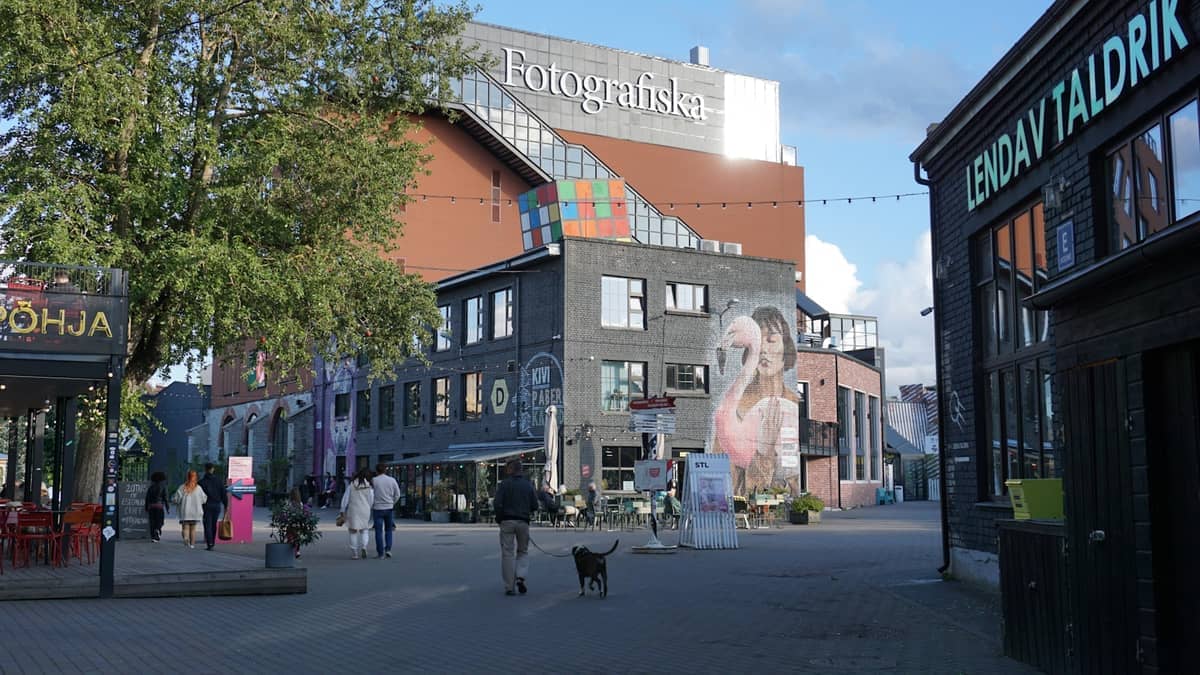
The museum sits at Telliskivi 60a-8, inside Tallinn's Telliskivi Creative City, a former industrial complex that has been repurposed into studios, cafes, vintage shops, and event spaces over the past decade. The contrast between the gritty brick exteriors of the old buildings and the polished interiors of the museum is part of what makes arriving here feel different from walking into a conventional gallery.
Telliskivi sits on the edge of the Kalamaja area, one of the most interesting parts of Tallinn for anyone willing to leave the medieval center. The area has a working-class wooden-house character mixed with a younger creative energy, and walking through it before or after your visit adds real context. If you're arriving from Tallinn Old Town, the walk takes roughly fifteen minutes and passes the city's main train station, Balti jaam. The tram lines 1 and 2 stop at Balti jaam, making this one of the better-connected modern venues in the city.
The building itself rises several floors, with gallery space occupying the middle levels, a ground-floor cafe for casual visits, and a sixth-floor restaurant that has views worth seeking out on their own. The elevator connects all floors, making the venue accessible for visitors with mobility considerations, though anyone requiring specific assistance arrangements should contact the museum directly before arriving.
Tickets & tours
Hand-picked options from our booking partner. Prices are indicative; availability and final rates are confirmed when you complete your booking.
Self-guided Discovery Walk of Tallinn city contrasts beyond the medieval walls
From 26 €Instant confirmationFree cancellationTallinn's art and culture tour with a local
From 62 €Instant confirmationFree cancellationHistorical walking tour of Tallinn with a local
From 599 €Instant confirmationFree cancellationIntroductory walking tour of Tallinn with a local guide
From 109 €Instant confirmationFree cancellation
The Exhibitions: What to Expect
Fotografiska Tallinn does not maintain a permanent collection in the traditional sense. The museum runs rotating exhibitions that typically run for several months at a time, with multiple shows open simultaneously across different gallery spaces. The caliber of photographers represented has included internationally recognized names alongside emerging artists from the Baltic and Nordic regions.
The gallery rooms are well-lit and thoughtfully laid out. Large-format prints are common, and the curatorial approach tends toward the thematic rather than the merely documentary. Some shows explore social and political subjects with intensity; others are more formally focused on the medium itself. The tone shifts depending on what is showing, which is both the appeal and the risk: on an unlucky visit, the current roster might not match your interests. Checking the exhibitions page before booking is genuinely worthwhile.
💡 Local tip
Visit the official site to see which exhibitions are currently running before you buy tickets. Programming changes several times a year, and planning around a specific show you care about makes the experience significantly richer.
The museum is not enormous. A focused visitor can move through all current exhibitions in ninety minutes. If you linger, read wall texts carefully, and take your time with images that hold your attention, two to two-and-a-half hours is a more realistic estimate. Budget more time if you intend to eat at the restaurant.
Time of Day and Crowd Patterns
Weekday mornings between opening at 9:00 and around noon tend to be the quietest. The galleries feel nearly private, the light from the building's upper floors is clean, and there is none of the weekend foot traffic that can make lingering in front of a photograph feel rushed. If you have the flexibility, a Tuesday or Wednesday morning visit is the version of Fotografiska Tallinn that most closely matches its best self.
Friday evenings are a different experience entirely. The museum stays open until midnight on Fridays, and the later hours attract a younger crowd mixing gallery visits with drinks at the cafe or dinner upstairs. If you enjoy cultural venues with a social atmosphere, Friday after 19:00 has its own appeal, and the exhibitions look different by artificial light. Saturdays and Sunday afternoons draw families and tourists from the Old Town, which means more noise and some competition for space in popular gallery rooms.
Photography inside the galleries is generally permitted for personal use, but flash is not. The large prints respond well to natural daylight hours, and if you are serious about documenting what you see, the morning sessions are the practical choice.
The Restaurant and Cafe
The sixth-floor restaurant is an attraction in its own right and does not require a museum ticket to visit. The views across Kalamaja's rooftops and toward the bay give the space a perspective on Tallinn that is hard to find elsewhere in the city. The menu focuses on seasonal, locally sourced ingredients and is positioned at the upper end of the price scale, though not unreasonably so by northern European standards.
The ground-floor cafe is a lighter option: coffee, pastries, and lighter food in a space that functions as a neighborhood meeting point as much as a museum amenity. On weekday mornings it has a calm, almost local atmosphere, and it is worth arriving a few minutes early to settle in before the galleries open.
Getting There and Practical Notes
Tram lines 1 and 2 both stop at Balti jaam, the main railway station, which is a roughly ten-minute walk from the museum through the Telliskivi complex. The walk itself passes through the creative district and is worth taking rather than rushing. Buses also serve the area; check transport.tallinn.ee for current routes. If you are staying in Kalamaja or the Noblessner waterfront area, the museum is walkable in under fifteen minutes.
Taxis and ride-hailing apps including Bolt are reliable and inexpensive for the short distance from the Old Town. Driving and parking in the Telliskivi area is possible but can be limited during peak hours.
Opening hours are Monday through Thursday 09:00 to 20:00, Friday 09:00 to midnight, Saturday 10:00 to 20:00, and Sunday 10:00 to 18:00. The museum is open all year round. If you are planning a visit as part of a broader Tallinn itinerary, the Tallinn Card may offer entry benefits worth checking before you buy tickets separately.
⚠️ What to skip
The museum is located inside the Telliskivi complex, which is a cluster of repurposed industrial buildings. The entrance is not immediately visible from the main road. Allow a few extra minutes to navigate the courtyard if it is your first visit.
Is It Worth Your Time?
Fotografiska Tallinn earns its reputation when the current programming is strong, and it usually is. For travelers whose interests lean toward contemporary photography, visual art, or design, it ranks among the most satisfying things to do in the city and holds up well against the Fotografiska venues in other capitals.
For visitors whose primary interest is medieval history and Old Town architecture, the museum represents a different kind of experience entirely and requires a conscious detour. That detour is worthwhile, but if your time in Tallinn is very short, prioritize accordingly. Travelers who want to go deeper on contemporary culture in the city should pair Fotografiska with a visit to the Kumu Art Museum in Kadriorg, which covers Estonian and international visual art across a much larger permanent collection.
Visitors expecting a traditional art museum with a stable permanent collection will be disappointed. The rotating model means quality is tied to programming cycles, and on a day when none of the current shows speak to you, the museum can feel thin for the ticket price. That said, the building, the restaurant, and the neighborhood context mean even a mixed exhibition day has compensating pleasures.
Insider Tips
- Check the exhibitions page at tallinn.fotografiska.com before buying tickets. A ten-minute read on what is currently showing will either fire your enthusiasm or save you the admission cost.
- Friday evening visits after 20:00 have a social atmosphere distinct from daytime gallery visits. The cafe and restaurant stay animated until late, and the quieter upper gallery floors feel almost like a private viewing.
- The sixth-floor restaurant does not require a museum ticket. If you want the view and a proper meal without committing to the full museum experience, book a table directly.
- The walk from Balti jaam tram stop through the Telliskivi Creative City courtyard is more interesting than arriving by taxi. Give yourself ten to fifteen minutes and look at what is happening in the complex around you.
- If you are traveling with children up to 15 years old, admission is free for them, which makes this a lower-risk stop for family groups who want to introduce younger travelers to serious photography.
Who Is Fotografiska Tallinn For?
- Photography enthusiasts and anyone who follows contemporary visual culture
- Design-minded travelers looking for modern Tallinn beyond the medieval Old Town
- Rainy-day visitors who want a genuinely absorbing indoor experience
- Couples combining a gallery visit with dinner at the rooftop restaurant
- Repeat visitors to Tallinn who have already covered the main historical sites
Nearby Attractions
Other things to see while in Kalamaja:
- Balti Jaam Market
Balti Jaam Market, known in Estonian as Balti Jaama Turg, sits beside Tallinn's central train station in the Kalamaja district. Reopened in 2017, it brings together local food producers, vintage traders, flower sellers, and street food vendors under one roof. Entry is free, and the market runs seven days a week year-round.
- Telliskivi Creative City
Once a Soviet-era railway and electrical engineering factory complex, Telliskivi Creative City has become the cultural and commercial center of Tallinn's Kalamaja district. With free entry, 200+ businesses, open-air markets, and a genuinely local crowd, it offers a compelling contrast to the medieval Old Town.