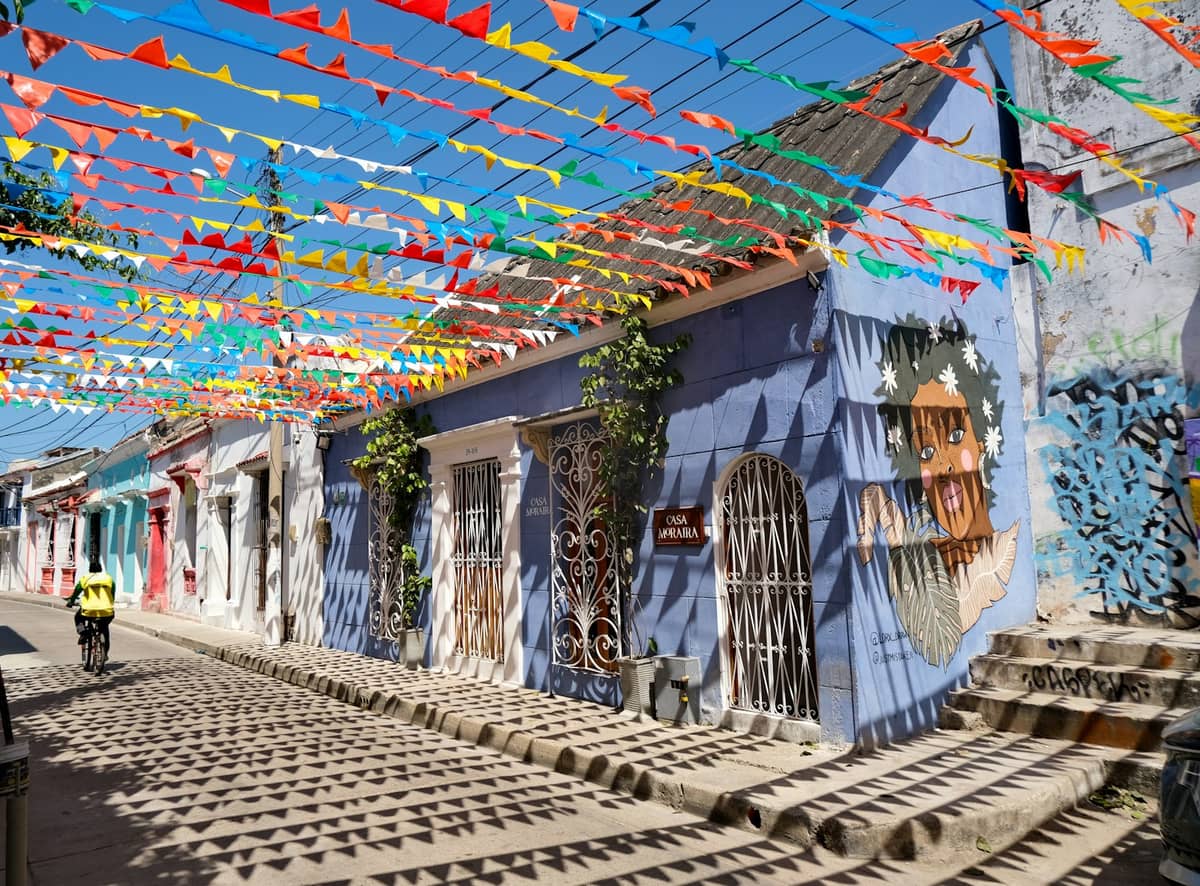
Getsemaní sits just outside Cartagena's colonial Walled City, separated from the Old Town by the ancient fortifications and connected via the Puente Román. Once the artisan and working-class quarter of Cartagena de Indias, it has evolved into the city's most creatively charged neighborhood, where street murals cover every other wall, Plaza de la Trinidad fills with locals every evening, and the bar scene on Calle del Arsenal runs until the early hours.
Getsemaní is the neighborhood that Cartagena's Walled City wishes it could be: less polished, more alive, and far more honest about who actually built this city. Just across the Puente Román from the Torre del Reloj, it packs colonial churches, political history, world-class street art, and a genuine nightlife scene into a walkable grid of pastel-painted streets.
Orientation: Where Getsemaní Sits in Cartagena
Getsemaní occupies a peninsula immediately south and southeast of the Walled City, physically separated from El Centro and San Diego by Cartagena's original colonial fortifications. The clearest entry point for most visitors is through the Clock Tower Gate, known locally as the Torre del Reloj, which marks the boundary between the Old Town and the start of Getsemaní's commercial edge along Calle del Arsenal.
To build a mental map: the walled Old Town sits to your north and east. Walk south through the Torre del Reloj gate and cross the Puente Román, and you are immediately in Getsemaní. The neighborhood's main artery, Calle de la Media Luna, runs roughly east-west through its heart, while Calle del Arsenal traces the waterfront along the southern edge. The social center, Plaza de la Trinidad, sits a few blocks in from the main gate, roughly mid-neighborhood.
The neighborhood's northern boundary is the old city wall itself. Moving south and west, Getsemaní thins toward the water and the old port infrastructure. As you push north past Calle 30, the streets become noticeably quieter and less tourist-oriented. The southern waterfront faces the inner bay, with views toward Manga island and, in the far distance, Tierra Bomba.
Getsemaní connects naturally to the rest of the historic core. San Diego, Cartagena's quieter colonial quarter, is a short walk through the Old Town walls. Bocagrande, the hotel-heavy beach peninsula, is about 15 minutes by taxi heading southwest. For a broader look at how all of Cartagena's neighborhoods fit together, the where to stay in Cartagena guide maps out the options clearly.
Character and Atmosphere: What Getsemaní Actually Feels Like
Early mornings in Getsemaní belong entirely to its residents. By seven o'clock, women carry groceries back from corner stores, mototaxis idle on Calle de la Media Luna, and the smell of fresh arepas drifts out from small kitchens. The streets are narrow enough that the morning light only hits the upper floors of the colonial buildings for the first hour after sunrise, keeping the sidewalks cool and shadowy. It is one of the few times in Cartagena's tourist center when you can walk without weaving through other travelers.
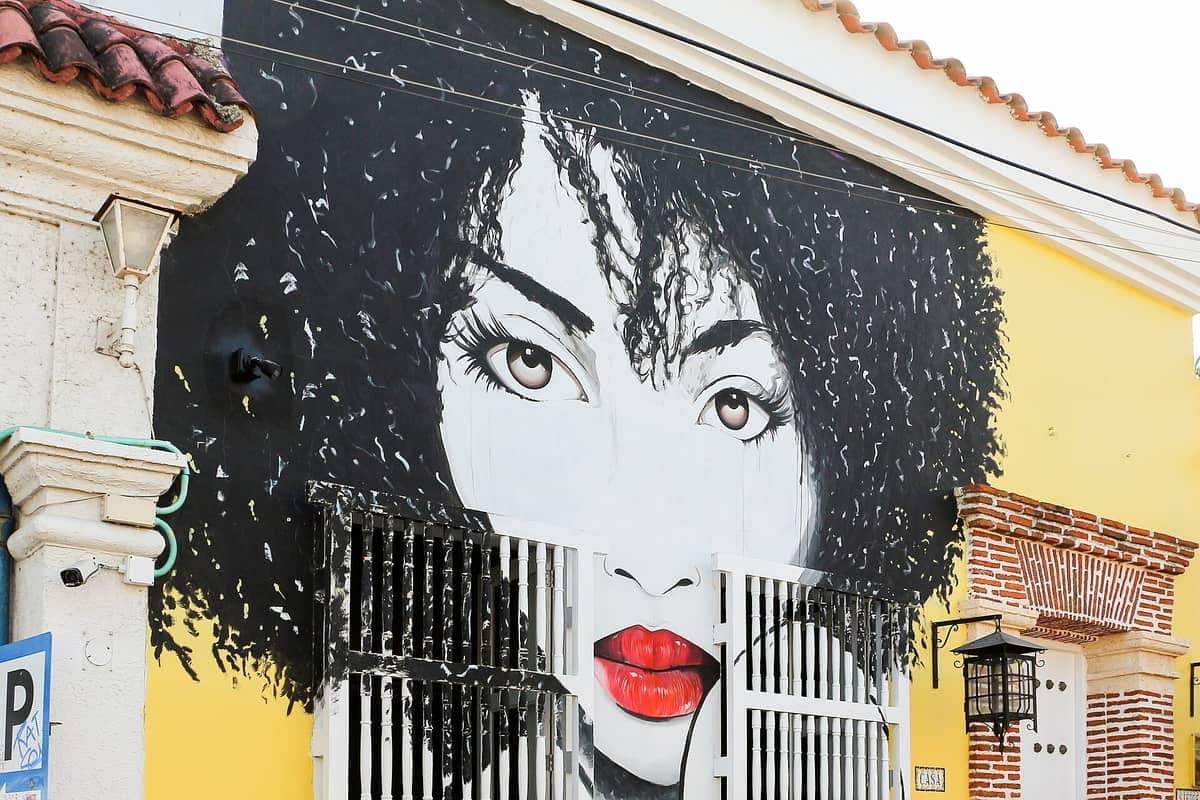
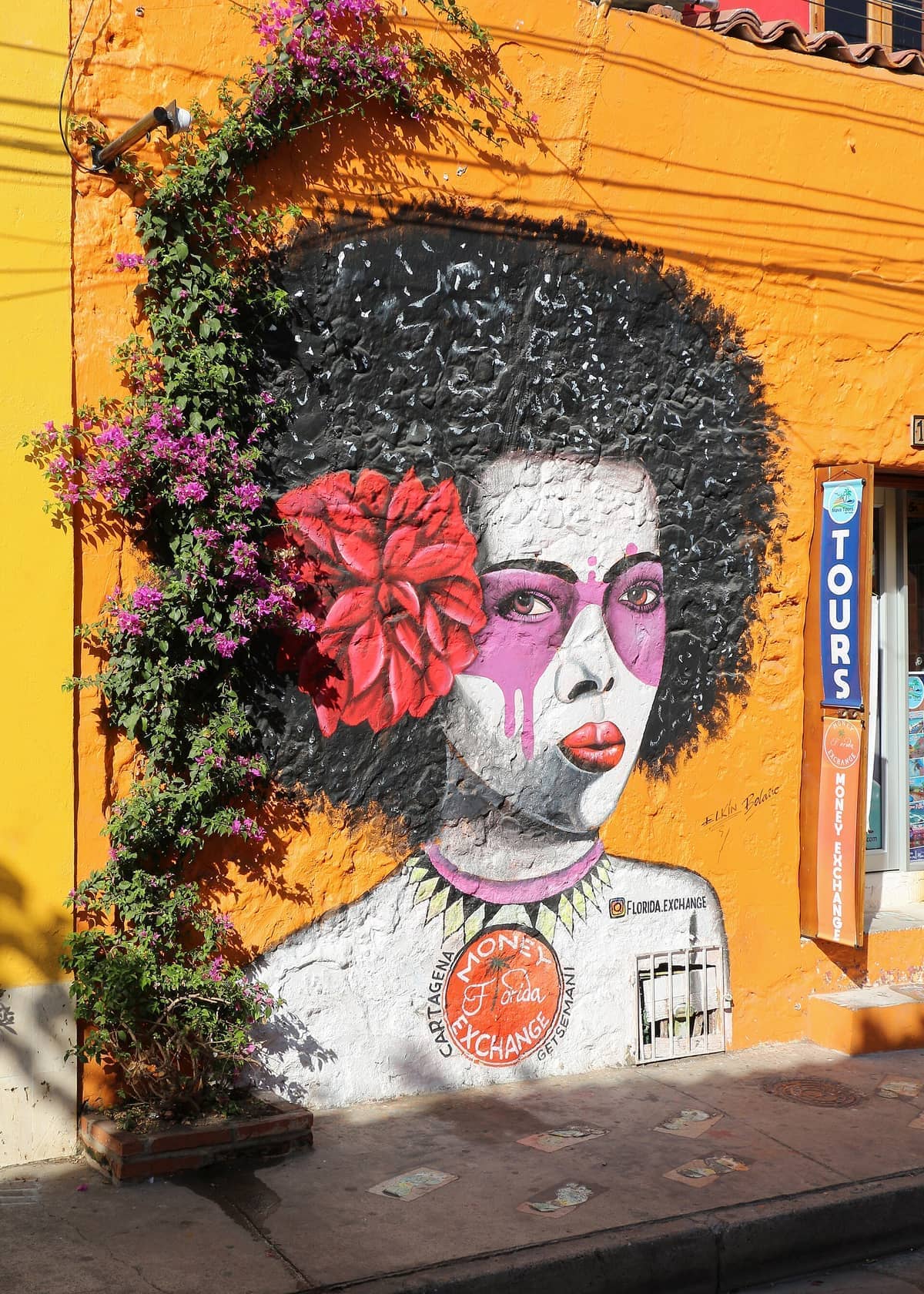
By mid-morning the street-art tourists arrive, phones raised toward the murals on Calle de la Sierpe, Callejón Angosto, and the famous umbrella-lined stretch of Calle 31, sometimes called Calle de la Sombrilla. The artwork ranges from large-scale political murals referencing Cartagena's Afro-Colombian history to abstract pieces commissioned from visiting international artists. The quality is consistently high and the walls change regularly: a piece that was there in January may be painted over by March.
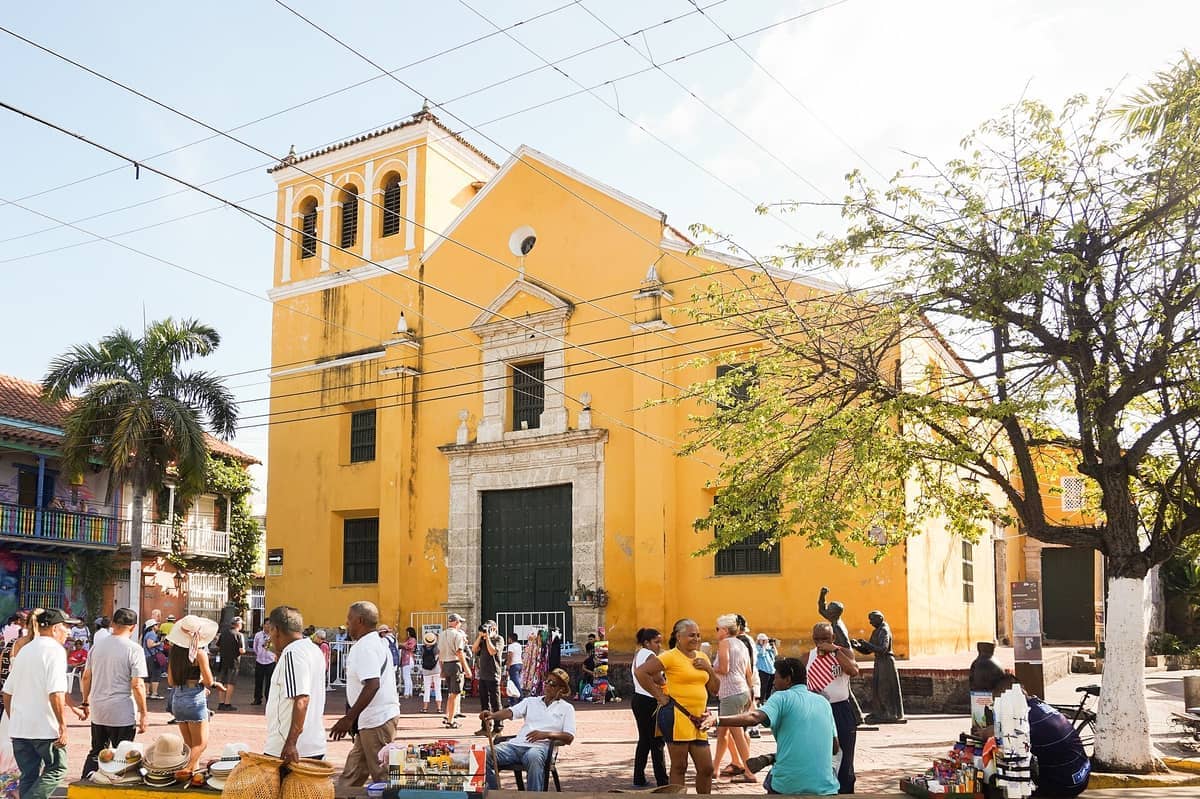
The afternoon heat drives most activity indoors between noon and four. This is the time to sit in a shaded café near Plaza de la Trinidad, drink tinto, and watch the square slowly empty. By five o'clock the plaza reanimates: kids play football in the center, older residents claim benches along the edges, and the first evening visitors start arriving from the Walled City. The Iglesia de la Santísima Trinidad catches the gold late-afternoon light on its facade in a way that rewards patience.
After dark, Getsemaní shifts register entirely. Plaza de la Trinidad becomes an outdoor living room for the entire neighborhood, with vendors selling cold beer from coolers, cumbia and salsa spilling out of the bars that ring the square, and a crowd that mixes locals, Colombian tourists from other cities, and international backpackers. The energy is loose and genuinely social in a way that the more curated restaurant strips of the Old Town are not. It is loud, it is warm, and it continues well past midnight on weekends.
⚠️ What to skip
As you move north in Getsemaní past roughly Calle 30, the neighborhood transitions away from the tourist circuit and can feel uncomfortable at night, particularly on poorly lit side streets. Stick to the central blocks around Plaza de la Trinidad and Calle del Arsenal after dark, and take the same precautions you would in any urban neighborhood: no flashy jewelry, keep phones out of sight on quiet streets.
History: Why Getsemaní Matters
Getsemaní's identity is inseparable from its history as Cartagena's working-class quarter during the colonial period. While the Walled City housed Spanish merchants, clergy, and colonial administrators, Getsemaní was where the artisans, freed Africans, and enslaved people lived and worked. The neighborhood was physically separated from El Centro by the city walls and a moat, a deliberate spatial segregation that reflected colonial social hierarchies.
This history makes Plaza de la Trinidad's political significance legible. On the night of November 11, 1811, it was here that residents of Getsemaní gathered and marched to demand Cartagena's declaration of independence from Spain, making this square one of the physical birthplaces of Colombian independence. The church overlooking the plaza dates to around 1600 to 1643, and the square itself has been a site of popular assembly for four centuries.
The neighborhood's Afro-Colombian heritage is woven into its character in ways that extend well beyond any single landmark. The street art frequently references this history explicitly. For travelers interested in understanding Cartagena's African roots more deeply, the Afro-Colombian culture guide provides essential context for what you are seeing on these walls.
The late 2000s and early 2010s brought rapid gentrification as boutique hotels, bars, and restaurants moved in, attracted by cheap rents and proximity to the Old Town. Long-term residents were pushed out by rising costs in a process that continues today. The tension between Getsemaní's working-class identity and its growing popularity is visible in the street art itself: some murals celebrate the community, others openly critique the displacement.
What to See and Do
Start any visit at Iglesia de la Santísima Trinidad and the plaza it faces. The church interior is modest but historically significant, and the square around it is the best place to understand the neighborhood's rhythms before heading further in. From here, the street-art circuit unfolds naturally: walk south toward Calle de la Sierpe, then double back through Callejón Angosto, then north on the umbrella-decorated Calle 31. Budget at least an hour if you stop to look properly.
The section of Cartagena's defensive walls that runs along Getsemaní's eastern edge is often overlooked in favor of the more famous wall circuit within the Old Town, but it offers unobstructed views toward Castillo San Felipe de Barajas and the hills beyond. Walking this stretch in the late afternoon gives you a sense of the city's military geography that the more crowded Old Town walls cannot always provide.
Calle del Arsenal, running along the neighborhood's waterfront edge, is worth walking at multiple times of day. In the morning it is relatively quiet, with a few shops opening. By evening it becomes Getsemaní's main bar strip, with live music starting around nine. The Calle del Arsenal nightlife scene is louder and cheaper than anything inside the Walled City, and considerably less staged.
Plaza de la Trinidad: the social heart of the neighborhood, best visited at both mid-morning and evening to understand the contrast
Iglesia de la Santísima Trinidad: 17th-century church with significant independence-era history
Getsemaní street art circuit: Calle de la Sierpe, Callejón Angosto, and Calle 31 offer the highest concentration of murals
Eastern city walls: the Getsemaní stretch offers views toward Castillo San Felipe and Cerro de La Popa
Calle del Arsenal: waterfront bar and music strip, liveliest after 9pm
💡 Local tip
The street art in Getsemaní changes frequently. If you are specifically interested in the murals, local guides who specialize in the neighborhood's art scene can point you to the newest pieces and explain the historical and political references that are easy to miss without context.
Eating and Drinking
Getsemaní has Cartagena's most varied and honestly priced food scene. At street level, look for small fondas and corner restaurants serving bandeja paisa-style lunches, empanadas de pipián, and freshly made arepas. The neighborhood is one of the better places in the city to eat the way locals eat, and for a fraction of the cost you would pay inside the Walled City walls. The Cartagena street food guide covers the wider city scene, but Getsemaní deserves particular attention for its lunch spots on the side streets off Calle de la Media Luna.
The restaurant scene around Plaza de la Trinidad has matured significantly over the past decade. You will find everything from Italian-influenced menus to creative Colombian cuisine at mid-range prices (roughly 30,000 to 70,000 COP per main course). Several rooftop restaurants and bars have opened overlooking the square, which offer reasonable food alongside good views, though quality varies and it is worth checking recent reviews before committing to a full dinner at any of them.
For drinking, Calle del Arsenal is the main event. The bars here tend to serve cheap beer and aguardiente, with live salsa and cumbia most evenings from Thursday through Sunday. The vibe is unpretentious: plastic chairs, cold beer, and music loud enough to feel but not so loud you cannot talk. A few craft cocktail bars have opened on the streets feeding into Plaza de la Trinidad, catering to the boutique-hotel crowd with more composed drinks at correspondingly higher prices.
ℹ️ Good to know
Cartagena's nightlife scene extends well beyond Getsemaní. For a full picture of where the city goes after dark, including clubs in Bocagrande and the late-night circuit in the Old Town, the Cartagena nightlife guide covers the options by neighborhood and music style.
Getting There and Around
From Rafael Núñez International Airport (IATA: CTG), Getsemaní is approximately 6 to 7 kilometers by road, roughly 15 to 25 minutes depending on traffic. Official airport taxis quote flat fares to the historic center that are now somewhat higher than previous 16,000 to 20,000 COP ranges (verify current rates before traveling, as fares change). Ride-hailing apps including Uber operate in Cartagena and provide a useful alternative to negotiating with individual taxi drivers. For more on getting around the city, see the getting around Cartagena guide.
On foot, Getsemaní is the easiest neighborhood in Cartagena to navigate. The entire area of interest for most visitors covers perhaps eight to ten city blocks, and the grid is relatively regular. From the Torre del Reloj gate, Plaza de la Trinidad is about a five-minute walk. From the plaza to the far end of Calle del Arsenal is another five to seven minutes. You do not need transport to move within Getsemaní itself.
Walking into the Old Town from Getsemaní takes three to five minutes through the Clock Tower gate. El Centro and San Diego are both walkable from Getsemaní, making the neighborhood a practical base for exploring the entire historic core without relying on taxis for short trips.
For trips to Bocagrande or the airport, taxis are the practical choice. Transcaribe buses run through the area, but routes and stops require local knowledge to navigate efficiently. Mototaxis are widely available for very short trips and are the fastest way to move on congested streets, though they carry the usual risk trade-offs of any motorcycle transport in a city with heavy traffic.
Where to Stay in Getsemaní
Getsemaní has become one of Cartagena's most interesting places to stay, with a mix of boutique hotels converted from colonial houses, mid-range guesthouses, and some of the city's better-value hostels. The accommodation here is generally 20 to 40 percent cheaper than equivalent properties inside the Walled City, and staying in Getsemaní puts you closer to the city's actual social life rather than its tourist-facing surface. For a full comparison of Cartagena's accommodation zones, the where to stay in Cartagena guide breaks down each neighborhood's trade-offs.
The best location within Getsemaní for most travelers is within two or three blocks of Plaza de la Trinidad. This puts you close enough to the bar scene to walk home easily, but the streets in this central zone are well-enough trafficked that they feel safe at night. Properties right on the plaza itself will be noisy on weekend evenings: light sleepers should look for somewhere on a side street a block or two back.
Getsemaní suits independent travelers, couples looking for something with more personality than Bocagrande's hotel towers, and anyone on a mid-range or budget who wants easy access to both the nightlife and the Old Town. Families with very young children may find the evening noise and street-level energy harder to manage, though the neighborhood is perfectly safe during the day.
Is Getsemaní Right for You?
Getsemaní is the most honestly Cartagenero part of the tourist circuit. It has genuine history, genuine art, and a social scene that has not been entirely packaged for outside consumption. That said, it is not without drawbacks: the noise from Plaza de la Trinidad can carry late into the night, certain streets require awareness after dark, and the ongoing gentrification means that what made the neighborhood interesting is slowly being priced out. If you want the version of Cartagena that feels most like a real city rather than a preserved colonial set piece, Getsemaní is the right choice. If you want pristine cobblestones and resort-style quiet, look at Bocagrande instead.
TL;DR
Getsemaní sits immediately outside Cartagena's Walled City, walkable from the Torre del Reloj gate in under five minutes, making it the most convenient base for exploring the historic core.
The neighborhood's street art, colonial churches, and Plaza de la Trinidad give it more authentic character than the more polished Old Town neighborhoods of El Centro and San Diego.
The bar and music scene on Calle del Arsenal and around Plaza de la Trinidad is Cartagena's liveliest and most local-feeling nightlife, running late on weekends.
Exercise standard urban caution after dark, particularly on side streets north of Calle 30, which are quieter and less well-lit than the tourist-facing central blocks.
Best suited for independent travelers, couples, and anyone seeking mid-range or budget accommodation with genuine neighborhood character; less ideal for families with young children or light sleepers who need quiet evenings.
Three days is enough time to experience the best of Cartagena de Indias: the UNESCO-listed walled city, a boat trip to the Rosario Islands, the street art and nightlife of Getsemaní, and a memorable day trip beyond the city. This itinerary is built for first-time visitors who want depth, not just highlights.
Cartagena de Indias is a year-round destination, but when you go shapes everything from hotel rates to beach conditions. This guide breaks down the dry season, rainy season realities, peak holiday crowds, and the sweet-spot months that most travelers overlook.
Cartagena de Indias sits at the heart of Afro-Colombian history. From the UNESCO-recognized Cultural Space of San Basilio de Palenque to the living traditions embedded in Getsemaní and beyond, this guide covers the history, the neighborhoods, and the practical details for experiencing this heritage authentically.
Cartagena, Colombia has a small but well-defined selection of true all-inclusive resorts. This guide breaks down every major option, where they sit geographically, what's included, current price ranges, and the real trade-offs so you can book with confidence.
Cartagena's beach scene spans gritty urban strips, local fishing villages, and some of the most spectacular Caribbean coastline in South America. This guide covers every option, from the accessible shores minutes from the old city to the powdery white sands of Isla Barú and the coral-fringed Rosario Islands.
Cartagena de Indias holds one of the best-preserved colonial ensembles in the Americas, recognized as a UNESCO World Heritage Site. This guide covers every major building, practical entry details, the best times to visit, and what most travelers get wrong about exploring the historic center.
Cartagena de Indias delivers one of the Caribbean's most genuinely romantic settings: a UNESCO-listed walled city, warm turquoise waters, and a sunset that turns the stone ramparts gold every evening. This guide covers the best romantic activities, where to stay, when to visit, and how to avoid the tourist traps that can flatten an otherwise exceptional trip.
Docking at Cartagena de Indias gives you one of the Caribbean's great port days — colonial forts, walled-city streets, and beach escapes all within reach. This guide covers exactly how to get from the pier to the good stuff, what to prioritize with limited time, and what to skip.
December is one of Cartagena de Indias' busiest and most expensive months, but also one of its best for weather. This guide covers the climate, seasonal events, booking realities, and practical tips to make the most of a December visit to Colombia's Caribbean coast.
Cartagena sits at the gateway to some of the Caribbean's most rewarding island destinations. This guide covers the coral reefs of the Rosario Islands, the white sands of Playa Blanca on Barú, the quieter shores of Tierra Bomba, and the best beaches and nature trips you can reach by boat or road from the city.
From rooftop cocktails above the Walled City to salsa-soaked plazas in Getsemaní, Cartagena de Indias comes alive after dark. This guide covers every major nightlife zone, realistic price ranges, what to skip, and how to plan a great night out in Colombia's most atmospheric Caribbean city.
Cartagena de Indias has a reputation as an expensive Caribbean destination, but the reality is more nuanced. With the right neighborhoods, transport choices, and food strategy, a week in Colombia's most photogenic city is well within reach of budget travelers. Here is exactly how to do it.
Cartagena de Indias has one of the most rewarding street food scenes on the Caribbean coast of Colombia. This guide covers the essential snacks, the best neighborhoods and markets to find them, realistic price ranges, and clear advice on what to skip.
Cartagena de Indias works surprisingly well as a family destination, but it rewards planning. From the Oceanario at Islas del Rosario to the hop-on hop-off city bus, this guide covers the best kid-friendly activities, practical logistics, and the seasonal factors every parent needs to know before booking.
Cartagena de Indias is one of the Caribbean's great base camps. Within a few hours by boat or road, you can reach pristine coral islands, an Afro-Colombian UNESCO heritage village, a one-of-a-kind mud volcano, and mangrove lagoons barely touched by tourism. These are the best day trips to plan from the city.
Everything you need to navigate Cartagena de Indias, from landing at Rafael Núñez International Airport (CTG) to hopping between neighborhoods. Real fare ranges, TransCaribe basics, ride-hailing realities, and seasonal advice included.
Cartagena, Colombia draws millions of visitors each year, but the safety question deserves a straight answer. This guide breaks down neighborhood-by-neighborhood risk, the most common threats tourists actually face, and practical steps to stay safe without missing the city.
Cartagena de Indias is one of the Caribbean's most photogenic cities, but it comes with real trade-offs: heat, crowds, and tourist pricing. This guide cuts through the hype to help you decide if Cartagena Colombia deserves a spot on your itinerary.
Cartagena de Indias delivers a rare combination of UNESCO-listed colonial architecture, Caribbean waterfront, and a genuine luxury infrastructure that rivals any Latin American city. This guide covers where to stay, where to eat, what to do, and when to book to get the most out of a high-end visit to Colombia's crown jewel.
Cartagena de Indias packs colonial fortresses, Caribbean islands, street art, and serious food into one compact city on Colombia's northern coast. This guide cuts through the tourist noise with specific prices, opening hours, seasonal advice, and specific rankings to help you spend your time well.
Choosing where to stay in Cartagena de Indias shapes your entire trip. This guide covers every major neighborhood, from the colonial Centro Histórico to the beach hotels of Bocagrande, with clear trade-offs, practical price context, and seasonal tips to help you book with confidence.