Cartagena's Colonial Architecture: A Complete Guide to the Historic Buildings
Cartagena de Indias holds one of the best-preserved colonial ensembles in the Americas, recognized as a UNESCO World Heritage Site. This guide covers every major building, practical entry details, the best times to visit, and what most travelers get wrong about exploring the historic center.
Plan and book this trip
Tools from our partner Travelpayouts help you compare flights and hotels. If you book through them, we may earn a commission at no extra cost to you.
Flights
Hotels map
TL;DR
- Cartagena de Indias' historic center is a UNESCO World Heritage Site with colonial buildings dating from the 16th to 18th centuries — walking the ramparts is free, 24 hours a day.
- The top paid sites are the Palacio de la Inquisición (around COP 24,000) and Castillo San Felipe de Barajas (38,000 COP), both open daily.
- Visit early morning or late afternoon — heat and humidity peak midday and make long walks through the colonial streets genuinely uncomfortable.
- The last Sunday of most months offers free entry to Colombians and resident foreigners at heritage sites including Castillo San Felipe (exceptions: January and December); policies at other sites, such as the Palacio de la Inquisición, can vary and should be confirmed locally.
- Colonial architecture extends well beyond the Walled City — Convento La Popa and fortifications on the outskirts are part of the same UNESCO ensemble.
Why Cartagena's Colonial Architecture Stands Apart
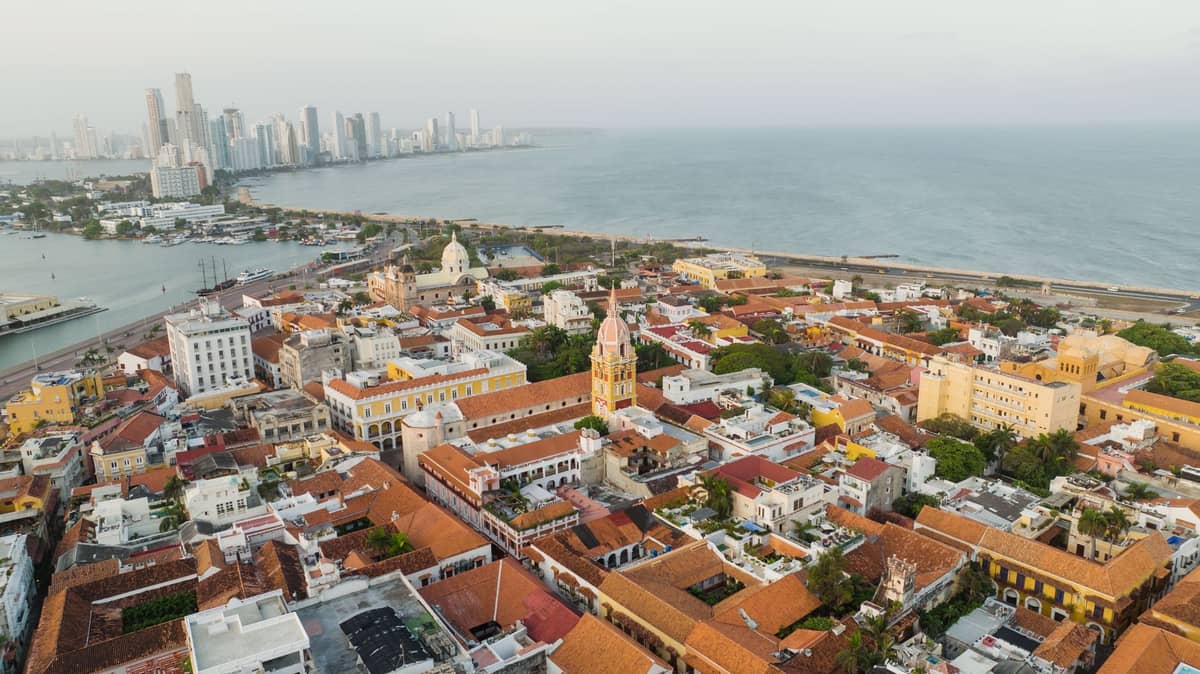
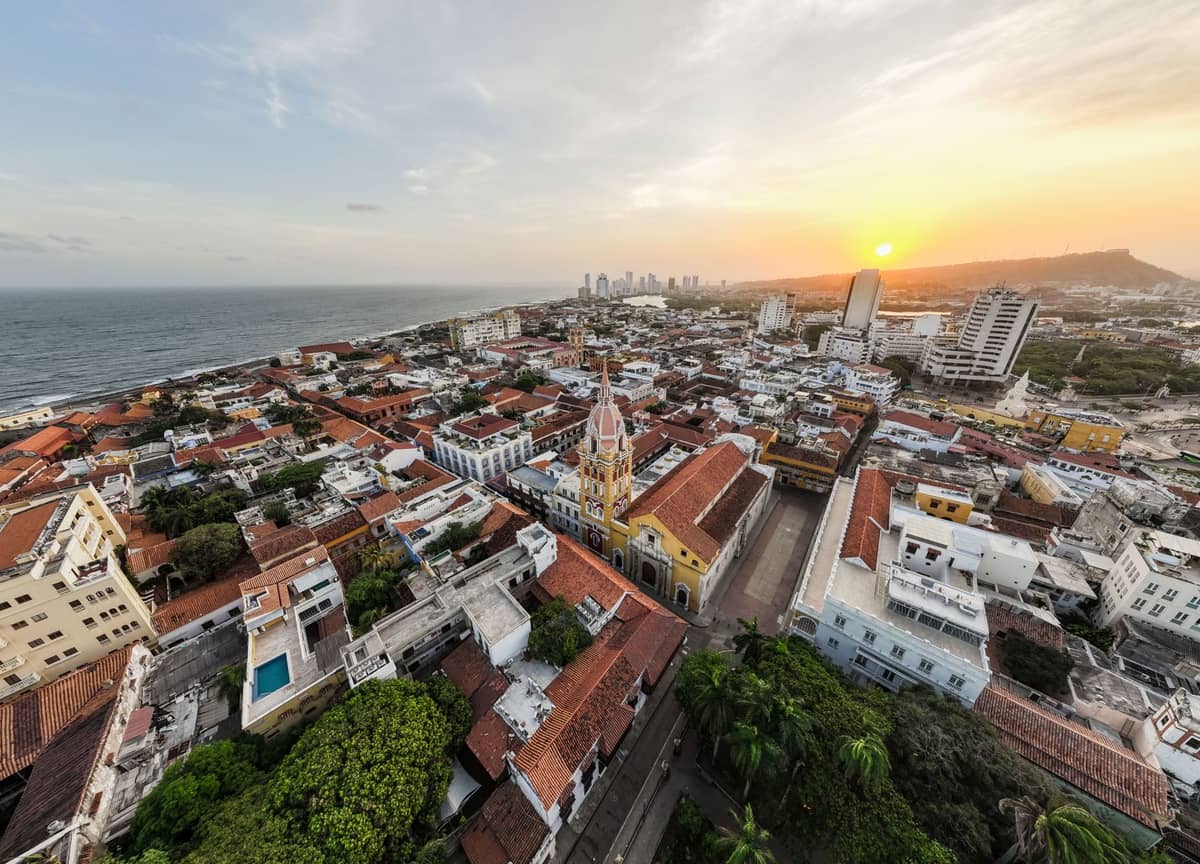
Cartagena de Indias, the capital of Colombia's Bolívar Department, was founded by the Spanish in 1533 and quickly became one of the most strategically important ports in the Americas. Gold and silver from across the continent passed through its harbor on the way to Spain, which made it a target for pirates and rival empires and, in turn, prompted the Spanish Crown to invest heavily in its fortification and civic infrastructure. The result is an urban ensemble that has survived largely intact: city walls, a fortress, baroque churches, civic palaces, and merchant houses with overhanging wooden balconies, all compressed into a walkable historic center. In 1984, UNESCO recognized the Ciudad Amurallada and its fortifications as a World Heritage Site, citing the completeness of the colonial urban fabric.
What makes the architecture here distinctive is not just age but coherence. Unlike cities where colonial buildings are scattered among modern construction, Cartagena's historic center has kept its original street grid, its original scale, and a remarkable density of 16th-to-18th-century structures. The buildings are color-coded by neighborhood character: the El Centro sector leans toward civic and ecclesiastical grandeur, while San Diego has a quieter, residential feel with bougainvillea-draped balconies and corner chapels.
The City Walls: Cartagena's Most Iconic Structure
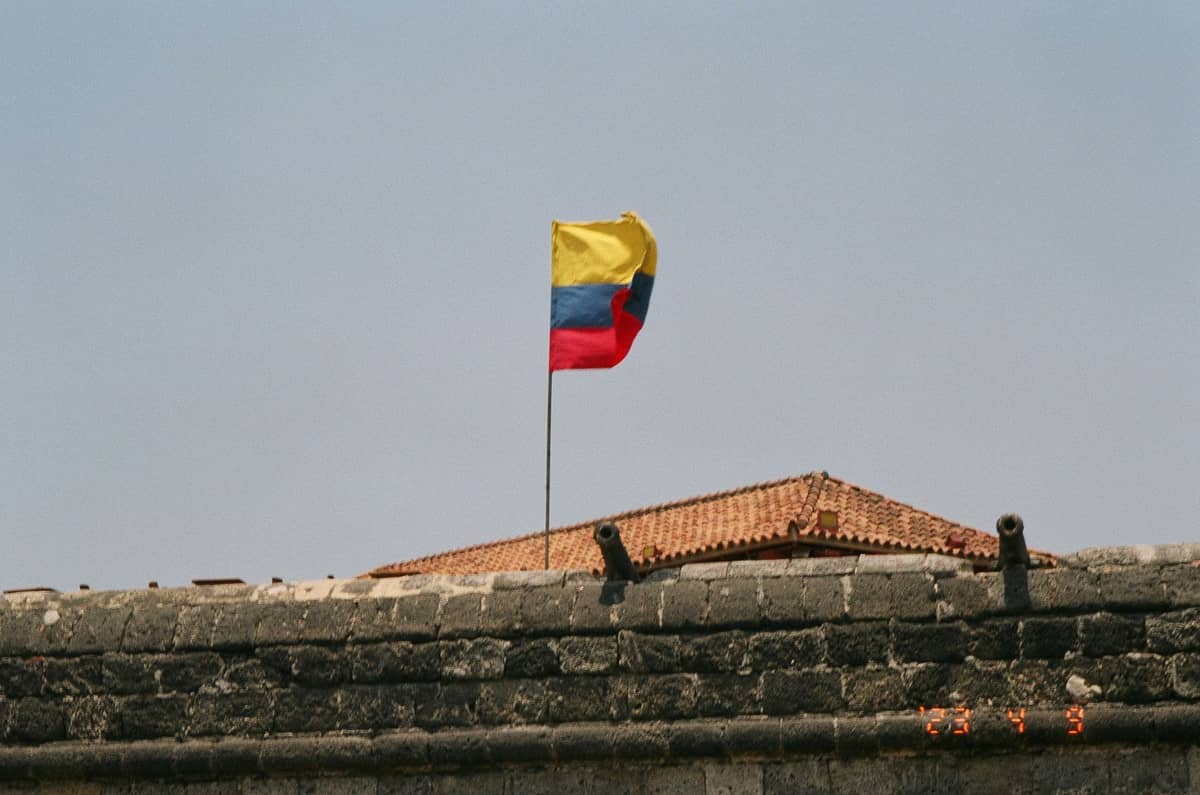
The Murallas de Cartagena are the defining feature of the colonial cityscape and the single best introduction to Cartagena's architectural history. Construction began in the late 16th century after Francis Drake sacked the city in 1586, and the walls were progressively reinforced over the following two centuries into a continuous ring a little over 11 kilometers long and up to about 15 meters high in some sections. The system includes bastions, curtain walls, and sea-facing batteries, all built from coral stone quarried locally.
Access to the ramparts is free at all hours, which surprises many visitors who assume there is an entry fee. There is none. You can walk the entire circuit at any time. The most popular stretch runs from the Torre del Reloj clocktower west along the sea-facing wall toward Baluarte San Francisco Javier, where the view over the Caribbean is particularly clear in the late afternoon. Sunset on the walls, roughly between 17:30 and 18:30 depending on the season, draws crowds, so arrive by 17:00 if you want a quiet spot on the parapet.
💡 Local tip
The walls are at their best in the early morning, between 6:30 and 8:30, when the light is soft, temperatures are around 26°C, and cruise ship passengers have not yet arrived in the old city. This is also when you'll find local residents jogging the ramparts — a much more authentic experience than the tourist rush from 10:00 onward.
The Torre del Reloj at the main gate (Puerta del Reloj) is the traditional entry point into the Walled City from Getsemaní and the most photographed single structure in Cartagena. The clock tower was added in the 19th century, but the gate itself is original colonial construction. It opens directly onto the Portal de los Dulces, a colonnaded arcade where vendors sell traditional Colombian sweets — worth a stop, though prices here are higher than in local markets.
Key Colonial Buildings: What to See and What to Pay
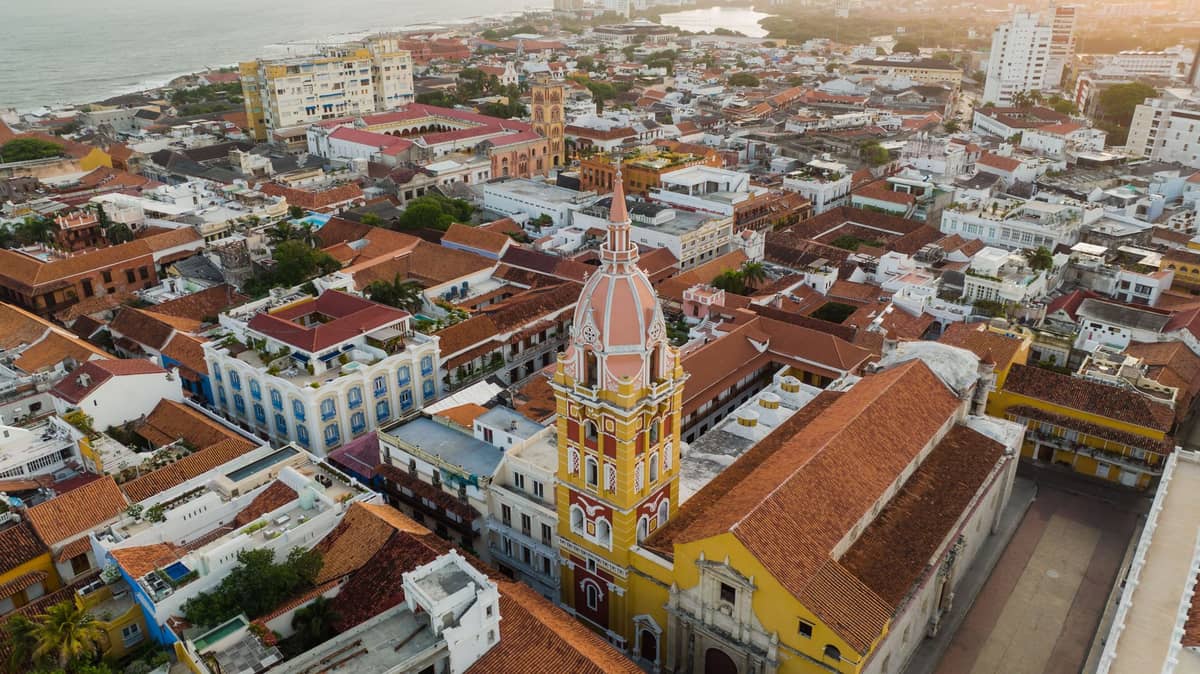
Most of the colonial buildings that charge admission are grouped around Plaza de Bolívar, the historic center's main square. This makes it easy to cover several in a single morning without excessive walking. The square itself, shaded by mature trees and flanked by the Cathedral and the Palacio de la Inquisición, is one of the finest colonial plazas in South America and worth time even without entering any building.
- Palacio de la Inquisición The finest single example of colonial civic baroque architecture in Cartagena, built in 1776 on Plaza de Bolívar. Now the Museo Histórico de Cartagena. Open Monday–Saturday 9:00–18:00, Sundays and holidays 10:00–16:00. Admission: around COP 24,000 adults, COP 20,000 for children, students, teachers, and seniors; under-5s free. The last Sunday of each month is reportedly free for all visitors — confirm locally as policies change.
- Castillo San Felipe de Barajas The largest Spanish colonial fortress in the Americas, sitting on a hill outside the Walled City. Open daily 7:00–18:00. Entrance 38,000 COP. Optional guide service costs around COP 10,000 per person extra and is worth it — the tunnel system beneath the fortress is confusing without explanation. Free entry for Colombians on the last Sunday of most months (exceptions: January and December).
- Catedral Santa Catalina de Alejandría Cartagena's main cathedral on Plaza de Bolívar, with construction begun in 1577. The current structure reflects multiple rebuilding phases after Drake's attack and a 19th-century restoration. Entry is free during visiting hours; masses are held daily and the interior is closed to tourists during services.
- Santuario San Pedro Claver A 17th-century church and monastery complex built by the Jesuits, dedicated to the Spanish priest who ministered to enslaved Africans arriving in Cartagena. The attached museum contains colonial religious art. Admission charged for the museum; the church itself can be entered for free during worship hours.
- Convento de La Popa An Augustinian convent from the early 17th century, perched on the highest hill in Cartagena at about 150 meters above sea level. The panoramic view of the colonial city, the bay, and the islands beyond is the best available anywhere near the city. Reachable by taxi (not safely walkable on the access road). Small admission fee applies.
⚠️ What to skip
Do not attempt to walk up to Convento La Popa on foot. The road leading up the hill has a history of robberies targeting tourists. Take a taxi directly to the entrance and arrange for the driver to wait, or book through a reputable tour operator. The view is worth the trip, but only taken safely.
The Neighborhood Architecture: Beyond the Main Monuments
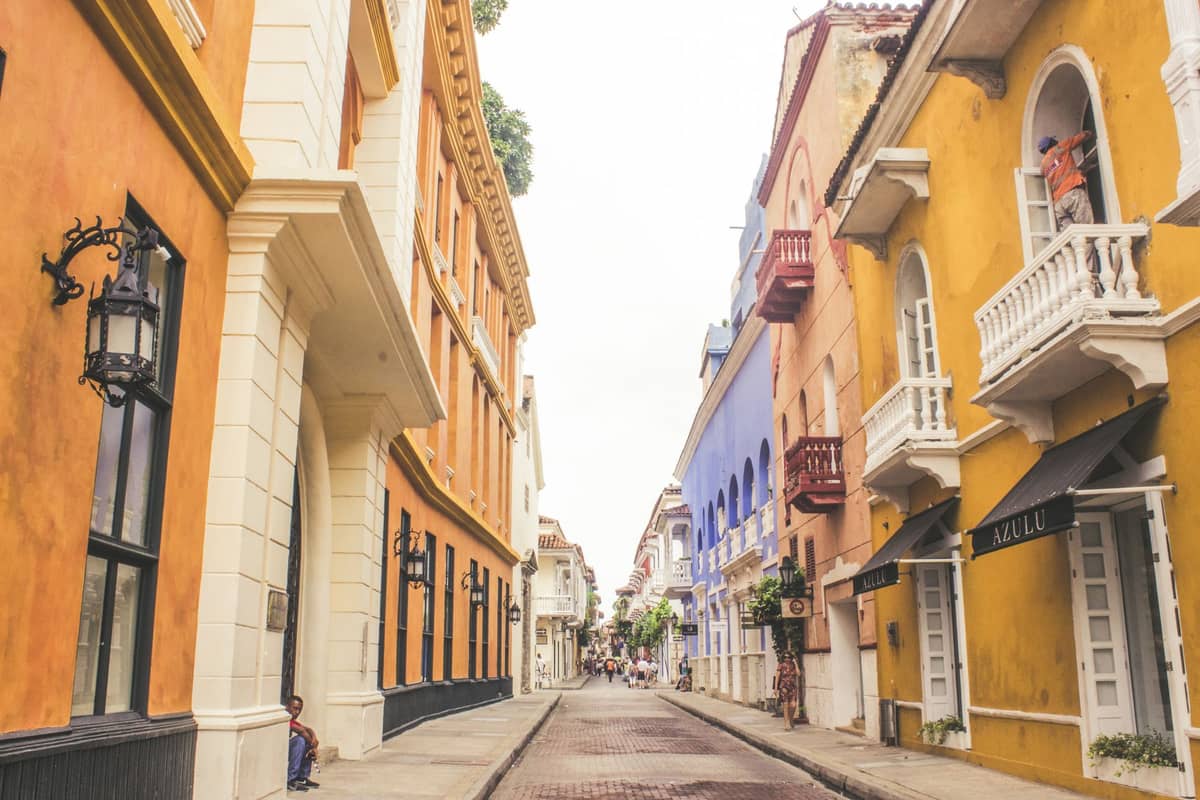
The colonial character of Cartagena is not contained in individual monuments — it lives in the streets themselves. The El Centro sector has the grandest architecture: the cathedral, the inquisition palace, and the larger merchant houses with stone facades and interior courtyards. San Diego, the northern quadrant of the Walled City, is quieter and more residential, with smaller colonial houses, boutique hotels in converted casas coloniales, and the Museo de Arte Moderno housed in a former 17th-century customs building on Plaza de San Pedro Claver.
Just outside the Walled City, Getsemaní deserves attention from anyone interested in colonial urban form. This neighborhood was historically where artisans, sailors, and freed enslaved people lived — the working-class counterpart to the wealthy Walled City. Its colonial houses are simpler and lower than those inside the walls, but the grid is intact and several 17th-century churches survive, including the Iglesia de la Trinidad, which anchors the neighborhood's main plaza. Getsemaní has become one of Cartagena's most interesting areas over the past decade, with its colonial fabric now overlaid with a distinctive street art scene.
The balconies deserve specific attention. Cartagena's wooden overhanging balconies — painted in ochre, terracotta, turquoise, and deep yellow — are one of the most reproduced images of the city. They are a direct Spanish Mudéjar inheritance, adapted for the Caribbean climate to allow airflow while providing shade. The most photogenic concentrations are on Calle Santo Domingo, Calle de la Factoria, and around Plaza de Fernández de Madrid in San Diego. No entry fee, no ticket required — you walk through.
Guided Tours vs. Self-Guided Exploration
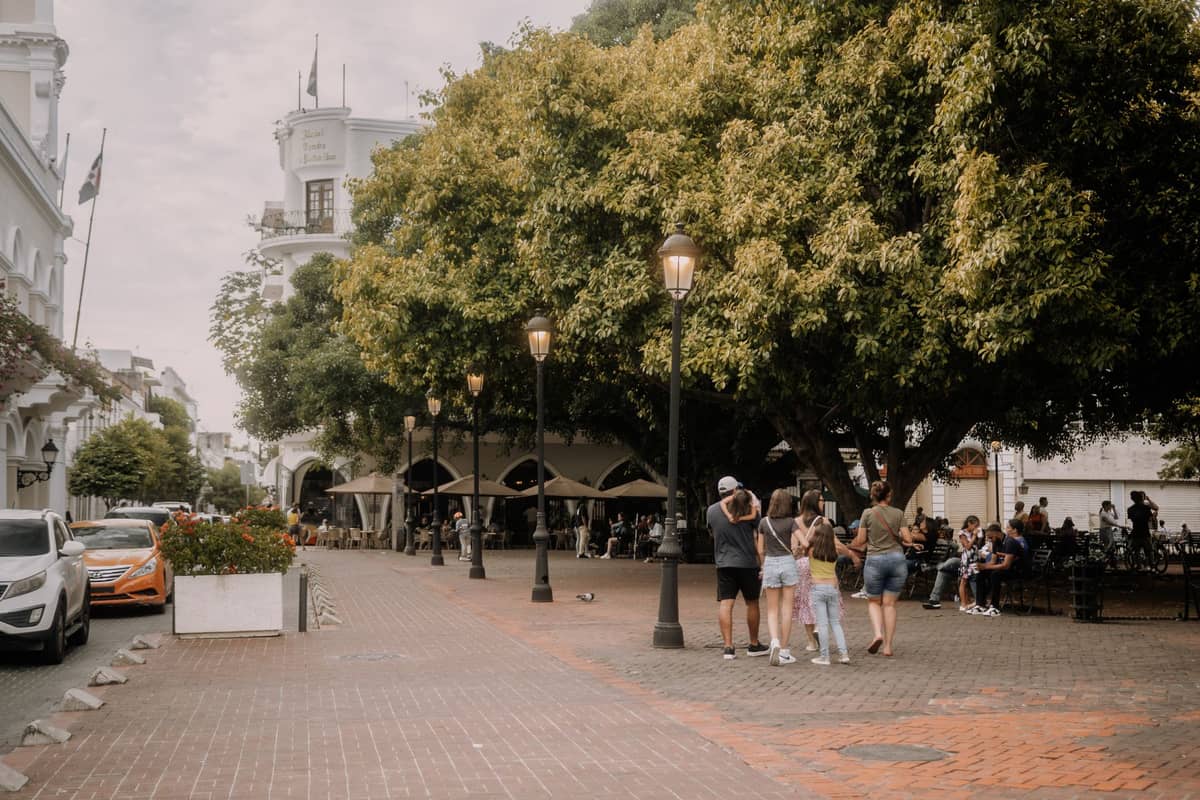
The Walled City is compact enough to explore independently using a good map. The main sites are within roughly 15 minutes’ walk of each other, and the streets — while sometimes confusing on first pass — follow a colonial grid that becomes readable quickly. For casual visitors, a self-guided walk covering the walls, Plaza de Bolívar, the Cathedral exterior, and Getsemaní takes about three hours at a comfortable pace.
For the fortress and the Palacio de la Inquisición specifically, a guided tour adds genuine value. Castillo San Felipe's tunnel system was engineered to allow defenders to hear approaching enemies through the stone — understanding the acoustic and strategic logic transforms what would otherwise be a confusing warren of corridors into a legible military system. Shared walking tours of the colonial center typically run around COP 60,000–120,000 per person for two to three hours. Private guides for small groups cost roughly COP 250,000–400,000 total, which splits reasonably among three or four people.
✨ Pro tip
Book guided tours for early morning slots (starting 8:00–9:00) rather than the popular 10:00 departures. The heat difference is significant by 11:00, and the light inside colonial churches and courtyards is considerably better in the morning. Many guides offer the same routes at lower rates for early-morning bookings because demand is lower.
- Wear light, breathable clothing and closed-toe shoes with grip — the stone streets and fortress ramps are uneven and slippery after rain
- Bring cash for museum admissions; not all colonial sites accept cards reliably
- Carry water; there are few public drinking fountains in the historic center and heat is a real factor year-round
- Photography inside churches is sometimes restricted during services — ask before shooting
- The last Sunday of most months is the best budget day for certain sites: Colombians and resident foreigners get free entry at national heritage attractions like Castillo San Felipe (with exceptions such as January and December), while policies at other sites vary — always check current rules before planning around this.
- The dry season (December–April) brings larger crowds to the historic center, especially January and Easter week; if you visit during peak periods, arrive at major sites when they open
Planning Your Visit: Timing, Costs, and Logistics
Cartagena's climate is tropical year-round, with daytime temperatures consistently between about 28°C and 33°C. The dry season runs December through April; the rainy season runs May through November, with September and October seeing the heaviest rainfall. For architecture touring, the dry season is easier but not dramatically so — colonial buildings do not close in the rain, and the wet season actually reduces midday crowd levels inside museums. For a full breakdown of when conditions favor different activities, see the guide to the best time to visit Cartagena.
Budget for admissions: a focused two-day architectural tour covering the Palacio de la Inquisición, Castillo San Felipe, Santuario San Pedro Claver, and Convento La Popa will cost around COP 70,000–90,000 in entry fees per person at current ticket rates, plus transport to La Popa and the fortress (both outside easy walking range of the Walled City). A shared guided walking tour of the colonial center adds another COP 60,000–120,000 if you choose one. If you're working with a tighter budget, the ramparts, Getsemaní streets, and church exteriors are completely free and represent the majority of the architectural experience. More budget strategies are covered in the Cartagena on a budget guide.
Where you stay affects how much time you spend walking in the heat. Hotels inside the Walled City and in Getsemaní put you within minutes of the main architectural sites. Staying in Bocagrande — the high-rise beach district about 3 km south — means taxis or rideshares for every historic center visit, which adds up. For architecture-focused trips, the historic center is the right base. The Cartagena accommodation guide breaks down the trade-offs by neighborhood.
FAQ
Do you need to pay to walk on the Cartagena city walls?
No. The ramparts of the Ciudad Amurallada are free to access at any hour, every day. There are no gates or ticketing systems on the walls themselves. Entry fees apply only to specific museums and churches inside the Walled City, such as the Palacio de la Inquisición and Santuario San Pedro Claver.
How long does it take to walk the Cartagena city walls?
The full circuit of the walls is roughly 11 km, but most visitors walk a section rather than the complete loop. The most popular stretch, from the Torre del Reloj to the sea-facing bastions near the old port, takes about 45 minutes at a leisurely pace. Allow two to three hours if you want to combine a ramparts walk with stops at Plaza de Bolívar and the main colonial churches.
Is Castillo San Felipe de Barajas worth visiting?
Yes, but it depends on your interest in military history and architecture. The fortress is genuinely impressive in scale — the largest Spanish colonial fort in the Americas — and the tunnel system beneath it is unlike anything else in Cartagena. It is not, however, a beautifully decorated colonial building in the way the Palacio de la Inquisición is. If you have limited time, prioritize the Walled City for aesthetic architecture and add the fortress if you have a second day.
What is the best time of day to tour Cartagena's colonial architecture?
Early morning, between 7:00 and 10:00, is the best window by a significant margin. Temperatures are around 26°C rather than 31°C, crowds are minimal, the light on the colonial facades is warm and directional, and most museums open by 9:00. The late afternoon, from about 16:00 to sunset, is the second-best option. Midday between 11:00 and 15:00 is genuinely uncomfortable in direct sun and should be used for indoor museum visits rather than street walking.
Is Cartagena's colonial architecture only inside the Walled City?
No. The UNESCO World Heritage designation covers both the Walled City and a broader ensemble of fortifications and historic structures. Castillo San Felipe de Barajas sits outside the walls on a hill to the east. Convento La Popa is on the highest hill in the city. The neighborhood of Getsemaní, immediately adjacent to the Walled City, contains 17th-century churches and a largely intact colonial street grid. A complete architectural visit requires at least partial exploration of all these areas.