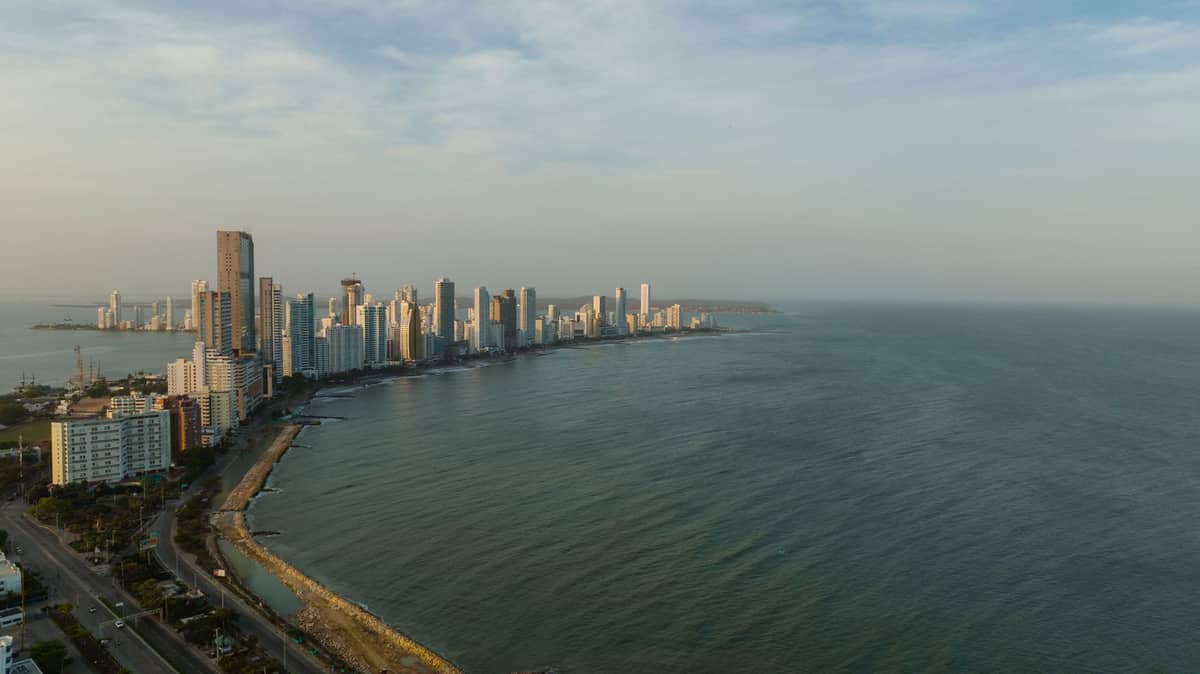
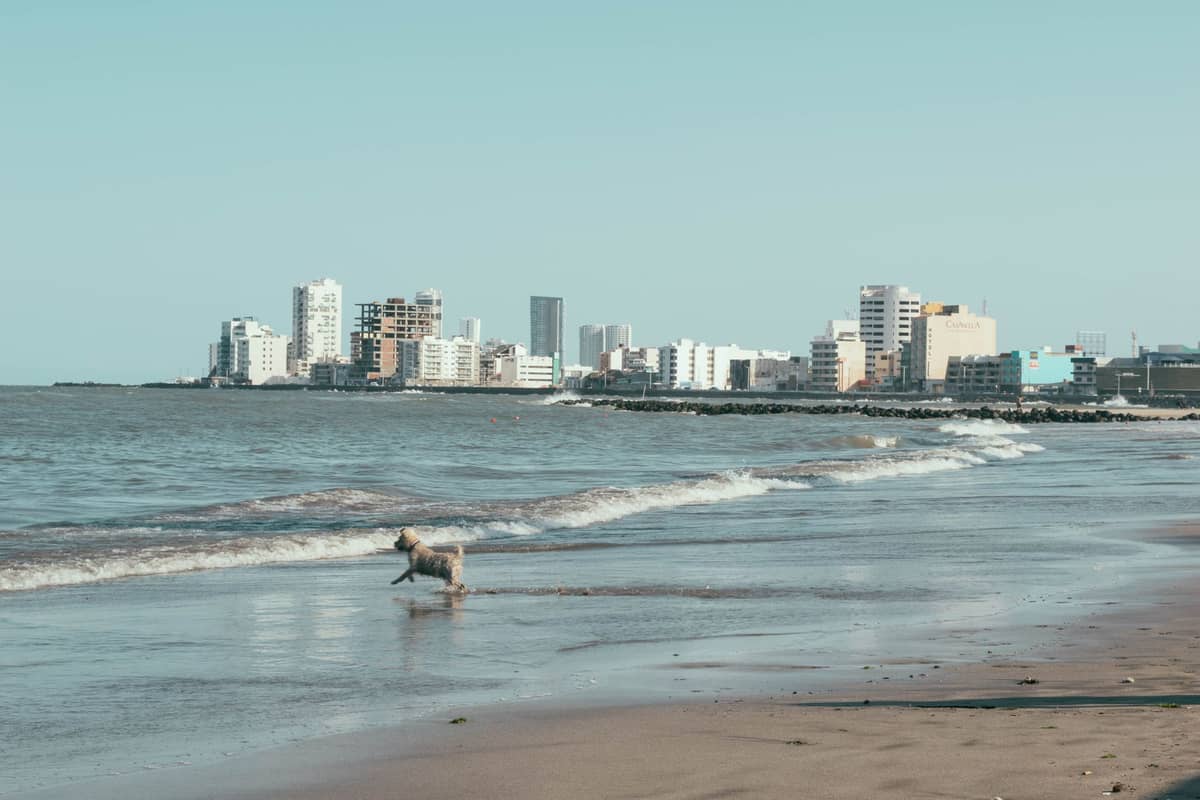
Bocagrande is Cartagena de Indias's contemporary beach peninsula, a three-kilometer strip of high-rise hotels, condominiums, and beachfront restaurants stretching south of the historic walled city. It offers a different pace from the colonial core: wider streets, ocean breezes, and a more resort-style atmosphere that suits families, beach-seekers, and travelers who want modern amenities without sacrificing proximity to the old city.
Bocagrande is Cartagena's modern seafront peninsula: a compact strip of high-rise towers, urban beaches, and commercial avenues that sits just minutes from the colonial walled city but feels like a different world. It is where beach holidays and city breaks overlap, drawing both Colombian vacationers and international travelers who want Caribbean water on one side and a functioning urban neighborhood on the other.
Orientation: Where Bocagrande Sits
Bocagrande occupies a narrow peninsula that extends roughly three kilometers southward from the edge of Cartagena's historic walled city. To the north, a naval base marks the boundary with the Centro Histórico. To the south, the peninsula tapers through Castillogrande and ends at El Laguito, a small circular point that is almost entirely given over to upscale hotels and residences. On the western side of the peninsula, the Caribbean Sea laps against the urban beach; on the eastern side, the Bahía de Cartagena provides calmer, darker water and a skyline view back toward the old city walls.
The neighborhood's spine is Avenida San Martín, a wide commercial boulevard that runs roughly parallel to the beach and concentrates most of the restaurants, pharmacies, banks, and shopping. A block west, Carrera 1 (also known locally as the seafront road) runs directly alongside the beach. The numbered streets (calles) cut east-west across the peninsula, and the whole grid is compact enough that almost nothing in Bocagrande is more than a ten-minute walk from the shore.
For visitors using Bocagrande as a base, the walled city is approximately 2.5 to 3 kilometers north, reachable by taxi in around ten minutes or on foot in around 30 to 35 minutes along the waterfront. The neighborhood belongs to Cartagena's Localidad Histórica y del Caribe Norte, though in character it has far more in common with a modern Colombian beach resort than with the cobblestoned streets of the Centro Histórico.
Character and Atmosphere
Arrive on Bocagrande's main beach on a Saturday morning and what you notice first is the scale of it: dozens of wooden beach chairs already claimed, vendors weaving between them with cups of fresh coconut water and bags of fried fish, cumbia drifting from a speaker somewhere down the sand. The beach faces west, so mornings are relatively soft and shaded. By noon the sun is direct and fierce, and by 2pm many people have retreated to the pool terraces of their hotels or to one of the open-sided seafood restaurants on the avenue behind.
The afternoon light on Bocagrande is spectacular. Between about 5pm and 6pm, the sky over the Caribbean turns deep orange and pink, and the beach fills again with an evening crowd: families, joggers running the seafront path, couples watching the sun drop toward the water. This is probably the best hour to be outside in Bocagrande, when the heat has eased and the neighborhood feels genuinely alive rather than simply busy.
After dark, Avenida San Martín shifts from practical shopping strip to a string of restaurants spilling tables onto the sidewalk. The energy here is more middle-class Colombian than tourist-bubble: locals from Cartagena's wealthier residential towers mix with visitors, and the restaurants are busy with families eating late, which is simply the normal dinner hour in this part of Colombia. There are bars and clubs, but Bocagrande's nightlife is more relaxed than what you find in Getsemaní. It is a neighborhood that goes to bed at a reasonable hour, with the exception of a few clubs near the beach that carry on later on weekends.
What Bocagrande is not is intimate or architecturally remarkable. The towers are glass and concrete, the streets are wide and car-heavy, and the overall aesthetic is the standard Caribbean resort peninsula found from Miami to Cancún. Travelers who come to Cartagena specifically for the colonial atmosphere may find Bocagrande a disappointment if they stay here exclusively. But as a base that combines beach access, modern infrastructure, and proximity to the historic center, it functions extremely well.
ℹ️ Good to know
Bocagrande is classified as estrato 5 to 6 in Cartagena's socioeconomic zoning system, making it one of the city's most expensive residential areas. This translates to well-maintained streets, reliable utilities, and a higher concentration of international-standard hotels and restaurants than in most other neighborhoods.
What to See and Do
The primary draw is Bocagrande Beach, the urban stretch of Caribbean coast that runs almost the full length of the peninsula. The central sections, near the main hotel zone, are lifeguarded and have the highest concentration of sun chairs and beach vendors. The water here is warm year-round, with temperatures typically between 27°C and 30°C. The beach is a genuine urban beach in the full sense: busy, social, and commercial rather than remote or pristine. For clearer water and fewer crowds, the islands offshore are a better option, but for a convenient morning swim before heading into the city, Bocagrande's beach does the job.
Most of Bocagrande's visitors spend at least part of their time in Cartagena's historic core. The city walls are a 20 to 30 minute walk north along Avenida Santander, or a short taxi ride. From the walled city, you can reach the Castillo San Felipe de Barajas by taxi in another ten minutes. Most day-trippers from Bocagrande combine a morning at the beach with an afternoon in the old city, then return for sunset on the waterfront.
For something quieter, Bocagrande is also the main departure point for boat trips to the Islas del Rosario, an archipelago of coral islands about 35 kilometers southwest in the Rosario and San Bernardo Corals National Park. Day-trip boats leave from Muelle Turístico La Bodeguita, by the Clock Tower in the historic center, typically departing early in the morning. The islands offer snorkeling in clear water, something the urban beach cannot match.
Swimming and sunbathing on Bocagrande Beach, particularly the lifeguarded central sections near the main hotel strip
Boat trips to the Islas del Rosario, departing from Muelle Turístico La Bodeguita by the Clock Tower
Evening walks along the seafront promenade, especially at sunset when the light over the Caribbean is at its best
Day trips north into the Centro Histórico to explore the colonial plazas, churches, and fortifications
Shopping along Avenida San Martín for local crafts, sunscreen, and practical supplies
⚠️ What to skip
Petty theft and bag snatching have been reported on Bocagrande Beach, particularly on the quieter outer sections toward the southern end of the peninsula and at dawn or dusk when the beach is less crowded. Keep valuables out of sight, stay in the populated central sections during off-peak hours, and be cautious in bars and clubs about leaving drinks unattended.
Eating and Drinking
Bocagrande's food scene is broad and reliable rather than exceptional. Avenida San Martín concentrates the majority of sit-down restaurants, ranging from standard seafood grills serving arroz de mariscos and whole fried fish to pizza places, burger spots, and the occasional sushi bar aimed at the local middle-class clientele. Prices here are higher than in Getsemaní or the popular street food zones of the old city, but still very reasonable by international standards.
Seafood is the dominant cuisine, as it is across coastal Cartagena. Look for the characteristic Caribbean fish dishes: mojarra frita (fried mojarra), camarones al ajillo (garlic shrimp), and the ubiquitous arroz con coco (coconut rice) that accompanies almost every main course. For a faster, cheaper option, the beach vendors and small food stands near the waterfront sell cold coconut water, fried corn arepas, and empanadas throughout the day. If you want to understand the street food culture more broadly, the Cartagena street food guide covers the city's best options.
Bars cluster near the beach end of the numbered calles. Most operate as open-air or semi-open spaces, which makes them genuinely pleasant in the evening when the sea breeze picks up. Craft beer has made some inroads here, but the standard drinks are aguardiente (Colombia's anise-flavored spirit), rum, and cold Club Colombia or Águila beer. The bar scene is generally relaxed on weeknights and more animated on Friday and Saturday when Cartagena residents from other neighborhoods come to Bocagrande for a beach-adjacent night out.
If you are self-catering or want breakfast supplies, there are several well-stocked supermarkets on Avenida San Martín, including branches of major Colombian chains. Fresh juice stands appear in the morning near the beach access points, selling tropical fruit blends of maracuyá, guanábana, and mango that cost a fraction of what restaurants charge for the same thing.
Getting There and Around
Bocagrande sits approximately 8 to 10 kilometers from Rafael Núñez International Airport (IATA: CTG), located in the Crespo neighborhood to the northeast. A taxi from the airport to Bocagrande takes roughly 15 to 25 minutes depending on traffic and costs more than the equivalent ride to the Centro Histórico; verify current fare ranges before travel, as prices change. Ride-hailing apps including Uber and inDrive operate in Cartagena and can be booked from the terminal. For full options on getting around the city, the getting around Cartagena guide covers public transport, taxis, and walking routes in detail.
Within the city, Bocagrande is served by Transcaribe and urban bus routes, most notably the T103 (Bocagrande) line, with stops marked throughout the neighborhood. The T103 (Bocagrande) line operates daily from approximately 05:00 to 21:00 and connects the peninsula to the city center. Stops are concentrated around Carrera 2 and Calle 5. Buses are cheap (around 3,000 to 3,400 COP, though verify current fares) and reliable enough for daytime travel, though at peak hours they can be crowded.
Taxis are plentiful throughout Bocagrande and are the most convenient option for reaching the Centro Histórico or Getsemaní at night. The ride from Bocagrande to the Torre del Reloj (the main entrance to the walled city) takes about ten minutes by car and costs a modest amount by international standards; negotiate the fare before getting in or use a ride-hailing app for price transparency. Walking the seafront route north along Avenida Santander takes 30 to 40 minutes and is pleasant in the early morning or at dusk, but is uncomfortably hot in the midday hours.
💡 Local tip
If you are heading from Bocagrande to the old city on foot, walk north along the waterfront on Avenida Santander rather than through the inland streets. The route passes a long stretch of sea wall with views back toward the peninsula and arrives at the base of the city walls near the Clock Tower, which is the most atmospheric entry point into the historic center.
Where to Stay
Bocagrande is Cartagena's primary hotel zone for travelers who want beach access, and the neighborhood contains the largest concentration of mid-range to upscale hotels in the city. The Hotel Caribe, one of Cartagena's oldest and most recognizable resort hotels, anchors the southern end of the strip in the El Laguito area near the transition toward Castillogrande. The majority of international chain hotels are also here. For a broader overview of the city's accommodation landscape, the where to stay in Cartagena guide compares Bocagrande with the historic neighborhoods and other options.
The best positioning within Bocagrande for most visitors is in the central section of the peninsula, within a block or two of the beach and on or near Avenida San Martín. This puts you within easy walking distance of the waterfront in one direction and the commercial strip in the other. The very northern tip of Bocagrande, closest to the naval base and the Centro Histórico boundary, is slightly less convenient for beach access but minimizes taxi time to the old city.
Bocagrande suits families, couples on a beach holiday, and travelers who prioritize comfort and modern amenities over immersion in colonial-era streetscapes. Budget travelers will generally find better value in Getsemaní or the San Diego district, where hostels and boutique hotels are closer to the main attractions and offer more character at lower price points. If the primary goal is to split time between beach and city, Bocagrande is the most practical base. If the primary goal is to live inside the colonial experience, staying in the walled city or Getsemaní makes more sense.
For travelers interested in Cartagena's all-inclusive resort options, many of the larger properties in Bocagrande and the adjacent El Laguito area operate on this model. The Cartagena all-inclusive resorts guide covers what is available and how to choose between them.
Practical Notes
Cartagena de Indias operates on Colombia Time (COT), UTC-5, with no daylight saving adjustment. The currency is the Colombian peso (COP). Spanish is the primary language; in the hotel and tourism sector of Bocagrande, English is fairly widely spoken, more so than in most other parts of the city. ATMs are numerous on Avenida San Martín and inside the larger hotels.
The climate in Bocagrande is the same as the rest of coastal Cartagena: a tropical wet-and-dry pattern with temperatures typically ranging from 28°C to 32°C during the day and dropping only slightly at night. The dry season runs from December through April, with January and February being the driest months. The rainy season runs from May through November, peaking in September and October. Even in the rainy season, rain usually falls in heavy afternoon or evening bursts rather than all day, and the beach is often still usable in the mornings. For a full breakdown by month, the best time to visit Cartagena guide goes into detail on what to expect season by season.
Bocagrande is one of Cartagena's safer neighborhoods for visitors, with violent crime levels that are low relative to the wider city. The main risk is petty theft, particularly on the beach. Standard precautions apply: leave passports and large amounts of cash in your hotel safe, keep phones and cameras close in crowded areas, and be alert on the quieter beach sections after dark. The overall risk rating for the neighborhood is low, and most visitors experience no problems.
TL;DR
Bocagrande is Cartagena's main beach district: a compact, walkable peninsula with a long urban beach, high-rise hotels, and a commercial strip of restaurants and bars.
Best suited for families, beach-focused travelers, and visitors who want modern amenities and easy island-trip logistics alongside access to the historic city.
The colonial atmosphere of the Centro Histórico is only 2.5 to 3 kilometers away, making Bocagrande a practical base for travelers who want both beach and history.
Petty theft on the beach is the primary safety concern; stick to populated, lifeguarded sections and keep valuables secure.
Budget travelers and those seeking immersion in Cartagena's historic character will find better value and more atmosphere in Getsemaní or the walled city.
Three days is enough time to experience the best of Cartagena de Indias: the UNESCO-listed walled city, a boat trip to the Rosario Islands, the street art and nightlife of Getsemaní, and a memorable day trip beyond the city. This itinerary is built for first-time visitors who want depth, not just highlights.
Cartagena de Indias is a year-round destination, but when you go shapes everything from hotel rates to beach conditions. This guide breaks down the dry season, rainy season realities, peak holiday crowds, and the sweet-spot months that most travelers overlook.
Cartagena de Indias sits at the heart of Afro-Colombian history. From the UNESCO-recognized Cultural Space of San Basilio de Palenque to the living traditions embedded in Getsemaní and beyond, this guide covers the history, the neighborhoods, and the practical details for experiencing this heritage authentically.
Cartagena, Colombia has a small but well-defined selection of true all-inclusive resorts. This guide breaks down every major option, where they sit geographically, what's included, current price ranges, and the real trade-offs so you can book with confidence.
Cartagena's beach scene spans gritty urban strips, local fishing villages, and some of the most spectacular Caribbean coastline in South America. This guide covers every option, from the accessible shores minutes from the old city to the powdery white sands of Isla Barú and the coral-fringed Rosario Islands.
Cartagena de Indias holds one of the best-preserved colonial ensembles in the Americas, recognized as a UNESCO World Heritage Site. This guide covers every major building, practical entry details, the best times to visit, and what most travelers get wrong about exploring the historic center.
Cartagena de Indias delivers one of the Caribbean's most genuinely romantic settings: a UNESCO-listed walled city, warm turquoise waters, and a sunset that turns the stone ramparts gold every evening. This guide covers the best romantic activities, where to stay, when to visit, and how to avoid the tourist traps that can flatten an otherwise exceptional trip.
Docking at Cartagena de Indias gives you one of the Caribbean's great port days — colonial forts, walled-city streets, and beach escapes all within reach. This guide covers exactly how to get from the pier to the good stuff, what to prioritize with limited time, and what to skip.
December is one of Cartagena de Indias' busiest and most expensive months, but also one of its best for weather. This guide covers the climate, seasonal events, booking realities, and practical tips to make the most of a December visit to Colombia's Caribbean coast.
Cartagena sits at the gateway to some of the Caribbean's most rewarding island destinations. This guide covers the coral reefs of the Rosario Islands, the white sands of Playa Blanca on Barú, the quieter shores of Tierra Bomba, and the best beaches and nature trips you can reach by boat or road from the city.
From rooftop cocktails above the Walled City to salsa-soaked plazas in Getsemaní, Cartagena de Indias comes alive after dark. This guide covers every major nightlife zone, realistic price ranges, what to skip, and how to plan a great night out in Colombia's most atmospheric Caribbean city.
Cartagena de Indias has a reputation as an expensive Caribbean destination, but the reality is more nuanced. With the right neighborhoods, transport choices, and food strategy, a week in Colombia's most photogenic city is well within reach of budget travelers. Here is exactly how to do it.
Cartagena de Indias has one of the most rewarding street food scenes on the Caribbean coast of Colombia. This guide covers the essential snacks, the best neighborhoods and markets to find them, realistic price ranges, and clear advice on what to skip.
Cartagena de Indias works surprisingly well as a family destination, but it rewards planning. From the Oceanario at Islas del Rosario to the hop-on hop-off city bus, this guide covers the best kid-friendly activities, practical logistics, and the seasonal factors every parent needs to know before booking.
Cartagena de Indias is one of the Caribbean's great base camps. Within a few hours by boat or road, you can reach pristine coral islands, an Afro-Colombian UNESCO heritage village, a one-of-a-kind mud volcano, and mangrove lagoons barely touched by tourism. These are the best day trips to plan from the city.
Everything you need to navigate Cartagena de Indias, from landing at Rafael Núñez International Airport (CTG) to hopping between neighborhoods. Real fare ranges, TransCaribe basics, ride-hailing realities, and seasonal advice included.
Cartagena, Colombia draws millions of visitors each year, but the safety question deserves a straight answer. This guide breaks down neighborhood-by-neighborhood risk, the most common threats tourists actually face, and practical steps to stay safe without missing the city.
Cartagena de Indias is one of the Caribbean's most photogenic cities, but it comes with real trade-offs: heat, crowds, and tourist pricing. This guide cuts through the hype to help you decide if Cartagena Colombia deserves a spot on your itinerary.
Cartagena de Indias delivers a rare combination of UNESCO-listed colonial architecture, Caribbean waterfront, and a genuine luxury infrastructure that rivals any Latin American city. This guide covers where to stay, where to eat, what to do, and when to book to get the most out of a high-end visit to Colombia's crown jewel.
Cartagena de Indias packs colonial fortresses, Caribbean islands, street art, and serious food into one compact city on Colombia's northern coast. This guide cuts through the tourist noise with specific prices, opening hours, seasonal advice, and specific rankings to help you spend your time well.
Choosing where to stay in Cartagena de Indias shapes your entire trip. This guide covers every major neighborhood, from the colonial Centro Histórico to the beach hotels of Bocagrande, with clear trade-offs, practical price context, and seasonal tips to help you book with confidence.