Cartagena Street Food Guide: Best Snacks, Local Markets & Where to Eat Like a Local
Cartagena de Indias has one of the most rewarding street food scenes on the Caribbean coast of Colombia. This guide covers the essential snacks, the best neighborhoods and markets to find them, realistic price ranges, and clear advice on what to skip.
Plan and book this trip
Tools from our partner Travelpayouts help you compare flights and hotels. If you book through them, we may earn a commission at no extra cost to you.
Flights
Hotels map
TL;DR
- Cartagena's street food is centered on fried snacks called fritos — arepa de huevo, carimañola, and empanadas are the classics you'll find across the city.
- The best local eating is concentrated in Getsemaní, around the Old City walls, and at Bazurto Market — each with a very different atmosphere and price point.
- Street snacks from local stalls cost COP 3,000–6,000 (under $2 USD); tourist-zone versions of the same items run COP 8,000–15,000.
- Bazurto is the most authentic market experience but requires some comfort with crowds and unfamiliar environments — it is not a sanitized food hall.
- The dry season (December–April) is the most comfortable time to eat outdoors, but street food is available year-round.
The Essential Cartagena Street Foods You Need to Try
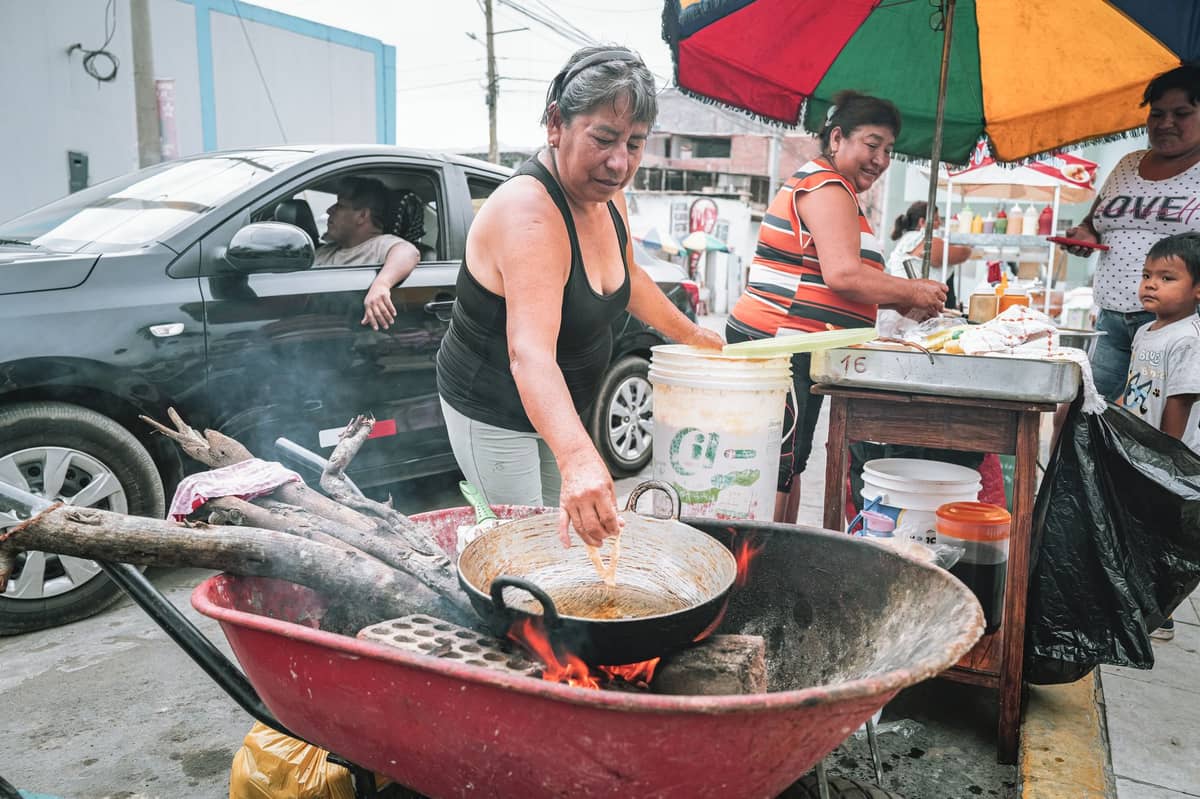
Cartagena de Indias has a distinct street food identity rooted in Afro-Caribbean and coastal Colombian cooking traditions. The backbone of the scene is fritos — a broad category of deep-fried snacks prepared fresh at outdoor stalls throughout the day. These are not the same as snacks sold at tourist restaurants with Cartagena branding. The real versions are crispier, cheaper, and made to order.
- Arepa de huevo A thick cornmeal arepa deep-fried twice, with an egg cooked inside. Crispy on the outside, soft within. This is the signature Cartagena street snack. Expect to pay COP 3,000–6,000 at a local stall.
- Carimañola A torpedo-shaped fritter made from yuca (cassava) dough, stuffed with seasoned ground beef or cheese, then deep-fried. Denser than an empanada and distinctly coastal Colombian in flavor.
- Empanadas Corn pastry pockets filled with potato, rice, and meat, fried golden. Ubiquitous across Colombia but Cartagena's versions often have a thinner, crispier shell than Andean-style empanadas.
- Raspao Shaved ice (not a snow cone) scraped from a block and drenched in fruit syrups — tamarind, corozo (a Caribbean palm fruit), or passion fruit. The best raspaos use fresh fruit costeño syrups, not artificial flavors. A standard cup runs COP 2,000–4,000.
- Cocadas Coconut candy squares sold by street vendors, typically in white (classic), brown (toasted), or pink (flavored) varieties. A Caribbean staple, produced traditionally in nearby San Basilio de Palenque.
- Patacones Twice-fried green plantain rounds, served plain or topped with hogao (cooked tomato-onion sauce) or shrimp. More of a side dish than a standalone snack, but sold at street stalls around Bazurto and Getsemaní.
ℹ️ Good to know
Corozo juice deserves a special mention. Made from the small red berries of a native Caribbean palm, this tart, deep-purple drink is sold by vendors near the Old City walls and at Bazurto. It is difficult to find outside the Caribbean coast of Colombia and worth trying while you are here.
Where to Find the Best Street Food in Cartagena
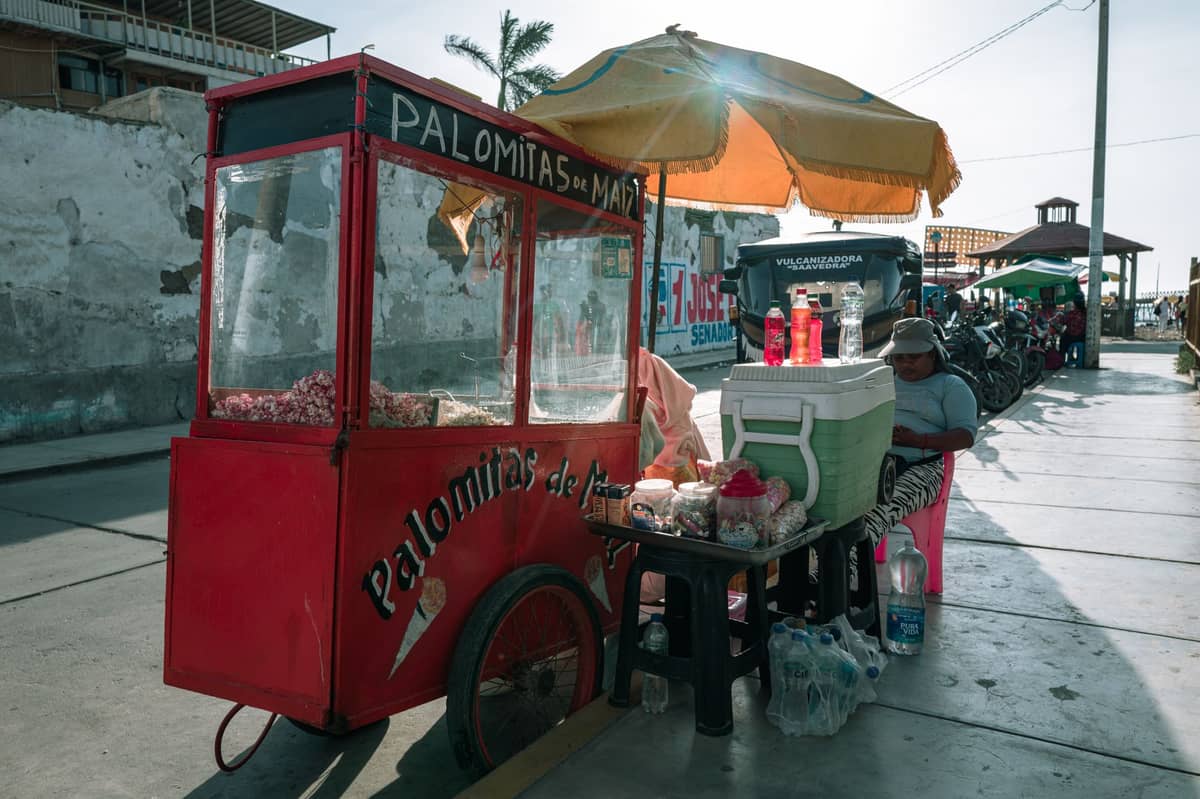
The city's street food geography breaks into three distinct zones, each with a different character. Getsemaní is the most accessible for visitors who want local food without traveling far from the Old City. The neighborhood around Plaza de la Trinidad — particularly Calle Larga and the surrounding streets — has a dense concentration of frito stalls active from early morning through late afternoon. Prices here are closer to local rates than anything inside the walled city.
Inside the Centro Histórico, street food exists but is priced for tourists. The area around Portal de los Dulces is the traditional candy and sweets zone, where vendors sell cocadas, alegrías (rice crisp candies), and sugar-coated fruits. It is worth visiting for the visual experience and a cocada or two, but do not expect budget-priced fritos here.
For the full local market experience, nothing compares to Bazurto Market. This is Cartagena's main wholesale market, chaotic by design, where the city's restaurants, households, and street vendors source their ingredients. Vendor setup starts around 5:00 a.m. and peak activity runs from 7:00 a.m. to 11:00 a.m. After noon, the market winds down significantly. You will find cooked food stalls alongside the produce and fish sections — soups, rice dishes, fritos, and fresh juices at prices that reflect a purely local clientele.
⚠️ What to skip
Bazurto Market is a working wholesale market, not a food court. It is loud, crowded, and involves navigating past raw fish, livestock, and dense foot traffic. Pickpocketing has been reported. Keep valuables secured, go in the morning, and consider joining a guided food tour for your first visit if you are not comfortable navigating unfamiliar urban markets independently.
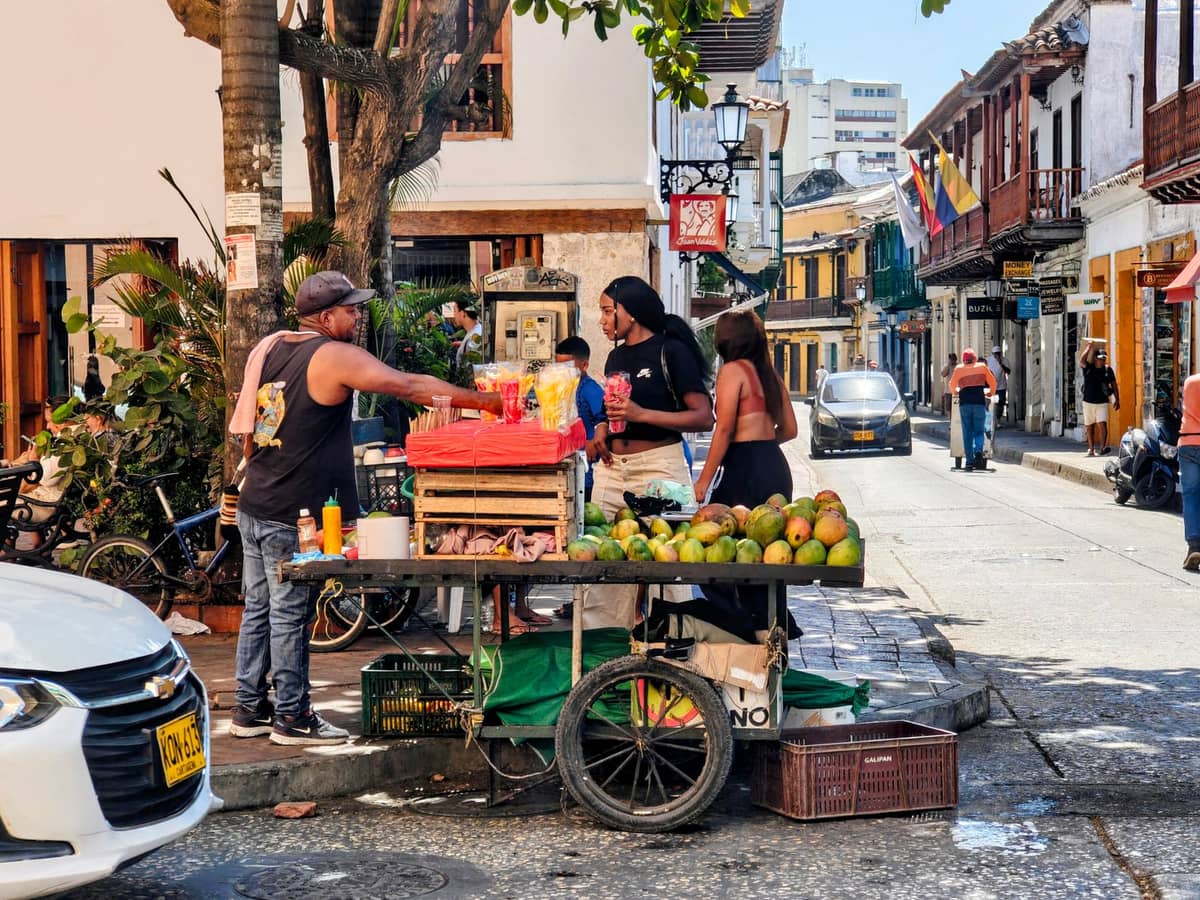
The beachfront strip of Bocagrande has its own street food presence, mostly paleta (ice pop) vendors and fruit carts working the beach and sidewalks. Prices are higher than Getsemaní, and the selection is narrower, but if you are already spending time at Bocagrande Beach, the fresh fruit vendors are worth using. Mangos sliced and seasoned with salt and lime are common and refreshing in the heat.
Bazurto Market: What to Know Before You Go
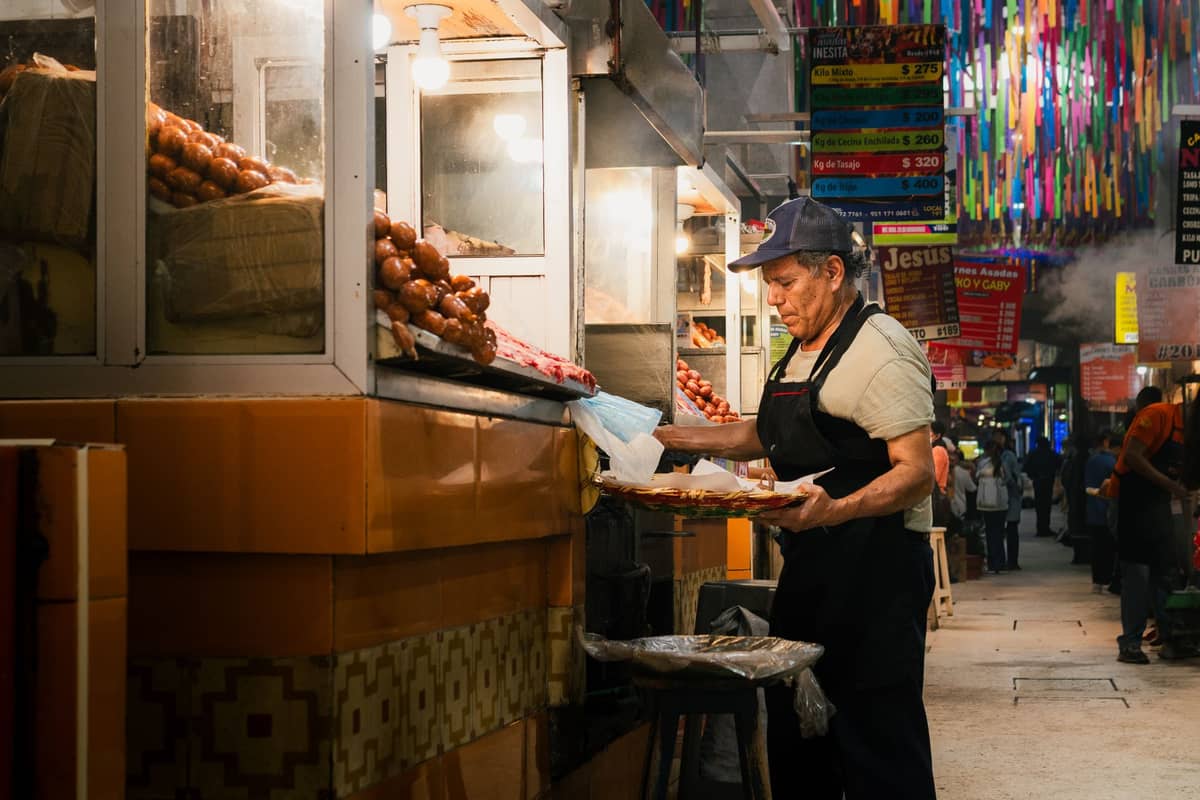
Bazurto is open daily, with the food stalls most active from the early morning through the late morning. The cooked food section sits toward the interior of the market, past the fruit and vegetable vendors. Look for women frying arepas de huevo in large caldrons of oil — these operations often have a line forming around them, which is the best indicator of quality. A full breakfast of an arepa de huevo, a carimañola, and a fresh juice should cost under COP 15,000 total (roughly $3–4 USD at current exchange rates).
Several tour operators run guided Bazurto food tours, typically departing in the morning to coincide with peak market hours. These tours add context about the market's role in the local food supply chain and the Afro-Caribbean culinary traditions behind many of the dishes. They are a reasonable option for first-time visitors who want to eat there without the stress of navigating it alone. Availability varies by provider and season, so book in advance during high season (December through March).
✨ Pro tip
If you visit Bazurto independently, go on a weekday morning between 7:00 and 9:00 a.m. Weekends are busier and more disorienting. Wear closed shoes, bring small bills (COP 5,000 and 10,000 notes), and skip the tourist-facing stalls at the entrance — the better food is deeper inside.
Street Food Prices: What Things Actually Cost
Price awareness is the single most useful tool for eating well in Cartagena without being overcharged. The same arepa de huevo that costs COP 3,500 at a Getsemaní street stall can appear on a Centro Histórico corner for COP 12,000 with a different presentation and a tourist-zone tax baked in. Neither version is fraudulent, but knowing the difference lets you spend your food budget intentionally.
- Arepa de huevo (local stall): COP 3,000–6,000
- Arepa de huevo (tourist zone): COP 8,000–15,000
- Carimañola: COP 2,500–5,000
- Empanada: COP 2,000–4,000
- Raspao (shaved ice): COP 2,000–4,000
- Cocada (coconut candy): COP 1,500–3,000
- Fresh tropical fruit cup: COP 3,000–6,000
- Corozo or lulo juice: COP 3,000–5,000
- Full Bazurto breakfast (arepa + carimañola + juice): under COP 15,000
These price ranges are approximate and reflect local stall pricing. COP values fluctuate against foreign currencies, so treat the USD equivalents as rough guides rather than fixed figures. The key takeaway: if you are paying more than COP 10,000 for a single fried snack at a street stall, you are in tourist-pricing territory.
Cultural Context: Why Cartagena's Street Food Is Distinct
Cartagena's food identity is inseparable from its history as a major port and the largest enslaved African population center in colonial Spanish America. Many of the dishes and techniques that define the street food scene trace directly to West African cooking traditions brought over during the colonial period. The cocada, for example, originates with Afro-Colombian communities, and its production is still closely associated with San Basilio de Palenque, a palenque community about 70 km south of Cartagena whose Cultural Space UNESCO recognizes as an element on the Representative List of the Intangible Cultural Heritage of Humanity.
Understanding this context changes how you experience a vendor selling cocadas near the Old City walls. Many of these vendors are Palenqueras — women from San Basilio dressed in colorful traditional clothing who have sold sweets in Cartagena for generations. They are not a tourist attraction; this is their livelihood and a continuation of a documented cultural tradition. For more on this history, the Afro-Colombian culture guide for Cartagena goes into much greater depth.
Practical Tips for Eating Street Food in Cartagena
Cartagena's climate shapes when and where street food works best for visitors. The city sits at near sea level on the Caribbean coast and stays hot year-round, with daytime temperatures typically between 28–32°C (82–90°F). The dry season (December through April) makes outdoor eating more comfortable, but the rainy season does not shut down street food — vendors adjust, and a brief afternoon downpour rarely lasts more than an hour.
For broader trip planning context, including which months are least crowded and most affordable, the best time to visit Cartagena guide covers seasonal trade-offs in detail. December in particular brings higher prices and crowds — relevant if you are budgeting for street food tours or market visits during peak season.
- Eat where locals are already eating — a queue of Colombians at a frito stall is better than any recommendation.
- Bring small bills. Most street vendors cannot break COP 50,000 notes and may wave you away if you offer one.
- Avoid pre-packaged fritos that have been sitting out. The quality difference between fresh-fried and sat-for-an-hour is significant.
- Hydrate aggressively. The heat plus fried food is dehydrating. Fresh fruit juices from market stalls are a better choice than bottled sodas.
- If you have a sensitive stomach, start with cooked-through items (empanadas, carimañolas) before tackling raw garnishes or uncooked salsas.
- The best street food hours are early morning (6:00–10:00 a.m.) for fritos, and midday to early afternoon for fruit vendors and raspao.
If you are combining street food exploration with a broader look at Cartagena's neighborhoods, the guide to getting around Cartagena covers transport options between the Old City, Getsemaní, and Bocagrande — all relevant when planning a food-focused day.
FAQ
What is the most famous street food in Cartagena, Colombia?
Arepa de huevo is the most iconic. It is a cornmeal arepa stuffed with a whole egg and deep-fried twice — crispy outside, soft inside. You will find it at stalls throughout Getsemaní and Bazurto Market, typically for COP 3,000–6,000 at local prices.
Is street food in Cartagena safe to eat?
Generally yes, with common-sense precautions. Stick to stalls with high turnover where food is fried fresh to order. Avoid items that have been sitting out for extended periods, especially in the heat. Bazurto Market requires more caution about hygiene than tourist-zone stalls, but the cooked food stalls there are popular with locals for a reason.
Where is the best place to eat street food in Cartagena?
Getsemaní is the most accessible neighborhood for street food with authentic local pricing. Bazurto Market offers the most immersive experience but requires more effort to navigate. Avoid looking for budget street food inside the walled Centro Histórico — prices there reflect tourist demand, not local norms.
How much does street food cost in Cartagena?
At local stalls in Getsemaní or Bazurto, individual items like arepas de huevo or carimañolas run COP 3,000–6,000 (under $2 USD). A full breakfast with juice at Bazurto should cost under COP 15,000 total. In tourist areas of the Centro Histórico, expect to pay two to three times more for the same items.
What time does Bazurto Market open and close?
Bazurto Market operates daily. Vendors start setting up in the very early morning and the market is most active between roughly 7:00 and 11:00 a.m. The cooked food stalls tend to become quieter after the late morning. For street food specifically, aim to arrive before 10:00 a.m.