Best Time to Visit Cartagena, Colombia: A Month-by-Month Guide
Cartagena de Indias is a year-round destination, but when you go shapes everything from hotel rates to beach conditions. This guide breaks down the dry season, rainy season realities, peak holiday crowds, and the sweet-spot months that most travelers overlook.
Plan and book this trip
Tools from our partner Travelpayouts help you compare flights and hotels. If you book through them, we may earn a commission at no extra cost to you.
Flights
Hotels map
TL;DR
- The best time to visit Cartagena, Colombia is December through March: dry weather, reliable sunshine, and the lowest chance of rain-interrupted days.
- Peak season (mid-December to March and Semana Santa) brings the highest hotel prices and crowds. Book at least 6-8 weeks ahead.
- The rainy season (May–November) does not mean constant downpours: most rain falls in short afternoon bursts, and hotel rates can drop 30–40%. See our budget travel guide to Cartagena for how to maximize value in the off-season.
- Cartagena is tropical year-round at 28–32°C (82–90°F). There is no cool season, only a wet one and a dry one.
- October is the wettest month. January and February are the driest. Neither is the cheapest — that honor goes to September and early October.
Understanding Cartagena's Climate: Two Seasons, Not Four
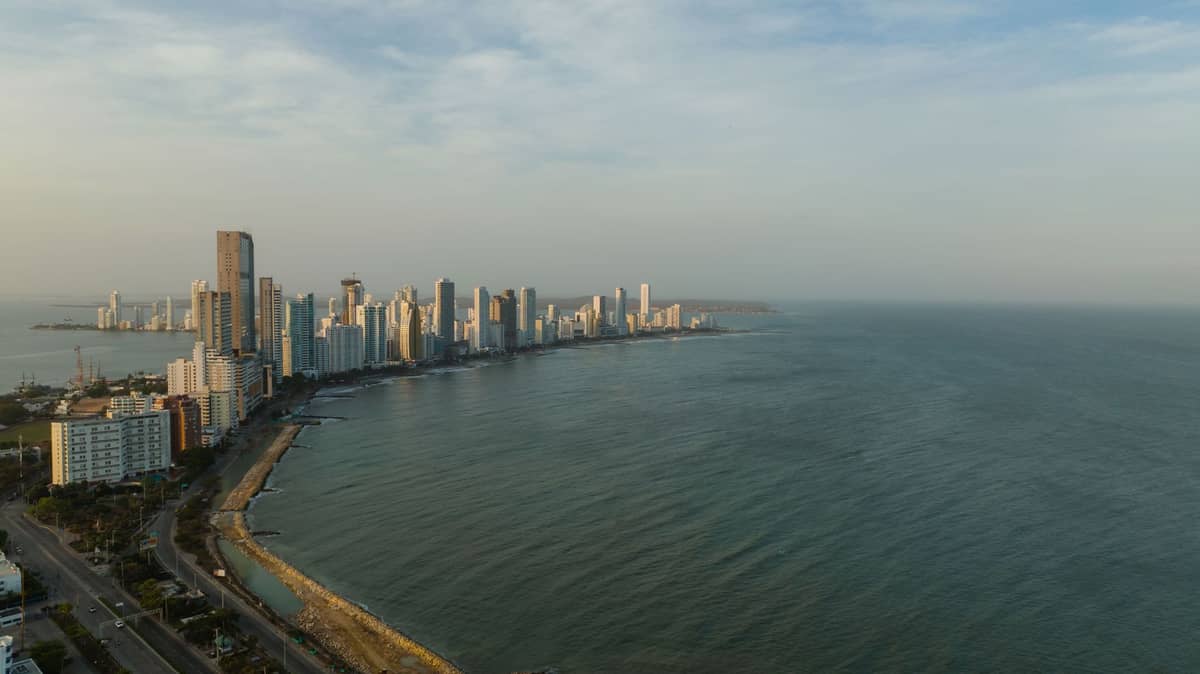
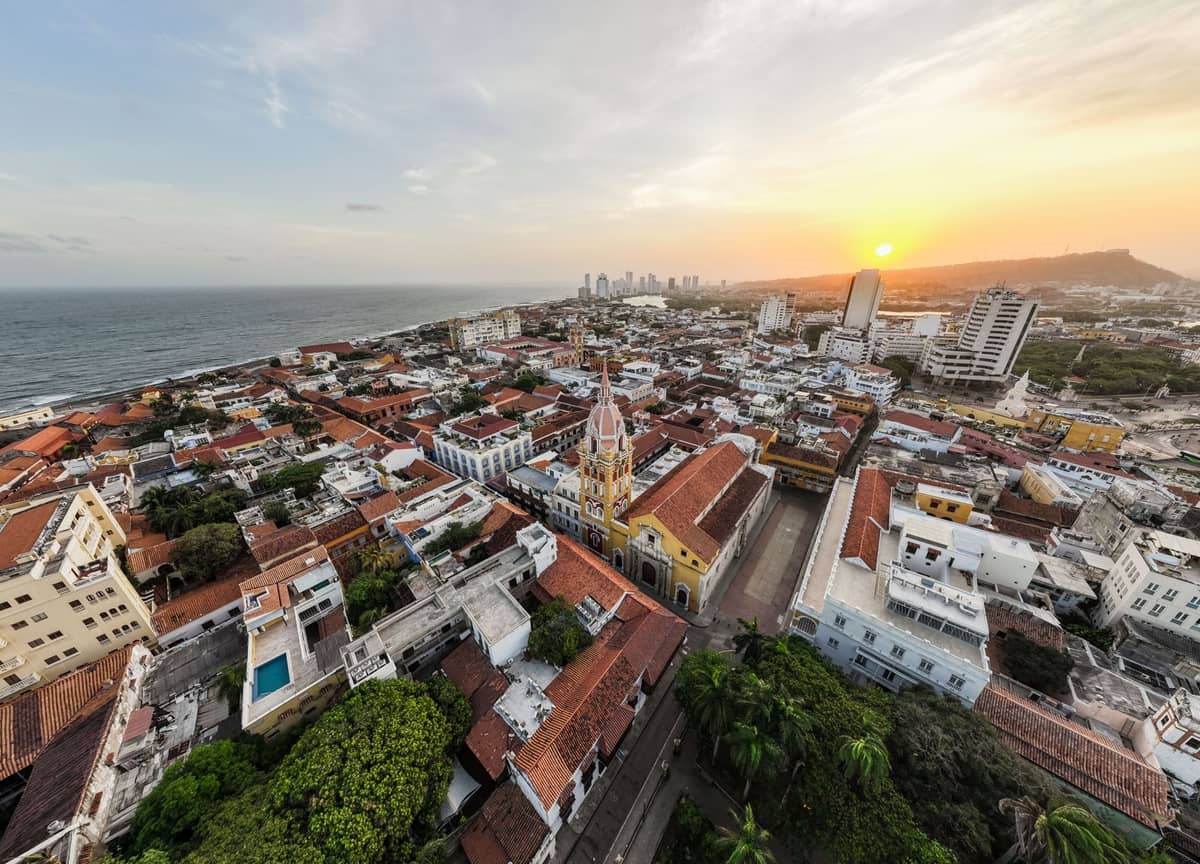
Cartagena de Indias sits on Colombia's northern Caribbean coast at near sea level, and its climate is defined by one variable above all others: rain. Temperatures barely move across the year, hovering between 28–32°C (82–90°F) during the day and dropping to roughly 24–26°C (75–79°F) at night. You will not find a cool season here. What you will find is a dry season and a wet season, and understanding the difference is the single most important factor in planning your trip.
The dry season runs from December through April. During this stretch, rainfall is minimal — January and February typically see only 2–4 rainy days per month — and the trade winds off the Caribbean provide some relief from the heat and humidity. The wet season runs from May through November, peaking hard in September and October. October is consistently the wettest month, with rainfall often reaching 230–270 mm and around 16–26 rainy days. That said, even at the height of the rainy season, most precipitation falls as short, intense afternoon showers rather than all-day grey drizzle. Mornings are frequently clear and usable.
ℹ️ Good to know
Cartagena sits south of the main Atlantic hurricane belt. The Colombian Caribbean coast is rarely in the path of direct hurricane landfalls, though the broader storm system can amplify the rainy season's intensity between August and October.
Month-by-Month Breakdown: Weather, Crowds, and Prices
- December – January (Peak High Season) The dry season kicks in alongside Colombian Christmas and New Year holidays. Domestic tourism surges, occupancy rates hit their annual high, and mid-range hotels in the Centro Histórico and Getsemaní commonly run US$80–150 per night. Book 6–8 weeks out minimum. Weather is excellent: sunshine, low humidity by local standards, and trade winds. The flip side is that the Walled City and popular beaches feel genuinely crowded.
- February – March (Sweet Spot) This is arguably the best combination of good weather and manageable crowds outside of holiday spikes. Rainfall remains very low, the trade winds are consistent, and prices ease slightly after the January rush. February is one of the driest months of the year. If Semana Santa falls in March, expect another surge in the final week.
- April (Semana Santa and Shoulder) Holy Week (Semana Santa) falls in March or April and is one of Colombia's biggest domestic travel events. Cartagena fills rapidly; transport, hotels, and boat trips to the islands book out weeks in advance. Outside of Semana Santa, April marks the transition into the wet season and crowds thin noticeably. Early April can be an excellent window if you miss the holiday rush.
- May – June (Early Rainy Season) Rain increases but is still manageable, and afternoon showers are often the only disruption. Hotel rates drop 20–30% compared to peak. June offers a decent balance for travelers who want lower prices without enduring the heaviest rainfall months.
- July – August (Mid Rainy Season) Rain frequency climbs. Humidity is at its highest. July and August are not ideal for beach trips or island day tours, since choppy Caribbean conditions can affect boat crossings to Islas del Rosario and Barú. That said, the city itself — the colonial architecture, the food scene, Getsemaní — remains fully functional and enjoyable. Rates are low.
- September – October (Wettest, Cheapest) October is the wettest month of the year. If outdoor activities are your priority, this is the hardest period to navigate. But hotel prices reach their annual floor — sometimes 40% below peak — and the city is uncrowded. Cultural visitors and those focused on food, nightlife, and the Walled City often find excellent value. September can also feel oppressively humid.
- November (Transition) Rain begins to ease in November as Cartagena transitions back toward the dry season. Prices remain low, crowds are thin, and by mid-to-late November the weather is often perfectly acceptable. November is underrated for budget travelers who can tolerate some weather uncertainty.
Peak Season: What to Expect and How to Prepare
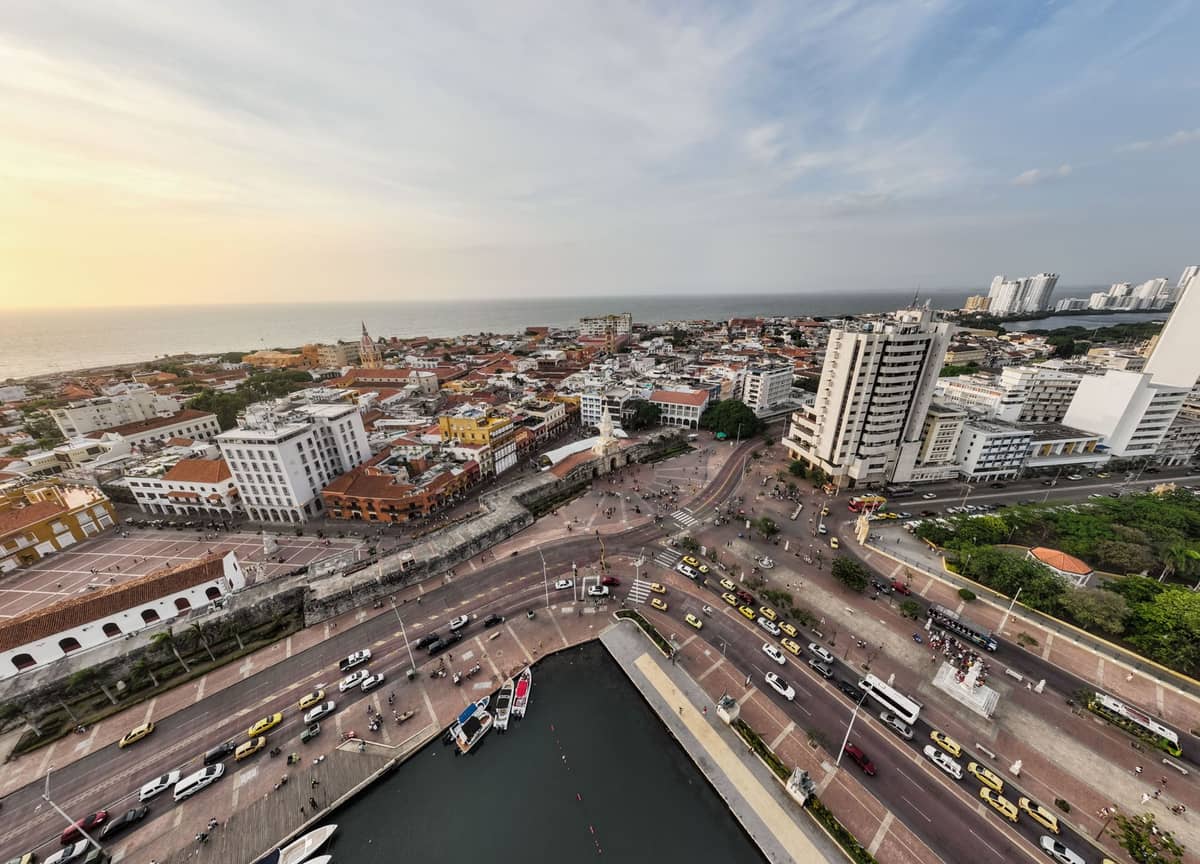
Peak season in Cartagena runs from mid-December through March, with two additional spikes during Colombian New Year and Semana Santa. During these windows, the Centro Histórico operates at full tourist capacity. The famous streets around Plaza de Santo Domingo and the Castillo San Felipe de Barajas fill up by mid-morning. Boat departures to the islands often sell out the day before.
Accommodation during peak season in the Walled City and Getsemaní typically runs US$80–150 per night for mid-range properties, with boutique hotels in restored colonial mansions pushing well above that. Bocagrande, the high-rise beach district, has more inventory and sometimes more competitive pricing, though it lacks the historic character of the inner city. If Cartagena in December is what you want, the guide below covers how to make the most of the festive season.
For a detailed look at what December specifically offers, including the holiday atmosphere and weather, see the complete guide to Cartagena in December.
⚠️ What to skip
Semana Santa (Holy Week) is one of the most heavily booked periods in all of Colombia's Caribbean coast. If your dates overlap with it, book accommodation and island tours at least 4–6 weeks ahead. Last-minute availability drops sharply, and prices spike even at lower-tier properties.
The Rainy Season: Overrated as a Problem, Underrated for Value
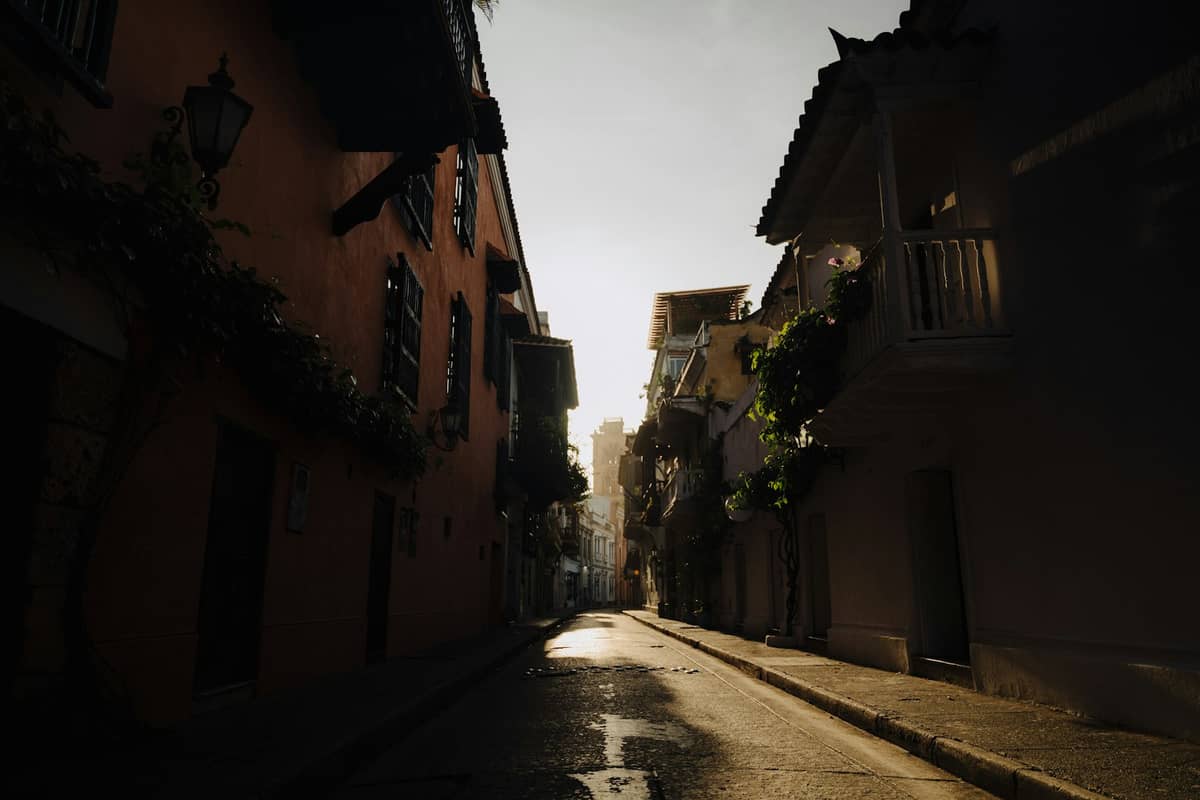
The biggest misconception about Cartagena's wet season is that rain makes the city unusable. It does not. What the wet season actually delivers is a pattern of heavy afternoon or evening showers, typically lasting 30–90 minutes, followed by clearing skies. Mornings are frequently dry and warm. If your itinerary includes the Walled City, museums, markets, and restaurants, the rainy season barely interrupts your plans.
Where the wet season does create real constraints is in outdoor and marine activities. Day trips to Playa Blanca on Barú and boat crossings to Islas del Rosario National Park are weather-dependent. Between July and October, Caribbean swells increase, sea conditions can deteriorate quickly, and some operators cancel or reschedule tours. If island-hopping is central to your trip, this is the practical reason to prioritize the dry season.
The financial upside of the wet season is meaningful. Hotel rates in the Centro Histórico and Getsemaní regularly fall to US$50–100 per night for mid-range properties. The city's restaurants, rooftop bars, and cultural sites are less congested, and you are far more likely to have the fortified city walls and viewpoints to yourself in the early morning. For travelers focused on culture, food, and nightlife rather than beach days, May through early July and November represent genuine value windows.
✨ Pro tip
If you visit during the rainy season, schedule boat tours and beach days for the morning — departures before 9 a.m. typically beat the afternoon buildup. Keep afternoons flexible for indoor activities: the Palacio de la Inquisición, the Gold Museum, or a long lunch in Getsemaní work perfectly as rain backup plans.
Best Time for Specific Types of Trips
What counts as the "best" month depends heavily on what you are actually planning to do. A couple on a romantic trip will weigh things differently than a family with young children or a solo traveler on a tight budget. Our guide for couples visiting Cartagena covers the specific neighborhoods and experiences that work best for a romantic trip, and the timing advice differs from a beach-focused itinerary.
- Best for beaches and island tours January through March. Sea conditions are calmest, visibility for snorkeling at Islas del Rosario is best, and Playa Blanca is accessible without weather risk. February is the peak of the dry season and the ideal beach month.
- Best for budget travelers May to June or November. Rain is present but manageable, hotel rates drop significantly, and the city is not overcrowded. November is the best single month for balancing cost and weather reliability.
- Best for cultural immersion Any time outside of peak holidays. The food markets, street scenes, and Afro-Colombian cultural experiences that make Cartagena distinctive are available year-round and actually more accessible when tourist volumes are lower.
- Best for families with children December to March for predictable weather and full activity availability. Semana Santa is festive but chaotic; mid-January to mid-February offers the calmest crowd conditions within the peak window.
- Best for nightlife and festivals December and January, when the city's social calendar is fullest. The New Year period through late January sees outdoor concerts, beach events, and a general festive energy that is hard to replicate in other months.
Families should note that Cartagena has solid year-round infrastructure for kids. Our guide to Cartagena with kids covers specific timing considerations for activities like the Oceanario at Islas del Rosario and visits to the city walls.
Practical Planning: Prices, Booking Windows, and What to Pack
Cartagena's hotel market follows a predictable seasonal curve. Peak prices apply from mid-December through March and again during Semana Santa. Mid-range properties in the Centro Histórico and Getsemaní often run roughly in the US$80–150 per night range in high season and around US$50–100 in the wet season. Boutique hotels in restored colonial buildings within the Walled City command premium rates regardless of season and often require advance booking year-round. The Bocagrande beach district has more rooms and can be more affordable during peak periods, though the trade-off is a less atmospheric location.
For flights, Cartagena is served by Rafael Núñez International Airport (IATA: CTG), located in the Crespo neighborhood, roughly 3 km from the Walled City depending on your specific hotel. Domestic connections from Bogotá, Medellín, and Cali are frequent. International routes are more limited; many travelers connect through Bogotá's El Dorado Airport. On packing: the answer is always light, breathable clothing regardless of season. The heat is consistent. In the wet season, a compact rain jacket or packable umbrella earns its weight. For detailed neighborhood and accommodation context, see our guide to where to stay in Cartagena.
💡 Local tip
Cartagena operates on Colombia Time (COT), UTC-5, with no daylight saving adjustments. The currency is the Colombian peso (COP). The official language is Spanish; English is spoken in most tourist-facing businesses in the Walled City and Bocagrande, but basic Spanish is genuinely useful in local markets and neighborhoods like Getsemaní.
FAQ
What is the best month to visit Cartagena, Colombia?
February is the single best month for most travelers: it falls within the dry season, rainfall is at its lowest, trade winds keep temperatures feeling more comfortable than in other months, and the post-New Year crowd surge has eased. January is close behind but still carries holiday-level prices. If you need to balance cost with weather, November is the best shoulder option.
Is Cartagena too hot to visit?
Cartagena is consistently warm at 28–32°C (82–90°F) year-round, and humidity is always present. Most visitors adapt quickly. The sea breeze along the Walled City and the coast makes it more bearable than the numbers suggest. Midday (12–3 p.m.) is the least comfortable window regardless of season; mornings and evenings are significantly more pleasant.
Does it rain a lot in Cartagena?
It depends entirely on the month. January through March see very little rain — often fewer than 5 rainy days per month. September and October are reliably wet, with 20-plus rainy days and monthly rainfall around 180–200 mm. Even in the wet season, most rain falls as short afternoon showers, and mornings are usually clear.
Is Cartagena safe to visit?
Cartagena is one of Colombia's most visited cities and is generally considered safe for tourists within the main visitor areas. The Centro Histórico, Getsemaní, and Bocagrande are well-traveled. Like any major city, it has neighborhoods and situations that require more caution. For current, specific safety guidance, consult your government's official travel advisory before your trip.
When is Cartagena cheapest?
September and October offer the lowest hotel and flight prices of the year, coinciding with the wettest part of the rainy season. May-June and November are cheaper than peak without the same weather risks. If saving money is a priority, November is the most practical budget window: prices are lower, rain is decreasing, and the city is not crowded.