Islas del Rosario National Park: Cartagena's Caribbean Coral Archipelago
Parque Nacional Natural Corales del Rosario y de San Bernardo stretches across 120,000 hectares of Caribbean Sea off the coast of Cartagena de Indias. It protects some of Colombia's most extensive coral reef systems alongside mangrove forests, seagrass beds, and dozens of small coral islands. This is the closest serious marine wilderness to the city, reachable by boat in under two hours.
Quick Facts
- Location
- Caribbean Sea off Cartagena, Colombia
- Getting There
- Boat from Muelle Turístico La Bodeguita, Avenida Blas de Lezo, Cartagena. Departures 8:00–10:00 a.m.
- Time Needed
- Full day (boats depart morning; return time depends on sea conditions and port authority)
- Cost
- Park entry from $11,000 COP (San Bernardo sector). Verify current tariffs directly with the park before visiting.
- Best for
- Snorkelers, divers, nature travelers, families wanting a beach day away from the city
What the Islas del Rosario Actually Are
The full official name is Parque Nacional Natural Corales del Rosario y de San Bernardo, and it is one of Colombia's main Caribbean marine protected areas. The park covers 120,000 hectares of open sea, coral reef, mangrove lagoon, and low-lying coral cays. Most visitors refer to it simply as the Islas del Rosario, though technically the park also encompasses the more distant San Bernardo islands to the south. For a day trip from Cartagena, the Rosario sector is what you will reach.
The archipelago consists of many small islands and cays, many of them privately developed with eco-lodges, weekend houses, or small beach clubs. A few islands remain undeveloped and are managed by the national parks authority, Parques Nacionales Naturales de Colombia. The protected reef system underneath is what gives the islands their ecological weight: barrier and fringing corals support hundreds of species of fish, sea turtles, rays, and invertebrates in water that can reach exceptional clarity during the dry season.
ℹ️ Good to know
The park entrance fee quoted on the official Parques Nacionales website is $11,000 COP for the San Bernardo sector. Tariffs for the Rosario sector and any changes to these figures should be confirmed directly with the park or your tour operator before you book, as fees are updated periodically.
Getting There: The Boat from La Bodeguita
All sea access to the Islas del Rosario originates at Muelle Turístico La Bodeguita on Avenida Blas de Lezo, in Cartagena. The pier sits just outside the old city walls and is easy to reach by taxi from Centro Histórico or Bocagrande. Boat departures are scheduled between 8:00 and 10:00 a.m.; the return time depends on sea conditions and port authority instructions, so plan your day around a full departure, not a half-day. The pier sits just outside the old city walls and is easy to reach by taxi from Centro Histórico or Bocagrande. Boat departures are scheduled between 8:00 and 10:00 a.m.; the return time depends on sea conditions and port authority instructions, so plan your day around a full departure, not a half-day.
The crossing takes roughly 45 minutes to 1.5 hours depending on the vessel and which island you are heading to. Lanchas (open speedboats) are the standard option and handle the chop well in calm conditions. During the dry season, December through April, the Caribbean can be rough in the morning and settle by midday. If you are prone to seasickness, sit toward the middle of the boat and avoid large breakfasts. An alternative land-sea route exists via Playa Blanca on Isla Barú, which allows land access to the park's southwestern edge, but for the coral reef experience most visitors want, the La Bodeguita boat is the practical choice.
💡 Local tip
Arrive at La Bodeguita pier by 7:30 a.m. at the latest. Boats fill quickly during high season (December to March), and the best snorkeling light is before 11:00 a.m. when the sun is high enough to illuminate the reef but glare has not yet flattened the water.
Tickets & tours
Hand-picked options from our booking partner. Prices are indicative; availability and final rates are confirmed when you complete your booking.
Baru Terrestre and Islas Del Rosario Pasadia full day tour
From 40 €Instant confirmationFree cancellationSan Andres Islands pontoon tour through the inner bay
From 26 €Instant confirmationFree cancellationSan Andres Island guided tour in Chiva bus
From 17 €Instant confirmationFree cancellationTotumo Volcano and lunch at a VIP hotel from Cartagena
From 34 €Instant confirmationFree cancellation
The Reef: What You Will See Underwater
The coral reefs of the Rosario archipelago are among the most ecologically significant in the Colombian Caribbean. The park protects barrier reefs, patch reefs, and fringing formations that shelter species including parrotfish, angelfish, moray eels, spotted eagle rays, and green sea turtles. During the dry season, visibility in the water can reach 15 to 20 meters in sheltered reef passages. In the wet season, run-off from the mainland and increased swell can reduce visibility substantially, though the reef is still diveable.
Most group tours include a snorkeling stop at one of the reef sites near the islands. The experience varies considerably by operator: budget lanchas may give you 30 minutes in the water at a crowded site, while private or eco-tour operators often reach quieter reef sections with longer in-water time. If diving is the primary reason for your visit, book a dedicated dive operator in Cartagena rather than a standard island day-tour, as the latter rarely includes tanks or dive guides.
Bring your own snorkel mask if you can. Rental equipment on the boats is functional but often ill-fitting, and a tight seal makes an enormous difference when you are trying to watch a turtle feed on seagrass three meters below. Reef shoes or water shoes are useful for wading ashore on the cays, where the bottom can be rocky or covered in sea urchins.
Island Life: What the Cays Feel Like Above Water
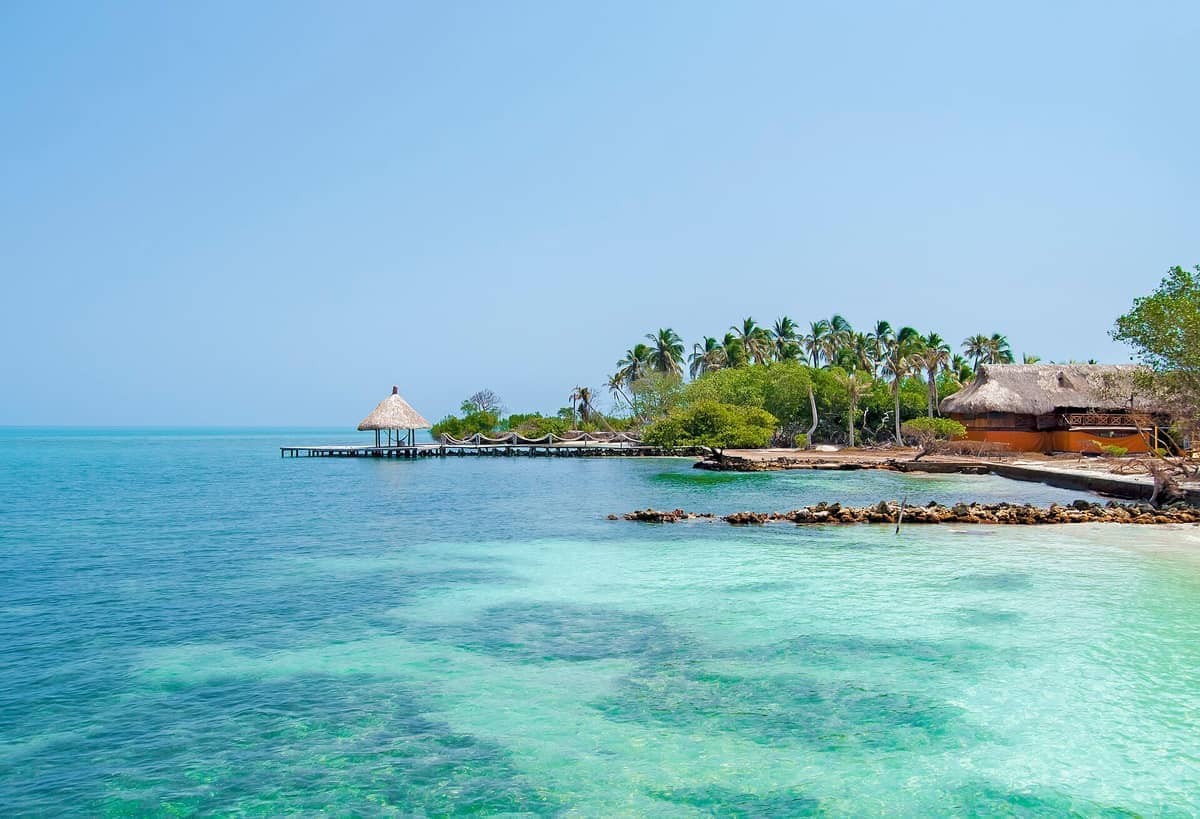
Step off the boat onto any of the smaller Rosario cays and the scale of the place surprises you. Most are no more than a few hundred meters across, so low that the sea feels like it is at eye level from the interior. The air smells of brine and sun-warmed sand. Coconut palms lean at angles shaped by the trade winds. In the early morning, before the tour groups arrive, the islands are genuinely quiet, with only the sound of waves and the occasional frigate bird overhead.
By midday the atmosphere changes. Popular islands with beach clubs fill with day visitors from Cartagena, music starts up, and vendors move between groups with cold drinks and food. If a social beach day is what you are after, this works well. If you came for the silence and the reef, mornings are when the park earns its national park designation.
The Oceanario Islas del Rosario on Isla San Martín de Pajarales is a small aquarium and marine education center within the archipelago. It is included in many group tour packages and is particularly appealing for families traveling with children, as it allows close observation of Caribbean marine life including sharks, rays, and coral reef fish in managed tanks and open-sea pens.
When to Go and When to Stay Home
The dry season, December through April, produces the best conditions for the Islas del Rosario across every relevant factor: water clarity, weather stability, calmer seas for the crossing, and lower risk of afternoon rain cutting your beach time short. January and February are especially reliable. Daytime temperatures across the year sit between 28 and 32 degrees Celsius, but the dry season trade winds make time on the open boat and on the islands noticeably more comfortable.
Visiting between May and November is possible but requires realistic expectations. The rainy season brings choppier seas, reduced underwater visibility, and the chance that heavy afternoon squalls will end your day early. September and October are the wettest months and the least suitable for a reef-focused trip. If you are visiting Cartagena during this period, the islands are still accessible on good days, but check conditions the morning of your departure and be prepared to reschedule. For a broader look at how the seasons affect your entire trip, the best time to visit Cartagena guide covers this in detail.
⚠️ What to skip
The sea crossing can be rough regardless of season if strong winds are present. Small children, elderly travelers, and anyone with mobility limitations should verify conditions before booking, as the open speedboats offer limited shelter and seats can be wet and unsteady in chop.
Practical Walkthrough: What a Day Trip Looks Like
A standard day trip to the Islas del Rosario typically follows a loose pattern: early morning departure from La Bodeguita, a crossing of 45 to 90 minutes, arrival at one or two islands for swimming and snorkeling, lunch at an on-island restaurant or from a packed cooler on the boat, an afternoon at a beach or reef, and a return trip that arrives back in Cartagena by 4:00 to 5:00 p.m. Most operators bundle the park entrance fee into the tour price, but confirm this before paying.
What to bring: reef-safe sunscreen (conventional sunscreens damage coral and are discouraged within the protected area), a hat and long-sleeve shirt for the boat crossing, your own snorkel mask, a dry bag or waterproof phone case, cash for drinks and tips, and a light layer for the return trip when the wind picks up at sea. There are no ATMs on the islands.
Travelers looking to combine the islands with a broader exploration of the coast can also consider a day trip to the wider Islas del Rosario area, which includes options for overnight stays on private eco-lodges within the archipelago. Staying overnight removes the time pressure of the day trip and allows early morning reef dives before any tour groups arrive. For those planning the broader Cartagena trip, day trips from Cartagena covers the islands alongside other coastal excursions.
Photography and Conservation Notes
Underwater photography works best in the first two hours after arrival when the light angle is favorable and the water has not been stirred by other swimmers. A wide-angle lens or a phone in a waterproof housing is sufficient for reef fish at shallow snorkeling depths. Do not touch the coral for a better angle: even light contact breaks polyps that took decades to grow.
Above water, the islands photograph best in the golden hour after arrival, before beach umbrellas and sunbathing crowds fill the frame. The view back toward the Cartagena mainland from the open water, with the city's towers just visible on the horizon, gives a useful sense of how far out you are.
The park faces ongoing conservation pressure from tourism, coastal development, and the cumulative effects of climate-driven coral bleaching. Visitors who choose operators that enforce no-touch reef rules, use reef-safe products, and limit group sizes at any one reef site contribute meaningfully to the park's long-term viability. This is not sentiment: the quality of the snorkeling you experience in 2026 is a direct result of how the reef has been managed over the past two decades.
Insider Tips
- Book a private or small-group lancha rather than a mass-tour boat if your budget allows. Group tours for 20 or 30 people churn through reef sites quickly and spend more time at beach clubs than at the coral. A private boat lets you set the itinerary, choose less-visited reef patches, and control how long you stay in the water.
- The Muelle Turístico La Bodeguita pier is active and, at peak season, slightly chaotic. Tour operators and independent boat captains will approach you aggressively. If you have not pre-booked, walk the full length of the pier before committing, compare what is included in each price, and confirm whether the park entrance fee is bundled into the cost.
- Bring more cash than you think you need. Cold beer, fresh ceviche, and coconut drinks on the islands are reasonably priced, but card payment is rare and often unavailable. There are no ATMs between Cartagena and the islands.
- If you want to snorkel without joining an island tour, some operators offer reef-focused trips that skip the beach clubs entirely and visit two or three reef sites in sequence. These are harder to find but worth seeking out for anyone whose primary interest is marine life rather than a social beach day.
- Consider the overnight option. Several eco-lodges on the smaller Rosario cays offer simple accommodation that puts you on the water at sunrise, before any day-trip boats arrive. The early morning reef, with the light coming in at a low angle and no one else in the water, is a genuinely different experience from the midday tourist version.
Who Is Islas del Rosario National Park For?
- Snorkelers and divers wanting access to Colombia's most accessible Caribbean reef system
- Families with children, particularly for the Oceanario Islas del Rosario – CEINER
- Travelers on a multi-day Cartagena itinerary who want a full-day natural escape from the city
- Nature and wildlife photographers looking for underwater and coastal subjects
- Couples combining a beach day with a boat excursion outside the main city beaches
Nearby Attractions
Other things to see while in Islas del Rosario:
- Oceanario Islas del Rosario
Oceanario Islas del Rosario, formally known as Oceanario Islas del Rosario CEINER, sits on Isla San Martín de Pajarales in the Rosario Islands archipelago off Cartagena, Colombia. It combines a working marine research center with public exhibits including open coral tanks, shark pools, and dolphin encounters. Getting there is part of the experience: access is by boat only, which shapes your entire day.