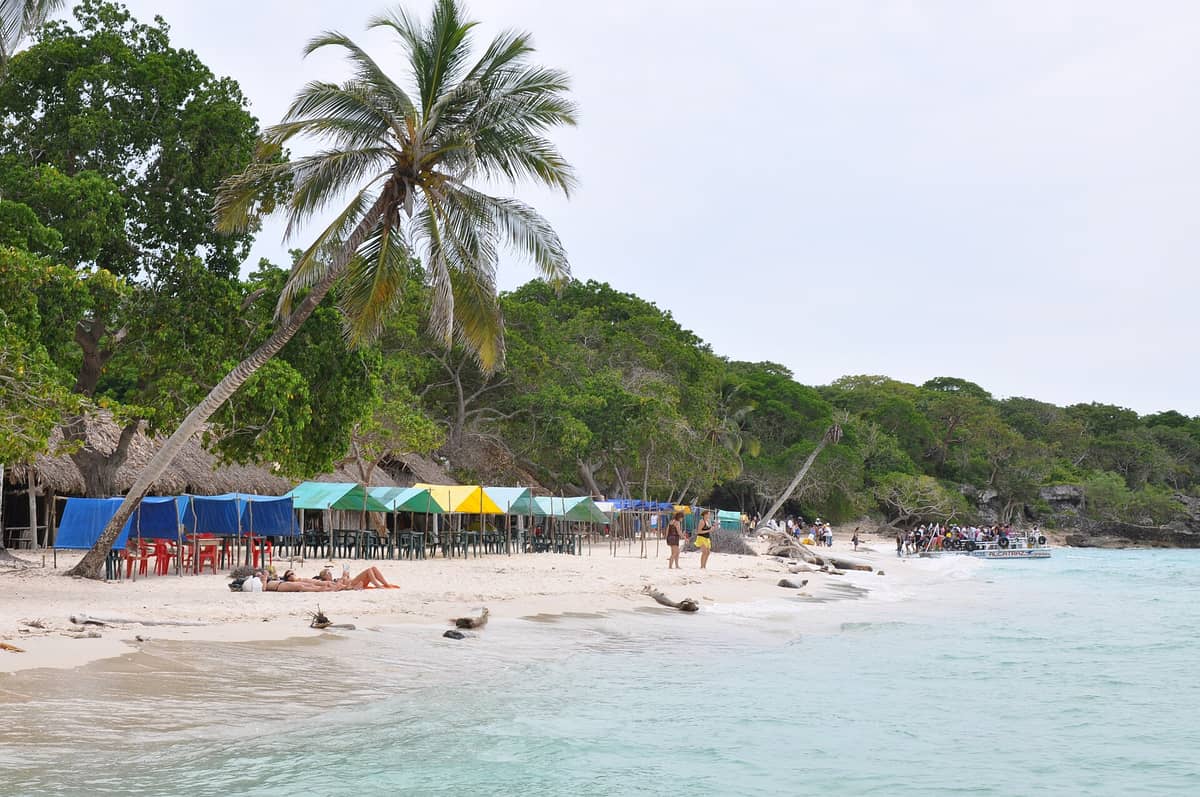
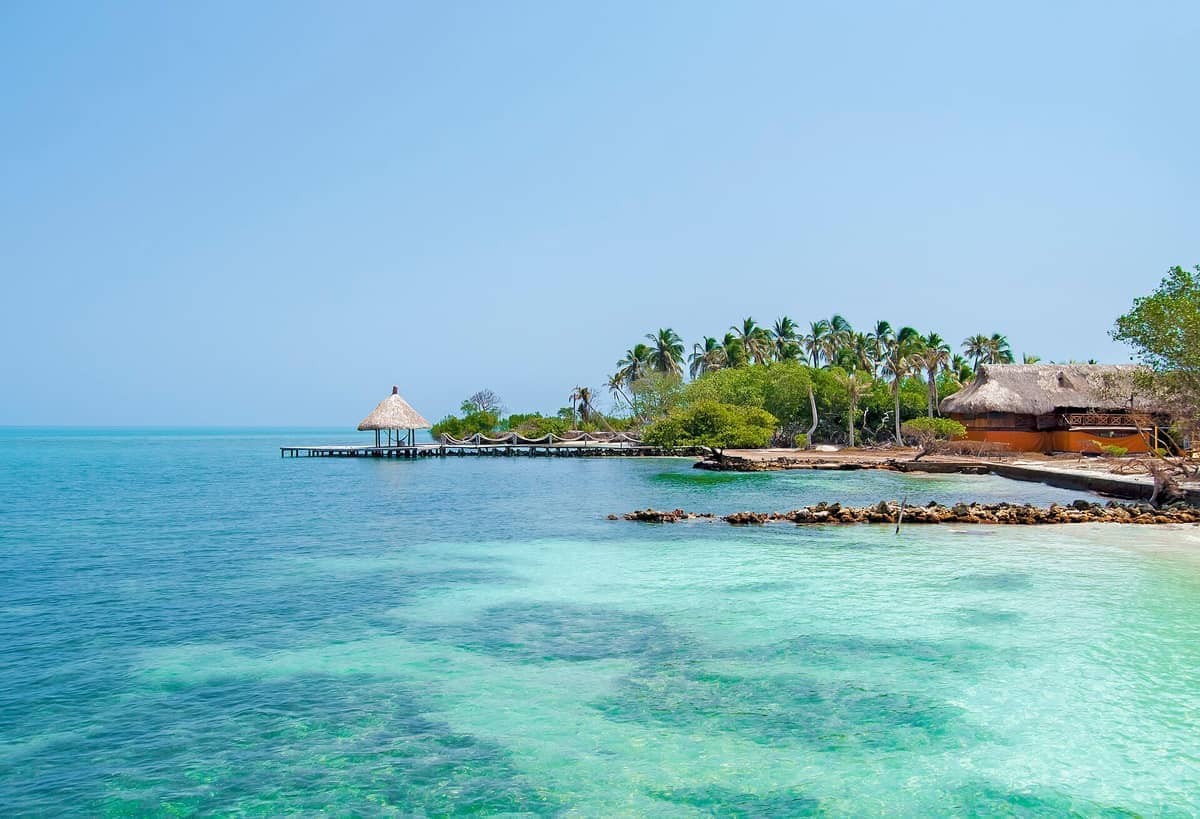
Islas del Rosario is a coral archipelago in the Caribbean Sea southwest of Cartagena, protected within the Parque Nacional Natural Corales del Rosario y de San Bernardo. The islands are Cartagena's premier escape for clear water, reef snorkeling, and quiet beaches, reachable only by boat from the city's waterfront.
Islas del Rosario is not a neighborhood you walk around in — it is a scattering of low-lying coral islands and mangrove-fringed cays sitting roughly 35 kilometers southwest of Cartagena in the Caribbean Sea. Technically part of the insular zone of Cartagena de Indias and protected within a national park, the archipelago is the most accessible stretch of truly clear Caribbean water near the city, and for many visitors it becomes the single most memorable day of their trip.
Orientation: Where the Islands Sit
The Rosario Islands lie in the Caribbean Sea off the southwestern tip of the Barú peninsula, which itself hangs below the city of Cartagena de Indias like a long finger of land. The archipelago is made up of roughly 27 small coral islands and sandy cays, the largest of which is Isla Grande. Collectively they fall within the Parque Nacional Natural Corales del Rosario y de San Bernardo, one of Colombia's most important marine protected areas.
To build a mental map: from central Cartagena, boats head south across the Bahía de Cartagena, pass near Isla Tierrabomba, and then continue into open Caribbean water before reaching the first islands of the archipelago. The journey takes roughly 45 minutes to an hour and a half depending on the boat type and which island you are heading to. There are no bridges, no ferry terminals on the island side with grid connections to the mainland, and no public transport. The sea is the only road.
The islands sit in close geographic relation to Isla Barú, which separates the archipelago from the mainland and where the famous Playa Blanca beach is located. Travelers combining both destinations in a single day trip get a fuller picture of what the coast south of Cartagena looks like beyond the city limits.
Character and Atmosphere
The Rosario Islands operate on a rhythm that has almost nothing to do with the one Cartagena runs on. Early morning, before the tour boats arrive, the water around the smaller cays is flat and clear enough to see the reef formations below the surface. The air smells of salt and sun-warmed vegetation. Pelicans patrol the shoreline. A few local families who live permanently on Isla Grande are already moving around their wooden houses, and the sound of a generator somewhere in the distance is often the only machine noise you will hear.
By mid-morning, the atmosphere shifts. Tour boats from Cartagena arrive in numbers during the high season, especially on weekends and during the December-to-April dry season. The organized beach clubs fill up, music starts, and the quieter cays get noticeably busier. The trade-off is that the infrastructure for eating, renting snorkel gear, and getting in and out of the water improves considerably once the day-trip economy kicks in.
By late afternoon, when the last tour boats have departed and the day-trippers have gone back to Cartagena, the islands settle again. Guests staying overnight on Isla Grande experience a genuinely different place: frogs calling from the mangroves after dark, bioluminescence visible in the shallows if the conditions are right, and a sky full of stars uninterrupted by city light. This split personality, hectic at noon and nearly silent by dusk, is the defining characteristic of the archipelago.
ℹ️ Good to know
The Rosario Islands sit within a national park, which means there are entry fees for visitors. These are collected at the departure dock in Cartagena or occasionally on the water by park rangers. Fees are subject to change, so confirm the current rate before you depart.
What to See and Do
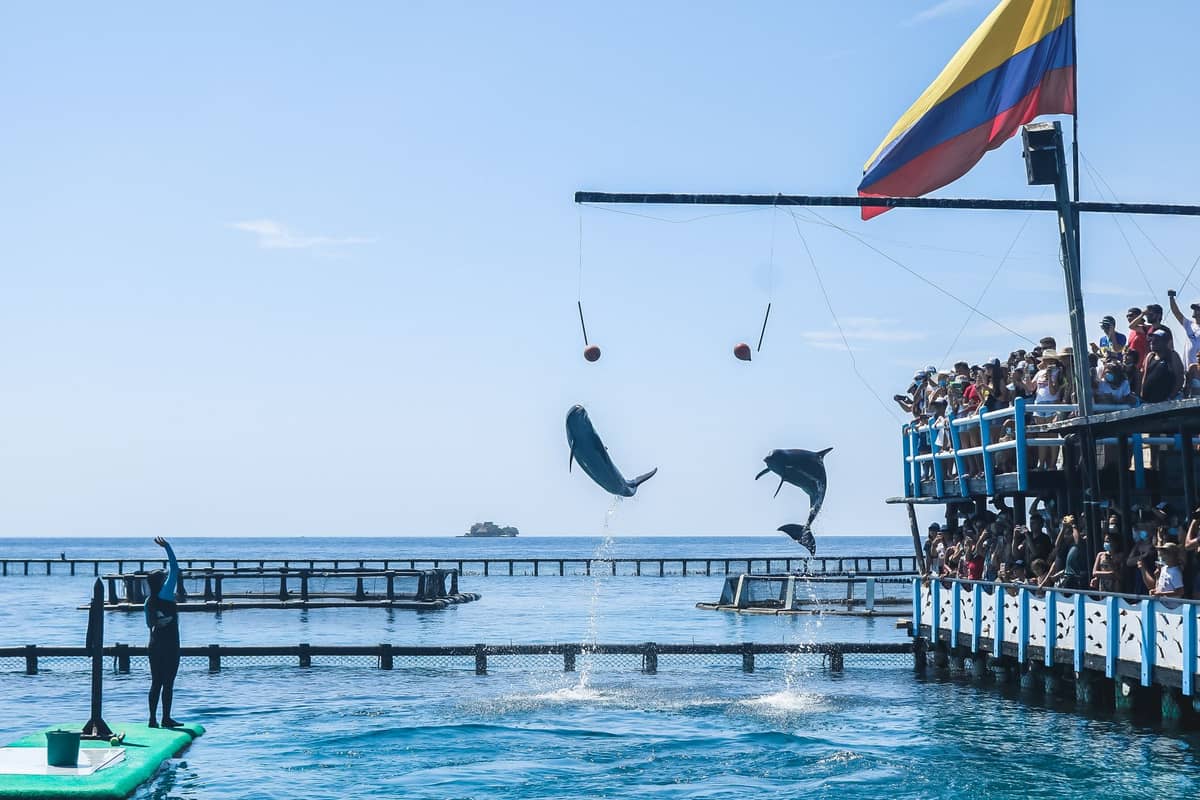
The primary draw is the reef ecosystem. The coral gardens around the smaller islands and cays support a range of fish, rays, and reef life that simply does not exist near the beaches of Cartagena or Bocagrande. Snorkeling is the most accessible way to see this, and most boat tours include at least one snorkel stop. For a more structured experience, the Oceanario Islas del Rosario on one of the smaller islands offers an aquarium and marine education center, a popular stop particularly for families traveling with children.
Isla Grande is the most developed island and the best base for anyone planning to spend more than a day. It has walking paths through mangrove areas, small beaches on multiple sides of the island, and several family-run guesthouses and eco-lodges. The island is large enough to explore on foot, though the interior mangrove forest can be dense and is best navigated with a guide or along marked trails. For a broader look at the island options around Cartagena, the Islas del Rosario National Park page covers the protected area in full detail.
Snorkeling over the coral reefs between the smaller cays, best in the morning before boat traffic stirs up sediment
Kayaking or paddleboarding in the sheltered channels between islands
Visiting the Oceanario for guided marine life tours
Exploring mangrove channels by small boat or kayak on Isla Grande
Swimming from the sandbar cays that appear at low tide
Watching for reef fish, sea turtles, and rays from the surface
Travelers interested in combining the islands with the broader Caribbean coastline around Cartagena should read the Cartagena islands guide which covers all the offshore options including Isla Tierrabomba and Playa Blanca on Barú.
💡 Local tip
The best snorkeling visibility is typically in the dry season from December to April, when rainfall is low and the water is calmer and clearer. During the rainy season from May to November, river runoff from the mainland can reduce visibility around some islands.
Eating and Drinking
Food on the Rosario Islands is simple, fresh, and mostly built around what arrived from the mainland that morning or what was caught nearby. The most common meal is a plate of whole fried fish, coconut rice, patacones (twice-fried green plantains), and a salad. Lobster and shrimp appear on menus at the more established restaurants on Isla Grande, though prices reflect the logistics of getting ingredients out to the archipelago.
Most of the beach clubs that cater to day-trippers include lunch in their package price, typically the standard fried fish combination. Drinks, coconut water, and cold beer are widely available throughout the day at any of the organized beach stops. Prices run higher than equivalent food in Cartagena, which is expected given the transportation costs, but the quality is generally good.
Travelers planning to stay overnight on Isla Grande should confirm in advance whether their accommodation includes meals or has a kitchen. Some eco-lodges are all-inclusive by default; others offer à la carte meals at the on-site restaurant. There are a handful of small family-run kiosks around the island that sell snacks and cold drinks throughout the day, but the overall food infrastructure is limited compared to a city neighborhood. Bring any specific dietary requirements or supplements from Cartagena.
Getting There and Around
Access to the Rosario Islands is exclusively by boat from Cartagena. The main departure points for organized tours are the Muelle de la Bodeguita (also called Muelle Turístico de la Bodeguita) near the old city walls, and the Marina Club de Pesca in the Manga neighborhood. Private charters also leave from other marina docks in Cartagena. Departure times for day trips are typically early morning, between 7:30 and 9:00, to maximize time on the water before the afternoon chop builds.
There are two categories of boat: the large collective lanchas that carry groups of 20 to 40 people and are the standard for organized day trips, and smaller private speedboats that can be chartered for direct transfers. The collective boats are significantly cheaper and are perfectly adequate for most visitors; travel time on the larger boats is longer, usually around 1.5 hours, while private speedboats can make the crossing in 45 minutes. For context on how the islands fit into a wider Cartagena itinerary, the 3 days in Cartagena guide gives a practical framework for when to schedule the trip.
Getting around within the archipelago is by small boat or on foot. On Isla Grande, most of the guesthouses and restaurants are reachable by foot along sandy paths. Moving between different islands requires hiring a small local boat, which can be arranged at the main dock on Isla Grande or through your accommodation. There are no taxis, no motorbikes for hire, and no paved roads on any of the islands.
⚠️ What to skip
There are limited police and medical services on the Rosario Islands. For any emergency, evacuation back to Cartagena may be necessary. Bring any medications you need, basic first aid supplies, and ensure you have comprehensive travel insurance before departing. Sun protection is essential — the equatorial sun reflected off open water is intense and the breeze masks how quickly you are burning.
Where to Stay
The vast majority of visitors to the Rosario Islands come on a day trip from Cartagena and return to their accommodation in the city the same evening. This is the practical choice for most itineraries and lets you spend your nights in a place with full infrastructure, good restaurants, and consistent transport options.
For travelers who want to experience the islands without the day-trip crowds, staying overnight on Isla Grande is worth considering. The island has a range of accommodation from basic guesthouses run by local families to small eco-lodges with hammocks over the water. These are not luxury properties by Cartagena standards, but the access to the reef in the early morning and late afternoon, when day visitors are absent, is genuinely different from the midday rush. For context on the full accommodation spectrum in Cartagena and how the islands fit in, the where to stay in Cartagena guide covers all the main areas including the islands.
There is also a small number of higher-end private villa rentals and boutique properties scattered across the smaller private cays, accessible mainly through specialist booking platforms or tour operators in Cartagena. These offer genuine seclusion but require careful logistical planning around boat transfers and provisioning. They are best suited to travelers staying three or more nights and willing to organize their own transport and supplies.
If your priority is luxury and comfort near the water, staying in Bocagrande on the mainland and day-tripping to the islands is a more reliable option. The beach hotels there have consistent service and infrastructure that the islands simply cannot match.
Practical Considerations and Timing
The dry season from December to April is the clearest, calmest window for visiting the islands. January and February in particular offer stable conditions, minimal rainfall, and the best snorkeling visibility. The best time to visit Cartagena guide covers the seasonal trade-offs in detail, but for the islands specifically, water clarity is more sensitive to rainfall than the mainland beaches are.
December, especially around the Christmas and New Year period, brings high visitor numbers and the boat departures fill up quickly. Booking your tour spot in advance during this window is strongly recommended. At other times of year, including the shoulder months of November and May, day trips are easier to join last-minute and the islands are noticeably quieter.
The rainy season does not make the islands inaccessible, but it does bring choppier crossings, reduced visibility underwater, and the occasional afternoon thunderstorm that shuts down water activities. Some travelers find the rainy season trade-off acceptable given lower prices and fewer crowds, but if snorkeling is your main goal, the dry season is meaningfully better.
Finally, be honest with yourself about what you want from the day. The organized day-trip version of the Rosario Islands, with a beach club, a group of 30 strangers, and a fixed itinerary, is a good time but a fairly packaged one. If you want something quieter, either book a private boat, time your visit for a weekday in the shoulder season, or plan an overnight stay. The islands reward patience and early starts. For a fuller overview of the best things to do across the whole city and its surrounds, the things to do in Cartagena guide puts the islands in the context of the wider destination.
TL;DR
The Rosario Islands are the closest point of genuinely clear Caribbean reef water to Cartagena, about 35 km southwest of the city and accessible only by boat.
Best visited during the dry season (December to April) for calm crossings and good snorkeling visibility; the rainy season is possible but water clarity suffers.
Day trips from Cartagena suit most itineraries; overnight stays on Isla Grande offer a quieter, more immersive experience at the cost of basic infrastructure.
There are no police or medical facilities on the islands — travel insurance, sun protection, and any personal medications must be sorted before you board the boat.
Ideal for snorkelers, beach-seekers wanting to escape the city, couples, and families with kids; less suited to travelers who prioritize nightlife, fine dining, or urban sightseeing.
Three days is enough time to experience the best of Cartagena de Indias: the UNESCO-listed walled city, a boat trip to the Rosario Islands, the street art and nightlife of Getsemaní, and a memorable day trip beyond the city. This itinerary is built for first-time visitors who want depth, not just highlights.
Cartagena de Indias is a year-round destination, but when you go shapes everything from hotel rates to beach conditions. This guide breaks down the dry season, rainy season realities, peak holiday crowds, and the sweet-spot months that most travelers overlook.
Cartagena de Indias sits at the heart of Afro-Colombian history. From the UNESCO-recognized Cultural Space of San Basilio de Palenque to the living traditions embedded in Getsemaní and beyond, this guide covers the history, the neighborhoods, and the practical details for experiencing this heritage authentically.
Cartagena, Colombia has a small but well-defined selection of true all-inclusive resorts. This guide breaks down every major option, where they sit geographically, what's included, current price ranges, and the real trade-offs so you can book with confidence.
Cartagena's beach scene spans gritty urban strips, local fishing villages, and some of the most spectacular Caribbean coastline in South America. This guide covers every option, from the accessible shores minutes from the old city to the powdery white sands of Isla Barú and the coral-fringed Rosario Islands.
Cartagena de Indias holds one of the best-preserved colonial ensembles in the Americas, recognized as a UNESCO World Heritage Site. This guide covers every major building, practical entry details, the best times to visit, and what most travelers get wrong about exploring the historic center.
Cartagena de Indias delivers one of the Caribbean's most genuinely romantic settings: a UNESCO-listed walled city, warm turquoise waters, and a sunset that turns the stone ramparts gold every evening. This guide covers the best romantic activities, where to stay, when to visit, and how to avoid the tourist traps that can flatten an otherwise exceptional trip.
Docking at Cartagena de Indias gives you one of the Caribbean's great port days — colonial forts, walled-city streets, and beach escapes all within reach. This guide covers exactly how to get from the pier to the good stuff, what to prioritize with limited time, and what to skip.
December is one of Cartagena de Indias' busiest and most expensive months, but also one of its best for weather. This guide covers the climate, seasonal events, booking realities, and practical tips to make the most of a December visit to Colombia's Caribbean coast.
Cartagena sits at the gateway to some of the Caribbean's most rewarding island destinations. This guide covers the coral reefs of the Rosario Islands, the white sands of Playa Blanca on Barú, the quieter shores of Tierra Bomba, and the best beaches and nature trips you can reach by boat or road from the city.
From rooftop cocktails above the Walled City to salsa-soaked plazas in Getsemaní, Cartagena de Indias comes alive after dark. This guide covers every major nightlife zone, realistic price ranges, what to skip, and how to plan a great night out in Colombia's most atmospheric Caribbean city.
Cartagena de Indias has a reputation as an expensive Caribbean destination, but the reality is more nuanced. With the right neighborhoods, transport choices, and food strategy, a week in Colombia's most photogenic city is well within reach of budget travelers. Here is exactly how to do it.
Cartagena de Indias has one of the most rewarding street food scenes on the Caribbean coast of Colombia. This guide covers the essential snacks, the best neighborhoods and markets to find them, realistic price ranges, and clear advice on what to skip.
Cartagena de Indias works surprisingly well as a family destination, but it rewards planning. From the Oceanario at Islas del Rosario to the hop-on hop-off city bus, this guide covers the best kid-friendly activities, practical logistics, and the seasonal factors every parent needs to know before booking.
Cartagena de Indias is one of the Caribbean's great base camps. Within a few hours by boat or road, you can reach pristine coral islands, an Afro-Colombian UNESCO heritage village, a one-of-a-kind mud volcano, and mangrove lagoons barely touched by tourism. These are the best day trips to plan from the city.
Everything you need to navigate Cartagena de Indias, from landing at Rafael Núñez International Airport (CTG) to hopping between neighborhoods. Real fare ranges, TransCaribe basics, ride-hailing realities, and seasonal advice included.
Cartagena, Colombia draws millions of visitors each year, but the safety question deserves a straight answer. This guide breaks down neighborhood-by-neighborhood risk, the most common threats tourists actually face, and practical steps to stay safe without missing the city.
Cartagena de Indias is one of the Caribbean's most photogenic cities, but it comes with real trade-offs: heat, crowds, and tourist pricing. This guide cuts through the hype to help you decide if Cartagena Colombia deserves a spot on your itinerary.
Cartagena de Indias delivers a rare combination of UNESCO-listed colonial architecture, Caribbean waterfront, and a genuine luxury infrastructure that rivals any Latin American city. This guide covers where to stay, where to eat, what to do, and when to book to get the most out of a high-end visit to Colombia's crown jewel.
Cartagena de Indias packs colonial fortresses, Caribbean islands, street art, and serious food into one compact city on Colombia's northern coast. This guide cuts through the tourist noise with specific prices, opening hours, seasonal advice, and specific rankings to help you spend your time well.
Choosing where to stay in Cartagena de Indias shapes your entire trip. This guide covers every major neighborhood, from the colonial Centro Histórico to the beach hotels of Bocagrande, with clear trade-offs, practical price context, and seasonal tips to help you book with confidence.