Cartagena on a Budget: How to Visit Without Overspending
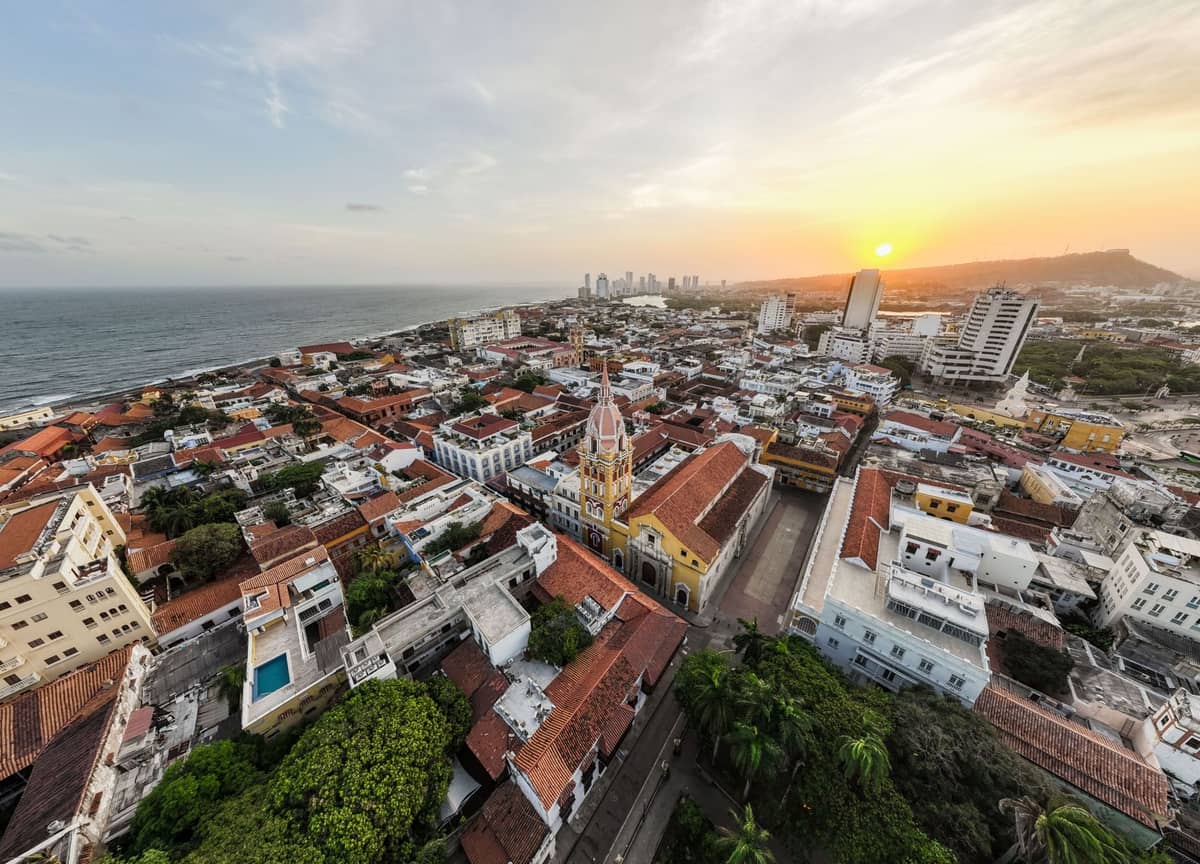
Cartagena de Indias has a reputation as an expensive Caribbean destination, but the reality is more nuanced. With the right neighborhoods, transport choices, and food strategy, a week in Colombia's most photogenic city is well within reach of budget travelers. Here is exactly how to do it.
Plan and book this trip
Tools from our partner Travelpayouts help you compare flights and hotels. If you book through them, we may earn a commission at no extra cost to you.
Flights
Hotels map
TL;DR
- A backpacker-style day in Cartagena, Colombia costs around 125,000 COP, covering a dorm bed, street food, local transport, and free sights.
- Local buses (Transcaribe and conventional lines) cost around 3,900 COP per ride and run most routes from 6:00 a.m. to 9:00 p.m.
- Stay in Getsemaní rather than the Walled City to cut accommodation costs by 30–50% while staying walkable to everything.
- The city's best experiences, including the city walls, street art, plazas, and beaches, are free or very low cost.
- Avoid peak season (December to March) if budget is a priority. Shoulder months like May and November offer lower prices, though check the best time to visit Cartagena for the full trade-offs.
Is Cartagena Actually Expensive? Setting Realistic Expectations
Cartagena is not uniformly cheap, and guides that call it a budget destination without qualification are doing travelers a disservice. The city operates on two parallel economies. Inside the Walled City (Centro Histórico), prices for restaurants, cocktails, and hotels rival those of any European capital. Step two blocks outside those walls into Getsemaní, and the same meal costs a third of the price. The gap between a tourist-facing dinner in El Centro and a bandeja paisa from a neighborhood fritanga is not a small one.
Budget travel in Cartagena is absolutely feasible, but it requires deliberate choices. Current travel data places a realistic bare-minimum backpacker day at around 125,000 COP, covering a hostel dorm (30,000–70,000 COP), street food, bus rides, and entry to one or two paid attractions. Mid-range travelers spending 300,000–500,000 COP per day get a private guesthouse room, sit-down meals, and the occasional boat trip. Luxury Cartagena is a different world entirely. For that, see the luxury Cartagena guide.
⚠️ What to skip
Peak season (December through March) and Semana Santa (Holy Week) push hotel prices up sharply and reduce hostel availability. If your dates are flexible, visiting in May or November can cut accommodation costs and avoid the busiest weather, though October sits in the heaviest part of the rainy season.
Where to Stay on a Budget: Neighborhood Matters More Than the Hotel
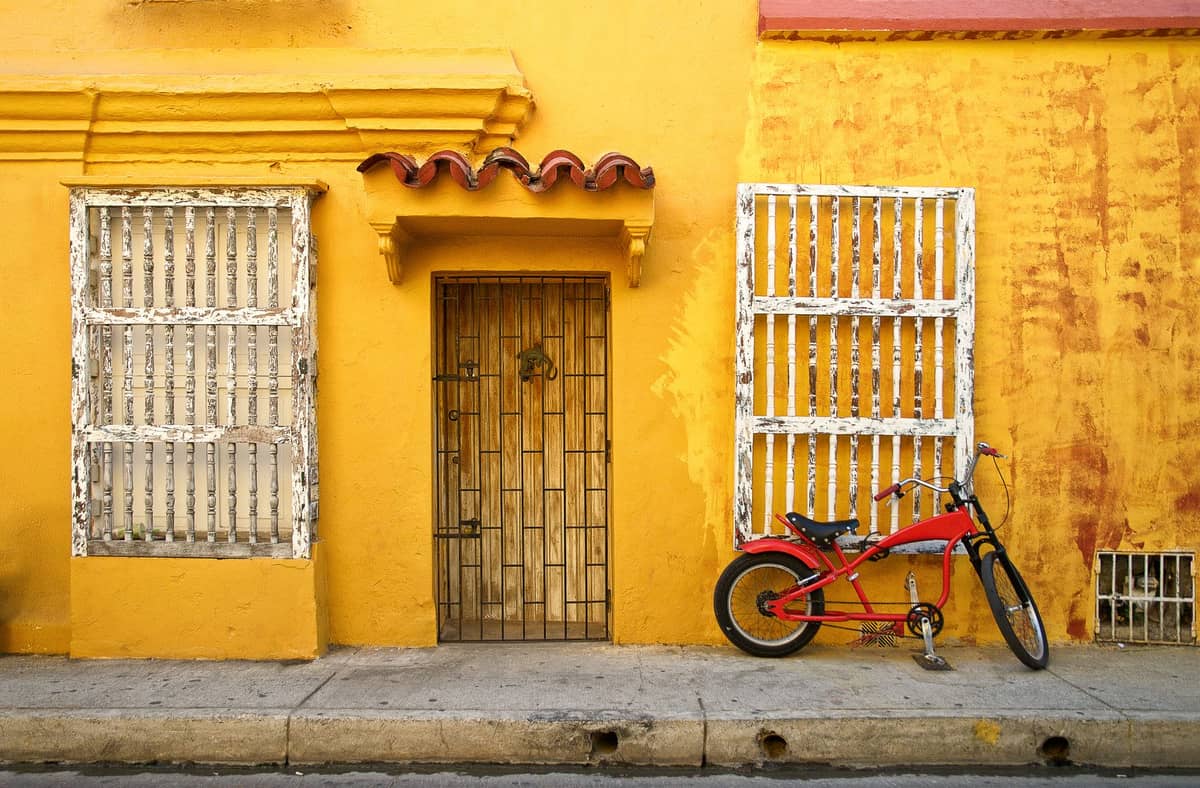
The single most effective budget decision you will make in Cartagena is choosing Getsemaní over the Walled City for accommodation. Getsemaní sits immediately outside the walls, a short walk from the Torre del Reloj gate, and its hostels and guesthouses are often cheaper than equivalent options inside the historic center. The neighborhood has transformed significantly over the past decade and now has excellent cafes, local restaurants, and the city's best street art scene.
Hostel dorm beds in Getsemaní typically run 30,000–60,000 COP per night. Private rooms in small guesthouses start around 100,000–150,000 COP. Inside the Walled City, expect to pay more than those figures for comparable quality. Bocagrande, the high-rise beach strip to the south, has some cheaper chain hotels and Airbnb options, but the neighborhood lacks the character and walkability of central Cartagena, meaning you will spend more on transport.
💡 Local tip
Book accommodations in Getsemaní at least 2–3 weeks ahead for visits between December and March. The best-value hostels fill up fast during dry season, and late bookers often end up paying more for worse rooms in less convenient areas.
Getting Around Without Paying Tourist Prices for Transport
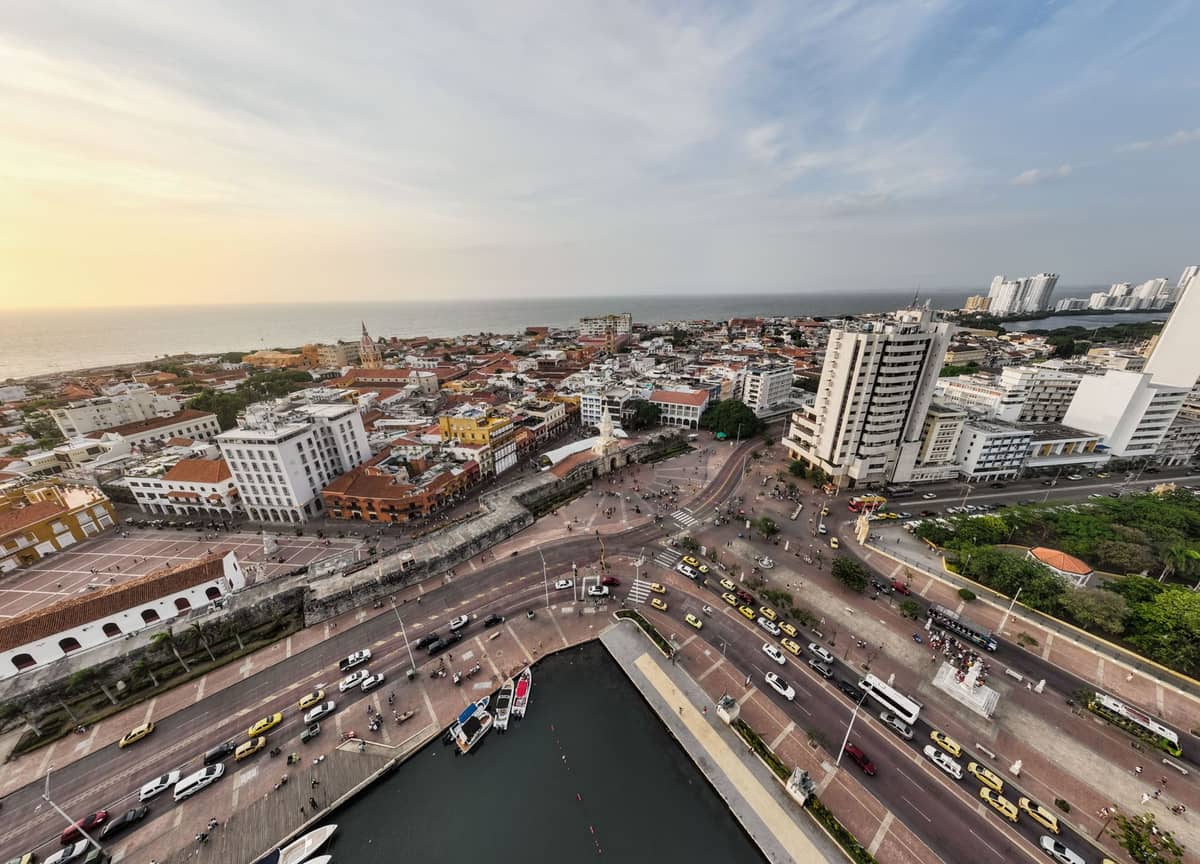
Cartagena has no metro. The two main low-cost options are conventional city buses and the Transcaribe bus rapid transit system. As of a recent fare update, the standard city bus fare is around 3,900 COP per ride, reflecting a rate change set by the mayor's office. Routes generally operate from around 6:00 a.m. to 9:00 p.m., with frequency varying by line. For most trips within the tourist core, including between Getsemaní, El Centro, and Bocagrande, walking is faster than any vehicle during the day.
From Rafael Núñez International Airport (IATA: CTG), which sits in the Crespo neighborhood roughly 3–7 km from the historic center depending on your destination, a Transcaribe bus from the Avenida Santander stop gets you to central Cartagena. Official airport taxis run 16,000–20,000 COP to Centro Histórico. Ride-hailing apps including Uber also operate in Cartagena; fares to the Walled City are typically higher than a taxi. Verify current rates before travel as these figures change with fuel costs and app pricing.
- City bus (Transcaribe or conventional) Around 3,900 COP per ride. Covers most neighborhoods. Best for longer distances like Bocagrande to Getsemaní.
- Walking Free and often the fastest option within the historic core. Getsemaní to the main plazas is under 10 minutes on foot.
- Official airport taxi 16,000–20,000 COP to Centro Histórico. Use authorized taxi stations at national and international exits inside the terminal.
- Airport Transcaribe bus Around 1 USD. Board from Avenida Santander, a 10-minute walk from arrivals. Slowest but cheapest airport option.
- Uber / inDrive Convenient but 12–18 USD from the airport to the Walled City. Better suited to mid-range travelers than backpackers.
Eating Well for Very Little: The Local Food Strategy
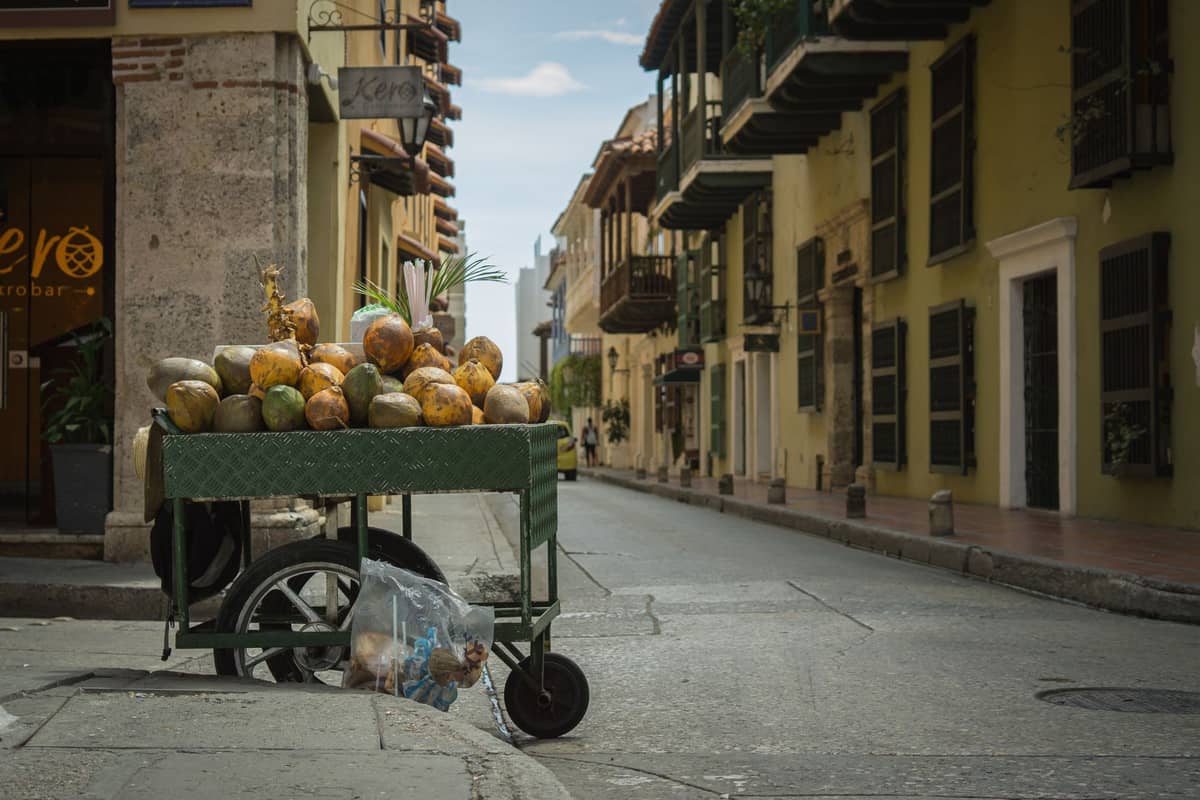
Cartagena's street food scene is one of the best arguments for budget travel here. A full meal of fried fish, patacones (fried plantain), and a cold juice from a street vendor or market stall costs 8,000–15,000 COP. The key is eating where locals eat, not where the menus have English translations and photos. Getsemaní's side streets and the area around Iglesia de la Trinidad have several no-frills lunch spots (called corrientazos or menú del día) where 15,000–20,000 COP buys a set lunch with soup, rice, protein, and a drink.
The Portal de los Dulces near the Torre del Reloj is worth visiting for traditional Colombian sweets at low prices. For a deeper dive into eating affordably, the Cartagena street food guide covers the best stalls, dishes, and price benchmarks by neighborhood.
✨ Pro tip
Avoid eating on the main tourist plazas like Plaza Santo Domingo or Plaza de la Aduana for regular meals. A beer there can cost 15,000–20,000 COP. Walk one or two blocks in any direction and prices drop by half. Save the plaza restaurants for a single sunset drink, not three meals a day.
Free and Low-Cost Things to Do in Cartagena
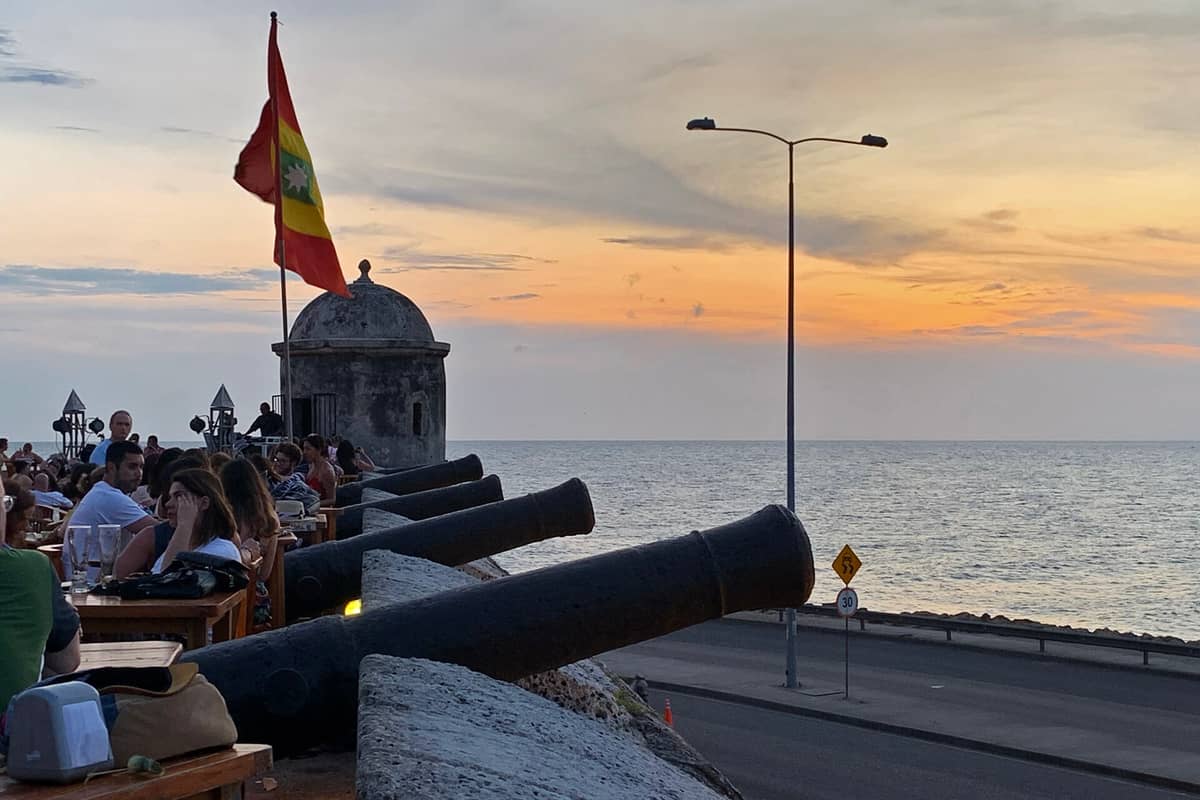
A significant portion of what makes Cartagena worth visiting costs nothing. Walking the city walls at sunset is free and gives you the best views in the city. The walls stretch over 11 km and take a full afternoon to walk completely. The colonial streets of Centro Histórico and San Diego reward slow exploration: door knockers, flower-draped balconies, and hidden plazas cost nothing to appreciate.
Getsemaní's street art is one of the most impressive urban art collections in Colombia and completely free to walk through. See the Getsemaní street art guide for the best murals and the stories behind them. For paid attractions, Castillo San Felipe de Barajas is the most significant paid sight and charges around 35,000–40,000 COP for foreign visitors, which most people find worthwhile. The Palacio de la Inquisición is another well-priced museum at roughly 30,000 COP.
- Walk the full city walls at sunset: free, no ticket required
- Explore Getsemaní street art: free, best in the morning before heat peaks
- Playa Marbella, north of the walls: free public beach, local crowd, no sunbed vendors
- Plaza Trinidad in Getsemaní on weekend evenings: free street performances and local food
- Santuario San Pedro Claver church exterior and plaza: free to sit, small fee for museum interior
- India Catalina statue and Parque Centenario: free public spaces with local life
Beaches and Islands Without the High Price Tag
The beaches immediately accessible from the city center are the budget-friendly ones. Playa Marbella, located just north of the walled city near the convention center, is a free public beach that locals actually use. It is not the prettiest beach in the region, but it is clean enough, free, and walkable. Playa La Boquilla is a longer beach about 20 minutes north by bus, with fresher water and a more relaxed feel.
The famous day trips to Islas del Rosario or Playa Blanca on Barú are beautiful but not cheap once you factor in boat transport, entry fees, and food. Budget 150,000–250,000 COP per person for a day trip depending on how you organize it. Group tours from the Muelle Turístico are generally the cheapest option. Going independently is possible but logistically complex and doesn't always save money. If budget is tight, prioritize one island day trip and spend other beach days at Marbella or La Boquilla instead.
ℹ️ Good to know
Cartagena has a tropical wet-and-dry climate with year-round heat. The dry season runs December to April, peak season for tourism and prices. The rainy season runs May to November, with September and October seeing the heaviest rainfall. Shoulder months like May and November offer lower costs and manageable weather.
FAQ
How much money do I need per day in Cartagena, Colombia?
A realistic backpacker budget is around 125,000 COP per day, covering a hostel dorm bed (30,000–70,000 COP), street food for all meals (around 30,000–40,000 COP), local bus rides, and occasional paid entry. Mid-range travelers spending 300,000–500,000 COP per day can stay in a private guesthouse, eat at sit-down restaurants, and add one paid excursion.
Is Cartagena safe for budget travelers?
Cartagena is generally considered safe for tourists in the main visitor areas including the Walled City, San Diego, and Getsemaní during daylight hours. Getsemaní in particular has improved significantly in recent years. As with any city, basic precautions apply: avoid displaying expensive cameras or phones in quiet streets at night, and use official taxis or ride-hailing apps after dark rather than flagging random cars. Check current advisories from your government's travel advisory service before traveling.
What is the cheapest way to get from Cartagena airport to the city center?
The cheapest option is the Transcaribe bus from the Avenida Santander stop, about a short walk from the terminal. Official airport taxis are faster and cost 16,000–20,000 COP to Centro Histórico. Ride-hailing apps like Uber are typically more expensive for the same trip.
Which neighborhood is best for budget accommodation in Cartagena?
Getsemaní is the best neighborhood for budget travelers. Hostel dorms start around 30,000–60,000 COP per night, private rooms from 100,000–150,000 COP, and the neighborhood is a short walk from the Walled City. It has excellent local restaurants, a strong street art scene, and a lively plaza atmosphere in the evenings.
Are there free things to do in Cartagena?
Yes, and some of the best experiences are free. Walking the city walls at sunset, exploring Getsemaní's street art, visiting Playa Marbella, wandering the colonial streets of Centro Histórico, and watching evening life at Plaza Trinidad all cost nothing. The main paid attractions worth the entry fee are Castillo San Felipe de Barajas (around 38,000 COP) and the Palacio de la Inquisición (around 24,000 COP).