Playa Azul La Boquilla: Cartagena's Blue Flag Beach with Local Character
Playa La Boquilla sits at the northernmost tip of Cartagena, about 10 km from the historic center. A free public beach in an Afro-Caribbean fishing community, it includes Playa Azul La Boquilla, a section holding Blue Flag certification for cleanliness and safety, and draws a mix of local families, kitesurfers, and travelers looking for something less packaged than the city's resort strips.
Quick Facts
- Location
- La Boquilla, Cartagena de Indias, Bolívar Department, Colombia. Approx. 10 km north of the historic center.
- Getting There
- Taxi or rideshare from Centro Histórico or Bocagrande: 15–25 min. Public bus along the coastal road is the cheapest option.
- Time Needed
- 2–4 hours for a beach visit; half a day if combining with a mangrove tour.
- Cost
- Free entry. Optional beach chairs/umbrellas rented from local vendors. Kitesurfing lessons approx. US$50–US$250 depending on duration.
- Best for
- Local beach culture, kitesurfing, Afro-Colombian community experiences, families, and budget travelers.
- Official website
- colombia.travel/es/blog/revista-colombia/la-boquilla
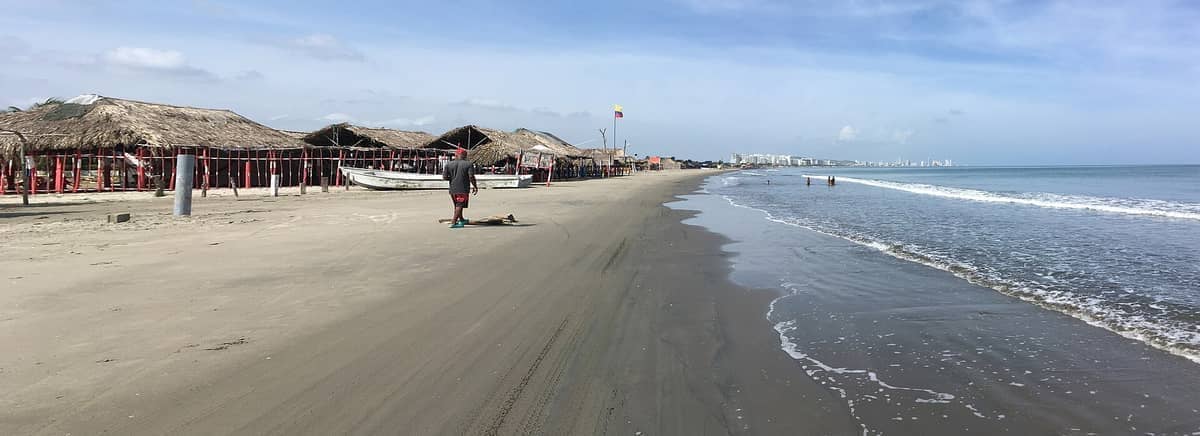
What Playa La Boquilla Actually Is
Playa La Boquilla is a free public beach on the Caribbean coast of Cartagena de Indias, located within the corregimiento (district) of La Boquilla at the city's northernmost point. It is not a resort beach. There are no all-inclusive wristbands, no hotel towers blocking the horizon, and no manicured lounger rows. What you get instead is a wide sandy shoreline belonging to an Afro-Caribbean fishing settlement that has existed here long before Cartagena's hotel boom arrived.
The beach stretches roughly 2 km along the coast. The central section, about 200 m of it, known as Playa Azul La Boquilla, holds a Blue Flag certification, one of the first beaches in Colombia to receive that designation when it was awarded in early October 2019. Blue Flag status requires meeting standards for water quality, environmental management, safety services, and basic facilities. The certification has been renewed in subsequent years. For a traveler choosing between Cartagena's beaches, this is a meaningful distinction.
ℹ️ Good to know
Blue Flag certification covers water quality and safety services, but it does not mean the beach is quiet or empty. Weekend afternoons draw local families, vendors, and music. If you want solitude, come on a weekday morning.
La Boquilla sits about 10 km north of Cartagena's Centro Histórico, which puts it closer to the airport than to the Walled City. If you are staying in Bocagrande or near the historic center, a taxi or rideshare typically takes 15 to 25 minutes depending on traffic. Public buses run along the coastal road and are the cheapest option, though they require a short walk to the beach access points.
The Feel of the Place at Different Hours
Early mornings at La Boquilla belong to the fishing community. Before 8 a.m., you are likely to see small wooden boats being pushed out through the surf, nets stacked on the sand, and the smell of salt and outboard engine fuel cutting through the air. The light at this hour is flat and silver. There are few tourists. Local women sometimes set up coal-fired grills near the road to sell arepas de huevo and fried fish before the beach crowds arrive.
By mid-morning, the beach shifts. Umbrella and chair vendors arrange their rentals in rows, cumbia and vallenato start drifting from speakers at the shoreside restaurants known as cevicheries, and the water fills with swimmers. The Caribbean here is warm, typically around 28 to 30 degrees Celsius, and the ocean floor drops gradually from the shore, making it reasonably safe for wading. Depending on the season, you may notice a moderate chop from northeasterly trade winds, which is exactly what draws the kitesurf crowd to the northern end of the beach.
Weekday afternoons are calmer and better for a longer stay. Weekend afternoons can get genuinely loud, with music competing from multiple beachfront spots and vendors making persistent rounds. Neither is inherently bad, but they are very different experiences.
Sunset is worth staying for if the weather is clear. The sky over the Caribbean from this stretch of coast produces deep orange and pink tones, and by around 5:30 to 6 p.m. the vendors begin packing up, leaving the beach quieter than it was at noon.
Tickets & tours
Hand-picked options from our booking partner. Prices are indicative; availability and final rates are confirmed when you complete your booking.
Totumo Volcano and lunch at a VIP hotel from Cartagena
From 34 €Instant confirmationFree cancellationCity tour of Cartagena with entry to San Felipe castle
From 25 €Instant confirmationFree cancellationSan Andres Islands pontoon tour through the inner bay
From 26 €Instant confirmationFree cancellationGlass-bottom boat tour to San Andres aquarium and mangroves
From 21 €Instant confirmationFree cancellation
Cultural Context: La Boquilla as a Living Community
La Boquilla is not just a backdrop for beach tourism. It is one of Cartagena's Afro-Colombian communities with roots in the city's history as a major port in the transatlantic slave trade. The residents here have maintained fishing traditions and distinct cultural practices that set this neighborhood apart from Cartagena's colonial center or its resort zones.
That cultural layering matters for how you visit. The community has worked to develop tourism on its own terms, including guided mangrove canoe tours through the wetlands that back the settlement. These tours, typically led by local guides, take visitors through the La Boquilla mangroves that separate the ocean from the Ciénaga de la Virgen lagoon behind the town. Combining a mangrove tour with a beach visit makes for a more complete half-day. Guides can usually be arranged directly at the beach or through local cooperative operators.
For deeper reading on this cultural dimension, the Cartagena Afro-Colombian culture guide provides useful context before you visit.
Kitesurfing and Water Activities
La Boquilla has a growing reputation as one of the better spots for kitesurfing near Cartagena. The consistent trade winds that blow along this stretch of coast, combined with the relatively flat water conditions in certain zones, have attracted a cluster of kitesurfing schools and rental operations. Lessons for beginners typically start around US$50 and go up to around US$250 for multi-day courses, though prices change and should be confirmed directly with operators on arrival.
Wind conditions are generally more reliable between December and April, during Cartagena's dry season, when the northeast trade winds are steady. The wet season (May through November) brings lighter and less consistent winds, along with afternoon squalls that can change conditions quickly. If kitesurfing is your primary reason for visiting, the dry season is the practical choice.
💡 Local tip
Kitesurf schools at La Boquilla are clustered toward the northern end of the beach, away from the main swimming and fishing areas. If you are not kitesurfing, stay south of the kite zone to avoid lines in the water.
Beyond kitesurfing, the beach offers standard Caribbean swimming. The water is clear enough for snorkeling close to shore in the morning before boat traffic picks up, though this is not a dive destination. Stand-up paddleboards and kayaks can sometimes be rented from vendors, but availability is informal and inconsistent.
Food, Vendors, and What to Expect on the Sand
The food situation at La Boquilla is one of its genuine strengths. The shoreline restaurants and informal cevicherias serve fresh fish caught that morning, coconut rice, fried plantain, and Cartagena-style ceviche made with lime, onion, and aji. Portions are generous and prices are lower than comparable food on the tourist circuit in Bocagrande or the historic center. A full fried fish plate with rice and patacones typically costs a fraction of what the same dish would run in a tourist-facing restaurant in the city.
Vendors will approach you on the beach. They sell fruit, coconuts, handcrafted jewelry, and braided hair services. The approach can be persistent, particularly on weekends. A polite but direct no gracias is understood. There is no need to be rude, and hard bargaining on small purchases is generally counterproductive in a community that relies on this income.
Beach chair and umbrella rentals are arranged directly with the vendors who set them up. Prices are not fixed and a quick negotiation is expected. Bring cash in small denominations since card payments are not standard on the sand.
Practical Information for Your Visit
La Boquilla Beach is open as a public space at all hours. Daylight visits are strongly recommended. The address commonly referenced is Cra. 3 #46-25, La Boquilla, Cartagena, Bolívar, 130002. There is no entrance gate or fee.
Cartagena's climate means you will be in direct tropical sun at this beach. Temperatures run between 28 and 32 degrees Celsius during the day year-round, with high humidity. SPF 50 sunscreen, a hat, and a rash guard are not optional if you are spending more than an hour outside. The dry season (December to April) brings lower rainfall and reliable sunshine; the wet season (May to November) produces afternoon rain that can roll in quickly, with September and October being the wettest months.
⚠️ What to skip
There is no formal changing room or locker infrastructure at the public beach. Some beachfront restaurants allow paying customers to use their facilities. Bring only what you can keep an eye on, and leave valuables at your accommodation.
For getting there, taxis from Bocagrande or the historic center take 15 to 25 minutes. Ride-hailing apps including Uber and inDrive operate in Cartagena and can be used to reach La Boquilla, though fares and app availability should be verified locally as these can change. Public buses along the coastal road are the cheapest option; ask the driver for the La Boquilla stop. For broader transport context in the city, the guide to getting around Cartagena covers your options in detail.
Photography is generally welcomed by vendors and restaurant owners, but ask before photographing local fishers or community members at close range. Mornings offer the best light and the most candid scenes without large crowds in the frame.
Practical Assessment: Is La Boquilla Worth It?
La Boquilla Beach delivers something that Cartagena's more commercial beaches do not: a sense of an actual place with its own identity. The fishing boats, the food cooked over coal, the mangroves visible behind the settlement, and the Afro-Caribbean culture that shapes daily life here give this beach a texture that a resort strip cannot replicate.
That said, it is not a pristine, isolated escape. The beach is urban-adjacent, vendor activity is constant during peak hours, and the Blue Flag zone is a relatively short stretch of a longer, uneven coastline. Travelers expecting manicured tranquility will be disappointed. Travelers who want to eat well, swim in the Caribbean, watch local life, and potentially take a mangrove canoe tour will find it one of the better half-days available from Cartagena.
If your priority is absolute water clarity and white sand without vendor contact, the islands further from the city are a better fit. See the guide to Cartagena's beaches for a full comparison of your options.
Insider Tips
- Arrive before 9 a.m. on a weekday to see the fishing boats return from the night's catch. Local women will be grilling breakfast food near the road entrance, and the beach is essentially empty. This is the best hour for photography and calm swimming.
- The mangrove canoe tours are organized through local community cooperatives, not through hotel tour desks. Going directly to a local guide at the beach typically costs less and puts more money in the community. Ask at the beachfront for someone from the local guide association rather than booking through a hotel.
- The kitesurf schools cluster at the northern end of the beach. If wind noise and kite lines are not your idea of a relaxing afternoon, set up your umbrella toward the central or southern section, near the Blue Flag zone.
- Small Colombian peso bills are essential. Most beach vendors, chair rental operators, and even some of the smaller cevicherias do not carry change for large notes. Withdraw cash in mixed denominations before leaving the city.
- The shoreside restaurants closest to the road tend to have the freshest fish because they buy directly from the fishers who launch from the same beach. Look for spots where you can see the catch of the day displayed rather than menus with photographs.
Who Is Playa La Boquilla For?
- Travelers who want Caribbean beach time with local Colombian character rather than a resort experience
- Kitesurfers and wind sports enthusiasts, especially during the December to April dry season
- Food-focused travelers after fresh Caribbean seafood at local prices
- Those combining a beach visit with a mangrove canoe tour through La Boquilla's wetlands
- Budget travelers, as entry is free and food and rentals cost significantly less than in Bocagrande or tourist-facing restaurants
Nearby Attractions
Other things to see while in La Boquilla:
- La Boquilla Mangroves
Just 15–20 minutes north of Cartagena's historic center, the mangrove channels of La Boquilla offer a rare combination of ecological richness and genuine cultural exchange. Guided by members of a 200-year-old Afro-Colombian fishing community, canoe tours through the Ciénaga de La Virgen reveal a quieter, greener side of the Colombian Caribbean.