La Boquilla is a coastal fishing community north of Cartagena's urban core, where Caribbean beach life meets mangrove ecosystems and Afro-Colombian tradition. It draws visitors looking for something rawer and less polished than the Walled City or Bocagrande, with canoe tours through mangrove tunnels and seafood eaten at plastic tables with your feet in the sand.
La Boquilla sits at the northern edge of Cartagena's urban sprawl, where the city abruptly gives way to a working Caribbean fishing village. It is one of the few places near Cartagena where Afro-Colombian coastal culture is still the dominant texture of daily life, and where the mangrove lagoons behind the beach feel genuinely wild rather than curated for tourists.
Orientation
La Boquilla is a corregimiento, a semi-rural administrative district that technically falls within the municipality of Cartagena de Indias but sits well outside its urban grid. It occupies a narrow sandy peninsula between the Caribbean Sea to the west and a network of lagoons and mangrove forest to the east, about 7 kilometers north of the historic Walled City.
To get your bearings: leaving Cartagena's city center northward along Avenida Santander, you pass through the Crespo neighborhood, skirt the runway of Rafael Núñez International Airport, and continue past the Hotel Las Américas complex before the road dips under a viaduct bridge and enters La Boquilla proper. The main village and beach strip extend northward from this bridge toward the smaller settlement of Boquillita. Beyond that, the coast continues toward Manzanillo del Mar. To the east, the lagoons feeding into the mangrove systems connect La Boquilla to the broader wetland corridor that includes the area around La Boquilla's mangroves, one of the most ecologically significant parts of Cartagena's immediate surroundings.
This geography, a thin strip of land between sea and lagoon, is what gives La Boquilla its double identity: a beach destination facing the open Caribbean on one side, and a mangrove ecotourism base facing the calm, bird-rich wetlands on the other. The village itself is compact, walkable end to end in under twenty minutes, and oriented around a short beachfront strip lined with informal restaurants and a grid of modest residential streets behind.
Character and Atmosphere
La Boquilla does not feel like a tourist district that happens to have locals living in it. It feels like a community that has learned to accommodate visitors while remaining fundamentally itself. Afro-Colombian identity is central here: the community traces its roots to the descendants of enslaved Africans brought to this coast during the colonial period, and that heritage shows up in the music drifting from houses, the style of the dugout canoes, and the way the fishing cooperative organizes the mangrove tours.
Early mornings in La Boquilla have a particular clarity to them. Fishermen push out before sunrise, the lagoon surface barely broken. By mid-morning, the beach restaurants are firing up grills, women are setting out chairs and umbrellas along the sand, and the first day-trippers from Cartagena are arriving by bus or mototaxi. The light in the late morning, when the Caribbean sun is still at an angle, turns the water a deep green-blue close to shore. By noon, the heat is serious and the beach fills with a mix of Cartagena families spending a Sunday out, Colombian tourists, and international visitors looking for a break from the Walled City's cobblestones.
After about 17:00, the character shifts. Day-trippers leave, the restaurants wind down, and the village returns to its own rhythms. This transition matters for visitors, and not only aesthetically: the evening is when local warnings about the beach sector north of the main hotel strip become relevant (more on this in the safety callout below).
La Boquilla is not a polished experience. There are no boutique hotels with infinity pools here, no cocktail bars with a design concept. What you get instead is a functional, working-class Caribbean beach with excellent fried fish, cold beer in coolers, and an ecosystem tour led by people who grew up in these mangroves. That combination is increasingly rare within easy reach of a city the size of Cartagena.
What to See and Do
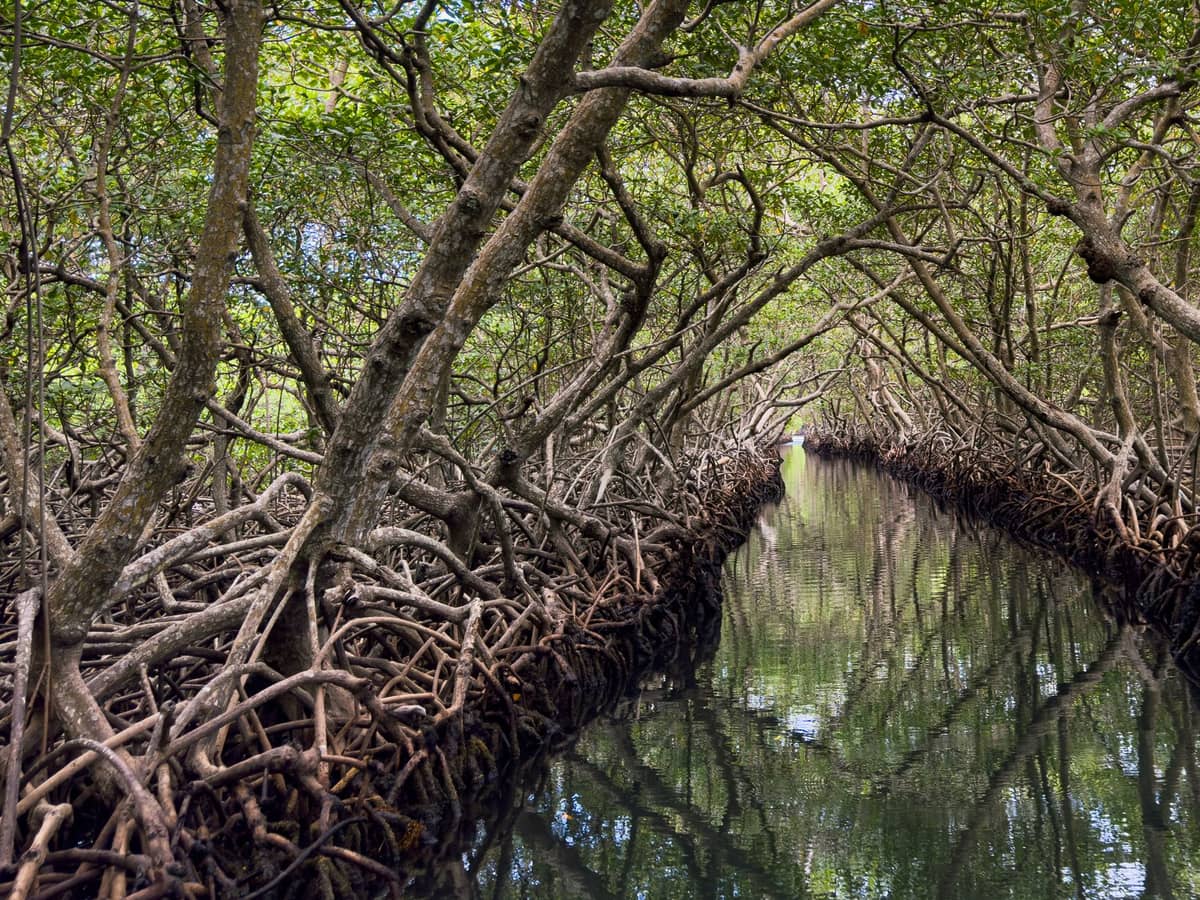
The main draw in La Boquilla is the mangrove ecosystem that borders the lagoon on the eastern side of the peninsula. Local fishing families and ecotourism cooperatives run canoe trips through narrow mangrove tunnels, paddling through channels where the tree canopies close overhead and the only sounds are water and birds. These tours typically last one to two hours, and guides point out herons, kingfishers, and occasional caimans along the route. The experience is genuinely different from anything available in central Cartagena, and the La Boquilla mangrove tours are the single best reason to make the trip out here.
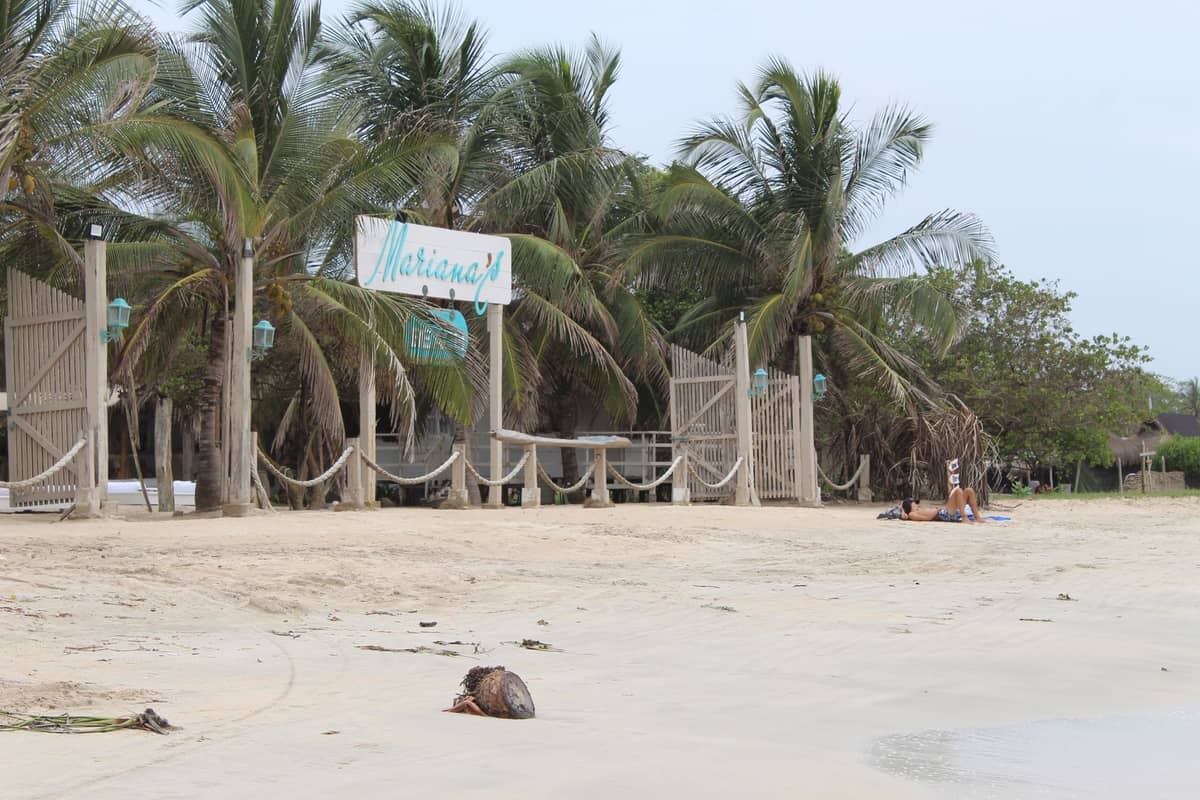
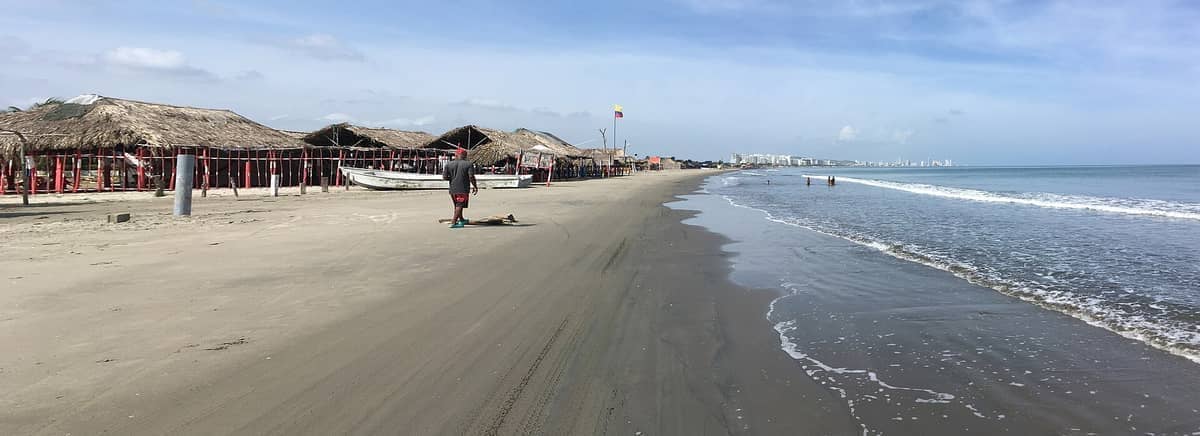
The beach itself, Playa La Boquilla, runs the length of the village's western edge. It is wider and less crowded than Bocagrande Beach on most weekdays, and the sand is coarser but the water is warm and swimmable. The informal restaurant strip along the beach is the social center of any visit: plastic chairs, fresh coconut, and grilled fish served with patacones and rice.
Canoe tours through mangrove tunnels and lagoons, typically organized through local fishing cooperatives near the village entrance
Swimming and beach time at Playa La Boquilla, best on weekday mornings before crowds arrive
Birdwatching in the lagoon and wetland zones, where species include herons, egrets, kingfishers, and pelicans
Volleyball and informal beach sports, a genuine local activity rather than a staged tourist event
Fresh seafood meals at the beachfront restaurant strip, the main culinary experience of the village
If you want to combine La Boquilla with a broader understanding of Cartagena's Afro-Colombian cultural landscape, the village fits naturally into a longer exploration. The Afro-Colombian culture guide for Cartagena covers this context in more detail, including the connection between La Boquilla and communities like San Basilio de Palenque.
💡 Local tip
Book mangrove canoe tours directly with local fishing families at the lagoon-side entry point rather than through hotel desks in the city center. You pay less, and the money goes directly to the community. Bring reef-safe sunscreen, as the lagoon waters are sensitive and the local guides actively discourage chemical sunscreens.
Eating and Drinking
Food in La Boquilla is overwhelmingly focused on the sea. The beachfront restaurant strip is the center of the eating scene, with a row of informal open-air places serving the same core menu: whole fried fish, coconut rice, patacones, ceviche, and cold Club Colombia or Águila beer. Prices are low by Cartagena standards, and the quality depends more on which family is running the place on that day than on any consistent ranking.
Named establishments along the strip include Play Mar, Beach Road, Chipichipi, La Langosta Roja, Dónde Ángel, Tía Sonia, María Pañito, Dónde Bertha, Boquilla y Mar, and Playa Melida. These are not restaurants in the formal sense: they are plastic-table operations with hand-painted signs, open from mid-morning through the late afternoon. Most do not take card payments. Arrive with cash in smaller denominations.
Cocktails here tend to be rum-based and mixed to order from bottles kept behind makeshift bars. Fresh fruit juices, corozo, tamarind, and lulo, are served alongside. There is no café culture in La Boquilla: if you need good coffee, have it before you leave Cartagena. The food scene is best experienced as a long, slow lunch with your feet in the sand rather than as a destination dining experience.
ℹ️ Good to know
The beachfront restaurants in La Boquilla are most active on weekends and Colombian public holidays, when local families from Cartagena fill the strip and live music sometimes appears in the afternoon. On weekday mornings, several spots open later than expected. If you arrive before 11:00, adjust expectations accordingly.
Getting There and Around
La Boquilla is accessible from central Cartagena by public bus, taxi, or ride-hailing app, with the journey taking between 25 and 45 minutes depending on traffic and your starting point. The fare structure for public buses follows the standard Transcaribe urban rate (around 3,400–3,900 COP per trip in recent years), set by the municipal transport authority.
Several bus routes and feeder services of the Transcaribe system serve La Boquilla from different parts of the city, running along Avenida Santander past the airport and into the corregimiento. For a full picture of how to navigate public transport across the city, the getting around Cartagena guide covers bus routes, taxis, and ride-hailing options in detail.
Taxis from the historic center to La Boquilla typically cost in the range of 15,000 to 25,000 COP depending on negotiation and time of day. Uber and inDrive operate in Cartagena and can be used for this route, though coverage can be inconsistent at the La Boquilla end for the return trip. Mototaxis operate within the village itself and are the fastest way to move between the beach strip, the lagoon entry point, and Boquillita.
Once in the village, everything is walkable. The beach strip runs for about a kilometer from the main entrance near the viaduct bridge northward through the village. The lagoon-side mangrove tour entry points are a short walk east from the main street. There are no traffic lights, few formal crossings, and the streets are unpaved in parts. Flip-flops are the appropriate footwear for everything except the mangrove canoe tour, where closed shoes or old sneakers are useful if you need to step out of the boat.
⚠️ What to skip
Multiple traveler accounts, including a detailed 2026 Tripadvisor review, report that the beach sector north of the main hotel strip in La Boquilla carries a significant risk of robbery, including in daylight hours, with the risk increasing sharply after 18:00. Visitors are strongly advised to avoid walking the northern beach stretch alone or after dark, to keep valuables at your accommodation, and to leave the village before sunset. This is not a general warning about the entire village, but it applies specifically to the northern beach corridor. Consult current traveler reports and official safety advisories before visiting.
Where to Stay
La Boquilla is not a major accommodation base and most visitors come on day trips from central Cartagena or Bocagrande. The village has a small number of guesthouses and posadas run by local families, offering basic rooms at low prices. These are most suitable for travelers specifically interested in spending time in the mangroves at dawn or dusk, when the birding is best and the day-trip crowds have not yet arrived or have already left. For those seeking organized comfort, the large resort hotels on the approach road, including the Las Américas complex, are technically adjacent to La Boquilla but operate in a completely different register. For a comparison of where to base yourself in Cartagena more broadly, the where to stay in Cartagena guide covers the tradeoffs between the Walled City, Getsemaní, and Bocagrande.
Travelers who want beach access without the polished resort infrastructure of Bocagrande might consider basing themselves in La Boquilla for a night or two, particularly during the dry season from December to April when the weather is stable. The tradeoff is limited restaurant variety in the evenings, reduced safety after dark compared to the city center, and fewer transport options at night. Families with children should weigh these factors carefully against the genuine appeal of early morning canoe tours in the mangroves.
La Boquilla in Context: How It Fits Into Cartagena
La Boquilla occupies a specific role in Cartagena's geography that is worth understanding before you visit. The historic Walled City, Centro Histórico, is where colonial architecture, major museums, and the densest concentration of restaurants and nightlife are found. Getsemaní, just outside the walls, is where the street art scene and most of the budget accommodation are concentrated. Bocagrande is the modern beach hotel district. La Boquilla sits beyond all of these, past the airport, as the city's northern coastal edge.
That positioning means La Boquilla rewards visitors who have already seen the city's main sights and want something different: a functional community rather than a heritage district, Caribbean nature rather than colonial architecture, and a level of cultural authenticity that the tourist core of Cartagena has largely traded away. It pairs well with a visit to Playa Marbella, the urban beach just south along the same coastal corridor, or as part of a broader exploration of Cartagena's less-visited northern zones.
For travelers with more time, La Boquilla also serves as a conceptual counterpoint to the more remote beach destinations reachable from Cartagena. The Cartagena beaches guide puts La Boquilla alongside options like Playa Blanca on Isla Barú and the Rosario Islands, helping you calibrate how far you want to go for how much isolation and natural quality.
TL;DR
La Boquilla is a working Afro-Colombian fishing village north of Cartagena's airport, best visited on a day trip for mangrove canoe tours and casual beachfront seafood.
The mangrove tunnel tours are the single most distinctive experience on offer and are operated directly by local fishing families, making them one of Cartagena's most authentic eco-tourism options.
Safety concerns on the northern beach strip are real and documented: avoid walking that section alone, keep valuables secured, and plan to leave before dark.
Getting there is straightforward by public bus (at the standard Transcaribe urban fare, around 3,400–3,900 COP), taxi (roughly 15,000 to 25,000 COP), or ride-hailing app from central Cartagena, with a journey time of 25 to 45 minutes.
La Boquilla suits travelers who want a contrast to the Walled City's colonial polish: raw Caribbean beach life, ecological richness, and a community where the culture has not been packaged for consumption.
Three days is enough time to experience the best of Cartagena de Indias: the UNESCO-listed walled city, a boat trip to the Rosario Islands, the street art and nightlife of Getsemaní, and a memorable day trip beyond the city. This itinerary is built for first-time visitors who want depth, not just highlights.
Cartagena de Indias is a year-round destination, but when you go shapes everything from hotel rates to beach conditions. This guide breaks down the dry season, rainy season realities, peak holiday crowds, and the sweet-spot months that most travelers overlook.
Cartagena de Indias sits at the heart of Afro-Colombian history. From the UNESCO-recognized Cultural Space of San Basilio de Palenque to the living traditions embedded in Getsemaní and beyond, this guide covers the history, the neighborhoods, and the practical details for experiencing this heritage authentically.
Cartagena, Colombia has a small but well-defined selection of true all-inclusive resorts. This guide breaks down every major option, where they sit geographically, what's included, current price ranges, and the real trade-offs so you can book with confidence.
Cartagena's beach scene spans gritty urban strips, local fishing villages, and some of the most spectacular Caribbean coastline in South America. This guide covers every option, from the accessible shores minutes from the old city to the powdery white sands of Isla Barú and the coral-fringed Rosario Islands.
Cartagena de Indias holds one of the best-preserved colonial ensembles in the Americas, recognized as a UNESCO World Heritage Site. This guide covers every major building, practical entry details, the best times to visit, and what most travelers get wrong about exploring the historic center.
Cartagena de Indias delivers one of the Caribbean's most genuinely romantic settings: a UNESCO-listed walled city, warm turquoise waters, and a sunset that turns the stone ramparts gold every evening. This guide covers the best romantic activities, where to stay, when to visit, and how to avoid the tourist traps that can flatten an otherwise exceptional trip.
Docking at Cartagena de Indias gives you one of the Caribbean's great port days — colonial forts, walled-city streets, and beach escapes all within reach. This guide covers exactly how to get from the pier to the good stuff, what to prioritize with limited time, and what to skip.
December is one of Cartagena de Indias' busiest and most expensive months, but also one of its best for weather. This guide covers the climate, seasonal events, booking realities, and practical tips to make the most of a December visit to Colombia's Caribbean coast.
Cartagena sits at the gateway to some of the Caribbean's most rewarding island destinations. This guide covers the coral reefs of the Rosario Islands, the white sands of Playa Blanca on Barú, the quieter shores of Tierra Bomba, and the best beaches and nature trips you can reach by boat or road from the city.
From rooftop cocktails above the Walled City to salsa-soaked plazas in Getsemaní, Cartagena de Indias comes alive after dark. This guide covers every major nightlife zone, realistic price ranges, what to skip, and how to plan a great night out in Colombia's most atmospheric Caribbean city.
Cartagena de Indias has a reputation as an expensive Caribbean destination, but the reality is more nuanced. With the right neighborhoods, transport choices, and food strategy, a week in Colombia's most photogenic city is well within reach of budget travelers. Here is exactly how to do it.
Cartagena de Indias has one of the most rewarding street food scenes on the Caribbean coast of Colombia. This guide covers the essential snacks, the best neighborhoods and markets to find them, realistic price ranges, and clear advice on what to skip.
Cartagena de Indias works surprisingly well as a family destination, but it rewards planning. From the Oceanario at Islas del Rosario to the hop-on hop-off city bus, this guide covers the best kid-friendly activities, practical logistics, and the seasonal factors every parent needs to know before booking.
Cartagena de Indias is one of the Caribbean's great base camps. Within a few hours by boat or road, you can reach pristine coral islands, an Afro-Colombian UNESCO heritage village, a one-of-a-kind mud volcano, and mangrove lagoons barely touched by tourism. These are the best day trips to plan from the city.
Everything you need to navigate Cartagena de Indias, from landing at Rafael Núñez International Airport (CTG) to hopping between neighborhoods. Real fare ranges, TransCaribe basics, ride-hailing realities, and seasonal advice included.
Cartagena, Colombia draws millions of visitors each year, but the safety question deserves a straight answer. This guide breaks down neighborhood-by-neighborhood risk, the most common threats tourists actually face, and practical steps to stay safe without missing the city.
Cartagena de Indias is one of the Caribbean's most photogenic cities, but it comes with real trade-offs: heat, crowds, and tourist pricing. This guide cuts through the hype to help you decide if Cartagena Colombia deserves a spot on your itinerary.
Cartagena de Indias delivers a rare combination of UNESCO-listed colonial architecture, Caribbean waterfront, and a genuine luxury infrastructure that rivals any Latin American city. This guide covers where to stay, where to eat, what to do, and when to book to get the most out of a high-end visit to Colombia's crown jewel.
Cartagena de Indias packs colonial fortresses, Caribbean islands, street art, and serious food into one compact city on Colombia's northern coast. This guide cuts through the tourist noise with specific prices, opening hours, seasonal advice, and specific rankings to help you spend your time well.
Choosing where to stay in Cartagena de Indias shapes your entire trip. This guide covers every major neighborhood, from the colonial Centro Histórico to the beach hotels of Bocagrande, with clear trade-offs, practical price context, and seasonal tips to help you book with confidence.